
County officials: Certain Montana mobile home owners will get hit with property tax spikes
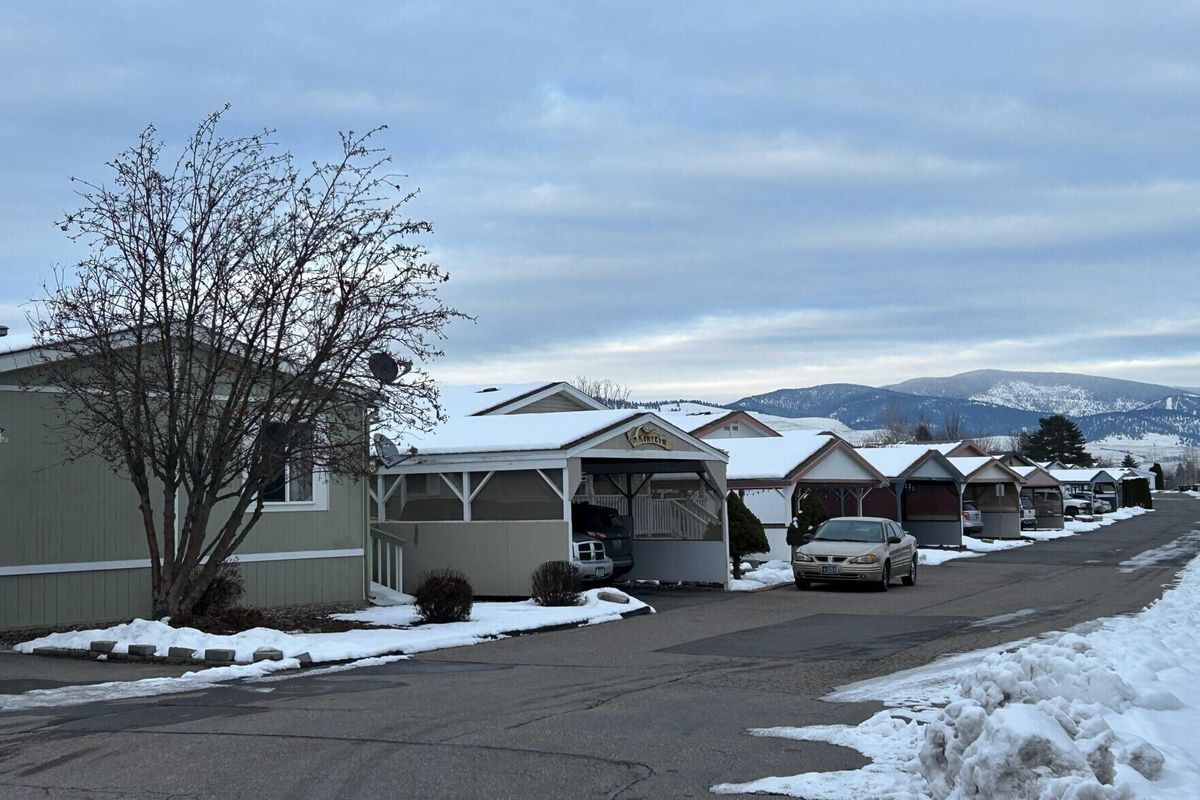
Yellowstone County Treasurer Hank Peters was sitting at his desk on the morning of April 20, preparing one of the first batches of 2026 property tax bills to be mailed out, when he noticed something wasn’t quite right.
The property tax bills for mobile home owners that Peters was reviewing showed collections far higher than the previous year.
“You see the number, and it’s like, ‘OK, wow, that’s a lot more than I was expecting,’” Peters said in a phone interview Monday.
What Peters observed is happening in other Montana counties, too: Many mobile home owners — who receive their property tax bills months earlier than the rest of residential property owners — are about to see much higher property tax bills compared to years past, five county treasurers warned in recent phone interviews with Montana Free Press.
Five county treasurers from Missoula, Gallatin, Valley and Jefferson counties, in addition to Yellowstone, said this trend is a result of the new laws passed at last year’s legislative session that required homeowners to opt in for lower tax rates. The treasurers explained that large portions of mobile home owners did not enroll for the preferential treatment.
“I have a deep concern about this because some of these people are not going to be able to afford these increased taxes,” Jefferson County Treasurer Terri Kunz said on a Monday phone call from Boulder. “I am very worried about this.”
For one mobile home on the west side of Billings, the 2025 property taxes reviewed by MTFP showed a nearly threefold increase from $678 to $1,941 in 2026. In Frenchtown, another mobile home’s property taxes went from $561 in 2025 to $1,574 in 2026.
“These are people who are already on the edge financially,” said Missoula County Treasurer Tyler Gernant. “Little increases mean a lot more to them, and this is a big increase.”
As the tax bills for mobile home owners are sent out this month, they are serving as the first indication of how the new laws are working and perhaps what’s to come for the rest of residential property owners later this year.
At the start of the 2025 legislative session, Republican Gov. Greg Gianforte and several legislators repeatedly pledged to enact meaningful property tax reform. After months of debate, lawmakers passed a property tax package that overhauled the state’s taxing methods, and major components of the new laws are now going into effect.
The new policies differentiate between types of residential property owners. The tax rates are lower for primary residences and long-term rentals, and higher for second homes and short-term rentals.
To receive the lower rates (known as the “homestead exemption”), homeowners and long-term rental owners have to apply through the state Department of Revenue and be deemed eligible. If they do not successfully opt in, they are assessed like a second home at a far higher rate than in previous years.
Country treasurers said this system has created gaps.
“The opt-in aspect inevitably leaves people out,” Gernant said.
Those homeowners will be hit with what could be a shocking increase in their annual expenses, county treasurers explained. That spike could be particularly head-spinning because many impacted homeowners likely got a reduction in their property taxes in 2025. State officials have said that 80% of homeowners in Montana saw a 5% or greater decrease in their bills.
“I don’t know how many people will be in here complaining, but it will be a lot,” said Gallatin County Treasurer Maureen Horton.
Both the governor’s office and the Department of Revenue defended the state’s outreach efforts.
“The governor is committed to ensuring that everyone who is eligible for property tax relief under the reforms receives it,” Kaitlin Timken, a spokesperson for the governor, wrote in an email to MTFP. “That’s why the Department of Revenue launched a massive effort to make homeowners aware of the reforms and the need to apply for the lower rates.”
Revenue department spokesperson Scott Mendenhall called the outreach campaign “extensive,” adding that the department notified property owners, including mobile home owners, of the changes in October and sent reminders in February.
Gernant, in Missoula, said that there is some indication that this spike could also be tied to errors in the Department of Revenue’s systems. In 2025, the state of Montana offered $400 rebates to residents living in their primary home, and those who claimed the cash were automatically enrolled in the lower tax rates for 2026. That check was intended as an incentive to ensure that eligible property owners were enrolled in the lower tax rates, but Gernant said he has seen residents who claimed the prior exemption did not carry over.
Mendenhall did not directly address allegations about these glitches, but he wrote that the state auto-enrolled 230,000 Montana property owners who claimed the rebate in 2025 into the homestead exemption. Mendenhall also added that if a mobile home owner’s homestead exemption application is still pending when they receive their much larger property tax bill, the department will work with the county treasurer to correct the rates and revise the bill.
The Revenue Department also acknowledged the increased bills for mobile home owners in a recent letter to county treasurers obtained by MTFP.
“We understand the concerns we’ve been hearing from many of you about the large number of mobile/manufactured homes that are seeing increased tax bills this year, as they did not apply to receive the reduced rates for a homestead principal residence,” property assessment division administrator Paula Gilbert wrote in the letter to counties.
Property tax costs are largely determined by the asset’s valuation, so if the value increases, the tax bill will often increase as well. But multiple county treasurers explained that mobile homes typically decrease in value or remain roughly stagnant, so an increase in valuation is unlikely to be the cause of the recent spikes.
Like other homes, mobile homes could also technically be “second homes” that lawmakers intended to be taxed at the higher rate. But by Horton’s estimate, very few mobile homes in Gallatin County are short-term rentals or second homes, meaning that they are likely eligible for the preferred rates.
“They’re typically on the tightest income,” Horton said of mobile home owners, adding that she would have liked to see the Legislature give this group “the benefit of the doubt,” and automatically enroll them in the lower rates.
Some mobile homes are exempt from most property taxes if the structures meet age and valuation thresholds. Of those eligible for taxation in the state’s two most populous counties — Yellowstone and Gallatin — treasurers said that well over half in each county were hit with the higher rate.
In Yellowstone County, 3,346 of roughly 5,800 mobile homes were assessed at the higher rate, Peters told MTFP. In Gallatin County, Horton said 65% — or roughly 1,800 — mobile homes are being taxed at a higher rate.
In Yellowstone County, that rate increase is also reflected in tax collections: Peters said the county collected $1.26 million in property taxes from this group of mobile homes in 2025. This year, his office billed more than double that amount: $2.61 million.
Increased collections were also apparent in Valley County, where Anderson said her office’s total billing for mobile homes doubled from $19,488 in 2025 to $40,069 in 2026.
Residents of mobile homes often own only their trailer while leasing the land beneath it. That scenario means mobile home residents are not only paying property taxes, but also paying rent for the land. And in recent months, many tenants in Montana’s mobile home parks have seen their rents rise.
“They’re uniquely impacted,” said Missoula Democratic Rep. Jonathan Karlen, whose district includes several mobile home parks. “A lot of people, especially in state government, don’t appreciate how difficult that is.”
Most primary residents who did not enroll in the homestead exemption are eligible for refunds in the coming months. But according to Gilbert’s letter, applications for refunds are not available until January 2027, months after the bills come due. Mendenhall said that property owners must pay their bills in full to be eligible for the refunds.
“It’s going to be very hard for people to pay this higher bill, especially when they weren’t expecting it,” Kunz said.
Most other residential property owners will receive their 2026 tax bills in the fall. Mendenhall said that his department “can’t estimate” whether the lack of enrollment on the part of mobile home owners will be indicative of what’s to come for the rest of the primary home owners.
The deadline to apply for the homestead and long-term rental exemption was March 20 — a three-week extension from the previous cutoff granted by state officials after reports of low application numbers and technological glitches. In total, state officials said that landlords and homeowners for roughly 300,000 properties enrolled or applied to receive the reduced rates.
“Nearly 400,000 Montana households are already better off under our new property tax relief law — I want every eligible family sharing in that,” Conrad Rep. Llew Jones, one of the main architects of the new tax policies, told MTFP in a text message when asked about the increases for mobile homeowners. “I had hoped they’d find a way to reach every last household.”
The Department of Revenue has already opened the online application portal for primary residents and long-term rental landlords to apply for the reduced rates in 2027. Homeowners can also verify their current exemption enrollment status on this website.
“Please sign up — this relief is yours,” Jones said.




Comments ()