
Crowded field makes for a Republican rodeo in Montana's western congressional primary
Congressman Ryan Zinke’s surprise announcement that he'll retire after his current term upended what was beginning to look like a relatively pedestrian election cycle in Montana. In the 48 hours left before the filing deadline, candidates began piling into the western congressional GOP primary for the chance to contend in what suddenly became the state’s most competitive federal race.
The result is a mad dash to the Republican primary election on June 2 between a popular conservative radio host, a grassroots GOP stalwart and the current Republican Montana Secretary of State. They each have a fair measure of name recognition and a pitch why they should succeed Zinke, one of Montana's most durable candidates who held the seat off and on for over 10 years.
Any candidate who believes they’ve got an edge is still tethered to the reality that, in a four-way primary where 26% of the vote can advance a candidate to the general, no one’s bid is mathematically safe.
“They’re all very credible candidates and from what we’ve seen, there just isn’t a perfect biography in the Republican primaries,” said Jeremy Johnson, who chairs the political science department at Carroll College in Helena. “What matters the most in recent years is a Trump endorsement; In a Republican primary it probably still carries some weight. But in terms of the actual biographies or career path, it's hard to weight one against another one.”
How the four Republicans entered this year’s race behind Zinke’s exit says a lot about who they are as candidates and how their campaigns have played out so far.
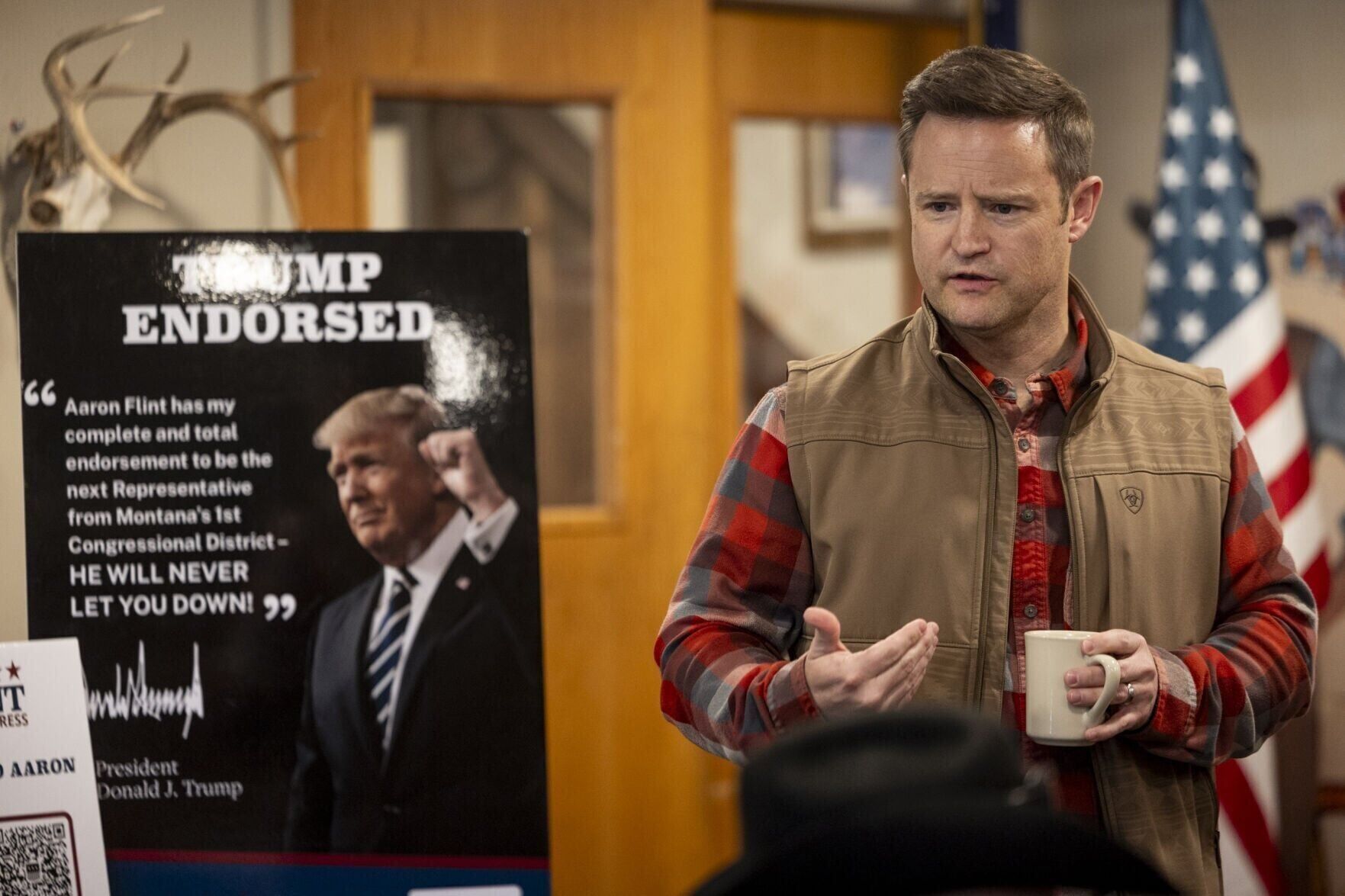
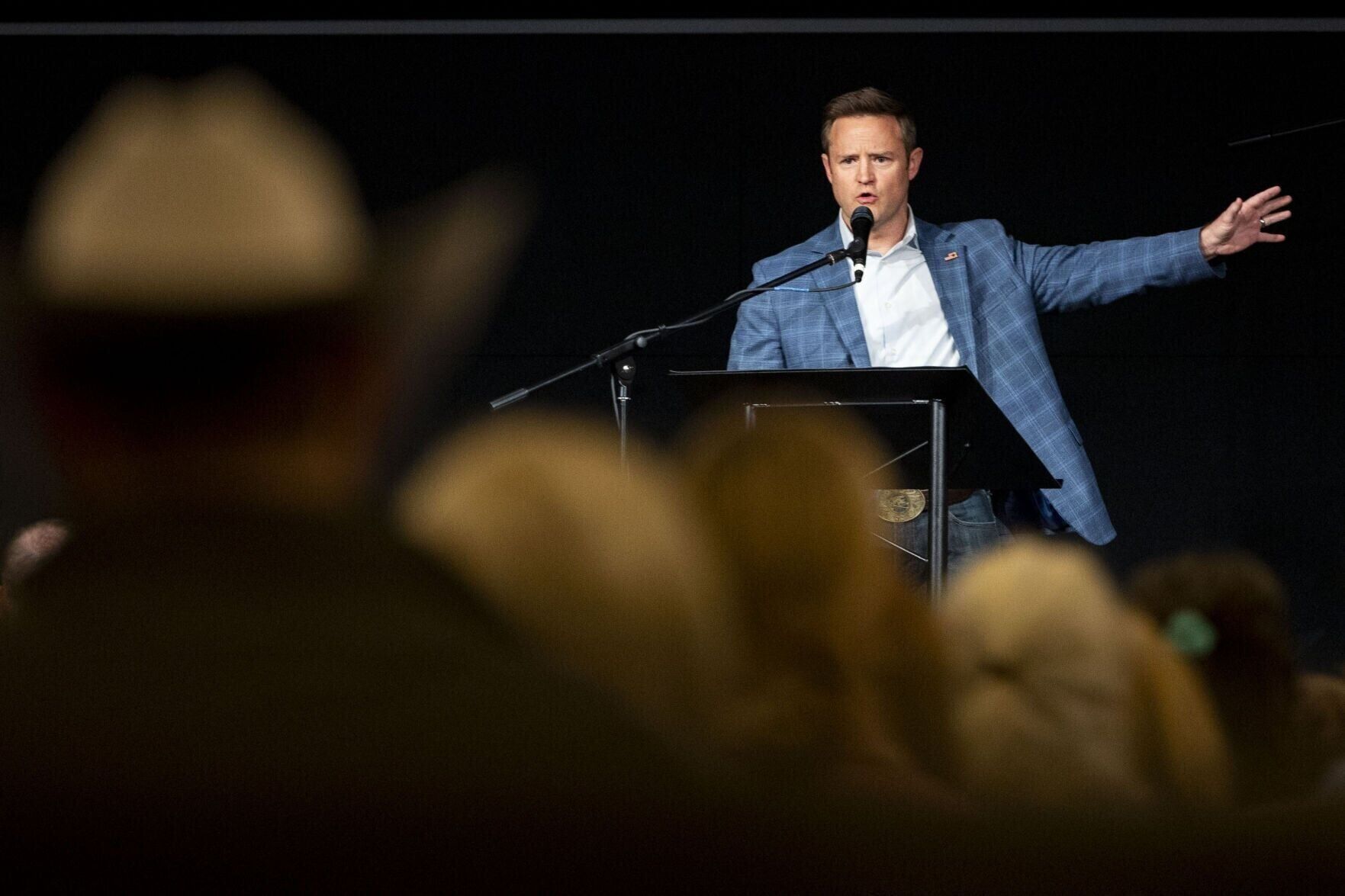
Aaron Flint
Only one candidate had the script ahead of time: Aaron Flint, who maintained the reins of the Montana Talks radio show after he moved from Billings to Kalispell, within the district’s perimeter, last July. Flint’s campaign was preloaded with a highly produced video, an endorsement from Zinke and the backing of President Donald Trump a day later, locking in the broadcaster as the establishment pick.
Flint, 46, has clung tightly to that Trump endorsement. A Montana Free Press-Eagleton poll conducted in December and early January clocked Montana’s approval of Trump at 50%, although he had a higher unfavorable rating, 44%, than legislative Democrats. More recently, the president’s national approval numbers have slid into the 30% range. But Flint, a retired lieutenant colonel from the U.S. Army Reserves and Montana National Guard, said Montanans still respect “fighters” like Trump. It is, after all, the one word Trump repeated after a bullet pierced his ear on a campaign stage in 2024.
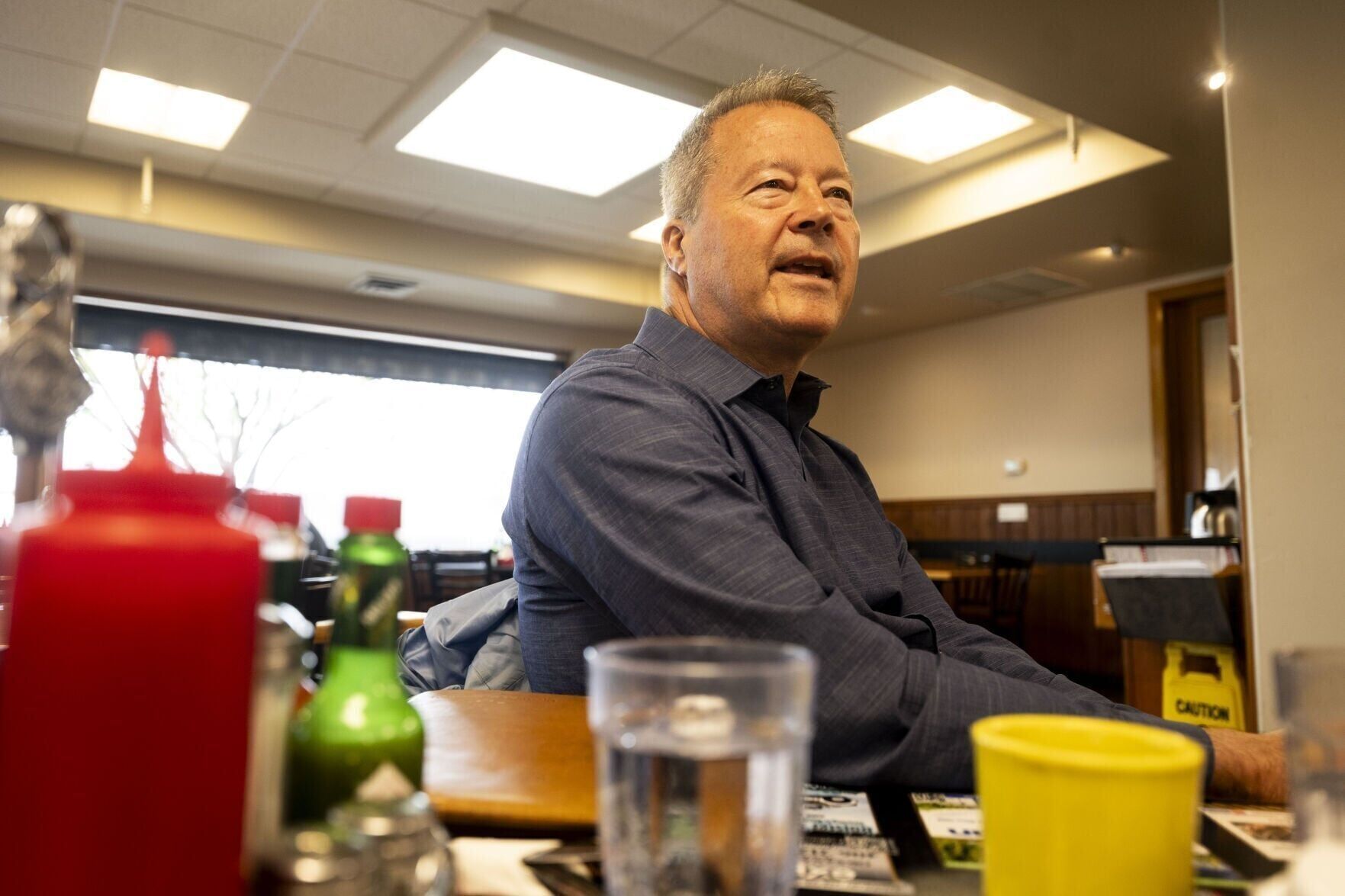
Flint casts himself as a fighter in the Capitol arena; he used the word 31 times in an interview last month in a Stevensville diner before a campaign event. Asked about invoking language that equates politics to combat, Flint said it’s all about the terms of engagement.
“When I talk about fighting for Montana — look, I’ve had Republicans on my radio. I’ve had Democrats on my radio show. There’s times I agree or disagree with both, right?” Flint said. “To me, fighting for Montana is, OK, what’s our objective? Our objective is we want to make the Montana dream affordable again.”
Revitalizing industrial and manufacturing work, Flint said, is the key ingredient to the affordability issue.
As frontrunners often do, Flint’s primary campaign messaging has largely trained its sights on general election opponents. Asked whether Trump has changed his politics over the last decade, Flint said it’s less about the president and more about Democrats’ frenzied response to Trump.
“I’d rather be on my pontoon boat this summer, but I think this fight is that important,” he said, raising the Russia investigation into Trump, COVID-19 restrictions and political debates about transgender rights. “I think it stiffened our resolve, for all of us conservatives, as Americans, union workers — I think it has stiffened our resolve for the America First agenda and the Montana First agenda.”
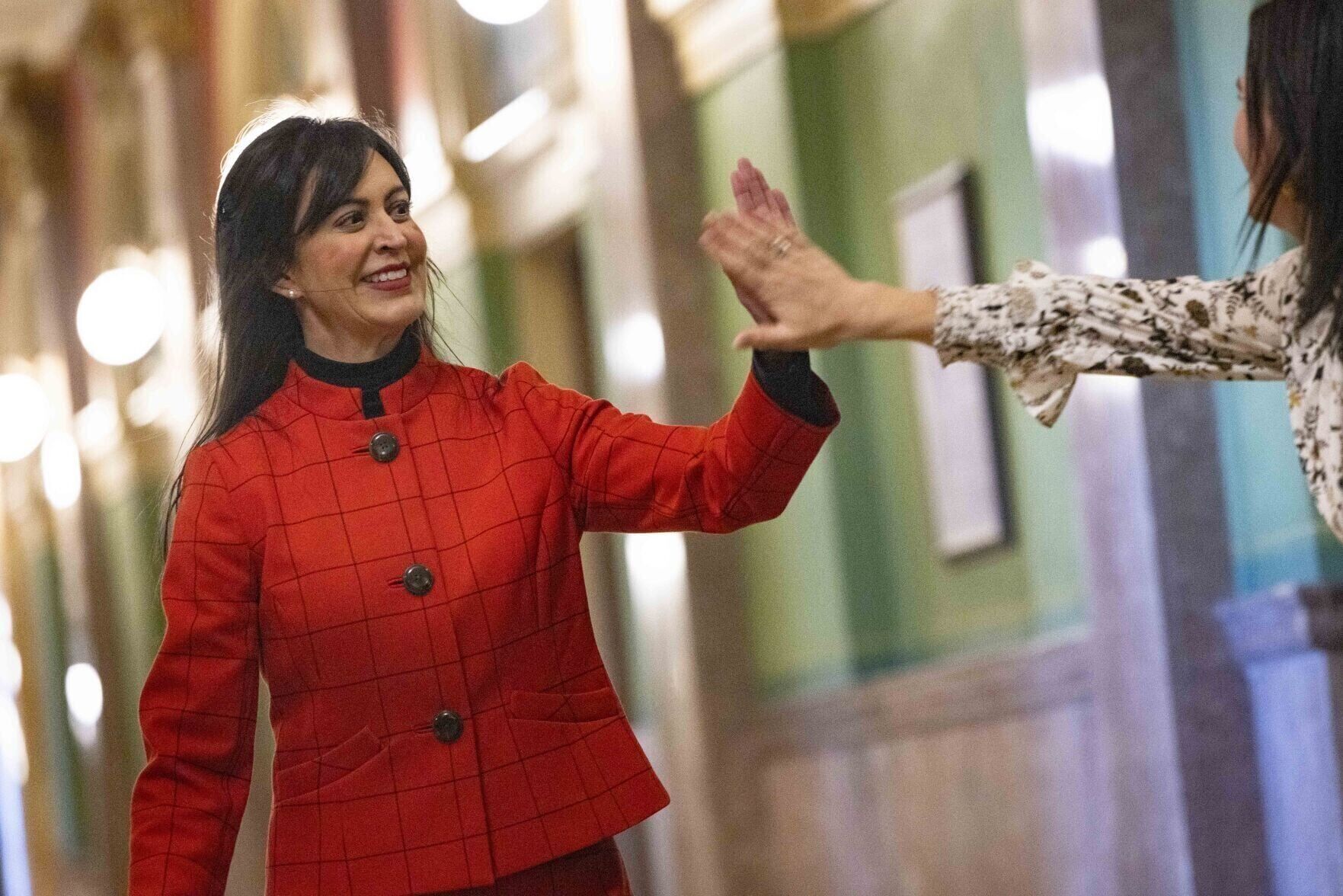
Christi Jacobsen
Montana Secretary of State Christi Jacobsen, although “absolutely surprised” by Zinke’s withdrawal, burst out of the gate a day later with her own campaign video. Jacobsen, 50, lives outside the district in the state capital (candidates are allowed to do so), but she won by the largest margins of any statewide candidate in the 2020 and 2024 elections.
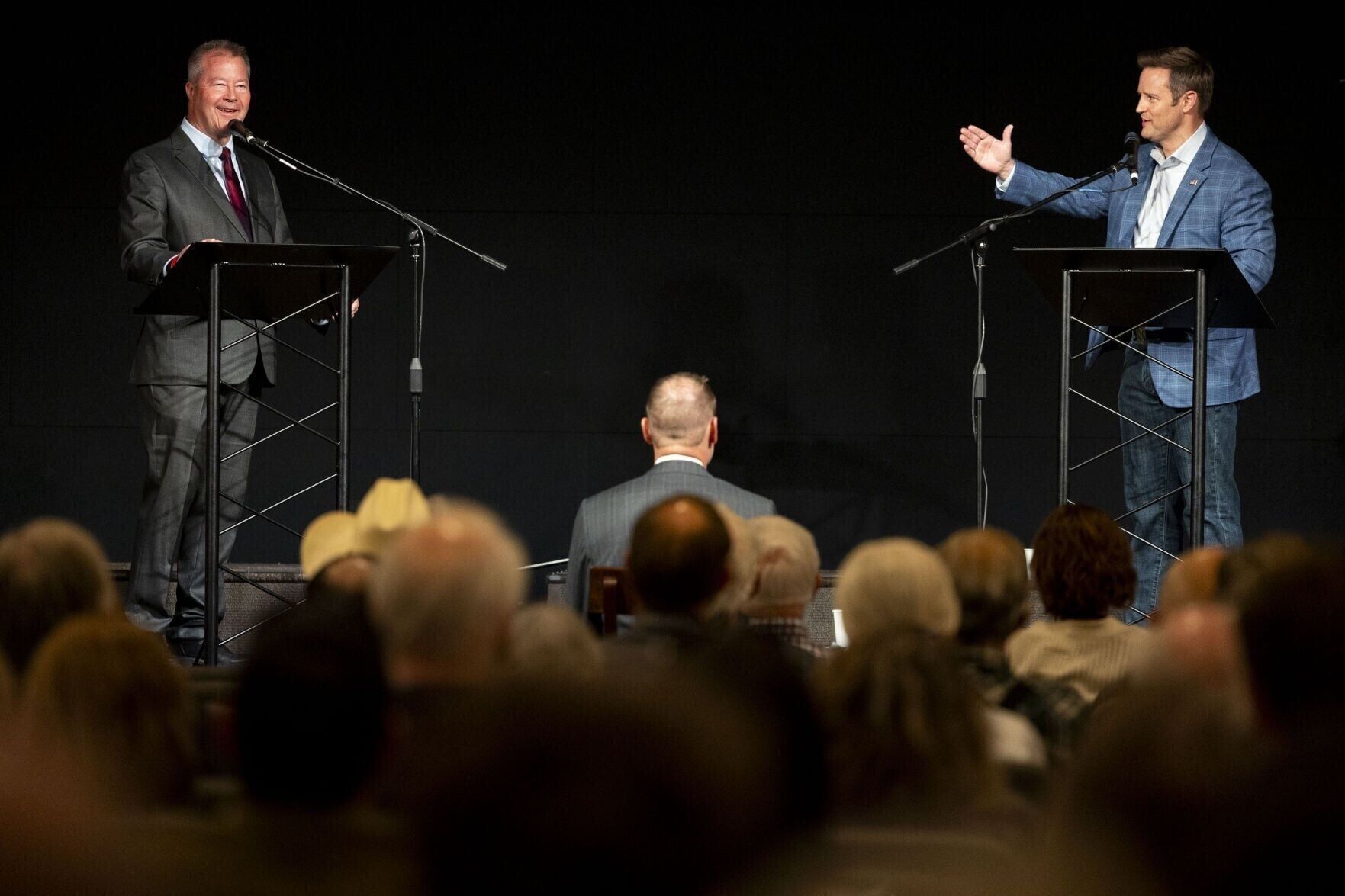
While she’s been less visible on the campaign trail, missing events like the only GOP primary debate in Bozeman last month and Lincoln-Reagan dinners, she’s also doing the work of an elected official, such as administering the current election — a day job no other candidate can claim.
“I’ve actually done it, delivered twice in a row in a general election, and I’m very proud of that record,” Jacobsen told the Montana State News Bureau.
Because the Zinkes and Trumps of the world lined up behind Flint so quickly, Jacobsen is in the unconventional position of being an elected official but still trying to portray herself as a grassroots candidate. But her work as secretary of state — chiefly, election security — is often top of mind for those voters. Tony Hudson, president of the North Bitterroot Pachyderm Club, roundly endorsed Jacobsen a week after she entered the race exactly because of her embrace of virtually all election security measures that have been proposed by the Republican state Legislature or the Trump administration.
Some of those efforts to root out noncitizens in concert with the federal government turned out to be controversial just as Jacobsen’s campaign hit the runway. The Legislative Audit Division said in March it would include in a future audit her office’s use of federal grant funds to pay for a mailer that featured Jacobsen and Trump with an announcement that the state would comb voter records for noncitizens. Questions also remain about what degree of voter data was handed over to the Trump administration in service of the effort.
Jacobsen, for her part, dismissed any notion that the postcards were controversial.
“It’s my job to have voter outreach,” she said. “One vote from a noncitizen is too many, and that is something that is, again, widely supported by Montanans. It’s a nonpartisan issue.”
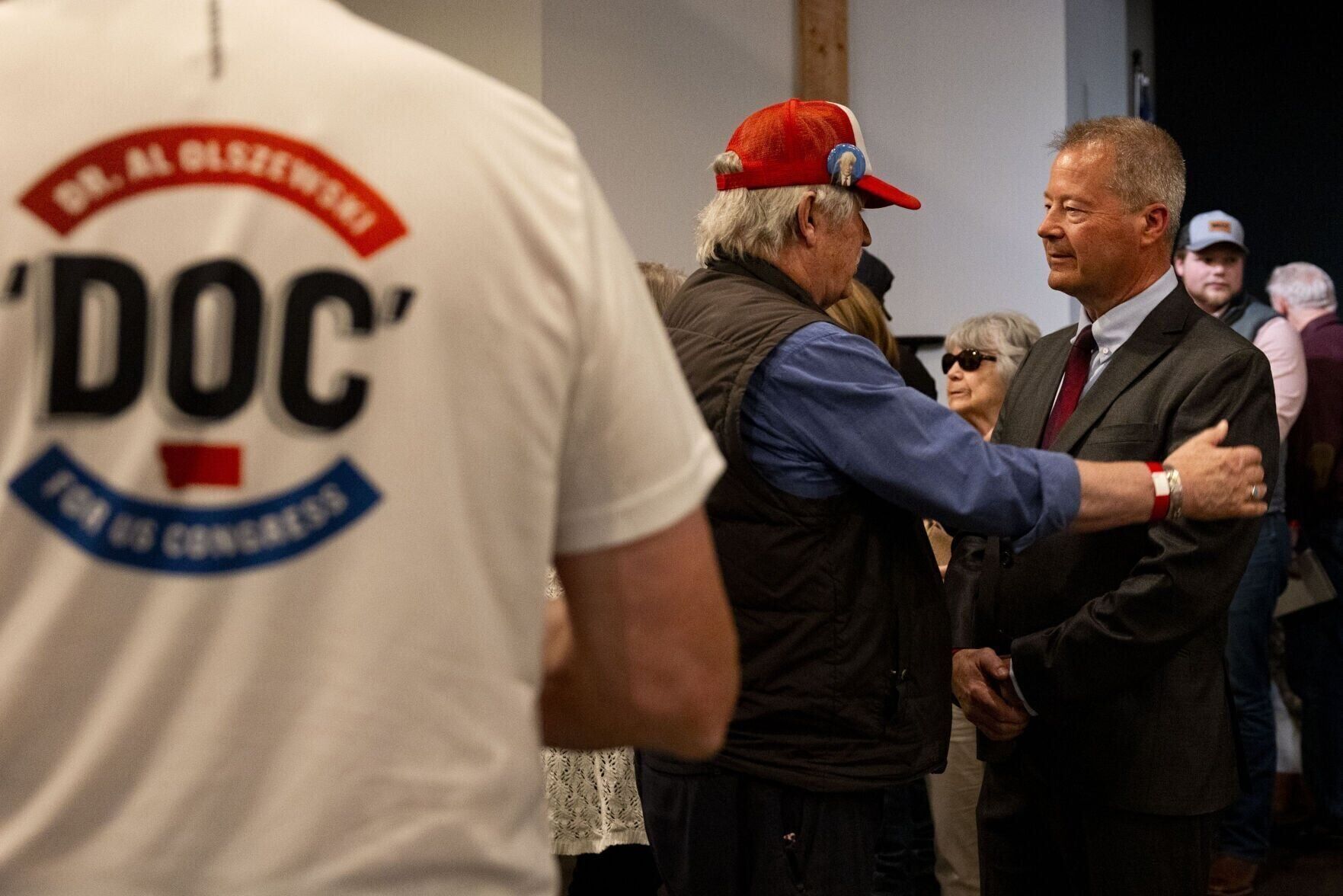
Al Olszewski
Al Olszewski, known widely in Montana politics as “Dr. Al,” filed to replace Zinke from a cab in Louisiana, about as off-guard as a prospective candidate could be.
Olszewski, 63, finished two points behind Zinke in the 2022 primary, a signal of his grassroots support across the district against an opponent who was once in the president’s cabinet. Even after sitting on the sidelines through the 2024 election, he remains highly regarded in conservative circles and chairs the Flathead County Republican Central Committee, considered a major GOP stronghold in the western congressional district.
There’s a downside to being known as a perennial candidate. Each of Olszewski’s previous statewide bids, such as his campaigns for governor, U.S. Senate and the House, have fallen short in the primary.
“Part of being a perennial grassroots candidate is … I’ve proven I'm not the guy with the special interest money. I am not their favorite person. In fact, I’m a threat,” Olszewski said in an interview at Sykes Diner, something of a Flathead Republican hangout. “And every time you run as a grassroots candidate, your brand increases if you’re authentic, if you’re consistent on the principles.”
Olszewski is also navigating a Republican field without Trump’s endorsement at a time when the president’s relationship with voters is getting more complicated. His war in Iran is unpopular and his promises on affordability are failing to materialize. Trump’s fumbled release of the Epstein files also damaged his credibility, Olszewski said.
He still supports the president but, of the three viable candidates, Olszewski has been the biggest proponent of Congress asserting more authority in the conflict with Iran.
Even as he and Flint have remained amiable on the campaign trail, Olszewski has taken the brunt of Zinke’s wrath this season. In April, the congressman attacked him in a newspaper column titled “Old lyin’ Al,” in which Zinke, among other things, said the candidate had exaggerated his military service; Olszewski denied any such embellishment.
But he also drew some lines between how he’s being thwarted by establishment Republicans and how former GOP Congressman Matt Rosendale was suddenly uninterested in running for reelection.
“(Rosendale) didn’t make deals, so he was unpopular with the establishment,” Olszewski said.
Ray Curtis
Then there’s Ray Curtis, a 65-year-old semi-retired government teacher living outside Missoula who filed for the office on March 4, the last day of candidate filing. Curtis’ decision to enter the ring was less about Zinke leaving and more about the three candidates who preceded him.
Curtis said he wanted to give people a candidate from “the middle,” and show his students that anybody can stick their neck out into this game, no matter how few endorsements come from the upper echelons.
Curtis, however, is also not taking any campaign contributions and is realistic about his slim chances.
“Realistically, it might not happen this election,” he said. “But maybe next election, young people might say, ‘You know what? Curtis did it. Maybe I’ll try.’”
Much of Curtis’ campaign is built on the idea of reconciling the coexistence of the government's three branches. Congress has ceded far too much power to the presidency, he said, which allowed an unelected billionaire to slash into federal programs, which then led to his own teaching opportunity with Humanities Montana evaporating last year.
One may have noticed by now that Curtis does not define himself as a Trump Republican. He’s a “Lincoln Republican” who can pull quotes from the 16th president or the 34th president (Dwight Eisenhower), the 40th president (Ronald Reagan) or the 1st president (George Washington) to bring together a message about equality and public service trumping the tribalism of modern politics.
“It’s kind of like a teaching opportunity for me,” he said. “Remember this, people: This is what we’re about. We’re not against each other. Republicans and Democrats can work together. … This country, our constitution was founded on compromise.”
Absentee ballots will be mailed out on May 8. The primary election is June 2.




Comments ()