
Debate divide: Aaron Flint attacks 'Dr. Al' as undermining Trump on Iran War in debate
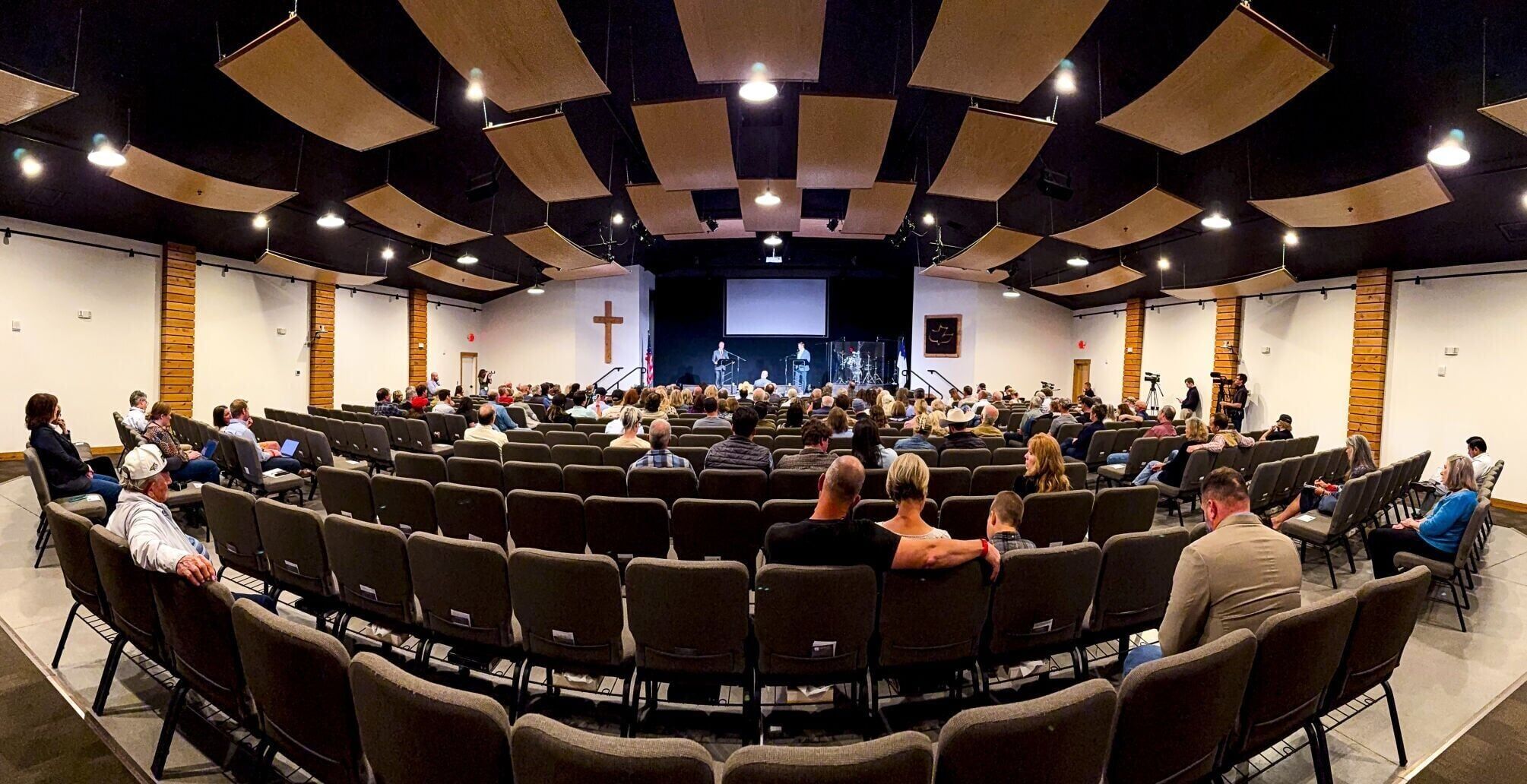
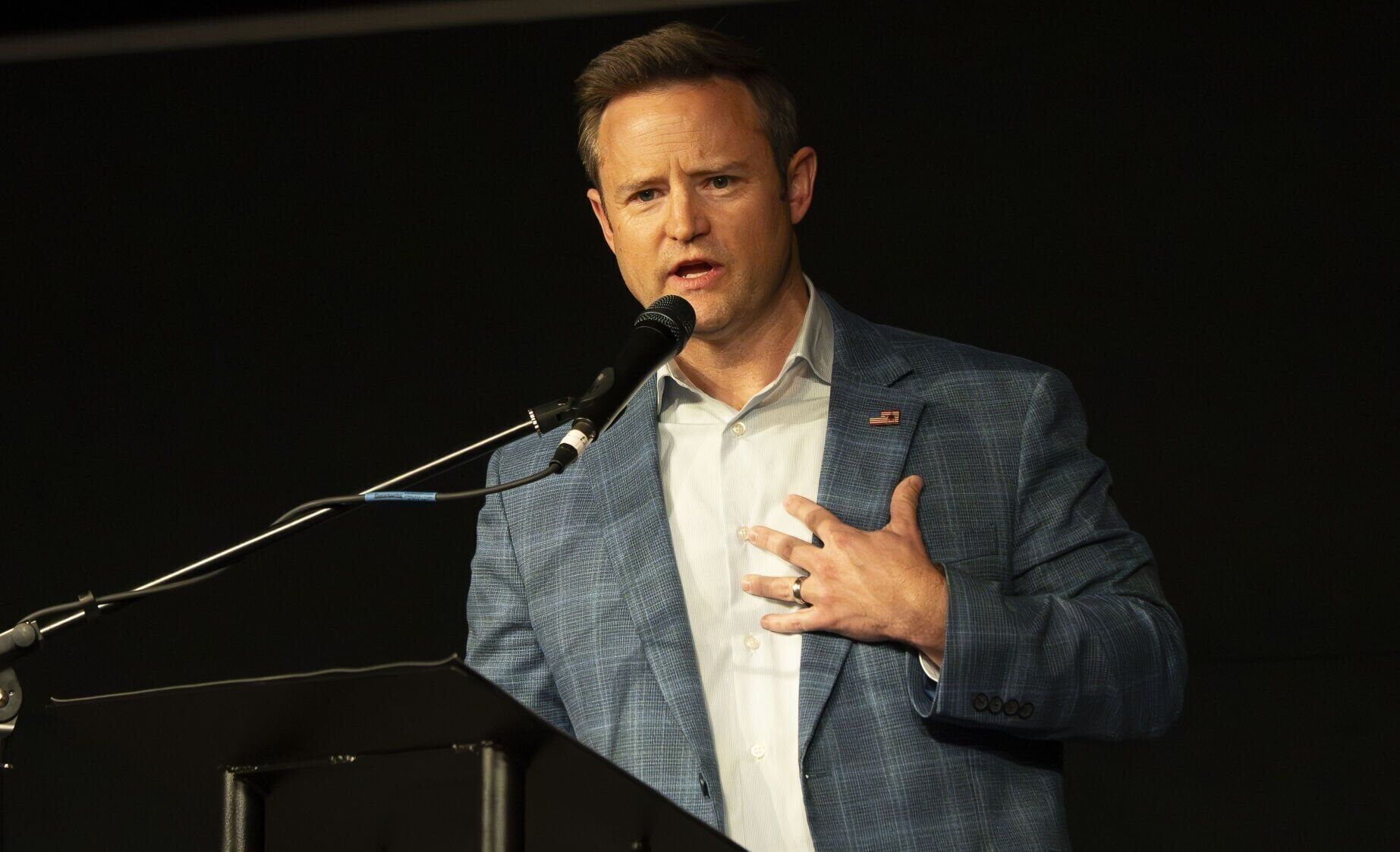
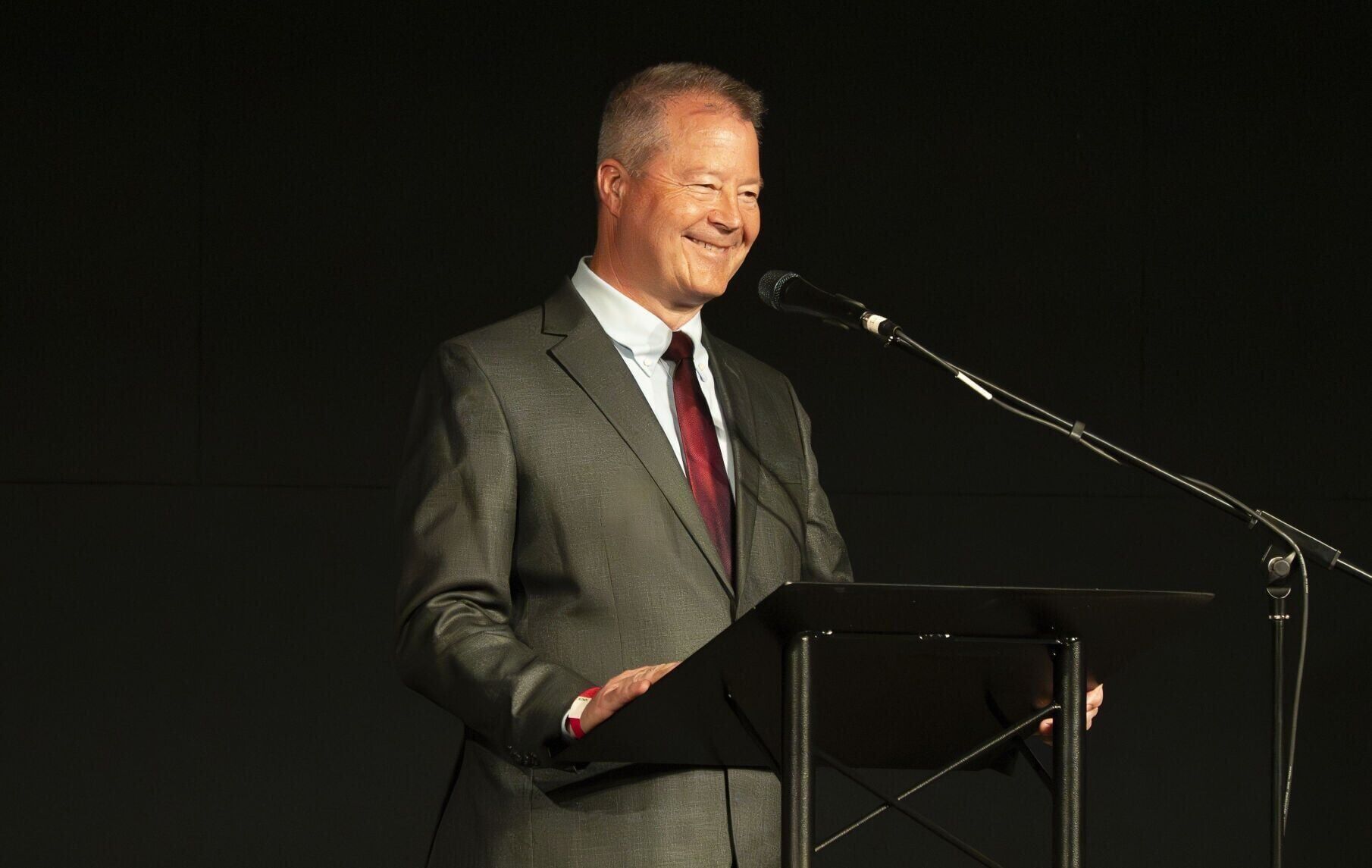
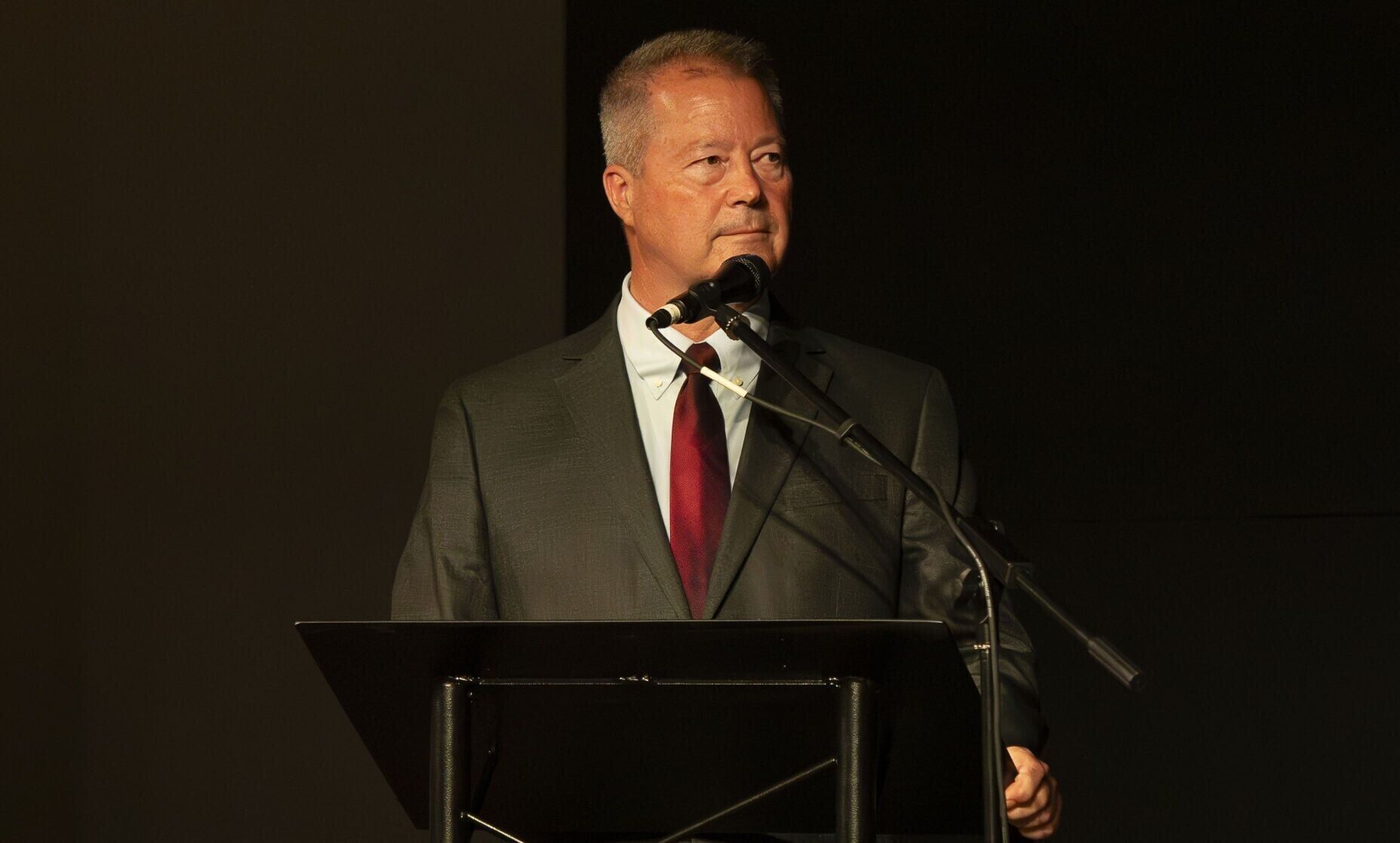
Radio host Aaron Flint attacked orthopedic surgeon Al Olszewski for undermining President Donald Trump’s war goals in Iran during a GOP primary debate for Montana’s 1st Congressional District at Calvary Church in Bozeman on Tuesday evening.
Iran and the Affordable Care Act were rare subjects where Flint positioned himself against Olszewski, who maintained little differentiation from his opponent.
“Lord, if there’s a battle to be won, that you give them victory,” said Dale Fricke, assistant Calvary pastor, to open the event. The pledge was recited after an introduction from Art Wittich, Montana Republican Party chairperson.
The third candidate, Secretary of State Christi Jacobsen, was absent from the Republican-only debate before the June 2 primary. The roughly 150 people in attendance prayed beforehand.
“I’m not so happy with what’s going on in the Iran war,” said Olszewski, who treated soldiers as an Air Force surgeon during the Gulf War. “Countries win wars but people do not.
“This next military incursion is going to exacerbate issues. The 1973 War Powers Act is going to require our president to lay down some cards and tell us exactly where we need to go moving forward. Our Congress is going to have to approve further military intervention.”
Trump faces a looming May 1 deadline for congressional authorization of the Iran war. Lawmakers are debating whether to authorize further military action or force a troop withdrawal.
While Congress is constitutionally required to authorize war, efforts to pass a war powers resolution to restrict military actions have consistently failed, with both the Senate and House rejecting efforts to withdraw forces.
“So, Aaron, come May 1, would you vote on the 1973 War Powers Act moving forward?” Olszewski asked, turning up the temperature.
“There are a couple of folks proposing reforms to the War Powers Act right now,” Flint responded. “You might know their names: Bernie Sanders and Ilhan Omar.”
Sanders and Omar both focused on utilizing the War Powers Act to restrict executive authority and end unauthorized U.S. military involvement, specifically targeting actions in the Middle East and the Caribbean. Sanders spearheaded efforts in the Senate to end support for the Saudi-led war in Yemen and to reform war powers, while Omar sponsored resolutions in the house to prevent unilateral military action against both Iran and in the Caribbean.
Flint repeated the Minnesota Congresswoman’s name four times, placing extra emphasis on the H-sound in her first name, alluding to her Somalian origins. The audience laughed.
“Do you want Il-HAN Omar to have veto authority over the commander in chief while your sons and daughters are in harm’s way?” Flint asked. “If there is a critical national security decision that needs to be made, do you want Ilhan Omar to have a veto power authority? I am certainly open to reforms, but I tell you what, when Bernie and Ilhan are the ones that are trying to have that veto power, oh boy.”
Flint then attacked Olszewski.
“I read an article in the Bozeman Daily Chronicle ... you appeared to be seriously undermining President Trump, just as we were in the middle of crucial negotiations to bring all of this war to a halt,” Flint said. “Your comments seemed anti-Trump, undermining the commander in chief. Most of the people thought you were a Democrat; they were accusing you of Trump derangement syndrome.”
Trump green-lighting the killing of Iranian Supreme Leader Ali Khamenei in a joint Feb. 28 U.S.-Israeli strike on Tehran didn’t start the war. Instead, he is ending pre-existing issues, according to Flint, who won’t rule out congressionally halting Trump involving the military in Iran.
“For the record I am not a Democrat,” Olzewski said. “My stance today is no different than before. I don’t like war, I support our president, and I trust he has information we do not have. I believe in the 1973 War Powers Act. Does it need to be changed? I don’t know. Very soon Congress is going to have to act and say yes to what our president’s doing, no to what he is doing, and then tell Trump under what conditions he can or cannot continue.”
“Get out of that war,” Olszewski previously told the Chronicle. “What we’re watching is regime change, no different than what Biden, Obama and Bush did before that.”
“A lot of times your whole story doesn’t quite come out in the paper,” he added after Flint’s attack.
‘Obamacare’”Prior to serving in the Legislature, you testified in support of bringing Obamacare to Montana,” Flint said to Olszewski.
Olszewski did testify in support of House Bill 590, during the 2013–2014 legislative session.
The bill was introduced to implement the “Access Health Montana Program”, associated with discussions surrounding Medicaid expansion in the state. Most Montana Republican legislators opposed the bill, which did not pass.
Olszewski is otherwise opposed to both the Affordable Care Act and Medicaid expansion, after he repeatedly voted to phase out Medicaid expansion while serving in the state legislature.
”My personal and legislative views have not changed,” Olzewski said. “I voted against Medicaid expansion throughout Montana in 2015 and 2019. I am the only state legislator who’s killed it three times.”
Olszewski said he had to testify for HB 590 out of loyalty to the Montana Medical Association in 2013.
”I was then president of the Montana Orthopedic Society on their advocacy for Medicaid expansion,” Olszewski said. “I didn’t agree with it, in fact I voted against it in the board meeting the week beforehand. It was appointed to me and in my responsibility as a board member.”
”I was on the radio cautioning against it and trying to stop it,” Flint said. “When you testified in support of bringing ‘Obamacare’ to Montana, what a setback it was.”
”It’s not about soundbites, it’s about actually getting work done and governing,” Olzewski said.
Extractive industries
“If we’re gonna have natural resource jobs, we have to make sure that we’re doing it in a 21st century sustainable way,” Olszewski said. “We’ve got to make sure those doing it are good stewards, that they create good, safe working environments.
Both Olszewski and Flint were on the same page regarding the Libby Exploration Project, formerly Montanore Mine. The evaluation of large copper and silver deposits near the Cabinet Mountains Wilderness involves drilling and rehabilitating an existing 14,000-foot tunnel.
“We need to make sure they do it more like the Stillwater mine in Columbus, where they protect the environment and protect their workers while holding up a high standard of environmental quality and worker safety,” Olszewski said.
More than 25 years old, the citizen-initiated agreement governing Sibanye Stillwater mining operations, preserving the environmental integrity of the East Boulder and Stillwater rivers, is one of the oldest and most effective cooperations of its kind.
“Why didn’t any (Democrats) stand up for the union Stillwater miners?” Flint questioned, adding: “700 mining jobs killed because of President Joe Biden’s green electric vehicle mandates. On top of that, Joe Biden and the Democrats allowed the Russians to dump palladium into the U.S. market, killing (these) Montana jobs.”
Sibanye-Stillwater began massive layoffs at the Montana mines in 2025, when the company announced 700 jobs were slated for elimination in Stillwater and Sweet Grass counties.
Palladium is a rare, silvery-white precious metal primarily used in automotive catalytic converters to reduce toxic exhaust emissions. Over 85% of its demand comes from the automobile industry, with additional significant uses in electronics, hydrogen purification, dentistry, and jewelry.
The completed layoffs, representing approximately 40% of the company’s Montana workforce and 13% of all payroll jobs in Stillwater and Sweet Grass counties, were attributed to falling palladium prices and high operational costs. Russia undercutting palladium prices crashed the global market for the mineral.
As of February 2026, the U.S. Department of Commerce imposed a preliminary 132.83% antidumping duty on Russian palladium imports, after an investigation into the unfair pricing. This, combined with a 110% countervailing duty for subsidies, effectively closed the U.S. market to Russian palladium.
Sibanye-Stillwater Vice President of Legal and External Affairs Heather McDowell previously said no Russian palladium entered the U.S. market after July last year. Despite the improvement of domestic market conditions, she told Stillwater County Commissioners last week no dramatic personnel changes at the mine are expected before 2027.
Native AmericansOlzewski ambiguously referenced Native Americans’ legal status.
“Really, we have many issues dealing with our (native) cousins on the reservations,” Olszewski said. “We need a 21st century discussion about who they are. Are they citizens of the U.S.? yes. Are they sovereign? Yeah, in their own issues, but not as a sovereign nation.
“Are (Native Americans) federal trustees, are they dependents of the federal government? Look, they’re Americans. They should be dependent. They’re great people. We need to figure our how we’re moving forward as all Americans.”
Flint later held a more exacting stance regarding Native status.
“Speaking of our Native American brothers and sisters, we need to take the fight to the Democrats,” Flint said. “As a veteran of Iraq and Afghanistan, Native Americans serve in the U.S. military at higher numbers per capital than any other ethnic category.
“Last week I had the honor of speaking with a Blackfeet Tribal Council member there. Look at what the Democrats did to our brothers and sisters in Indian country. Democrats opened the borders, they allowed Tren de Aragua thugs and Mexican drug cartels to specifically target our American Indian reservations. It is a shame.”
Tren de Aragua, a violent transnational criminal organization originating from Venezuela, has been identified as having a presence in Montana, including areas near or involving Native American reservations.
Presidential prideFlint mentioned his presidential endorsement from Donald Trump five times.
“Some of you might like (Trump’s) fighting style, some of you might not like his style, but I think we can all agree (voters) need fighters,” Flint said after speculating whether Republicans winning the seat could determine control of the House.
“Experience matters,” Olszewski said. “That’s different from any of the candidates on the Republican side, the Democrat side, and even the Libertarian side.”
Said Flint: “We are going to decide whether this country remains a free republic for another 250 years or whether we’re going in another direction altogether. This U.S. House seat is critical. (Democrats) are going to tear down the dams, push gun control, they’re gonna try to flood the borders (with migrants) again.”




Comments ()