
Done in the dark: How advocates and attorneys navigate domestic violence in Billings
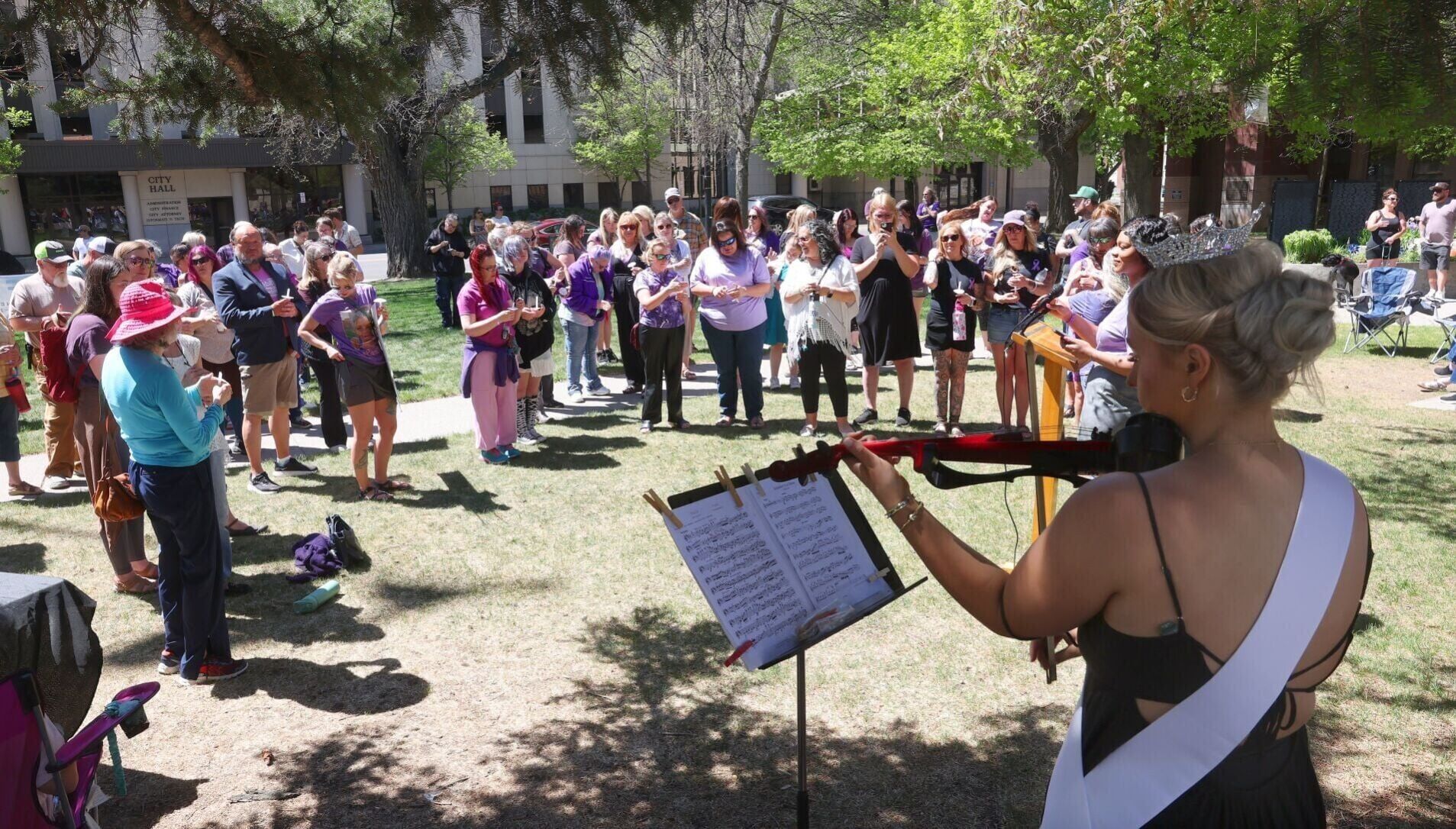
On the last Sunday in April, well over a hundred people gathered on the Yellowstone County Courthouse lawn to mourn the death of a Billings woman and mother of five.
First responders found Shawna Katherine Hart’s body on a rural piece of property in Big Horn County. Authorities ruled her death a homicide and last week, a Billings man pleaded not guilty to her murder. The two were in the midst of a divorce.
The man accused of murdering Hart, Tanner Michael Grove, had already been convicted of assaulting her and had a history of domestic violence accusations, according to court records.
Grove spent five months in jail following his conviction for misdemeanor partner or family member assault. A Billings Municipal Court judge sentenced Grove to a year in jail, with all but 150 days suspended. He was released in mid-March and less than a month later, he had two warrants for his arrest: He had allegedly pointed a shotgun at two of Hart’s children.
Yellowstone County prosecutors subsequently charged Grove with felony assault and violating a no-contact order.
Then on April 22, just a little over a month after leaving jail, Grove was accused of murdering Hart and abandoning her body inside a vehicle on a stretch of farmland west of Hardin.
Grove has pleaded not guilty to deliberate homicide, burglary and tampering with evidence in connection to Hart’s death, which spurred the Billings City Council to reckon with how law enforcement, advocates and social workers respond to cases of domestic violence.
Stacked against the victim
There are women in Montana and outside of the state that are now living independent lives with agency, free from the abusive partners that almost killed them, thanks to the intervention and coordinated efforts of the Northern Lights Family Justice Center in Billings.
These women have moved away and started new lives; they are raising their kids, one became an entrepreneur, one bought a cell phone on her own — an accomplishment after the controlled environment she was living in — and they all have found their voices again.
“The last one almost killed her,” said Kristie Funk, a domestic violence investigator with Billings police, about a survivor. But now this woman is “literally just flourishing.”
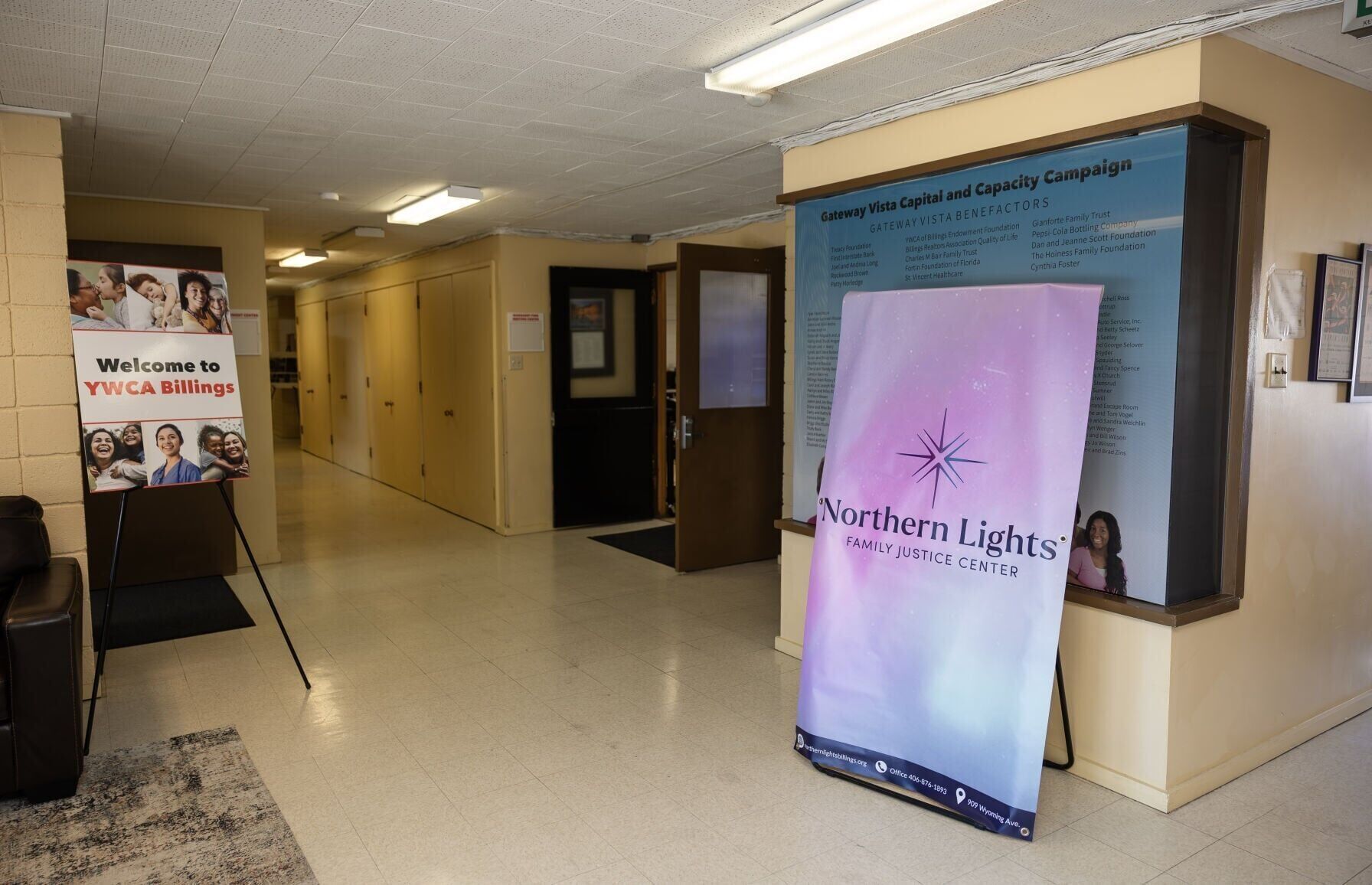
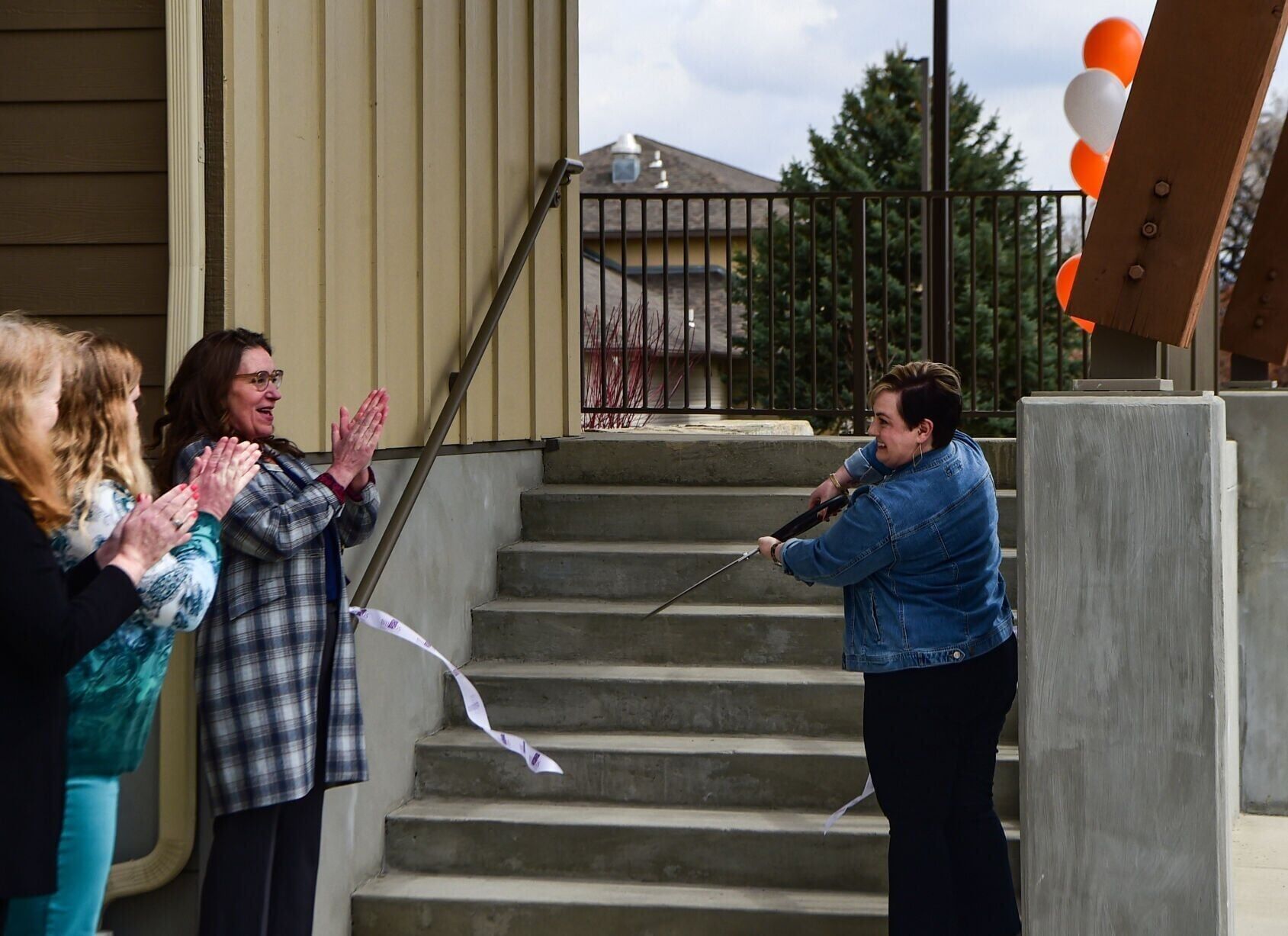
The two-year-old center is the first of its kind in the state, and a gamechanger for victim advocacy in Montana, catching up to national best practices. Located at the YWCA campus, the Northern Lights Family Justice Center is a multi-agency program that brings together two Billings police officers with community-based victim services, creating a collaborative environment where people affected by domestic violence, sexual assault, stalking and related harms can get coordinated help in one place.
The center’s purpose is to reduce victim trauma, improve immediate safety and streamline “warm handoffs” between systems.
“The Family Justice Center has changed the way I do my work,” said Katie Nash, a Billings police officer and domestic violence investigator. “I don’t just do my piece anymore. I can connect someone with the next piece.”
They’re more approachable now, away from the intimidating atmosphere of the police station, tucked into a quiet neighborhood and dressed in civilian clothing.
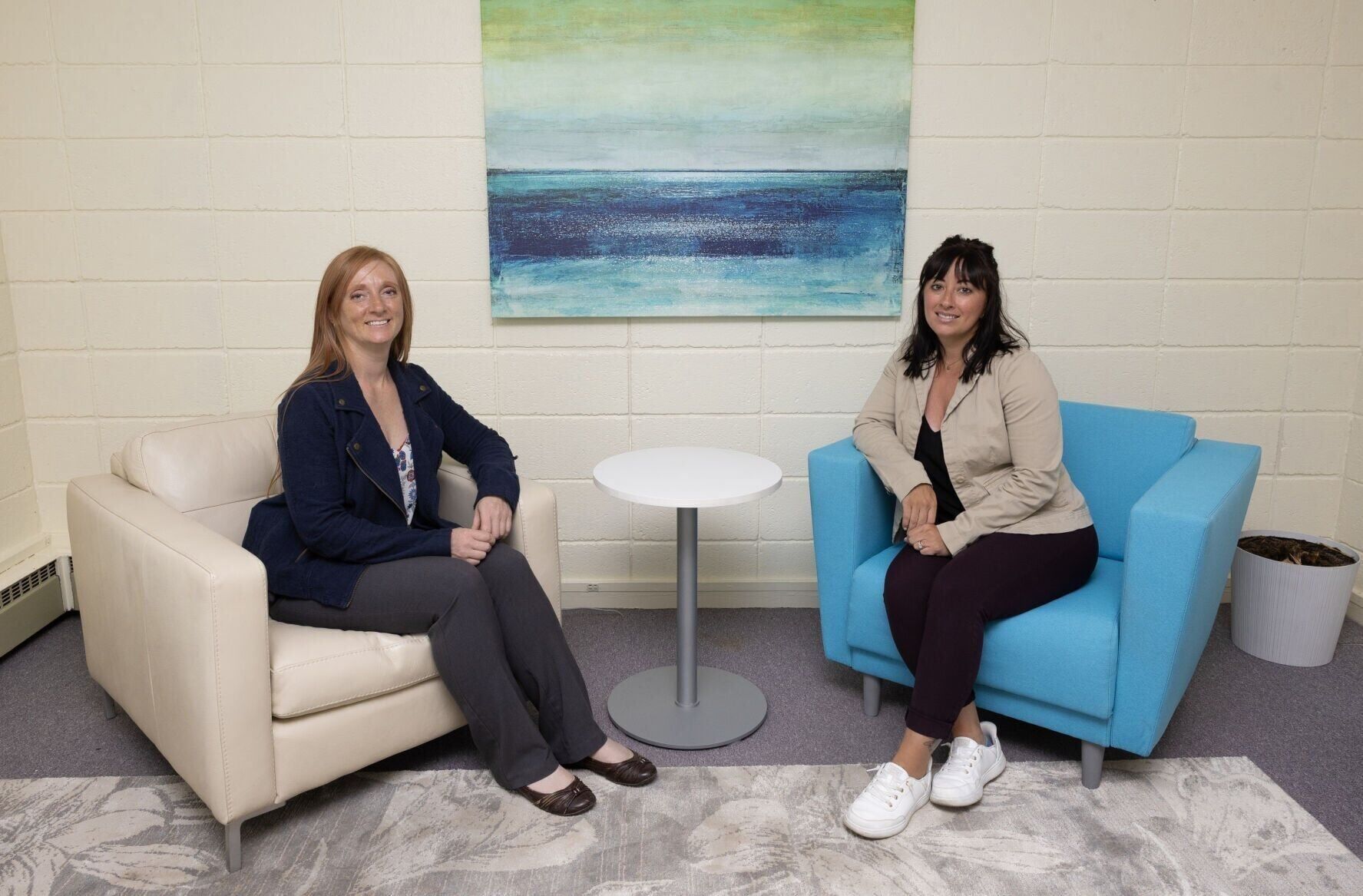
The two women officers that make up the justice center have already noticed an increase in positive interactions and reciprocity — as has YWCA’s executive director Erin Lambert.
“It’s been a very significant impact for us … because we have access to information or help from our systems partners right here,” Lambert said. “And we feel it also gives survivors better access to the system and we can support them through that process.”
YWCA has on staff victim-witness specialists, domestic violence prosecutors, a civil attorney, a housing navigator and two service navigators. It takes a team of professionals — including the Family Justice Center officers — to help victims navigate what they know to be a convoluted system, that often feels stacked against the victim.
“From my perspective, there are gaps in the criminal justice system because it was not designed to accommodate or account for victims of crime and their needs after the system gets involved,” Nash said.
One gap Nash identified is that “various local records systems do not speak to one another … officers do not have the same information that prosecutors have and vice versa.”
Another gap, as she sees it, is that the criminal justice system by necessity takes time, time for investigations, documentation, case review, issuance of warrants and other procedures.
“Throughout that time, it certainly feels to victims like 'nothing is being done.' I imagine that is a pretty traumatic feeling,” she said.
She encourages those who have reported a crime to contact their local law enforcement or the prosecutor’s office to ask for updates on the case, or, if it is a domestic or sexual violence case, to reach out to the Northern Lights Family Justice Center to get connected to the criminal justice system and available resources. They are ready to help with options both within and outside of the criminal justice system.
'Done in the dark'
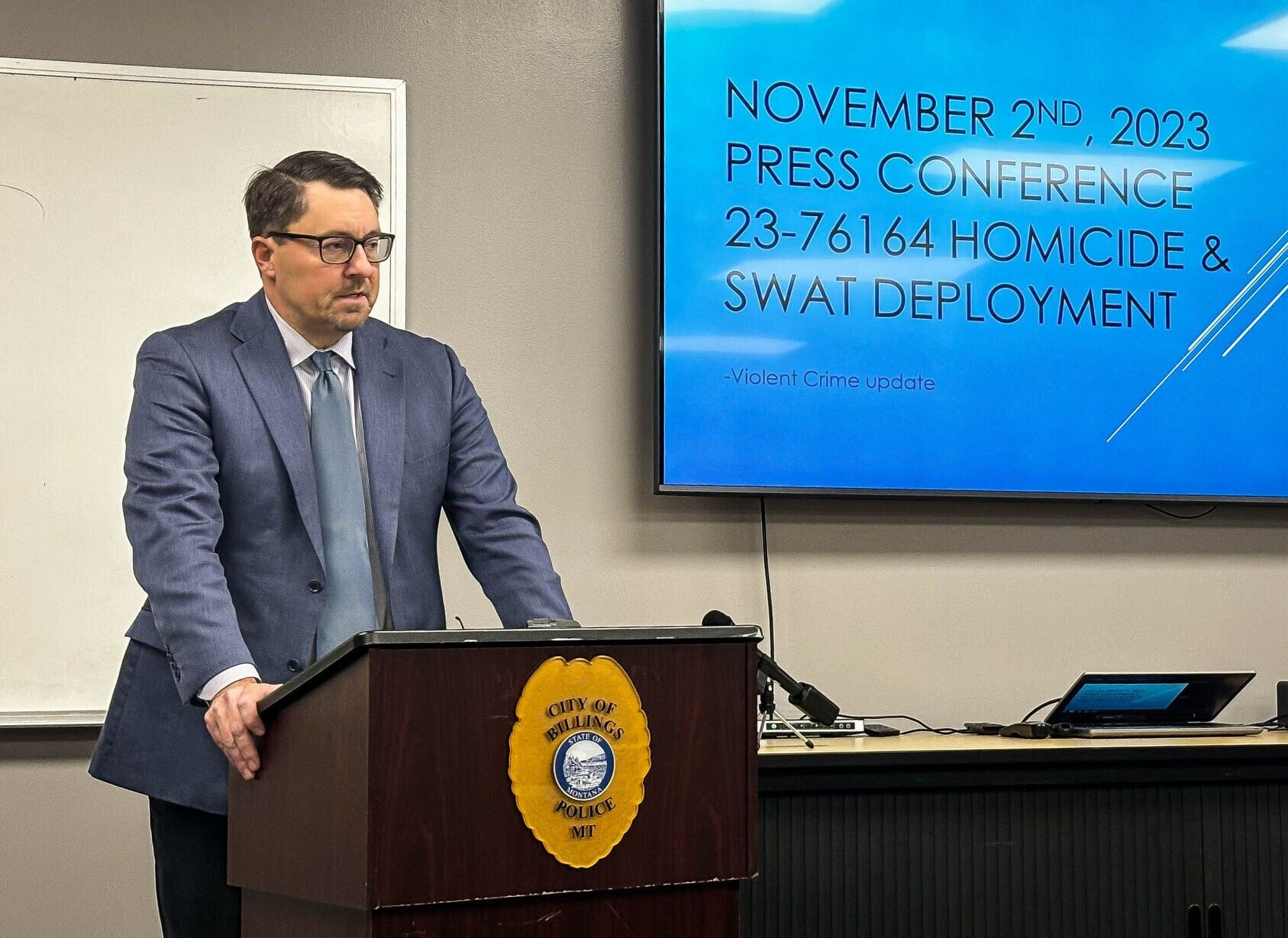
“Domestic violence cases are tough,” said Yellowstone County Attorney Scott Twito.
“I would say they are probably the most difficult in any category of cases, just in my experience as a prosecutor. … And they hurt the most, because you try to do your best, but they’re often frustrating.”
Twito said he’s seen firsthand the improvements made in the past two decades in how law enforcement and prosecutors approach domestic violence and its survivors, both through training on the trauma that survivors carry and changes to statewide statutes centered on intimate partner violence. The difficulty in prosecuting those cases, Twito said, is the fact that such offenses are committed “in the dark.”
“There’s often no third-party witnesses,” Twito said, “or capable third-party witnesses. Obviously, a 1-year-old is not a capable witness in a domestic violence case. Domestic violence offenders often are aware of that, especially the repeat offenders.”
Repeat offenders, Twito said, often decline to speak to police during an initial call for domestic violence, or do their best to change the narrative of the abuse.
Policy changes made in the last decade that have made a difference in holding domestic abusers accountable in Montana include when strangulation became a felony offense in 2017 — it was a misdemeanor previously — and when the child-endangerment statute enhancement passed in 2025, which strengthened penalties for assault when a child is present — heard or witnessed. This was done to deter violence in front of children and reduce intergenerational trauma and harm.
According to the Montana domestic violence fatality review commission, childhood trauma and generational abuse — both physical and sexual — continue to be significant factors of intimate partner violence.
“Since 2000, when the Department of Justice began tracking these events, approximately 286 Montanans have died in family violence homicides through December 2024," according to the Montana domestic violence fatality review commission report for 2025.
Following past reporting in the Billings Gazette, since 2021 at least nine deaths in Billings were related to domestic violence: seven women and two young boys.
Last year alone, three women from Billings were allegedly killed by their current or former partners: Megan Elizabeth McClave, Kari Daily and Nila Dawson. Criminal charges have been filed in the fallout of all three of their deaths. Earlier this year, a Yellowstone County District Court judge sentenced a man to 85 years in prison for killing his girlfriend, Genna Rae LaCombe.
Statewide, 43 people in Montana from 2020 through 2024 were killed by intimate partners, according to data from the Montana Board of Crime Control. In the same period, an average of about 844 people a year were victims of aggravated assault at the hands of their partners.
In particular, women and Native Americans are starkly overrepresented as victims of domestic violence in Montana.
Grassroots change
The existence of the Family Justice Center in Billings is a feat in of itself and something for which Officer Nash has long been advocating for in an effort to get Montana to catch up to best practices.
Launched in July 2024, it is the first official Family Justice Center in the state. Officer Funk noted that Missoula already has some co-located services and is working to establish an official Family Justice Center of their own.
“It’s incredible how we’re able to work together,” said Lambert, the YWCA's director. “I also believe that since we have been housed together and are working together, the overall law enforcement response in Billings in improving. I feel like it’s shifting.”
Lambert said as patrol officers and the public become more aware of the Family Justice Center and the services YWCA offers, the number of referrals they’ve received has increased noticeably.
“And we’re honestly hearing from fewer survivors that they had a negative experience with law enforcement,” Lambert said. “I think it really is like a grassroots change that’s happening since we’re working together.”
Yet, for as much of a difference that the existence of the Family Justice Center has made for Billings thus far, the work of victim advocacy in Montana still requires a lot of hard work.
Kelsen Young is the executive director of the Montana Coalition Against Domestic and Sexual Violence and has been a lobbyist and policy advocate for the coalition since 2005.
“We are the voice at the state legislature and to a certain extent the federal government,” she said.
She’s seen first-hand from attending a dozen legislative sessions the complications that arise when ideas are brought to the table to improve or tweak laws in advocacy of domestic violence victims.
In Montana, the law that covers domestic violence between intimate partners is called the Partner Family Member Assault statute.
“That basic statute is what protects survivors,” Young said. “It is pretty bare bones in terms of interventions early on.”
Legislative fights
The first two domestic assault offenses are misdemeanors — minimum penalties could include a fine as low as $100 and as low as 24 hours of jail time. Domestic assault doesn't become a felony until the third offense.
Montana’s animal cruelty statute is stricter. It escalates to a felony on the second offense and aggravated animal cruelty is considered a felony on the first offense.
“These are not intervention strategies that actually result in safety or a permanent idea of safety. We have tried to fix that,” Young said. “When we have tried to increase penalties within the legislative process, we have routinely had legislators who not only won’t consider that change, but actually want to make it less restrictive than it already is.”
She pointed to an especially galling example.
“We had a prominent legislator on senate judiciary who wanted to make all first offense domestic violence crimes deferred,” meaning the abuser could, with stipulations, have the offense taken off their record.
“The only way you get to a felony is when you’ve had two prior convictions,” Young said. “Every attempt we’ve made, the legislature has not only rebuked that attempt to increase penalties, but have countered us with a proposal that would weaken existing law.”
The frustration she feels “is a fire that burns inside of me that keeps me doing this work.”
Yellowstone County Attorney Twito said that the most common charge his office sees filed among domestic violence cases is the third offense that becomes the felony.
Twito estimated that Yellowstone County prosecutors charge anywhere from 90 to 150 people a year with felony partner or family member assault. Twito said charges of strangulation are the second most common domestic violence offense filed by his office.
The statute labeling strangulation as a felony offense originated out of the Yellowstone County Attorney’s Office. In 2017, Montana became the 45th state to specifically criminalize the act of choking an intimate partner or family member. Advocates, prosecutors and medical experts have consistently cited strangulation as the most common predicator of homicide by an intimate partner. One 2007 study from the Journal of Emergency Medicine found non-fatal strangulation to be precursor in 45% of attempted homicides of women and 43% of homicides.
From 2018 to 2024, according to data compiled by the Montana Department of Corrections, 507 men across the state were sentenced for strangulation of a partner or family member. In that same timeframe, 651 men were sentenced for felony partner or family member assault, with only 30 women being sentenced for that crime.
Domestic violence vs. the 2nd Amendment
Advocating stronger survivor protection policies to protect survivors gets even more complicated when gun ownership is involved. According to Montana Domestic Violence Fatality Review Commission’s biannual report for 2025, 56% of intimate partner homicides from 2000 to 2024 included a gun.
“What it comes down to is half of the world wants us to protect survivors. The other half wants us to protect survivors, but not at the risk of someone’s gun rights,” Young said. “Until the culture changes enough to be interested in putting restrictions on people when they’ve harmed their partner, there’s only so much we can do. It really is about culture change at this point more than it is about legal tweaking.”
The policy question becomes even more complex at the state level.
“We are in this new challenging place where our law currently cannot be enforced in terms of the Federal Firearms ban, so we are having to come up with a state-level solution,” Young said.
Looking ahead to the next legislative session, a proposal is coming out of the Criminal Justice Oversight Council that addresses the access to weapons issue in Montana.
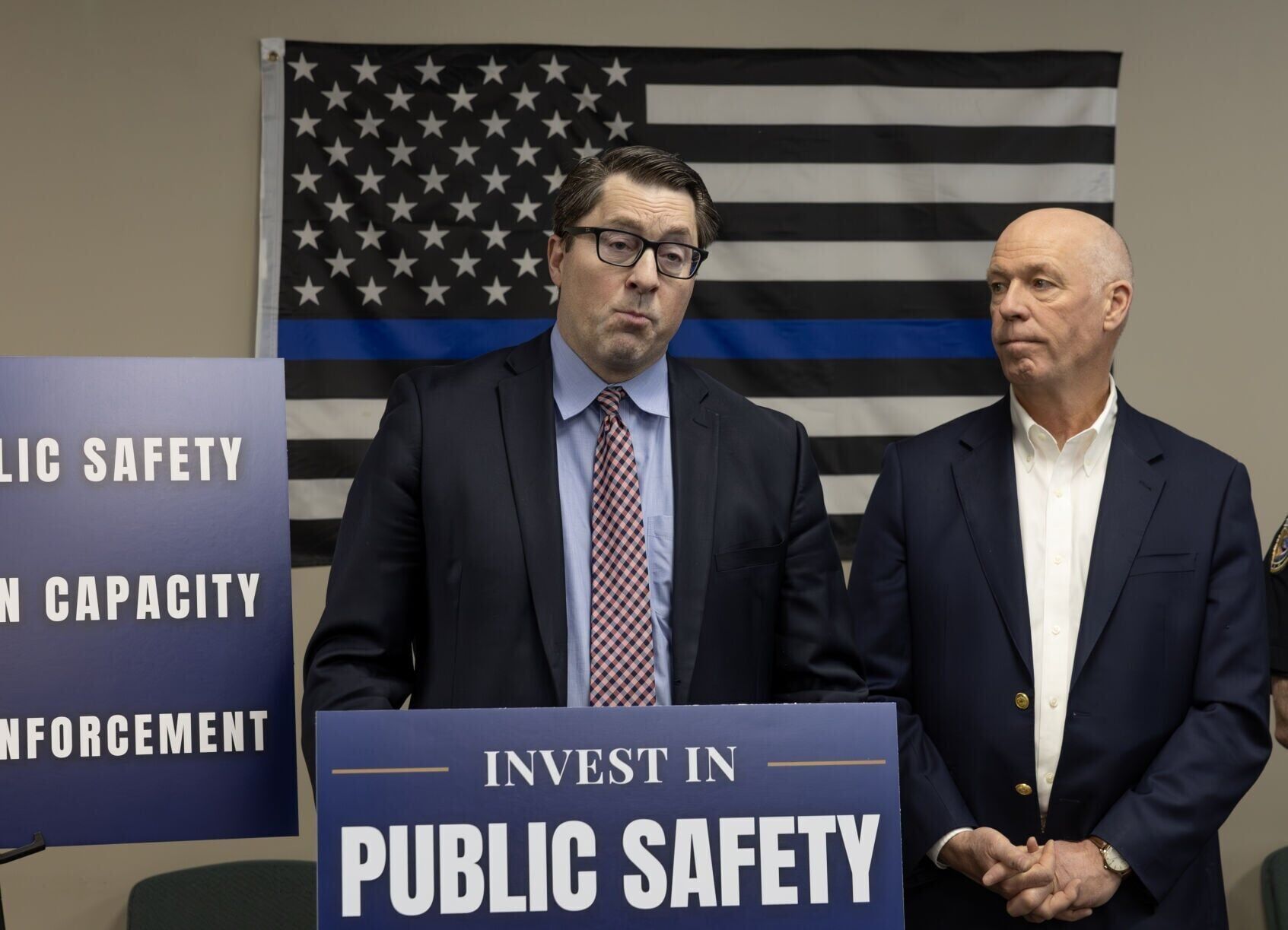
Twito, who serves on the legislature’s Criminal Justice Oversight Council, is working with the other members to draft a bill aimed at addressing a legal firearms loophole.
In late 2024, the U.S. 9th Circuit Court of Appeals ruled that Montana’s law dictating what constituted misdemeanor partner or family member assault did not meet the federal standard for offenses that would typically result in a prohibition on firearms possession.
In September 2025, Twito drafted a letter signed by every member of the Criminal Justice Oversight Council, including the council’s chair Montana State Sen. Barry Usher, and sent it to Montana’s congressional delegation. The letter urged the state’s federal representatives to find a solution to the loophole.
“The law was used judiciously, and according to the U.S. Bureau of Alcohol, Tobacco, Firearms and Explosives,” Twito wrote, “the agency found the law was used in federal prosecutions in Montana fewer than 15 times in the last 10 years.
“However, because of the DeFrance decision, Montana will be the only state in the nation where this federal prohibition is no longer valid due to the 9th Circuit’s reliance on the ‘categorical approach’ to analyze the predicate conviction.”
While it would be ideal for Congress to tighten up federal standards, Twito said he and his colleagues on the Criminal Justice Oversight Council are vying for a solution in the state legislature.
The council has drafted a bill that would bar those convicted of misdemeanor partner or family member from possessing firearms for five years. The draft bill is still being deliberated by the council in preparation for next year’s legislature.
“Our Legislature is such that the right to bear arms is front and center for a lot of them, and so any restrictions on firearms is seen as an affront to that basic belief,” Young said.
“There’s a bunch of Billings legislators that really would need to be moved on this topic for us to have any progress … I will say cases like what you all are experiencing in Billings are the kind of things that happen that sometimes policymakers will stop and reflect and make a different decision.”



Comments ()