
Empower program in Missoula helps people rebuild life after spinal cord injury
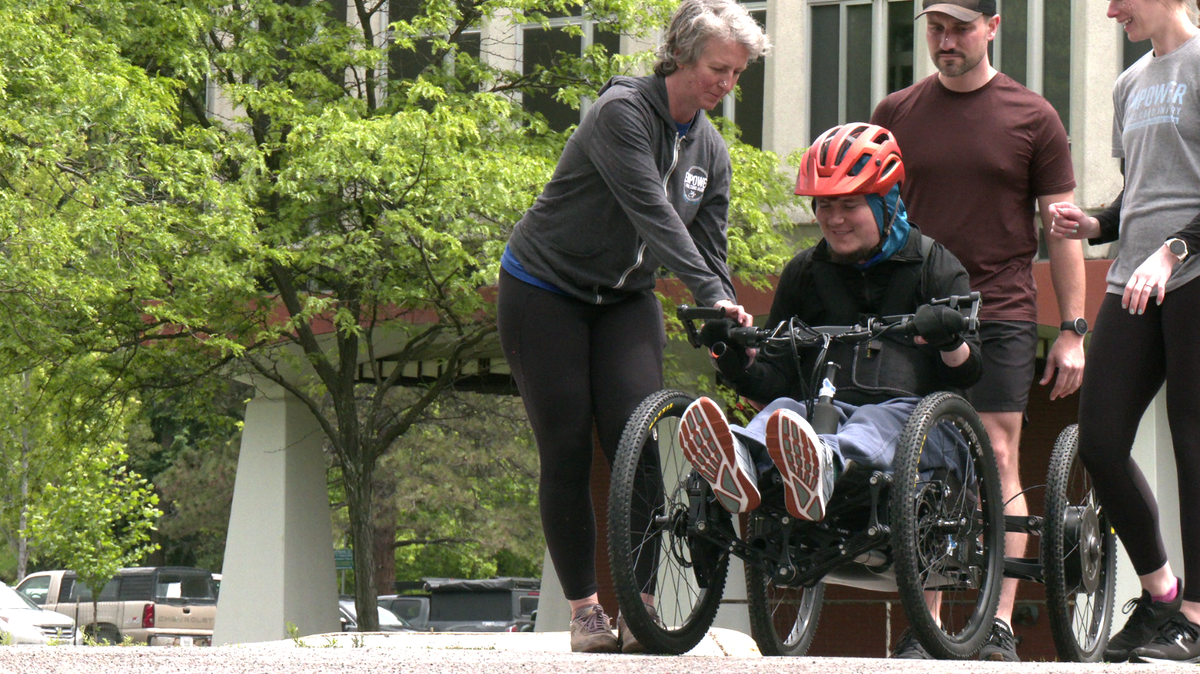
MISSOULA, Mont. — A weeklong program at the University of Montana helped people with spinal cord injuries build skills, confidence, and community as they adjusted to life after injury. Empower Spinal Cord Injury brought 10 participants from across the country to Missoula for intensive therapy, adaptive recreation, peer support, and time with others who understood what daily life could look like after a spinal cord injury. For many participants, the biggest challenge came after leaving the hospital and trying to figure out what came next. "They created this camp, this program, to help people find the skills, the community, the confidence to get back out and live life fully with their injury and disability," Tim Brown said. After a 2022 car accident while coming home from Seeley Lake, which left Kelsey Mulcahy paralyzed, she said she did not know what her future would look like and felt alone. "So in 2022, I was in a car accident coming home from Seeley Lake, leaving me paralyzed. And with that, it left me really not knowing what my future looked like. It just leaves you feeling really, really lonely," Mulcahy said. That changed when she arrived for the first time, back in 2023, and was met by a large group ready to help and ask about her goals. "When I first showed up, it was like 40 people came out of the door, open arms, and came and grabbed my bags. And they're like, "What do you want to do? What are your goals like? We're here for you," Mulcahy said. Throughout the week, participants worked one-on-one with physical and occupational therapists, learned new ways to handle daily life, and tried activities they did not expect to do again. Nicholas Clothier said one of those moments came when he tried a hand bike and found it worked better than he expected. "Even today, getting into a hand bike, I didn't necessarily think it was going to work... but it still worked out," Clothier said. Clothier, who said he sustained his spinal cord injury at 15, said the week also pushed people to take chances. "You can't be afraid to fail. You've got to try it out, and the opportunities are there for you," Clothier said. Participants said the strongest part of the week came from meeting others with similar experiences and hearing their stories. "So far my favorite thing has just been meeting all the other people here, learning about everyone else's story," Clothier said. Brown said organizers wanted participants to leave knowing they could still shape a full life with purpose, joy, and confidence. "I think the biggest thing we want participants to leave with is that they can live their lives fully as a person with a disability. That they can choose how to go forward in their life with purpose, with joy, with confidence," Brown said. Mulcahy, now a peer mentor, said she wanted others to connect with support that could help them grow. "Find the camp. Find an organization. Find your people. That's the way out," Mulcahy said.



Comments ()