
EPA promises update on Butte lead action level by June 1
Cyrus Western promised in January that EPA would announce by June 1 a new action level for lead contamination of residential soils and interior dust in Butte.
On Monday, Mackenzie Meter, a regional EPA spokeswoman, said, "Yes, we are still on track to release a proposed new residential lead cleanup level by June 1."
Western, EPA’s Denver-based regional administrator, acknowledged in January that the longstanding action level of 1,200 parts per million needed to adjust downward.
“We all know that the 1,200 number — that’s not acceptable — that it needs to come down, and that’s going to by a pretty significant extent,” Western said during a Jan. 27 public meeting at Montana Tech.
EPA has relied on the 1,200 ppm standard in Butte to trigger cleanup of residential soils and interior dust contaminated by lead, a toxic heavy metal especially injurious to children.
Public officials, Superfund watchdogs and public health officials have long argued that the 1,200 ppm number is unconscionably high. By comparison, the trigger in Anaconda for residential soils and dust cleanup has been 400 ppm.
A biogeochemist with expertise in lead exposure reacted in 2023 to the EPA’s action level for lead in Butte.
“I am really surprised to read that they are using the 1,200 ppm standards, which is for soil in areas where children are not coming in contact with it,” said Gabriel Filippelli, chancellor’s professor in the Department of Earth Sciences at Indiana University-Purdue University Indianapolis.
“They should take the precautionary approach and remediate down to 400 ppm, at least. In California, the remediation standard is 80 ppm,” he said at the time.
PPM is an abbreviation for parts per million, a measurement that typically describes the concentration of a substance in water or soil. EPA has justified the higher number in Butte by insisting the community's lead is less bioavailable than elsewhere, including Anaconda — an assertion disputed by many who note that Butte also experienced pollution from smelters.
Western’s prediction that the new action level will be lower “by a pretty significant extent” is unlikely to drop the number to the 175 ppm proposed in October 2024 — a level the Trump appointee linked to the Biden administration.
When EPA proposed dropping the lead action level in Butte from 1,200 ppm to 175 ppm, regional officials and environmental watchdogs embraced the dramatic potential drop and were similarly pleased by EPA’s proposal to expand sampling and remediation to more residential neighborhoods.
At the time, Dr. Seth Cornell, an internist in Butte and a member of the Butte-Silver Bow Board of Health, described a measured and ultimately prophetic reaction to the proposal.
“A long overdue step in the right direction, but I’ll reserve my applause until a formal plan is approved and implemented,” Cornell said then.
EPA asked for public comment on the new proposal and set a deadline of Valentine’s Day 2025. The agency said it would review the comments and provide a “responsiveness summary” — described as a comprehensive response to all major comments and concerns raised by the community, including potentially responsible parties, such as Atlantic Richfield. The U.S. subsidiary of bp America is deemed responsible for the cleanup because it purchased the Anaconda Co., the original polluter, in 1977.
That never happened.
The Montana Standard submitted a Freedom of Information Act request to EPA to review submitted comments.
Laurie Matthews is a lawyer with Morgan Lewis, a firm that has represented Atlantic Richfield. She submitted the most detailed and extensive comments in opposition to the proposed 175 ppm standard. She wrote that “EPA has made decisions that result in a proposal not supported by fact, science or law and that create significant implementation issues.” Matthews wrote, “EPA has developed an indefensible Proposed Plan that must be withdrawn and reevaluated.”
Her Morgan Lewis bio reports that Matthews works with “two multi-industry groups composed of major corporations that share a common interest in … achieving site closures with a minimum of expense and delay.”
Meanwhile, Cyrus Western reports to Lee Zeldin, who Trump appointed to lead EPA. The May 4 edition of “The New Yorker” included a profile of Zeldin by Elizabeth Kolbert, a Pulitzer Prize-winning reporter.
“In a little more than a year, Zeldin has transformed the EPA from an agency devoted to protecting human health and the environment into one that, more or less openly, sides with polluters,” Kolbert wrote.
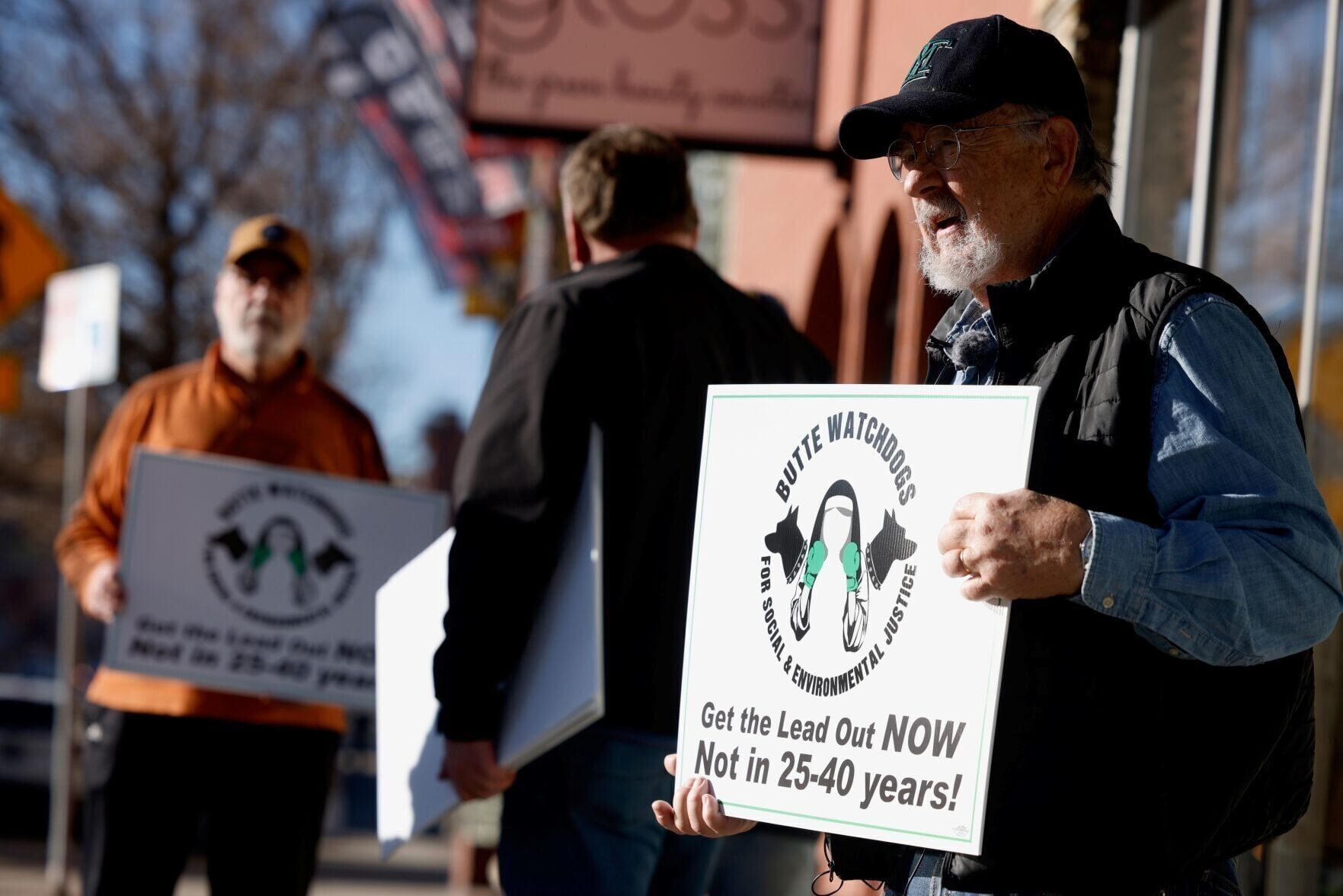
Concerns about human health, especially the health of children, have long been cited in Butte-Silver Bow County by those advocating for a thorough cleanup of lead in residential soils and interior dust. The Board of Health, the Butte Watchdogs for Social & Environmental Justice and numerous individuals have cited the conclusion by the Centers for Disease Control and Prevention that no level of lead is safe for children.
These commenters, and others – including the Montana Department of Environmental Quality — have expressed support for making more Butte neighborhoods eligible for sampling of residential yards and interior dust and potential remediation.
“Butte-Silver Bow supports the agency’s proposed Butte Priority Soils Operable Unit boundary expansion, with one exception,” observed the city-county in comments submitted Feb. 11, 2025.
“Butte-Silver Bow also proposes inclusion of the residential area immediately adjacent to the proposed boundary expansion,” the comments added. “This area includes a number of residential properties, the Margaret Leary Elementary School and Jeremy Bullock Soccer Complex.”
Commenters balked, however, at the prediction that expanded sampling and remediation could take 25 years.
Matthews weighed in, finding a rare point of consensus with regional watchdogs.
“Note that the original Record of Decision estimated that sampling would be complete by 2014 and remediation by 2019,” she wrote.
But Matthews objected to the potential costs of the 175 ppm standard and expanded sampling and remediation.
“To justify this enormous cost increase, EPA would need to demonstrate a commensurate benefit to human health and the environment, an analysis that EPA did not conduct,” she wrote.
Western agreed to a brief interview with The Montana Standard before his public presentation in January.
“June 1 is when we’re going to come out with this new proposed plan,” he said, noting it will rely on the best available science to identify a number “that is genuinely protective, but also allows us to make progress."
“We haven’t been cleaning up enough yards,” Western said.





Comments ()