
EPA proposes lowering trigger for Butte lead cleanup, expanding work
The U.S. Environmental Protection Agency on Monday morning released details about a long-awaited proposal to significantly lower the lead cleanup level for residential soils and interior dust in Butte. As envisioned, the cleanup level would drop from 1,200 parts per million to 456 ppm.
In addition, EPA proposed expanding the current boundary for residential sampling and remediation. The so-called Butte Priority Soils Operable Unit, or BPSOU, a federal Superfund geographic construct, would grow by about 3,637 acres, which would add 7,100 homes.
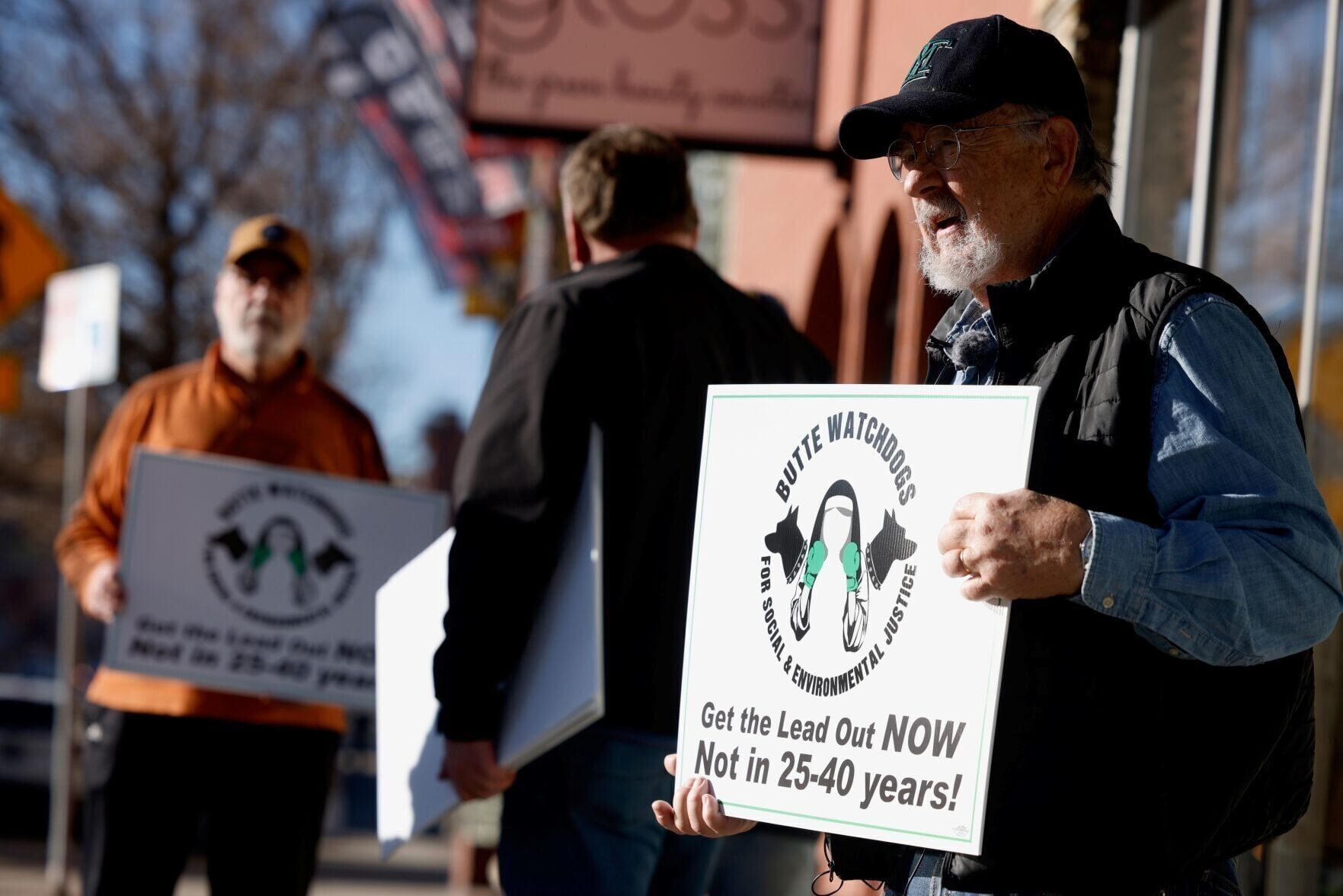
EPA’s proposal moved in the direction of changes long sought by Butte’s most steadfast environmental watchdogs, but these same vigilant observers did not stand up and cheer Monday morning.
Two key things stuck in their craw.
EPA estimates expansion of the boundary for sampling and cleanup and related work at thousands of homes would take 15 years. In addition, the 2026 proposal sets a target blood lead level of 5 micrograms per deciliter [µg/dL].
“It’s disappointing to see EPA once again reject well-established science on the dangers of lead," said Erik Nylund, a member of the Butte Watchdogs for Social & Environmental Justice.
“It’s absolutely immoral to allow the continued slow walk of cleanup, no matter what level is set,” he said. “The people of Butte deserve a timely and science-based cleanup like every other place affected by aerial emissions from smelting, not 15 years to sample and continue to expose people.”
Dr. Seth Cornell is an internist in Butte and a member of the Medical Monitoring Work Group that helps assess the effectiveness of the Residential Metals Abatement Program. He shared similar thoughts.
“The good people of Butte have waited more than 40 years for the EPA to facilitate a cleanup of our community, and now we're being told to wait at least 15 more, assuming the EPA meets a timeline it has already missed twice,” he said. “Even after that, residential lead soil levels here will remain higher than what is currently permitted in neighboring Anaconda.”
David Hutchins, an assistant professor of environmental engineering at Montana Tech and longtime regional watchdog, also weighed in.
“EPA says this proposal is science-based, but the plan does not adequately explain why a 5 µg/dL blood lead target was chosen when EPA itself acknowledges there is no known safe level of lead in blood,’’ Hutchins said. “If that number is meant to track the Centers for Disease Control and Prevention blood lead reference value, then it is already out of date: CDC lowered its reference value from 5 to 3.5 µg/dL in 2021, after first establishing the 5 µg/dL reference value in 2012.
“Butte should not be asked to accept a cleanup standard built around yesterday’s science, especially when children are the population most at risk,” Hutchins added.
Like Nylund, Hutchins faulted the timeline for cleanup.
“That means a whole new generation of Butte children could grow up with preventable exposure while the work slowly proceeds,” he said. “The plan also does not clearly explain how EPA will ensure participation from property owners who refuse access, including landlords whose tenants may be the people most at risk.”
He said a truly protective plan would guarantee timely cleanup and protect children regardless of who owns the property.
Cyrus Western, EPA’s regional administrator, responded Monday during a telephone interview to concerns about the 15-year timeline.
“That’s a conservative number,” he said. “I will absolutely be pushing everybody to do it faster than that.”
Western said the EPA believes the 5 µg/dL reference value is protective, science-based and targeted specifically for soils. He said the community has layers of protection through the Remedial Metals Abatement Program, with lead testing of interiors and soils.
“We understand that [the lead debate] has been a source of frustration for the community for years,” Western said.
J.P. Gallagher, chief executive officer of Butte-Silver Bow County, would agree. He had mixed reviews about Monday’s proposal.
“Today’s announcement from the EPA is an important step toward improving long‑term health protections for the people of Butte-Silver Bow,” Gallagher said. “While I was not surprised to see the proposed residential lead cleanup level set at 456 ppm, given earlier indications it would rise from the previously discussed 175 ppm, I am disappointed that our number remains higher than Anaconda’s 400 ppm.”
He said the proposed expansion of the sampling and remediation misses some key places.
“I am also concerned that the proposed expansion of the BPSOU boundary does not include some of our most vulnerable neighborhoods, particularly the areas around Margaret Leary School,” Gallagher said. “Ensuring those families receive the same level of protection remains one of my top priorities, and I will continue pushing for their inclusion.”
He said the proposed 15-year timeline is an improvement on the 25-year timeline previously forecast.
“Butte‑Silver Bow is ready to get to work with EPA, the state and Atlantic Richfield to continue to move forward immediately with expedited sampling and with yard and attic cleanups,” Gallagher said.
“I encourage all residents to take part in the 30‑day public comment period. Your voice is critical. We will continue advocating for a cleanup that is aggressive, equitable, and protective of every neighborhood in Butte.”
EPA has relied on the 1,200 ppm standard in Butte to trigger cleanup of residential soils and interior dust contaminated by lead, a toxic heavy metal especially injurious to children.
The abbreviation ppm represents parts per million, a measurement that typically describes the concentration of a substance in water or soil.
Public officials, Superfund watchdogs and public health officials have long argued that the 1,200 ppm number is unconscionably high. By comparison, the trigger in Anaconda for residential soils and dust cleanup has been 400 ppm.
EPA has justified the higher number in Butte by insisting the lead in the community is less bioavailable than elsewhere, including Anaconda — an assertion disputed by many who note that Butte also experienced pollution from smelters.
The Butte-Silver Bow Board of Health, the Butte Watchdogs for Social & Environmental Justice and numerous individuals have cited the conclusion by the CDC that no level of lead is safe for children.
The EPA will look to Atlantic Richfield to pay for additional sampling and cleanup costs. Under federal Superfund law, the company became liable for remediation of pollution caused by the Anaconda Co., which Atlantic Richfield purchased in 1977.
“Atlantic Richfield will review EPA’s Proposed Plan for Butte and remains committed to working with EPA, the state of Montana and Butte-Silver Bow to implement an effective and protective cleanup for the Butte community,” the company said Monday.
EPA’s lead-related proposals are subject to a 30-day public comment period beginning June 1. The agency will hold a formal public hearing on Tuesday, June 16, from 6 p.m. to 7 p.m. in the Library Auditorium at Montana Tech. Public comments will be recorded. Written comments can be submitted to EPAButtePPcomments@epa.gov.
Editor's note: This story was updated to correct Cornell's involvement in the Medical Monitoring Working Group.




Comments ()