
Helena-Lewis and Clark County 911 dispatch center running low on funds, could need levy
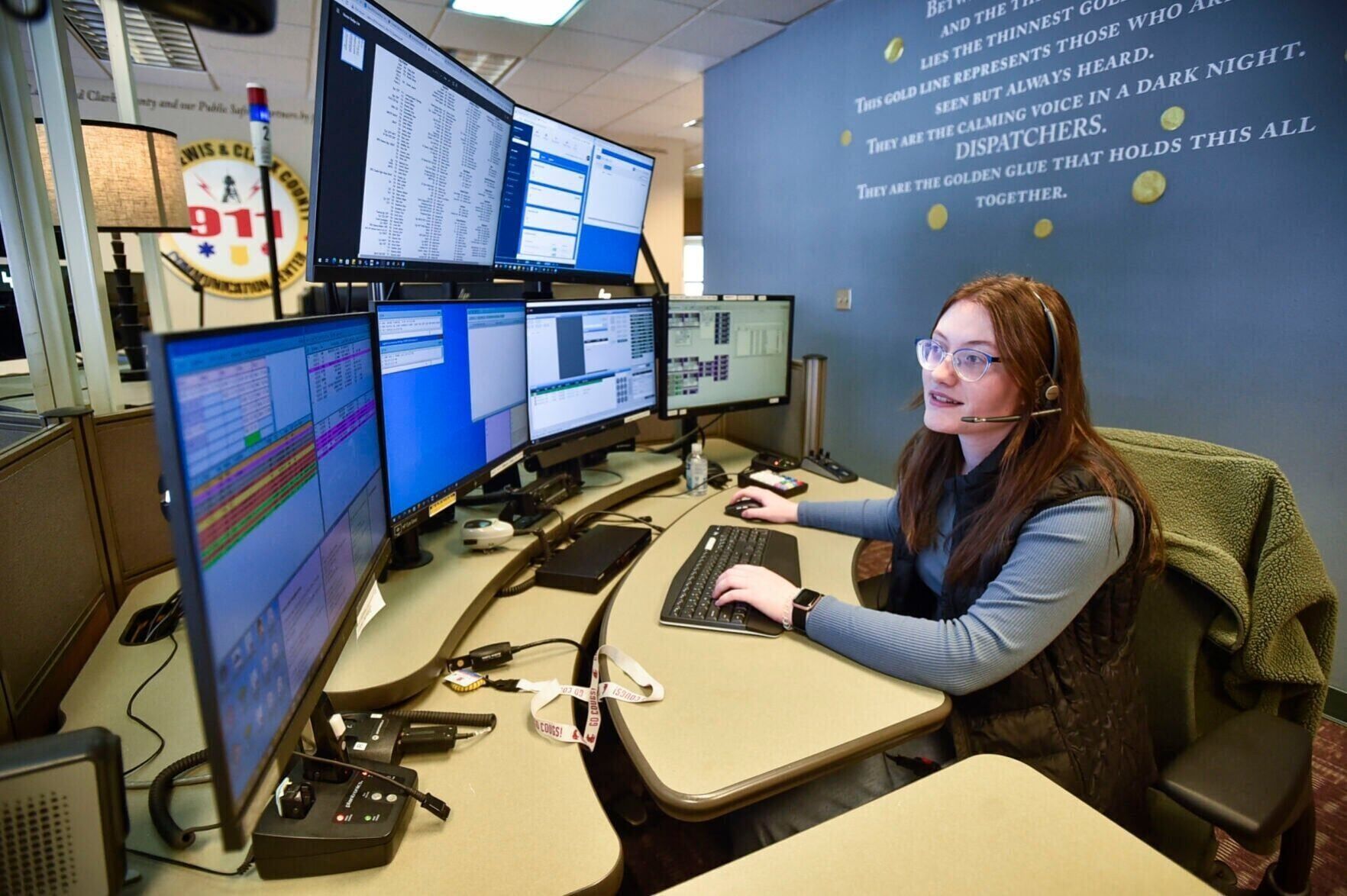
Helena and Lewis and Clark County’s 911 dispatch center is struggling to pay its 14 call-taking employees, staff said Tuesday — and it could soon need to hire more dispatchers to keep up with growing demand.
Staff funds are paid by a 2020 county public safety mill levy that also funds other emergency services, such as the Lewis and Clark County Sheriff’s Office.
For the past four years, the dispatch center has had to dip into other pots of its 911 budget to completely pay salaries, but this is the first year it’s had to drain its entire share of levy funds, Support Services Administrator Zach Slattery told the Independent Record on Wednesday.
It trimmed where it could, including cutting back on supply funds and striking a deal with software companies to sit at a fixed subscription rate, but it still needed to take $252,000 from 911 funds to make up the salary deficit for fiscal year 2027, Slattery said.
“What we don’t want to do is cut services to all the entities that we currently provide for and shortchange public safety,” Helena Police Chief Brett Petty said Tuesday. “Am I saying we can get by now with what we’re doing? Yes, we can, but if you look at the calls and yearly call data, it just keeps rising.”
“A lot of things are in the air,” Slattery said, but he estimated the dispatch center would only be able to go two or three more years without more funding before it hit a financial wall.
On top of that, having 14 "front-line" dispatch call-takers is already a thin staff for the county’s needs, Slattery said.
Dispatch handles 70,000 calls per year for 25 different public safety entities, Petty said Tuesday.
To handle that, dispatch never staffs fewer than two call-takers at a time, usually working 12-hour shifts starting or ending at 7 a.m., Slattery said.
It works, he said, but he has to be careful to not be “running them into the ground” with only 14 dispatchers employed. It can be especially challenging on days like Dec. 18, 2025, when a windstorm blasted the county.
The center fielded quadruple its usual daily phone calls, 1,029 of them, and dispatched for 505 calls for service, well over the 10-year December average of 135, according to the city.
On that day, Slattery had off-duty dispatchers calling in to help, he said. The team effort was a huge relief, he said, but he doesn’t want to count on volunteers and goodwill to handle that kind of emergency.
A third-party consultant is studying how many dispatchers the county should have based on call volumes. The consultant is expected to provide the final results from that study in June or July. Slattery said the consultant is projected to recommend at least five more full-time equivalent (FTE) positions, which accounts for hours worked by full-time and part-time staff, to keep up with Helena’s and Lewis and Clark County’s growing demand, he said.
That is about what Slattery expected, he said. For nearly his entire 19-year tenure, the call center only had six FTEs, and momentum toward the current staffing of 14 only began in 2021.
Realistically, he doesn’t think he would secure five more employees unless county voters approved a mill levy.
At a Tuesday city-county joint work session, which had attendance from both Helena city and Lewis and Clark County commissioners, County Commissioner Candace Payne was vehemently against the idea. If Helena was "fully staffed," why would it need more employees, she asked.
“We just had the school mill levy crash,” Payne said. “We will need to figure out how to get by with less, just as many of us do in our home budgets.”
Petty said the five FTEs the city believes will be recommended will come from expert consultants, not the dispatch staff. The consultants will have a chance to present directly to the city and county commission once the study is completed in the coming weeks.
“Whether we can do it or not — a conversation for another time,” Petty said. “But we’re telling you where we’re at now, and what we have for staffing, is not going to be sustainable for the future.”
Historically, dispatch’s Support Services Division, which pays employee salaries, received around 42% of the 2020 mill levy funds, but it has lately seen 36%, Finance Director Sheila Danielson said.
Whether future budgets include the additional positions or not, 911 is still underfunded, Danielson said. The city and the county will need to find a way to either find funding or cut services.
A duty of local government is to fund its essential services, County Commissioner Andy Hunthausen said. Things will likely hurt for a few years, but he recommended committing to a plan to find new funding.
“This is big,” Hunthausen said. “It sounds big. It is huge, but on the one hand, it’s really normal. … I think government has to be the size it needs to be to serve the community appropriately, right?”
City Commissioner Melinda Reed commended dispatch for getting to 14 employees, saying she remembered "not too long ago when we were severely understaffed there." She said she looked forward to hearing more about the staffing study.
As of Wednesday, the county isn't considering a new mill levy, county spokesperson Betsy Kirkeby said. If a mill levy were proposed, it would likely need approval by the County Commission before it landed on county ballots.
The city is also considering a mill levy for additional firefighter and police staff, which would go in front of voters in the November general election, city spokesperson Amanda Opitz previously confirmed. However, the details, such as how much the city would ask for and if fire and police would be on the same ticket, is still undetermined.
“I understand the economy we’re in currently,” Slattery said. “I’m feeling it too." But 911 is how firefighters, police and medics get to callers, he said, and it will not work if there is no one to take the calls.



Comments ()