
'Hey bear!': Participants get chance to spray charging bear at Montana FWP event
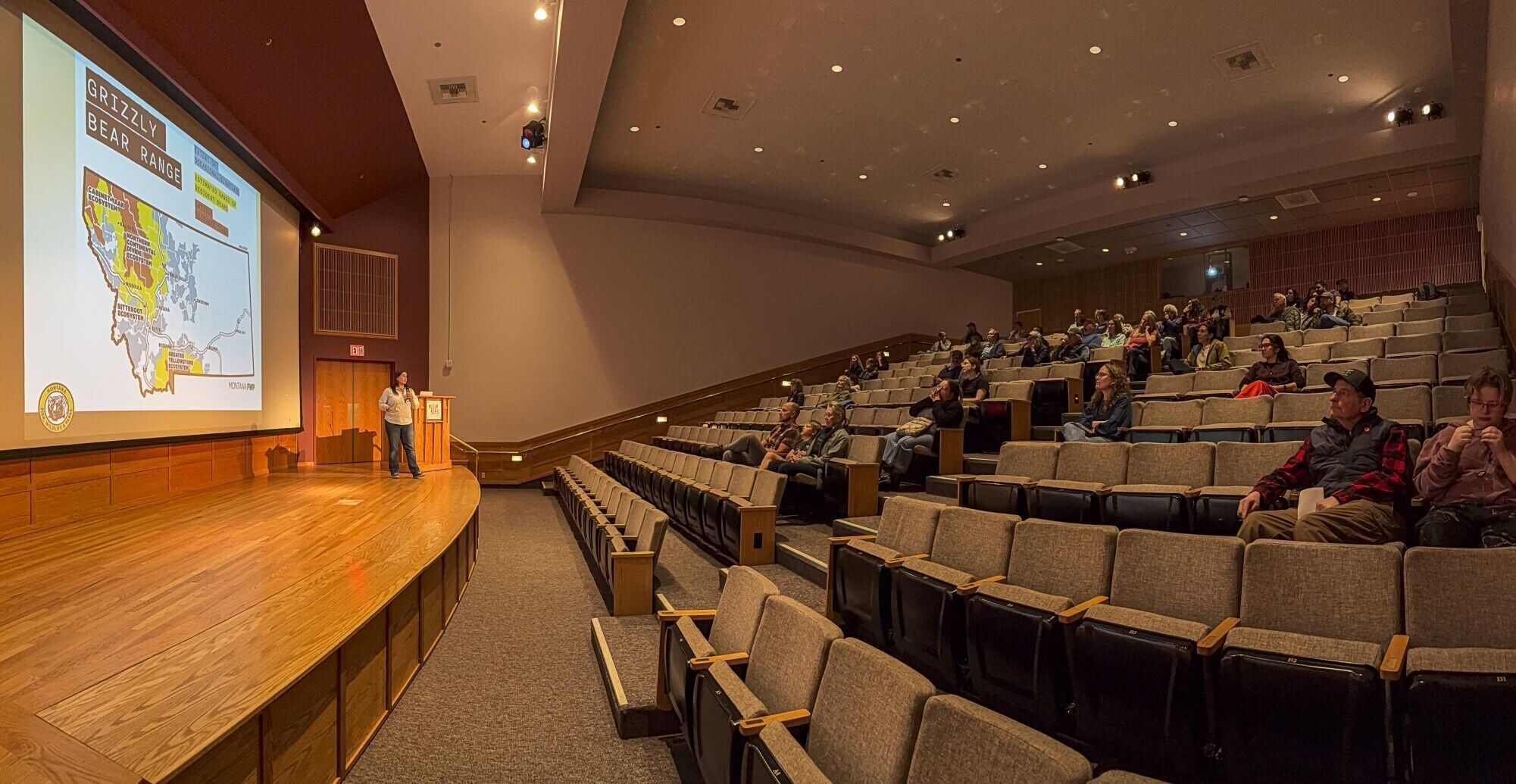
“The more you understand something, the less you fear it, and with bears that’s especially true,” Danielle Oyler said during a talk on bear safety at the Museum of the Rockies.
Oyler’s presentation was part of the Montana Fish, Wildlife & Parks “Bear Aware” event on Wednesday evening.
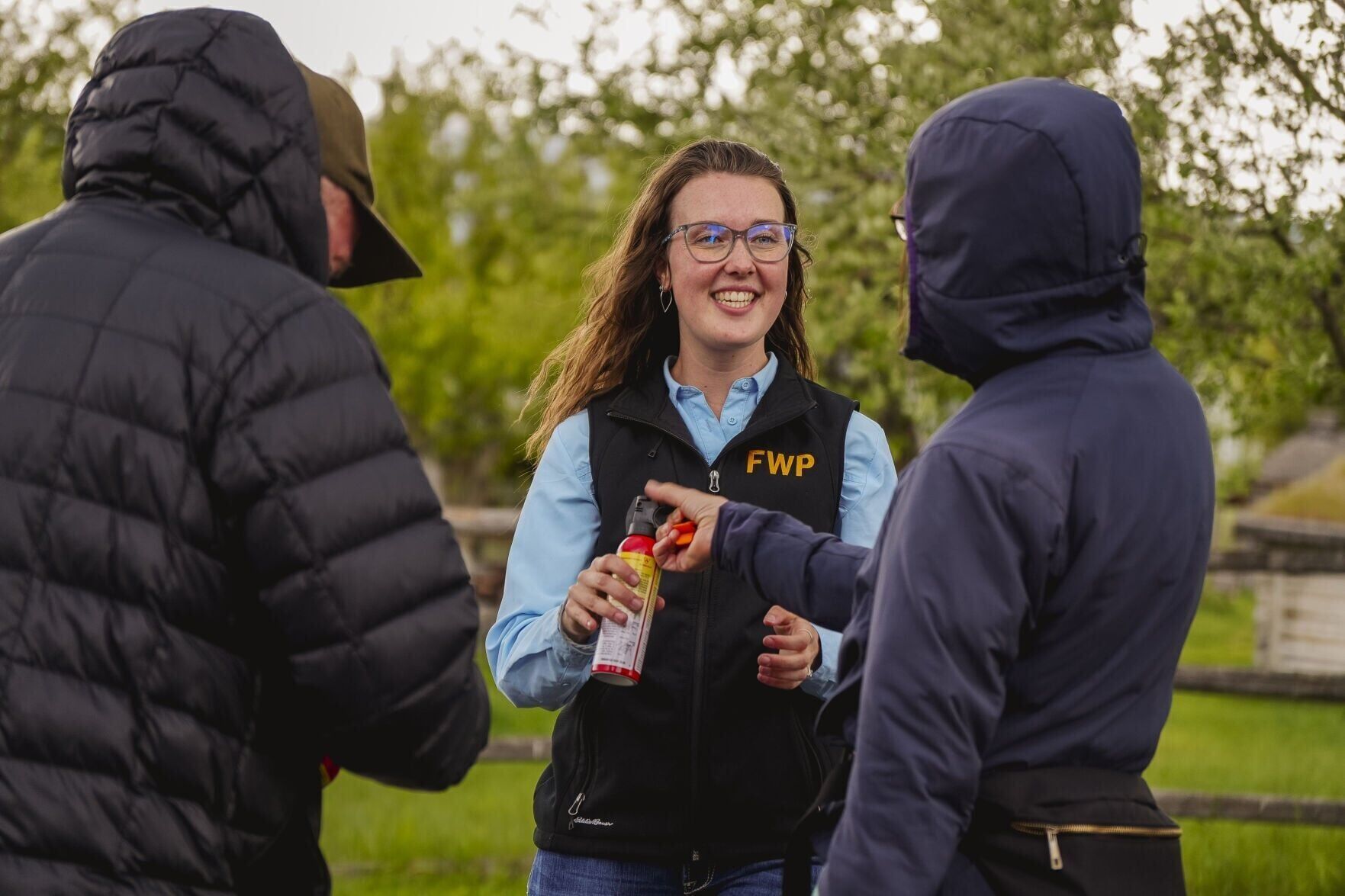
The talk equipped participants with background knowledge before their practical skills were put to the test with a parking-lot bear-spray demonstration.
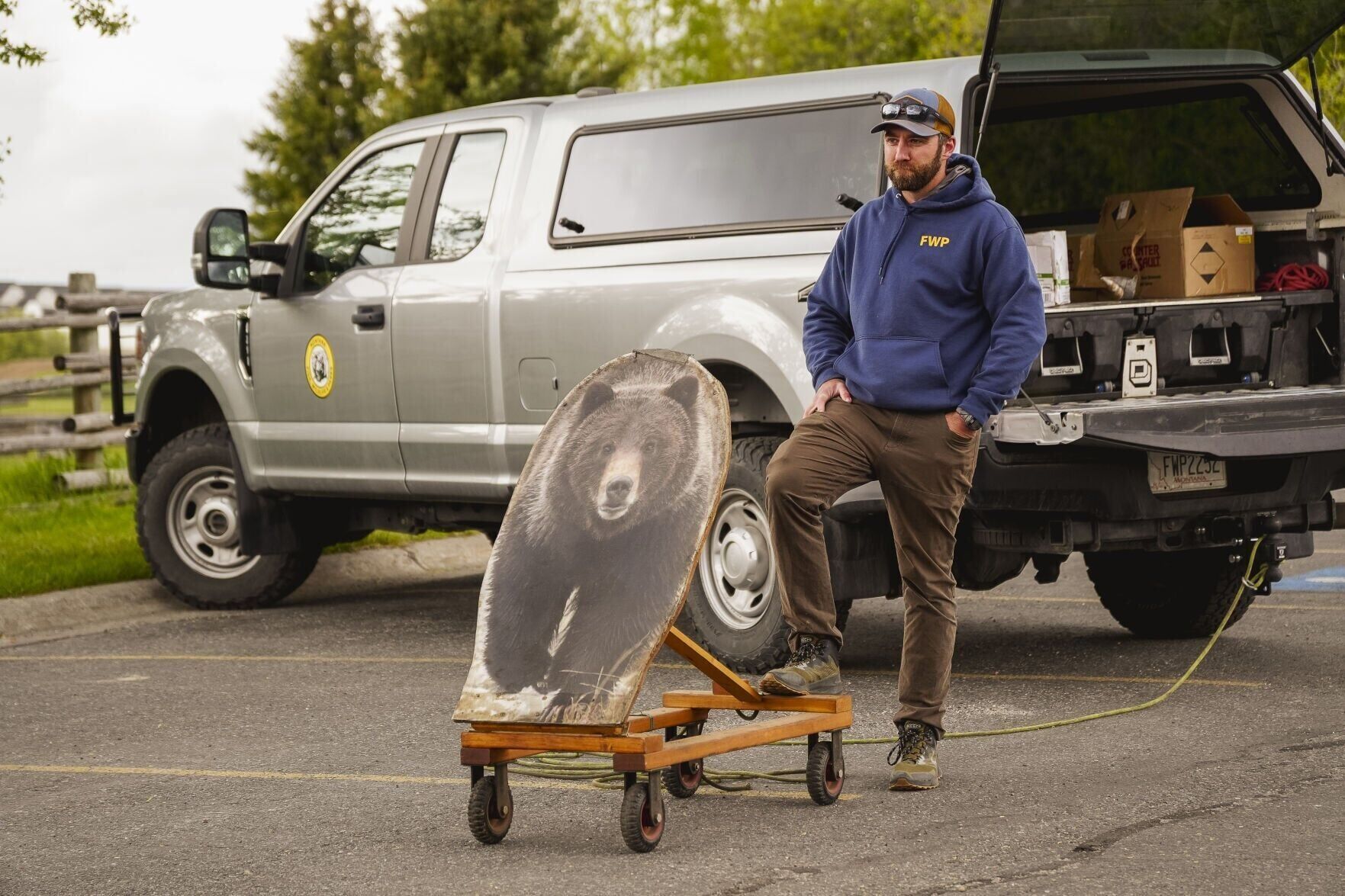
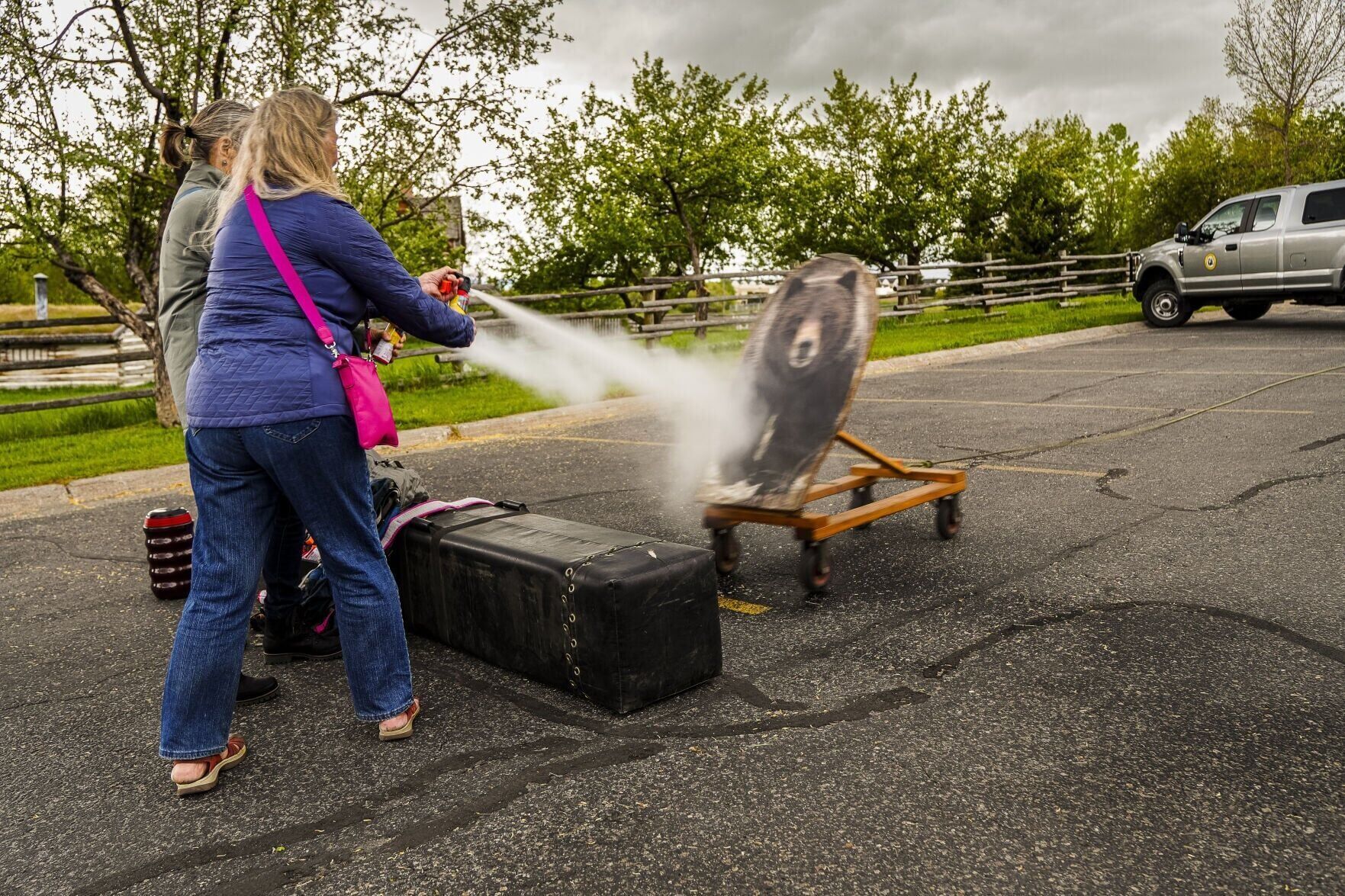
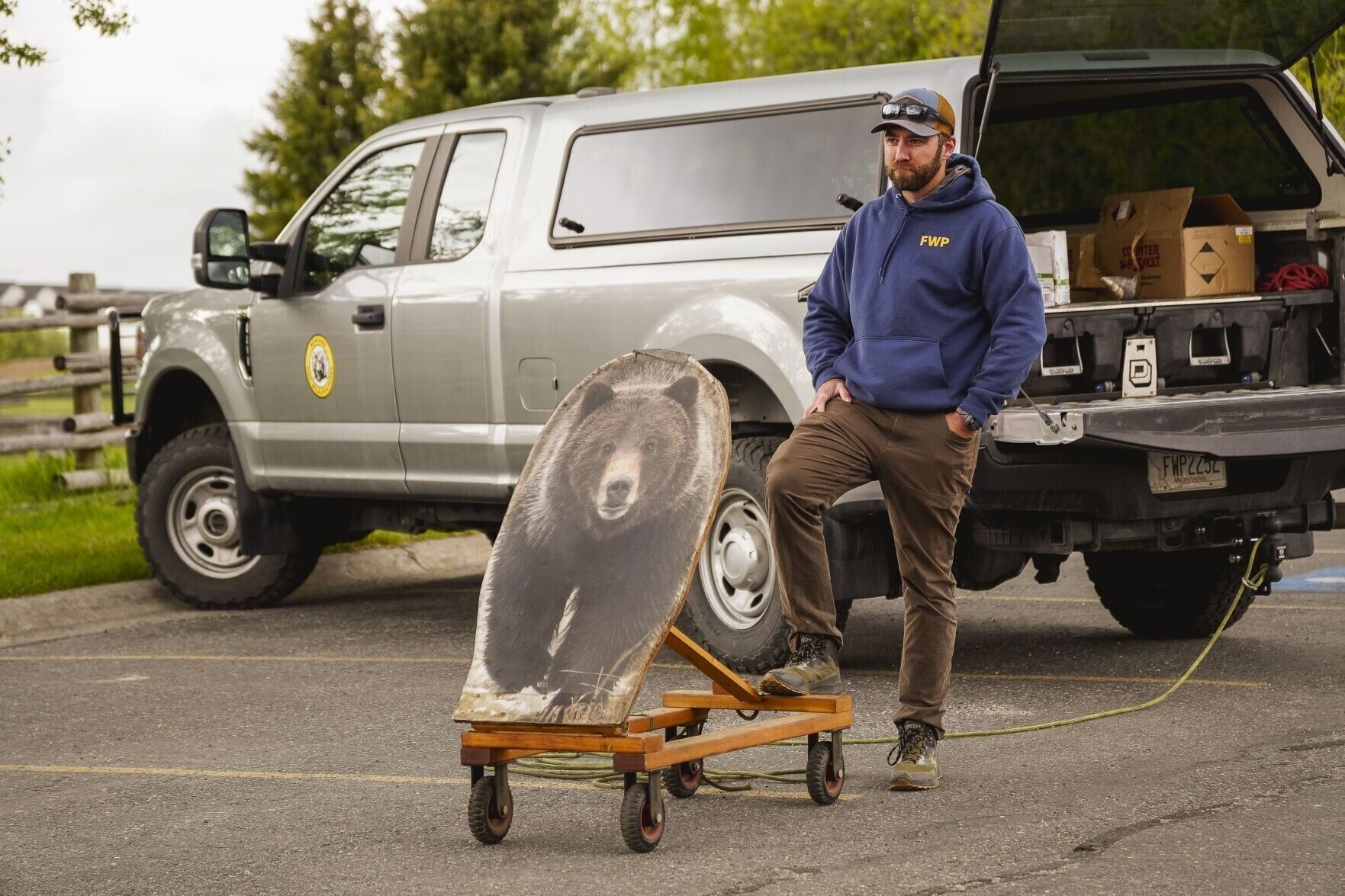
In the demonstration, a wooden dolly with a bear decal on it was pushed about 20 feet down the parking lot, and groups of two participants would practice spraying the bear with inert canisters that did not contain actual bear spray.
To make the bear attack more realistic, they would face the opposite direction, with their spray holstered, and quickly turn around after FWP staff member Nicole Ballard yelled, “Hey bear!”
The fake bear in the demonstration is supposed to be a defensive bear about to attack. In the earlier talk, Oyler explained the difference between defensive and predatory behaviors in bears.
“Bear behavior should determine your behavior in an encounter,” Morgan Jacobsen, FWP information and education program manager, told The Chronicle.
If a bear isn’t looking in your direction or making eye contact, you can easily back up and leave the area without incident.
If a bear sees you, you should pull out your canister of bear spray but wait until the bear disengages by breaking eye contact or moving in a different direction.
Defensive bears might make jaw clicking noises, start huffing or swatting at the ground, or start swaying their head back and forth. In this situation, stand your ground, pull out your bear spray and wait until the bear disengages.
If the bear charges, deploy the spray.
An average canister of bear spray typically has about five to eight seconds worth of spray once deployed. The active ingredient is called oleoresin capsicum and is mostly hot chili pepper extract.
If a bear charges — never run. Bears can run up to 35 mph and are used to chasing their prey.
If a bear makes contact with you, lay on the ground face-down and cover your neck.
Predatory, or curious, bears, may approach people out of curiosity. In this situation, you should act big and make noise. If needed, one should deploy the spray or fight back.
“Avoiding conflicts is better than dealing with conflicts,” Jacobsen said.
During her presentation to about 50 people in the museum’s Hager Auditorium, Oyler explained the difference between grizzly bears and black bears.
Black bears live in forested environments and are better climbers than grizzly bears. Grizzly bears live in prairies and like open spaces, are more confrontational, are good diggers, and have a powerful sense of smell.
Peak bear activity occurs during early mornings and late evenings. Fall is when most conflicts happen between humans and bears because bears are in a period called hyperphagia where they’re eating more in preparation for hibernation and are easy to startle. This period overlaps with hunting season and fall recreation activities.
Oyler also explained the importance of keeping food and toiletries away from bears while spending time outdoors. Even bottles of sunscreen and bug spray can be attractants.
Campers should store their food in containers, inside a vehicle, or hung 10 feet up a tree. Garbage, grills and bird feeders can also attract bears in residential areas.
“We have more bears in more places every year,” Oyler said.
Throughout the presentation, Oyler also stressed the importance of having bear spray with you anytime you’re outdoors. She recommended two canisters per person, in case one canister must be deployed, and she reminded the audience that canisters can explode in hot cars and aren’t safe to use after their expiration date.
Bear spray comes out at about 70 mph and will most likely get on the person deploying it, which is why Oyler recommends carrying soap to clean off the spray.
“It’s an effective self-defense tool in bear encounters,” Jacobsen said. “It’s affordable and it’s easy to use, it’s very mechanically simple, and accessible for people of all abilities.”


Comments ()