
House money: Forstag, Flint lead fields in April fundraising, PAC support surges
Democratic candidate Sam Forstag’s fundraising figures have surged in recent weeks, and the campaigns jockeying for the western congressional district nomination traded barbs on Tuesday over PAC spending in the final week before the June 2 primary.
Forstag posted the highest fundraising figures of any candidate among Democrats and Republicans between April 1 and May 13 with $238,400 raised, according to recent Federal Election Commission reports. Republican Aaron Flint led the GOP field with $223,000 in that same period.
Forstag also had the most cash on hand of the Democrats going into the last three weeks of the primary, with $161,400 after spending nearly $300,000. Forstag has seen considerable attention from national news outlets compared to the other candidates, and is scheduled to appear with U.S. Rep. Alexandria Ocasio-Cortez, a leader of the progressive movement, in Missoula on Thursday, just five days before the June 2 election.
Ryan Busse trailed Forstag in fundraising in the latest reporting period with $165,300, but has hauled in more than any other candidate over the course of the primary race with $701,400.
Busse spent almost $100,000 more than Forstag during the reporting period, including considerable sums on television advertising and text message services around the district. He had $150,000 cash on hand going into the final primary push, but appeared in a comfortable position with Democratic primary voters after a Montana Free Press-Eagleton poll clocked his favorability at 75% (Favorability rates how a potential voter feels about a candidate, but doesn’t necessarily indicate how they would vote). Forstag followed Busse in this poll with 55% favorability.
Russell Cleveland, who has sworn off any PAC support this election, and Matt Rains, who has said he’ll accept any PAC money sent his way, were both distant third- and fourth-place candidates in the most recent fundraising report.
Cleveland brought in about $93,000 from April to mid-May, and had about $55,000 in the final stretch to Election Day.
Rains saw a little less than $50,000 in campaign donations in that period and headed into the second half of May with about $34,000 cash on hand.
The Busse-Forstag horse race in the latest fundraising period was far more competitive than the Republican primary.
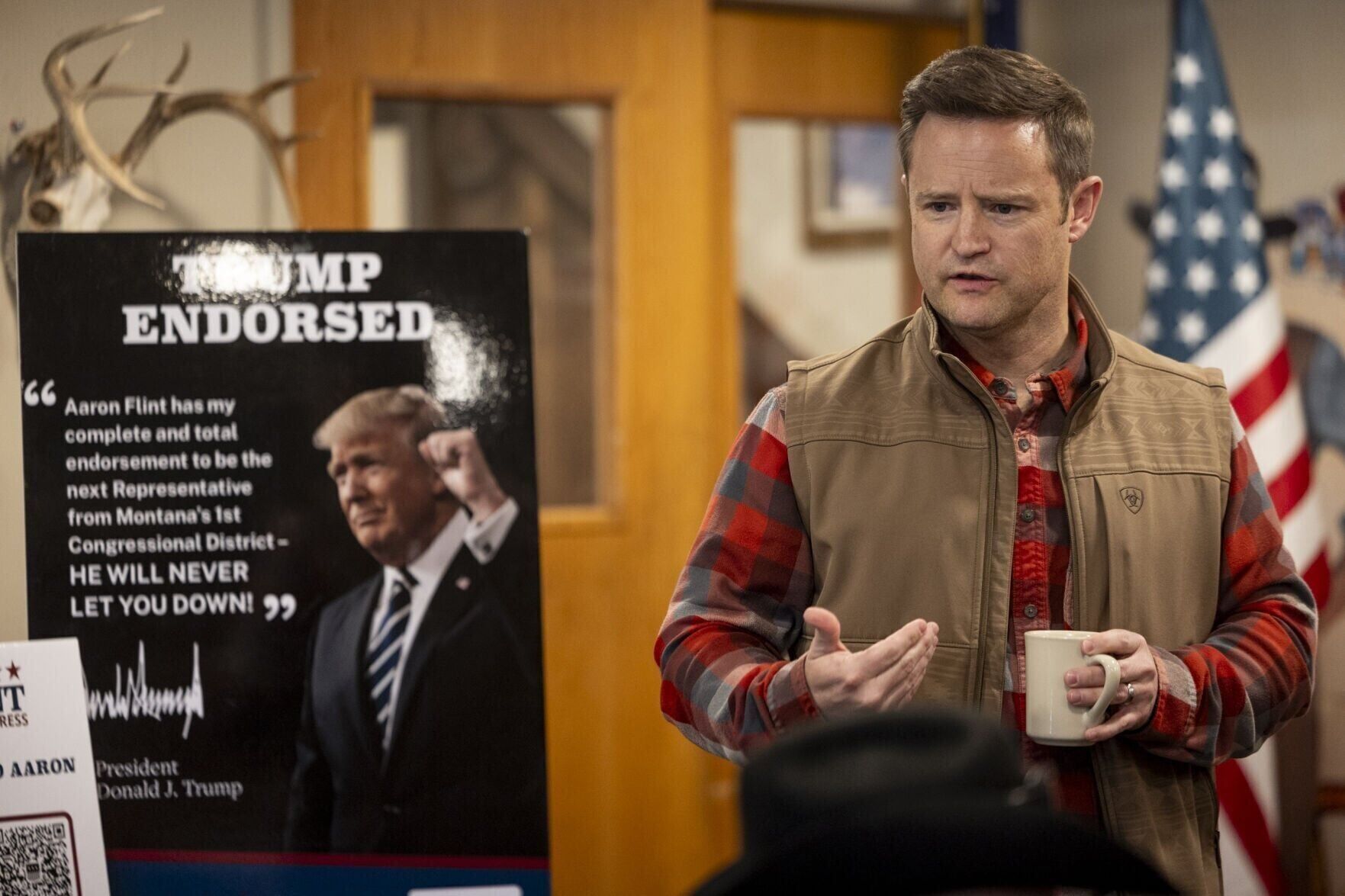
Flint’s $223,000 trounced his primary opponents’ hauls. He’s raised about $646,000 since launching his campaign and has roughly $384,000 in cash on hand after expenses through the latest reporting round.
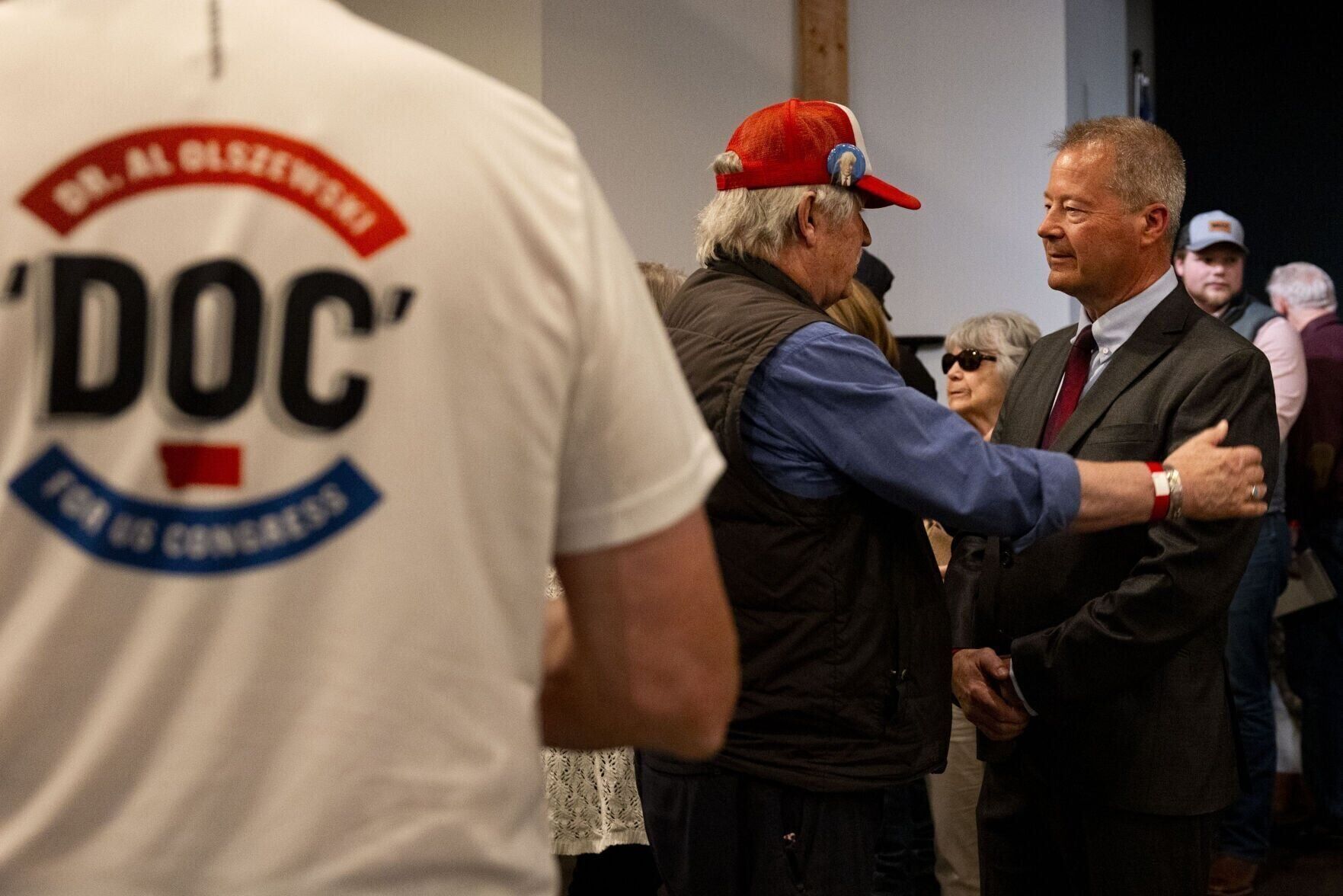
Dr. Al Olszewski and Montana Secretary of State Christi Jacobsen both spent big, but raised less than $100,000 for their respective campaigns. Olszewski raised $87,000 and spent $304,000. Jacobsen raised $54,000 and spent about $267,000. Their cash on hand figures were both around $100,000 at the end of mid-May.
Jeremy Johnson, chair of the political science department at Carroll College, said fundraising doesn’t always signal a winner.
“Getting your name out is important but there are certainly examples in the past where the better-funded candidates don’t win,” he said. That’s especially true in primary elections, he said, which are more condensed and give candidates limited time to build up name recognition.
Primary voters, Johnson said, are smaller in number and can be more easily swayed than a general electorate.
Send in the super PACs
In the Republican primary, a pro-AI group called American Mission has spent $876,800 supporting Flint — more than the Flint campaign has raised so far.
American Mission is part of a network of affiliated PACs tied to Leading the Future, a pro-artificial intelligence organization backed by OpenAI and venture capitalists fueling the tech boom. The network is making independent expenditures for Trump-endorsed candidates across the country this cycle, and has so far spent its money to support Flint with media placements, mailers, printing and postage.
Data centers are a political flashpoint when it comes to concerns around tech, AI and, generally, wealth. Flint, like most candidates, has said he wants to see data centers come with their own power and water, rather than drawing down limited natural resources and jacking up electricity prices in Montana.
He’s taken the distinct position, however, that a moratorium would threaten national security.
“If you were to do an all-out ban on this, basically you’re handing over our private data and you’re handing over the economic future and national security to China and Russia,” he told the Montana State News Bureau in April. “Nobody wants our data in the hands of the Chinese.”
Tech Oversight Project is a left-leaning organization tracking money of the AI-related spending in races across the country this fall. Sacha Haworth, the group’s executive director, said American Mission spending in elections was a play to maintain profits by keeping kids addicted to screens with social media and chatbots.
Haworth criticized Flint’s national security position on data centers.
“We can keep America safe, lower home energy costs and protect public health all at the same time, and the best way to do that is to make sure Big Tech plays by the same environmental rules that every other industry abides by in this country,” Haworth said. “It’s absurd of Aaron Flint to tell us that, in America, we need to choose between clean drinking water and affordable electricity.”
In an email to the Montana State News Bureau, Flint campaign manager Heather Swift dismissed the comment from Haworth as coming from a Democratic talking head.
“I frankly don’t give a hoot what some washed up Obama staffer and liberal out of state advocacy group has to say about Montana,” Swift said.
On the Democratic side, Forstag’s campaign went on the offensive on Tuesday after more than a month of being attacked by Busse’s campaign over so-called dark money connections.
Forstag’s campaign highlighted a recent $60,000 digital ad buy on Busse’s behalf from the Save America Fund, a group whose donors last year included gas and electric utilities and housing associations that Forstag’s campaign argued had engaged in problematic business practices.
“This last minute infusion of support from a fossil fuel and utility industry-based super PAC proves that Ryan Busse can’t be trusted to fight for Montanans,” Forstag campaign manager Brandon DeMars said in a press release on Tuesday.
Forstag, meanwhile, has benefitted from roughly $138,000 in independent expenditures from Progressive Turnout Project, a PAC that’s done field organizing for his campaign in recent weeks.
Busse’s campaign has for more than a month attacked Forstag for his out-of-state support, particularly that from a billionaire-backed outfit called Elect the Bench and a donation from one of the Murdoch family members.
“Ryan Busse has always been the pro-conservation, anti-data center champion in this race, and this last-minute attack from the Forstag campaign is a desperate attempt to gain ground,” Busse campaign manager Alice Collins said.



Comments ()