
How the push to get the Anaconda mass shooting court documents unsealed unfolded
Three days after Michael Paul Brown allegedly shot and killed four people inside the Owl Bar in Anaconda, and while he was still on the run, Anaconda-Deer Lodge County Attorney Morgan Smith filed a motion in district court to seal every document and pretrial proceeding in the case.
Smith attested that the public release of any pretrial information in the case “would create a clear and present danger to the fairness of the trial.” She also wrote that “the prejudicial effect of the information on trial fairness cannot be avoided by any reasonable alternative means.” The motion asked that all documents be sealed until Brown’s trial was complete or “until such other Motion is made by this Court.”
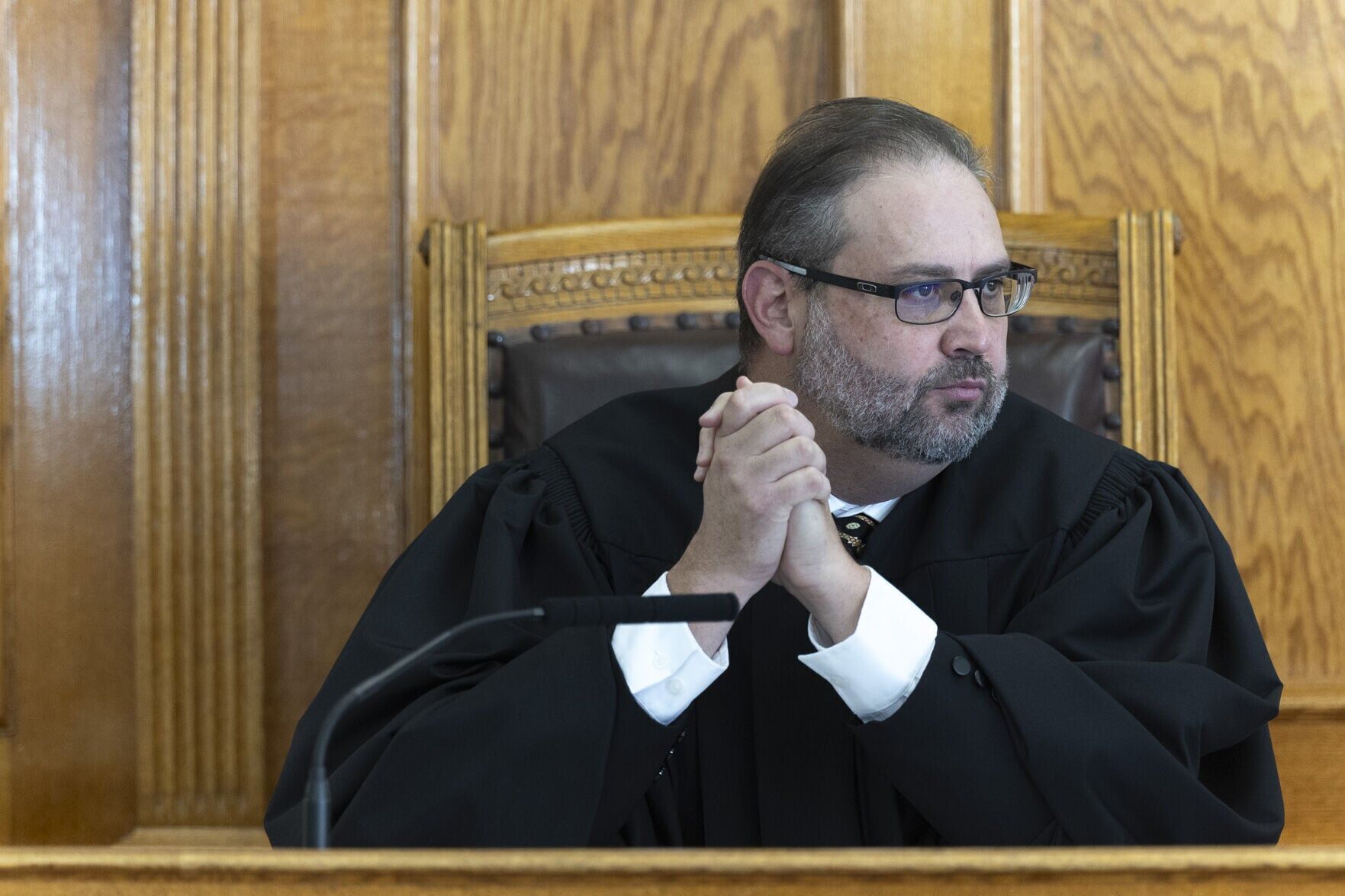
Anaconda-Deer Lodge District Court Judge Jeffrey Dahood granted the motion the next day, ordering everything in the case be sealed “until trial is completed or further Order of this Court.” Brown would be arrested three days after his order.
Nine months later, on Friday, Dahood unsealed every one of those documents in Brown’s case except for a mental health evaluation, detailing what allegedly transpired on the morning of Aug. 1 at the Owl Bar and when Brown allegedly fled into the Anaconda Range afterward, where he would elude dozens of police officers for a week before being captured in a trailer close to town on Aug. 8.
But those records were only unsealed after a consortium of Montana news outlets and organizations, including The Montana Standard’s parent company, Lee Enterprises, sued to get the records unsealed, relying on state law, the Montana Constitution, and a series of Montana court rulings to successfully argue the court did not give news outlets their due right to argue why the documents should be public before they were sealed.
The coalition sued in January, arguing that court precedent in Montana requires that media “be allowed to be heard and participate in the decision-making process prior to sealing court records.”
Dahood originally denied that motion, saying the news outlets had not shown why they should be heard on the matter. He also never allowed the news outlets’ motion into the case’s record in Anaconda-Deer Lodge County.
But a five-justice Montana Supreme Court panel in March sided with the news outlets. In a 5-0 decision written by Chief Justice Cory Swanson, the court said Dahood erred when he failed to allow the news outlets to argue why the records should not be sealed: “This reasoning reflects a fundamental misunderstanding of governing law.”
Swanson’s opinion also found that never allowing the news outlets’ motion into the case record ran afoul of state law and the right-to-know provision of the Montana Constitution.
The decision did not directly force the unsealing of the documents, just the chance for the news outlets to be heard. But state attorneys, in discussion with the news outlets’ attorneys, agreed to unseal every record except for Brown’s mental health evaluation. The state attorneys filed a motion to unseal those documents, which Brown’s attorneys did not oppose.
"After strategic consideration by the State, consultation with the defense, and after having consulted counsel for the media, the State moves to unseal all documents in the record except for Ct. Doc. #25 and moves to vacate the hearing currently set for April 30, 2026," the motion said.
Dahood granted it, giving the attorneys time to notify the victims’ families the documents would be made public May 8.
Following the release of those documents on Friday, the news outlets’ legal firm said Dahood had signed another order on Friday allowing the state to file new fitness to proceed and mental health evaluation documents under seal, and that an evidentiary hearing be held for the news outlets and other parties to discuss the necessity of sealing those documents on June 10.



Comments ()