
In Butte, Democratic heavyweight Pete Buttigieg stumps for Montana Plan
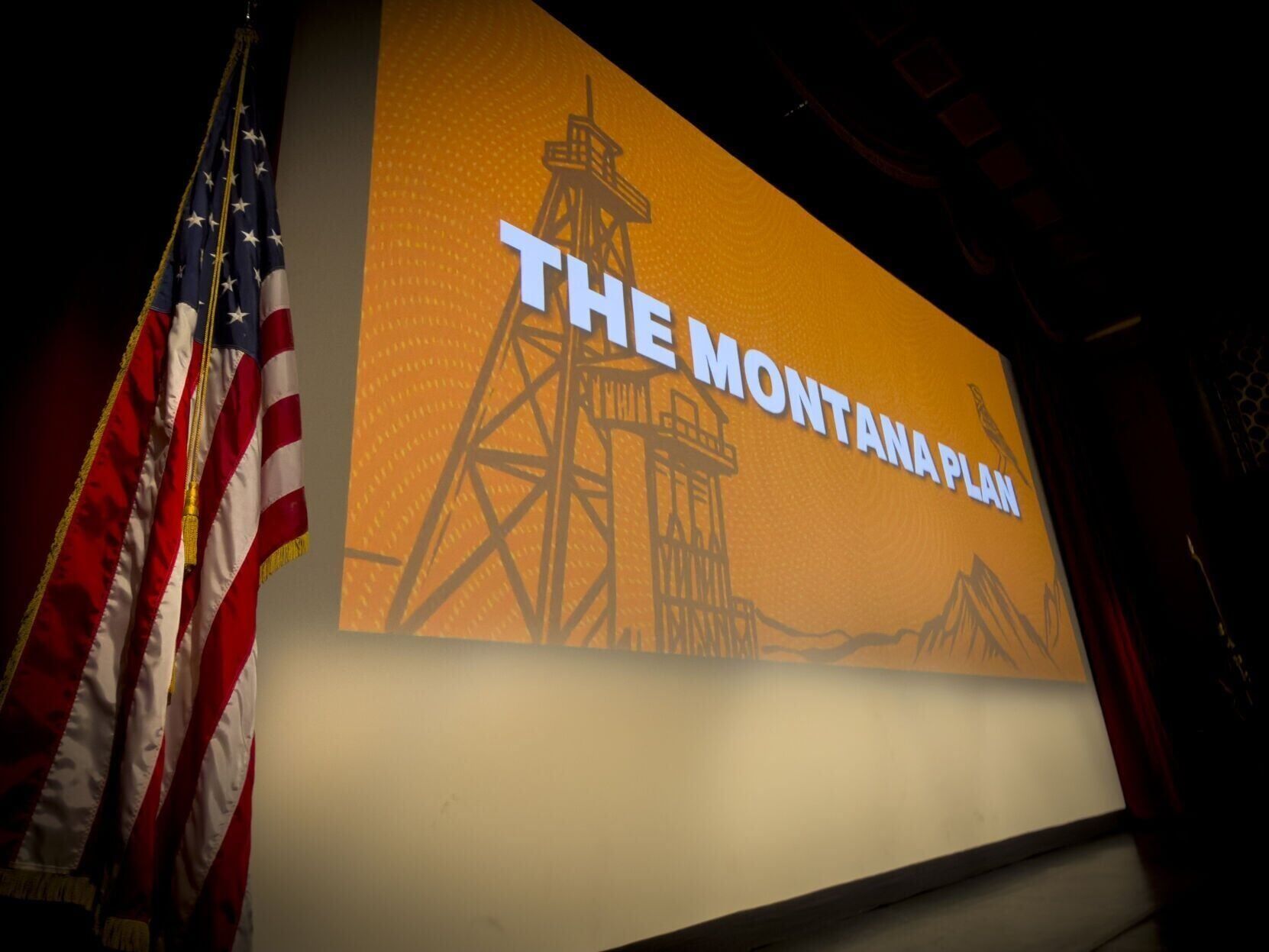
BUTTE — The Montana Plan, a statewide ballot initiative with hundreds of volunteers gathering signatures to reduce corporate election influence, has Pete Buttigieg’s attention.
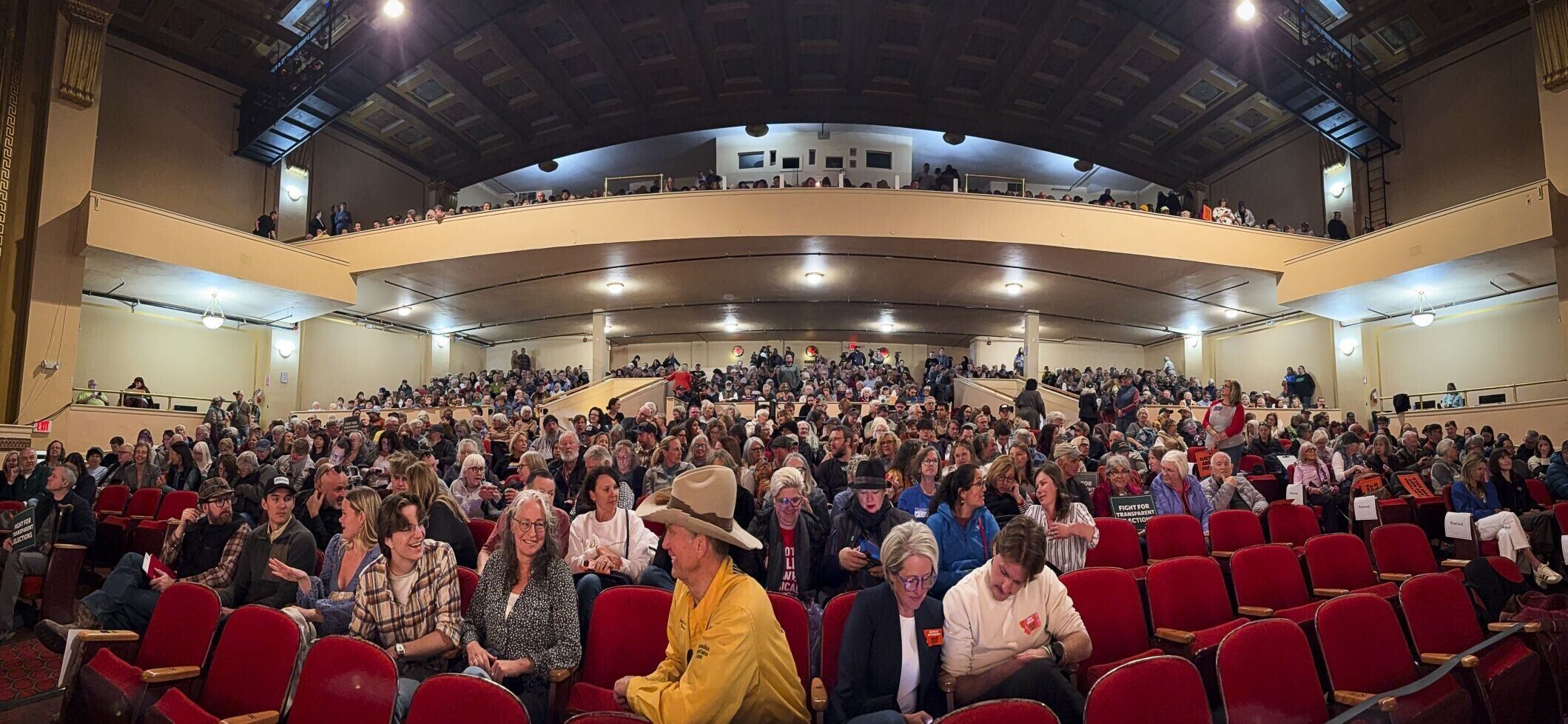
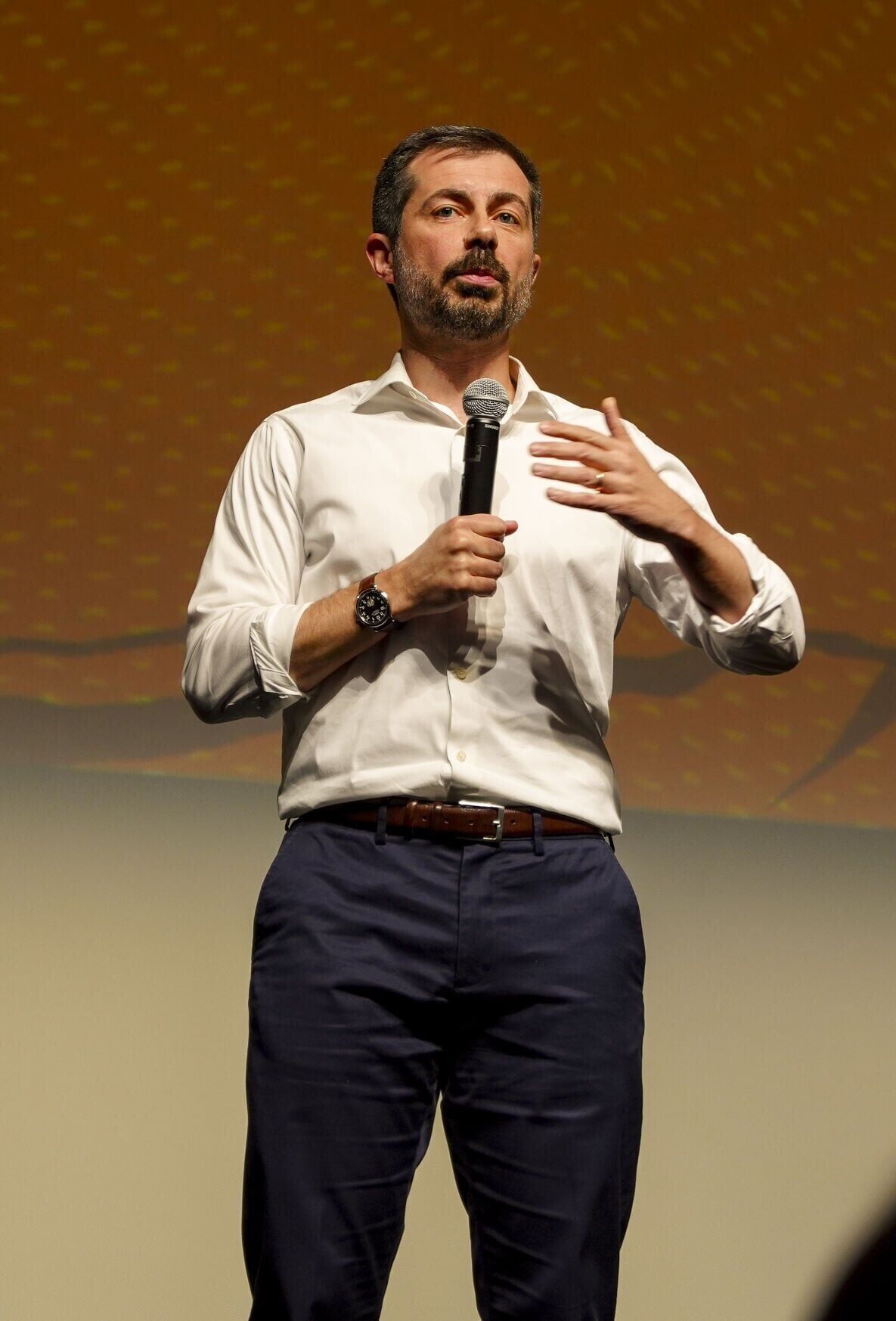
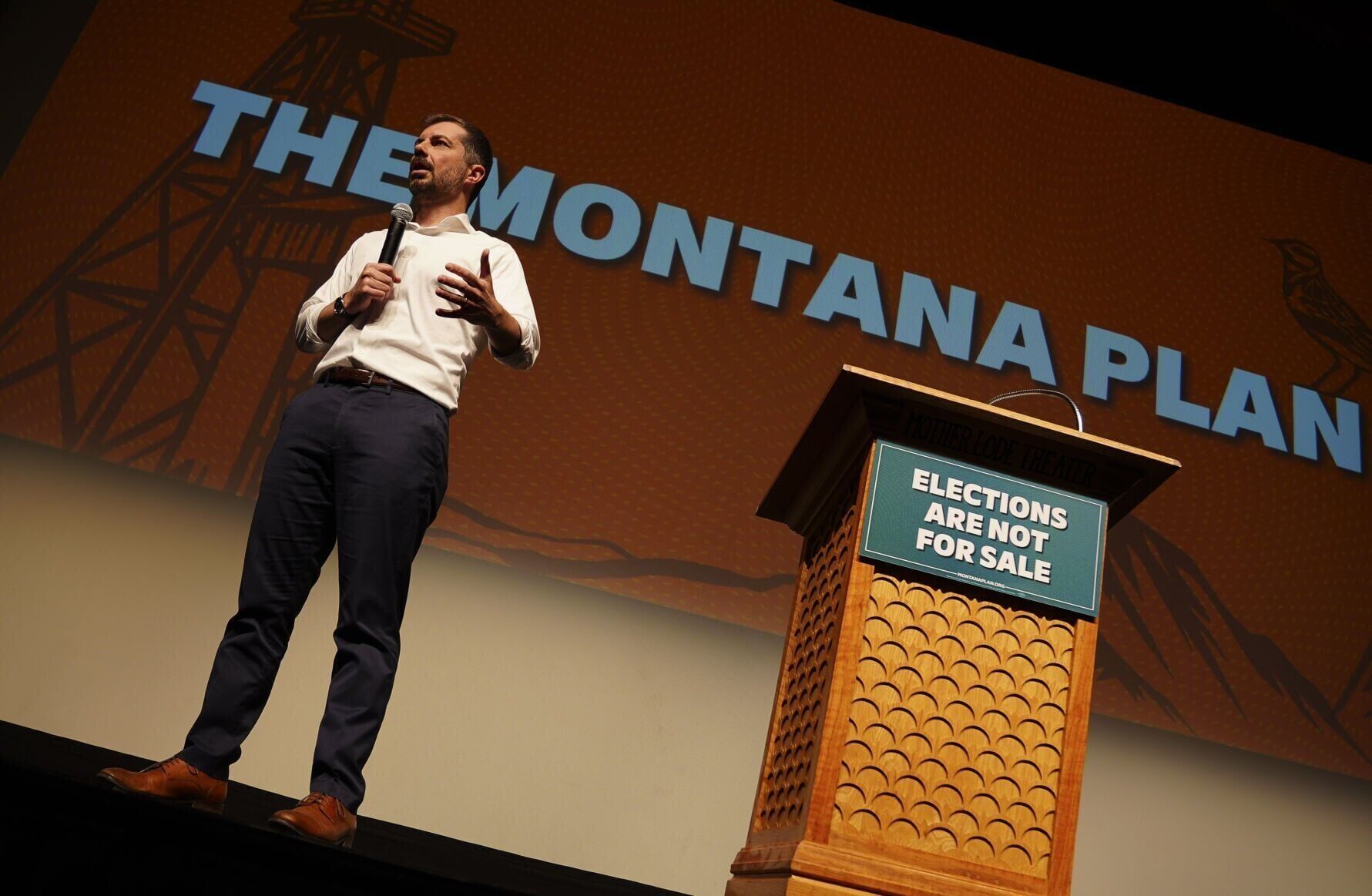
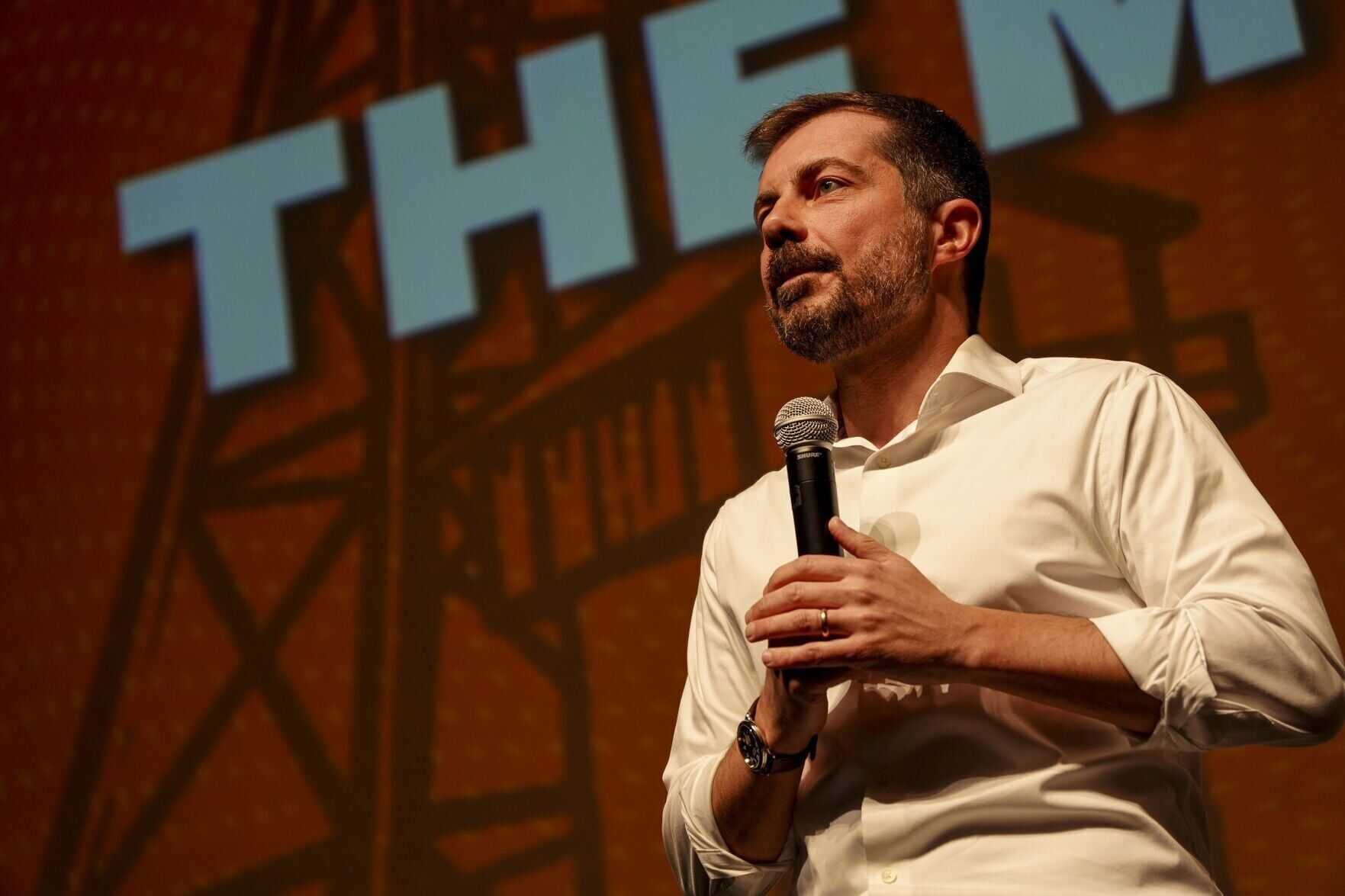
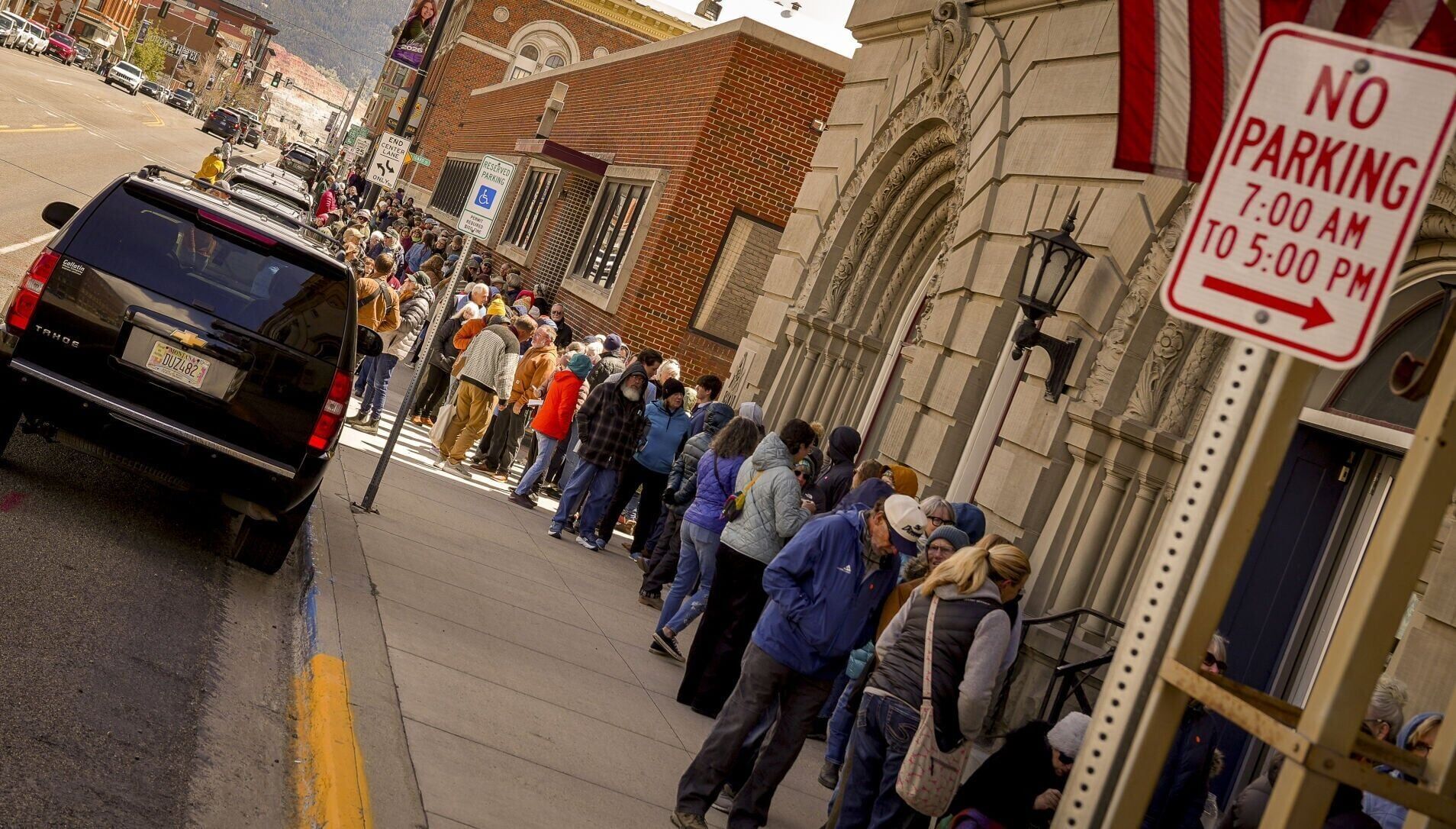
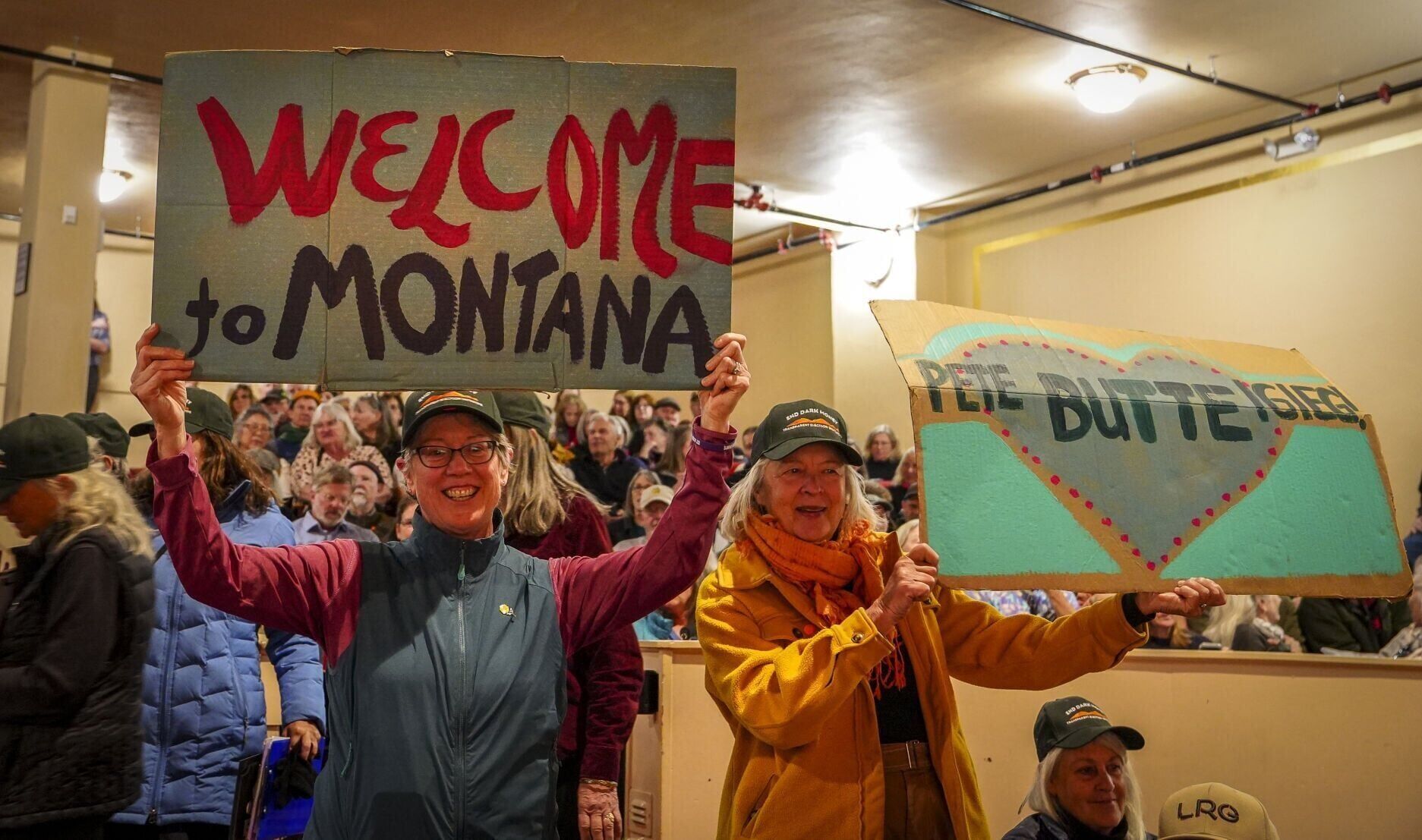
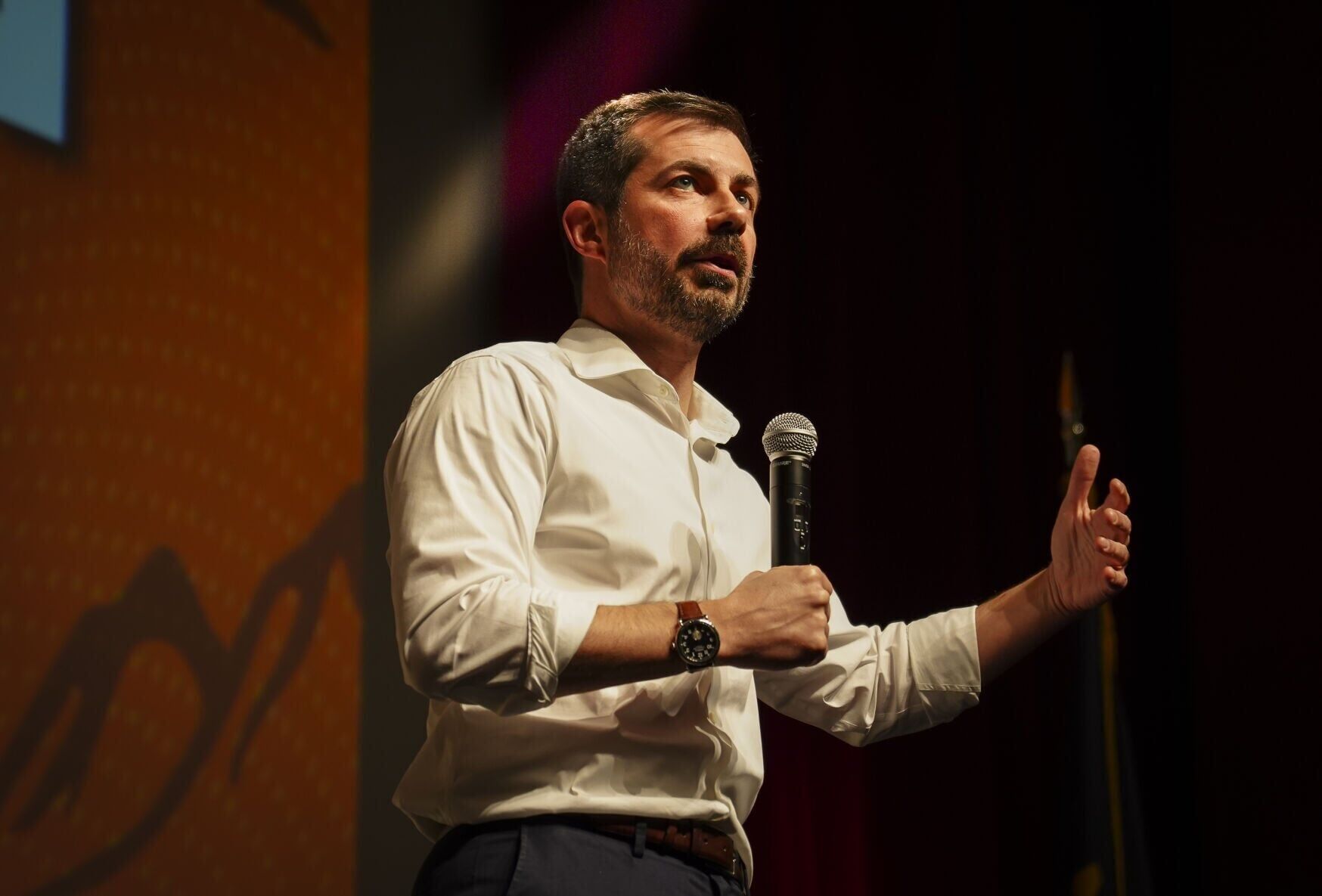
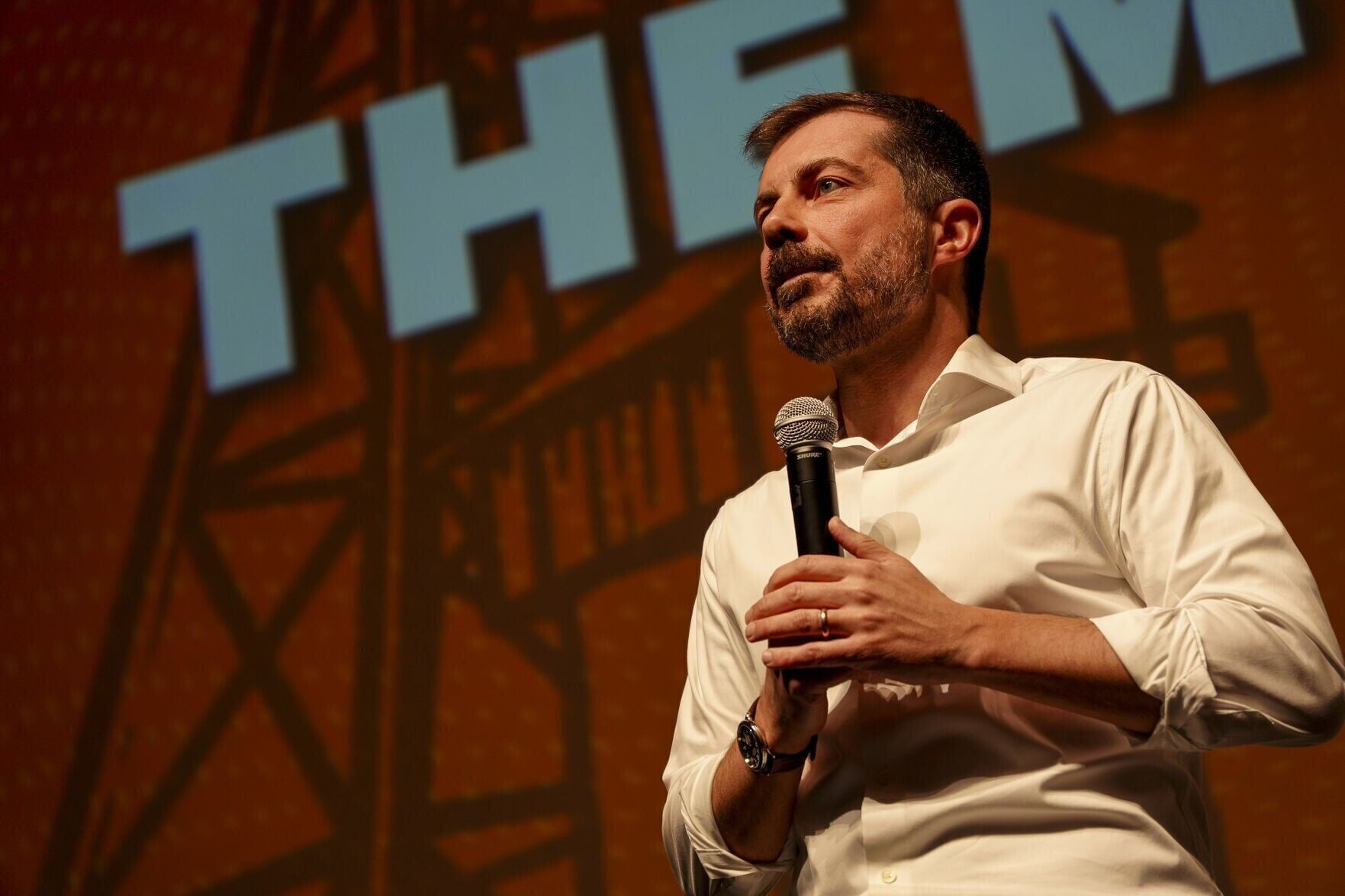
Hundreds of eager attendees awaiting the former South Bend, Indiana, mayor, a 2020 Democratic presidential contender and former U.S. Secretary of Transportation, wrapped a block away from the 1,203-seat Mother Lode Theatre in Butte on Sunday for Buttigieg’s Montana Plan town hall. At times, the more than 1 1/2-hour event more closely resembled a campaign rally with a tinge of anti-corporate capitalism.
After answering questions from more than a dozen audience members, the Chronicle had one backstage question for Buttigieg: What inspired his support of the Montana Plan to travel across the country and tout its importance?
“It came across my radar a few months ago,” Buttigieg said. “It started out seeming like an academic thing, this theoretical principal, one that could be immune to the Supreme Court’s (Citizens United v. FEC) decision that free speech is the same thing as (corporate) campaign influence.
“The more I looked at it, the more I thought, ‘This really is a very creative way to establish this principal.’ I’m not a constitutional expert. A lot of people think this is so much stronger than anything that’s been done.”
Approximately 32,000 signatures are needed by June 19 to put the Montana Plan on the ballot. It’s a tall but possible order, according to Tom Moore, a senior fellow of Democracy Policy at the Center for American Progress, a prominent Washington, D.C.-based public policy research and advocacy organization.
Moore wrote the 170-page white paper, the original concept for the Montana Plan, in 2024.
“Buttigieg mentioned (the Montana Plan) at a speech somewhere a couple months ago,” Moore told the Chronicle. “The goal of having Buttigieg show up is to get people fired up, get more signatures, and get this over the top.”
Taking paid leave, Moore flew to Montana for the first time in 10 years, gathering signatures as a volunteer for the now nationally recognized effort that began in his head.
“I wanted to put some sweat equity into this,” said Moore, who stopped by the Chronicle on Friday with Brady Wiseman, a former Democratic Montana House member representing District 65, which encompasses parts of Bozeman and Belgrade.
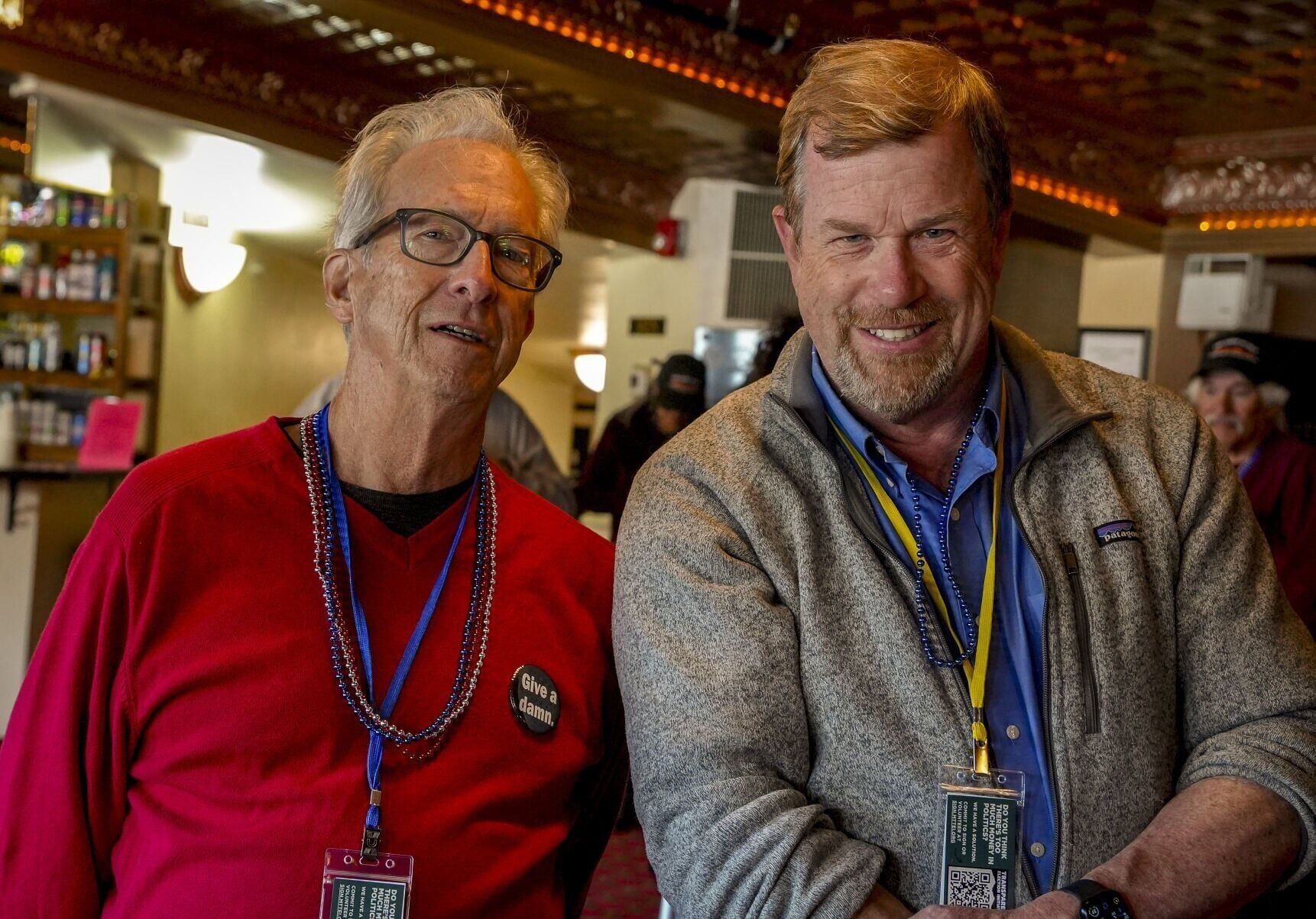
More than 80 clipboard wielding volunteers are gathering signatures in the Bozeman area. The Montana Plan garnered 20,000 signatures before the town hall. Approximately 32,000 are needed statewide to place the initiative on the November ballot, per Wiseman.
The petition must contain signatures equal to 5% of total votes cast for governor from at least one-third of Montana legislative districts to qualify for the referendum, per Ballotpedia, a digital political encyclopedia.
Approximately a year and a half ago, Moore, 58, sent his concept to Jeff Mangan and 50 other professors and activists. Mangan, a former Democratic Montana House and Senate member, and the state’s nonpartisan Commissioner of Political Practices from 2017 to 2023, turned Moore’s idea into the nonprofit Transparent Election Initiative.
“Jeff called me up late that night ... ‘We are doing this in Montana’,” Moore said,. “People always say, ‘Why Montana?’ It’s got this great history of states’ rights, fighting political corruption. I handed Jeff a match and he lit it.”
Mangan now leads the Transparent Election Initiative.
“People saw what was happening in Montana,” Moore said. “Jeff got the word out fast, broadly. We ended up with (similar) bills in 14 states. It went viral.”
Although Hawaii was the first to pass legislation banning corporate and dark money political spending, just last week, its law is slated to go into effect on July 1, 2027. If the Montana Plan passes the ballot box, the Treasure State could be the first where such a policy goes into effect.
“When I got to the Center for American Progress, I worked on whether corporate boards were really given the authority to make these (election contribution) decisions,” Moore said. “It got me thinking about corporate power. Corporations are creatures of state law. They do not exist outside of statutes. They get every single one of their powers from the state, their power to own property, to sign contracts.”
A Georgetown Law school alumnus, Moore jokes he could easily lecture on the legal theory behind the Montana Plan for hours.
“This power to spend in politics must also come from the state. Since Dartmouth College v. Woodward, 1819, the Supreme Court said (corporations) only exist in law. What came from that case was all these states put in these clauses saying, ‘We can change up (corporations’) powers at any time or get rid of them at any time.
“If they can do that, then why not just no longer grant them the power to spend in politics?”
Montana’s Corrupt Practices Act was a landmark voter initiative passed in 1912 banning corporate money in elections and preventing the “Copper Kings”, the state’s Gilded Age industrial titans, who fiercely fought for control of Butte’s booming copper industry by buying politicians.
The 2010 Supreme Court Citizens United decision fundamentally transformed American campaign finance, including shutting down Montana’s law. The 5-to-4 ruling determined the government cannot restrict independent political spending from corporations, associations and labor unions, enshrining the spending as protected First Amendment freedom of speech.
Neither the Republican nor the Democratic Party supports the Montana Plan, per Wiseman.
“The official party structure is not supporting us,” he said. “Our Legislature won’t pass it, and our governor wouldn’t sign it. (Neither party) likes that money pulled from their pockets.
“People are traveling to Montana to work on this because the Montana Plan is so profound, so simple, yet so powerful.”
That includes Buttigieg.
“I know I have a strong partisan profile,” Buttigieg said. “I wasn’t sure whether I should become directly involved or not, but I learned there are people across the aisle (in support) of this. I learned there is a need for signatures, that it’s going to take a lot of grassroots work.”
The Montana Plan wasn’t the only topic for Buttigieg at the town hall.
Q: In addition to the Montana Plan, what other reforms can be taken to end political corruption in Washington, D.C.?
A: “The biggest long-term bulletproof way to deal with Citizens United is a constitutional amendment dealing with some of the problems it created. We’ve done it 29 times. We kind of forgot how to do it recently.
“This country changed its Constitution so people couldn’t drink beer. Then we thought, ‘Well, that’s a dumb idea.’ Then we changed it again.
“I feel the same way about the popular vote. There’s this idea out there that the status quo of the Electoral College benefits small states. It maybe benefits some states, but a place like Montana is completely disempowered. Imagine if Republicans had to come campaign in Montana if they wanted to be president. Imagine if Democrats had to come campaign.”
“There are reforms to the Supreme Court most people would support. An easy one is term limits.
“There’s some things we can do to make the House of Representatives a little bit more representative. How about we just don’t have gerrymandering at all?”
Q: What are the plans to fix growing medical expenses?
A: “I will defend the Affordable Care Act. I will defend Medicaid and Medicare. We have to do more. We should have Universal Healthcare, so no one must ask themselves if they are going to make housing or food cuts to pay for medical care.”
Q: Could the Montana Plan hurt grassroots advocacy organizations? What safeguards are in place to prevent the ballot measure from hurting community organizing?
A: “I am no one’s idea of a legal expert. The Montana plan is focused on corporations and what they can do. Not every artificial person is a corporation. That’s where some of the language tries to make clear that difference.
“The biggest problem we have today is a wild imbalance of power between these vehicles that can mobilize tens to hundreds of millions of dollars on behalf of corporations, with them sometimes hiding behind these groups to manipulate elections.”
Q: How can political discourse be more civil?
A: “That’s why I developed this unexpected specialty of going on Fox News. It’s not that I believe them when they say they are fair and balanced, but it’s that I know a lot of viewers tune in in good faith.
“I think civility would improve if we had more (legislative) outcomes that at least roughly reflect what most most people believe.”
Q: How can young people be encouraged to engage in politics?
A: “It takes folks from different generations caring. If you’re younger than I am, most of what you’ve witnessed at the national level has been policy failure.
“You’ve lived the Iraq war, Afghanistan War, financial crises, housing, education getting absurdly unaffordable. It’s enough to make anyone feel cynical about the process.”
Q: What sacrifices do you see Democrats willing to take to reaffirm and reestablish a separation of powers between the executive and legislative branches?
A: “This is gonna be tricky. On the one hand, I believe in a robust use of existing law and tools to get things done. One the other hand, it’s very clear our presidency is out of control.
“It turns out if you really want an executive branch to be constrained, it turns out that self-restraint was doing more work to hold up our constitutional system than we thought. If Congress is supine and the courts are complicit, the reality is the executive branch can get away with anything. Democrats should embrace a robust and representative Congress that can hold its own and courts that don’t answer to one or the other party.”


Comments ()