
Judge to Crazy Mountain Ranch: Be more careful about vetting water sources for golf course
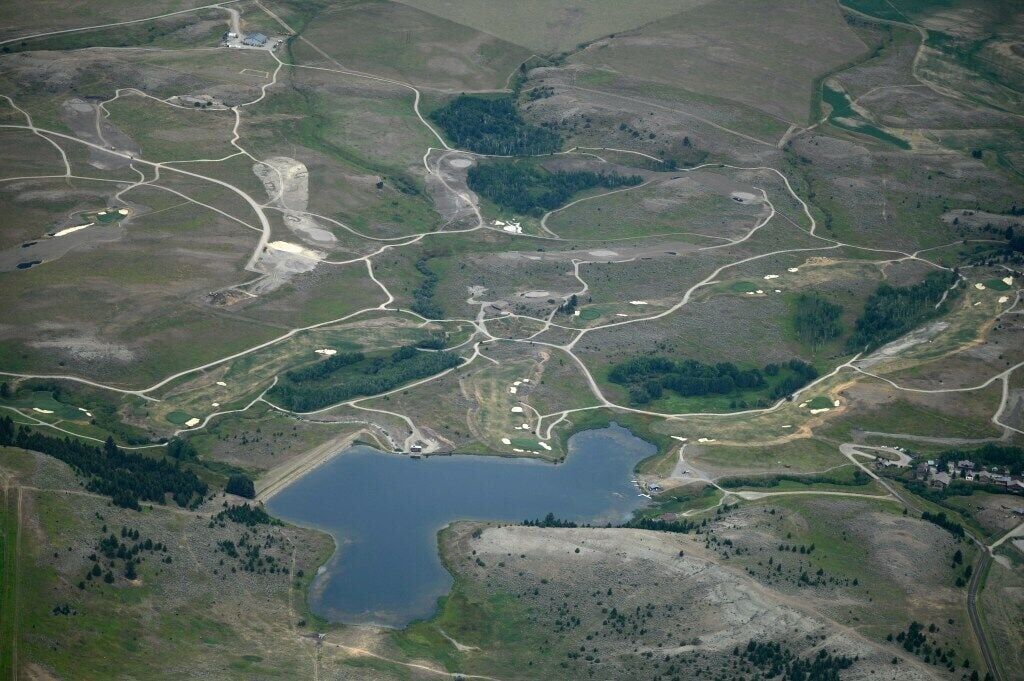
Did the luxury resort Crazy Mountain Ranch illegally use hundreds of thousands of gallons of water to keep its golf course green last summer? And if so, was the violation egregious enough that the multi-million dollar resort developer should pay $1,000 for each day it improperly watered its invitation-only club with water from a well in Boulder?
These were two of the main questions District Court Judge Matthew Wald weighed during a Thursday morning hearing. Ultimately, Wald found that during an eight-day period last summer, Crazy Mountain Ranch relied on water it shouldn’t have used. However, he acknowledged that Crazy Mountain Ranch appeared unaware that the town of Boulder was selling ill-gotten water and decided not to levy the $8,000 fine requested by Montana’s water-right administrator. Instead, he told the ranch to be more careful about vetting water sources in the future.
“You don’t just get to do a wink and a nod and say, ‘I can use the water and don’t have to figure it out,’” Wald said. He also chastised the ranch for not being more careful, reminding their lawyer that under the consent decree the parties signed in July “to make damn sure that the water you put on those sodded acres is compliant — and it wouldn’t have taken a lot.”
The ruling came directly after two hours of debate between Crazy Mountain Ranch and the Montana Department of Natural Resources and Conservation, which took place before a small audience assembled at the Park County courthouse. It’s just the latest in a yearlong legal battle between Crazy Mountain Ranch and the state over how Crazy Mountain Ranch sources water to keep the 18-hole golf course it’s constructing green, without infringing on the needs of agricultural neighbors.
In marketing materials, CrossHarbor describes the golf course as “challenging, yet very playable course that seamlessly blends with the landscape.” Crazy Mountain Ranch has weathered criticism from neighboring landowners who fault DNRC for starting construction on its golf course before it had secured the necessary approvals to irrigate it, an action for which Sam Byrne, co-founder of Crazy Mountain Ranch’s parent company, has since apologized for, arguing it wasn’t intentional.
All parties agreed that the ranch had purchased hundreds of thousands of gallons of water from a well in Boulder lacking a valid water right, which is required by state law before a party can withdraw water from the state’s rivers or aquifers. Crazy Mountain Ranch began trucking in the water from Boulder, around 130 miles away, last summer after Judge Wald faulted Crazy Mountain Ranch for irrigating its golf course with water from nearby Rock Creek that had been historically used for agricultural purposes.
The water in Boulder flowed up from an aquifer, around 80 feet under the ground, through a well located in a wooden pumphouse about 35 minutes outside Helena. (The ranch also began using water from Big Timber and a utility in Four Corners last summer. Though some protested, those purchases did not prompt legal proceedings.)
While both the Department of Natural Resources and Conservation and Crazy Mountain Ranch agreed that the Boulder well wasn’t a legal water source, they did not agree on whether it was the ranch’s responsibility to vet the well under the terms of a legal agreement Department of Natural Resources and Conservation and the ranch entered into in July.
It’s not clear why Boulder was selling illegal water – whether sloppy record-keeping, a misunderstanding or something else. Boulder is not facing legal repercussions, but the city has agreed to stop selling water since the issue surfaced. (Boulder declined to comment on the matter on Thursday.)
Crazy Mountain Ranch attorney Peter Scott argued that his client had “no duty to investigate” the legality of the City of Boulder’s well and that Crazy Mountain Ranch shouldn’t be penalized for Boulder’s decades-long use of an illegal well. He also argued that Crazy Mountain Ranch was being unfairly targeted by the state. The golf course, which partially opened for use last year to members of its invitation-only ranch, is owned by CrossHarbor Capital Partners. That company also owns Yellowstone Club, an exclusive skiing and golfing community whose members include Tom Brady, Bill Gates and Eric Schmidt.
“There’s no evidence that CMR had actual knowledge — and, importantly, no obligation to acquire additional knowledge” of the well in question, Scott argued. “There’s no pattern, there’s no intent, there’s no lack of good faith. The question just comes down to not should they or could they have found out, but were they required to do so.”
Department of Natural Resources and Conservation lawyer Jennifer Wells countered that Crazy Mountain Ranch had violated the Montana Water Use Act on multiple occasions to irrigate its golf course. Wells also argued that Crazy Mountain Ranch has repeatedly bristled at the agency’s efforts to get them in line with state law. She faulted Crazy Mountain Ranch for “persistent noncompliance and noncooperation,” highlighting the illegal water use that landed them in court in the first place.
She argued that Crazy Mountain Ranch in 2024 and 2025 irrigated its golf course with another source of water it should not have tapped into — namely, Rock Creek, a tributary of the chronically overallocated Shields River — without obtaining the required authorization. The use raised the ire of a dozen ranchers, agricultural companies and other downstream irrigators, who petitioned the DNRC to investigate. “CMR has yet again used unauthorized water,” Wells told Wald on Thursday.
Rich Serrazin, a water commissioner who divides up water among Shields Valley water-right holders when there isn’t enough to go around, was one of the few members of the public who attended the hearing.
“At least they got a little slap, anyway,” Serrazin said of the Judge’s decision to find Crazy Mountain Ranch out of compliance with the court order.
“It could really be tight on water this year,” he added. “It should stay limited to ag use, I think.”
While Thursday’s development ends the lingering question of whether the ranch will be fined over trucking in water from Boulder, it does not determine how the ranch will secure water for the golf course moving forward.
It could be years before the Crazy Mountain Ranch water-use issue is fully decided. The ranch is moving forward with two tracks to secure access to its existing water rights. In the near term, it’s hoping to temporarily lease water to itself using legislation that state lawmakers passed last year. In the long term, it’s going through a change application process so it can apply its existing — and substantial — water rights to the golf course, which is located on an area of the ranch that hasn’t previously been irrigated. Both applications are currently before the Department of Natural Resources and Conservation.
Its owners have defended the golf course, with its extensive water needs, as one of the primary amenities that allow parent company CrossHarbor Capital Partners to keep the ranch 90% undeveloped. If they lost the golf course, they’d need to build more homes, they have suggested.
Asked to reflect on what the order means for the larger landscape of water use and enforcement in Montana, Missoula-based attorney Graham Coppes offered that DNRC appears to be taking a more hands-on role to prevent illegal water use.
“This specific example is receiving so much scrutiny because of who it is and what it is and the amount of public outcry about it,” Coppes said, adding that he and others who value viable fisheries welcome the state’s shift toward enforcing the Montana Water Use Act.
“From my view, the government is the only actor with enough power and money to really step in and fill the void,” Coppes said. “If you think about the future, big developments, big data centers — [these] powerful market forces that have interests in water — having farmers trying to stand up to those people and enforce those water rights is a pretty out-of-balance equation.”



Comments ()