
Kurt Alme emphasizes Montana roots, conservative cred in early weeks on campaign trail
If there’s one thing the presumed Republican nominee for Montana’s open U.S. Senate seat wants voters to know about his candidacy, it’s that his roots in this state run deep.
The 59-year-old can tick through the mascots of the football teams he faced as a Miles City High School Cowboy and sometimes the final score. He has a story about meeting a legendary Dillon rodeo cowboy who he later learned was his childhood babysitter and anecdotes about hiking and fishing the Beartooth Mountains with his two now-grown children.
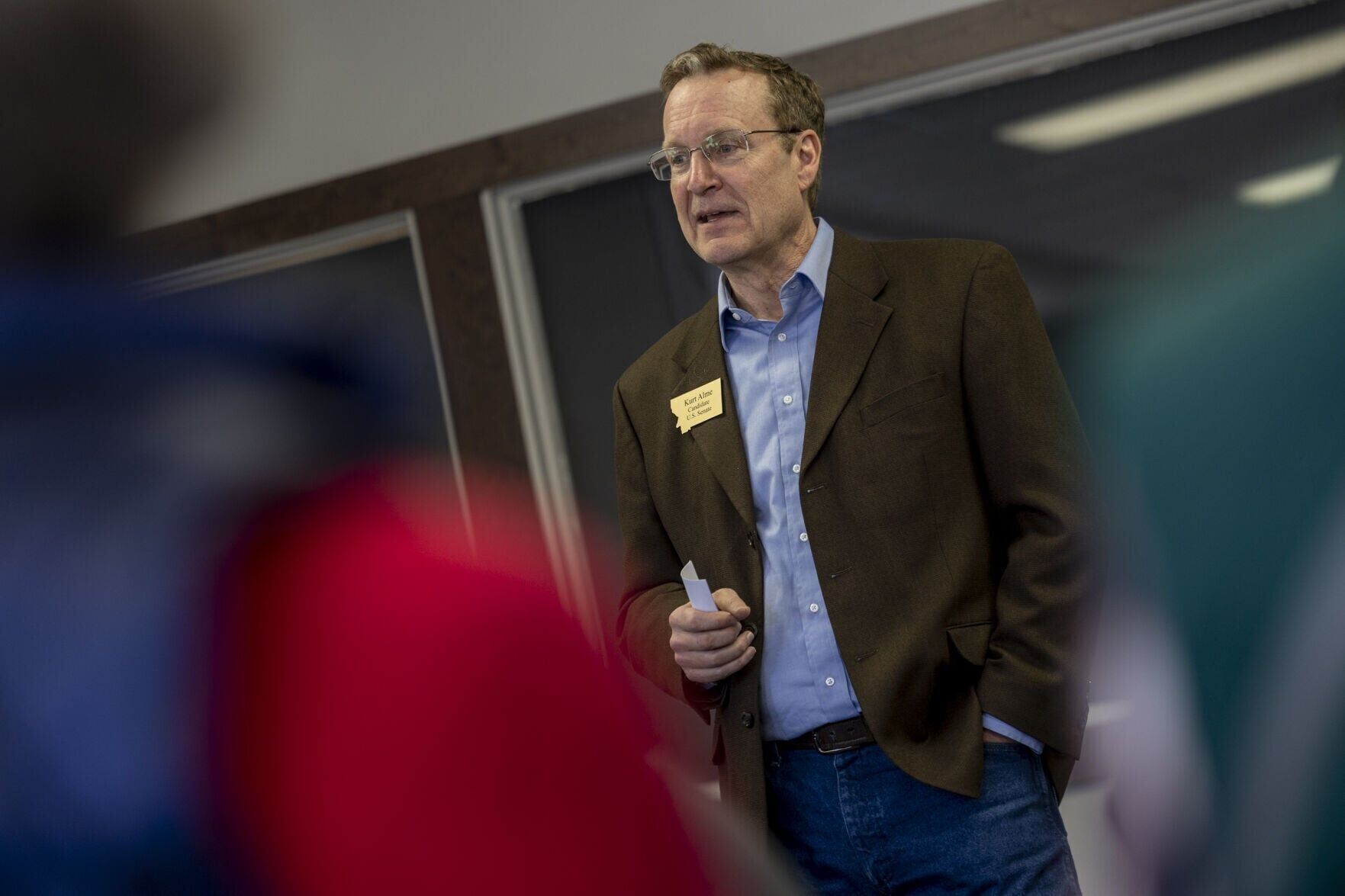
These vignettes are what Kurt Alme leads with when introducing himself in person to voters, not the fact that he’s endorsed by President Donald Trump and the state’s all-GOP federal delegation or a rabble-rousing run-through of GOP Platform hits.
It’s a choice that could be construed as an effort to separate himself from the undeniably cunning political maneuver that got him into the race.
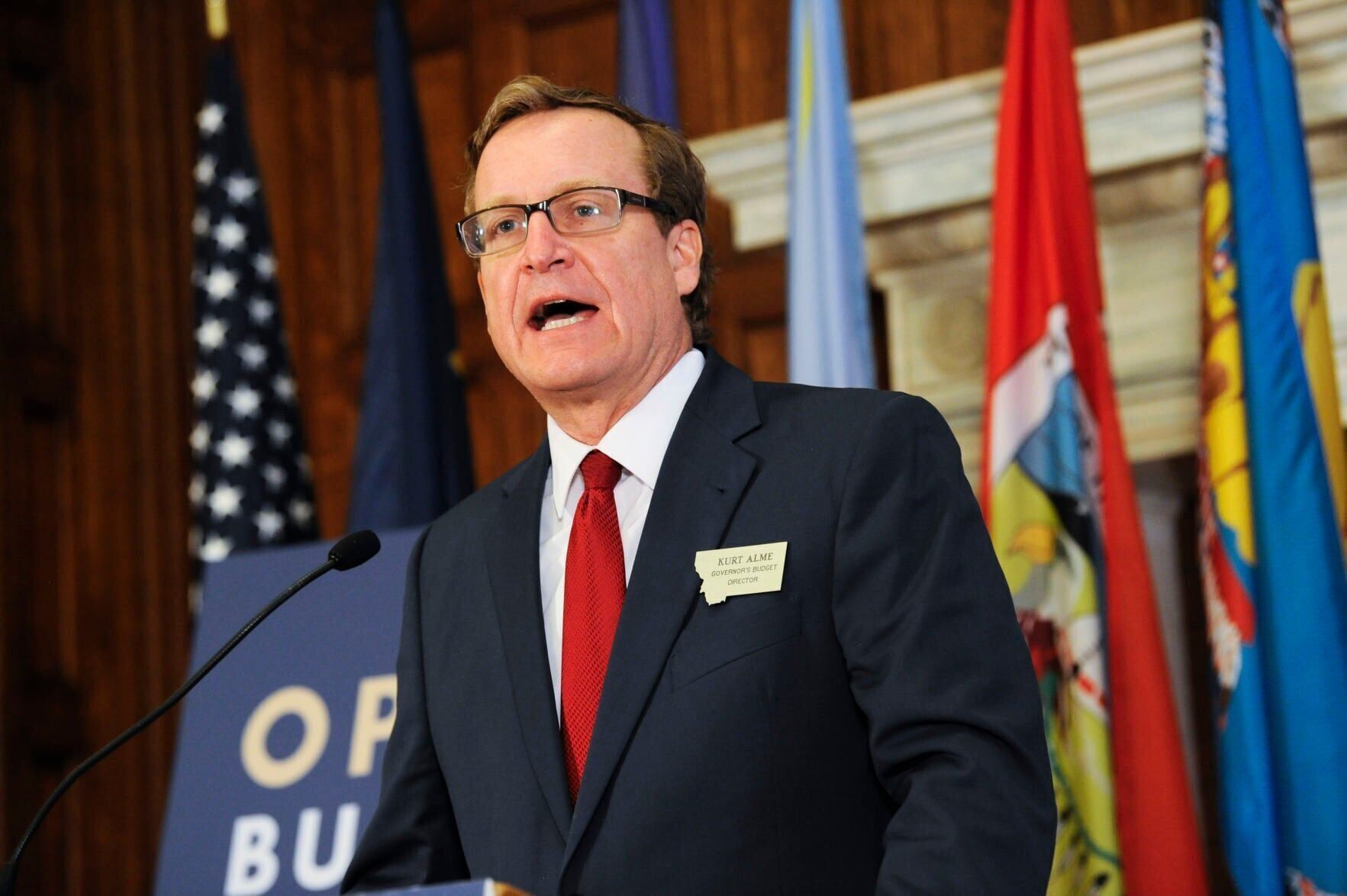
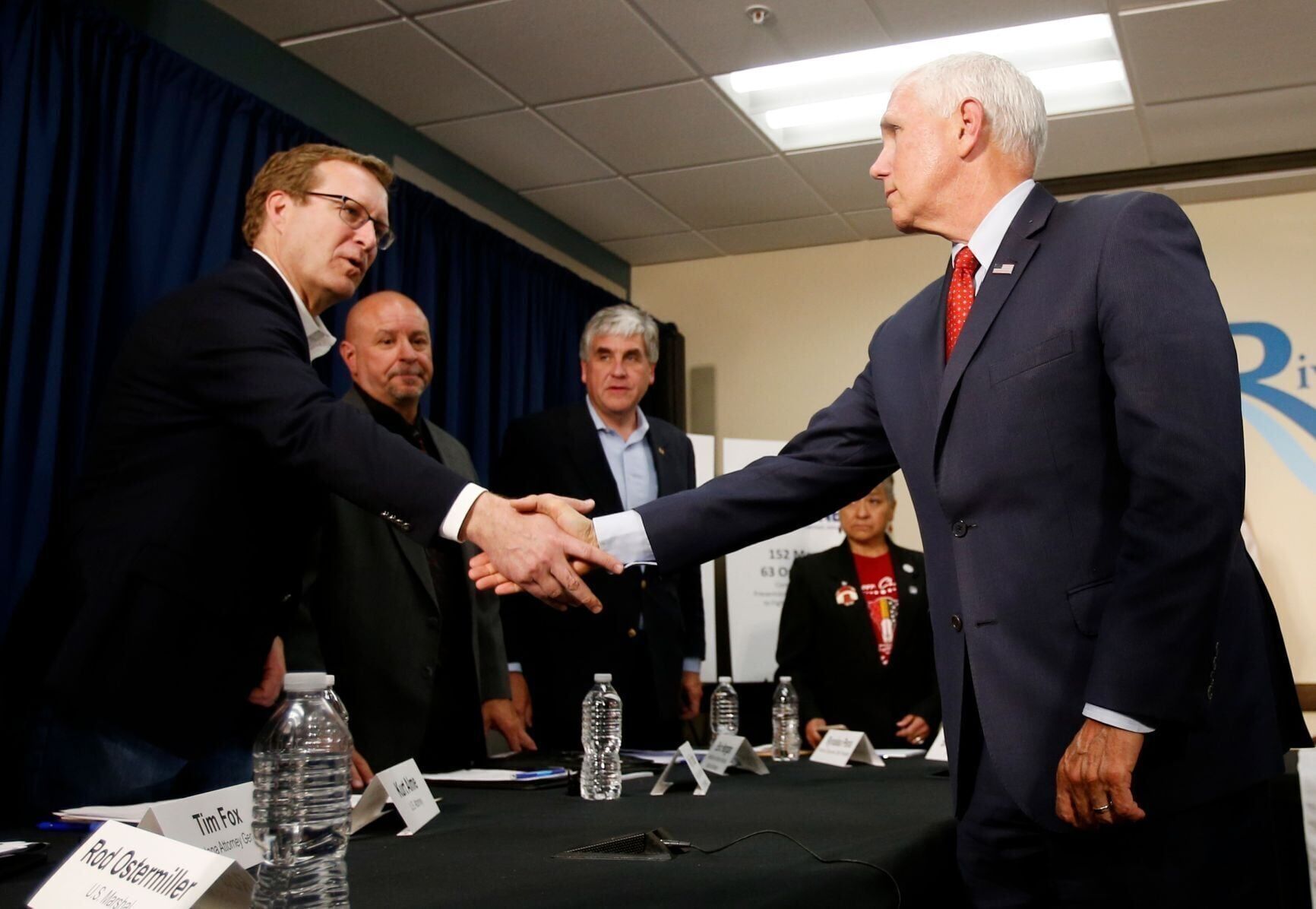
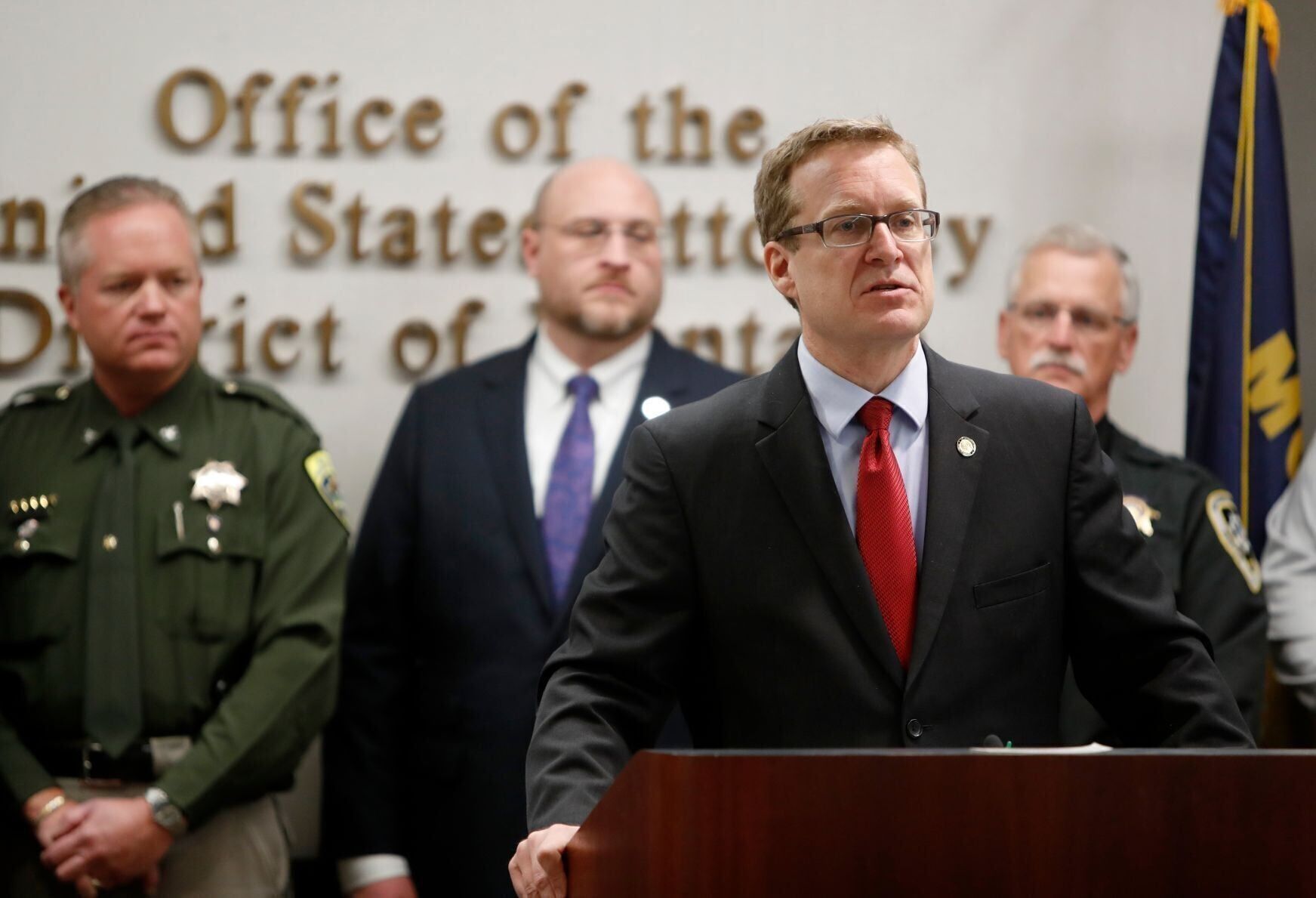
Alme, who served two stints as the Trump-appointed U.S. Attorney in Montana and almost one year as budget director under Gov. Greg Gianforte, was a relative no-namer to anyone outside the state’s Republican political establishment until the final day of candidate filing in March. Many heard of him for the first time when, minutes from the deadline, incumbent Sen. Steve Daines dropped out and Alme was teed up to take his place — a move intended to chill formidable competitors from entering.
But in a tough election environment, Alme has something Republican rising stars who have recently ascended to federal office — Tim Sheehy, Matt Rosendale and Gianforte — have lacked: bona fide Montana ties.
Though he faces two primary opponents, perennial candidate Charles Walking Child and mechanical engineer Lee Calhoun, Alme is the frontrunner by any metric. Most professional observers of politics would say that makes him the strong favorite to win the statewide race come November, even with the unexpected spotlight and fundraising firepower of independent candidate Seth Bodnar.
In the opening weeks of the campaign, Alme has been asked by disgruntled voters in rural and populated parts of the state who still appear at his events to explain his entrance into the contest. His responses, invariably on message, suggest a recognition that perhaps more important right now than burnishing his conservative credentials is building a brand that isn’t defined by the politicking that ushered him into the race, and instead focuses on a biography that voters relate to.
“Montana is my home. I’ve been a public servant my whole career, and here was another chance for us to step up and serve again,” Alme said at a brewery in Three Forks. “It really isn’t any more complicated than that.”
The issues
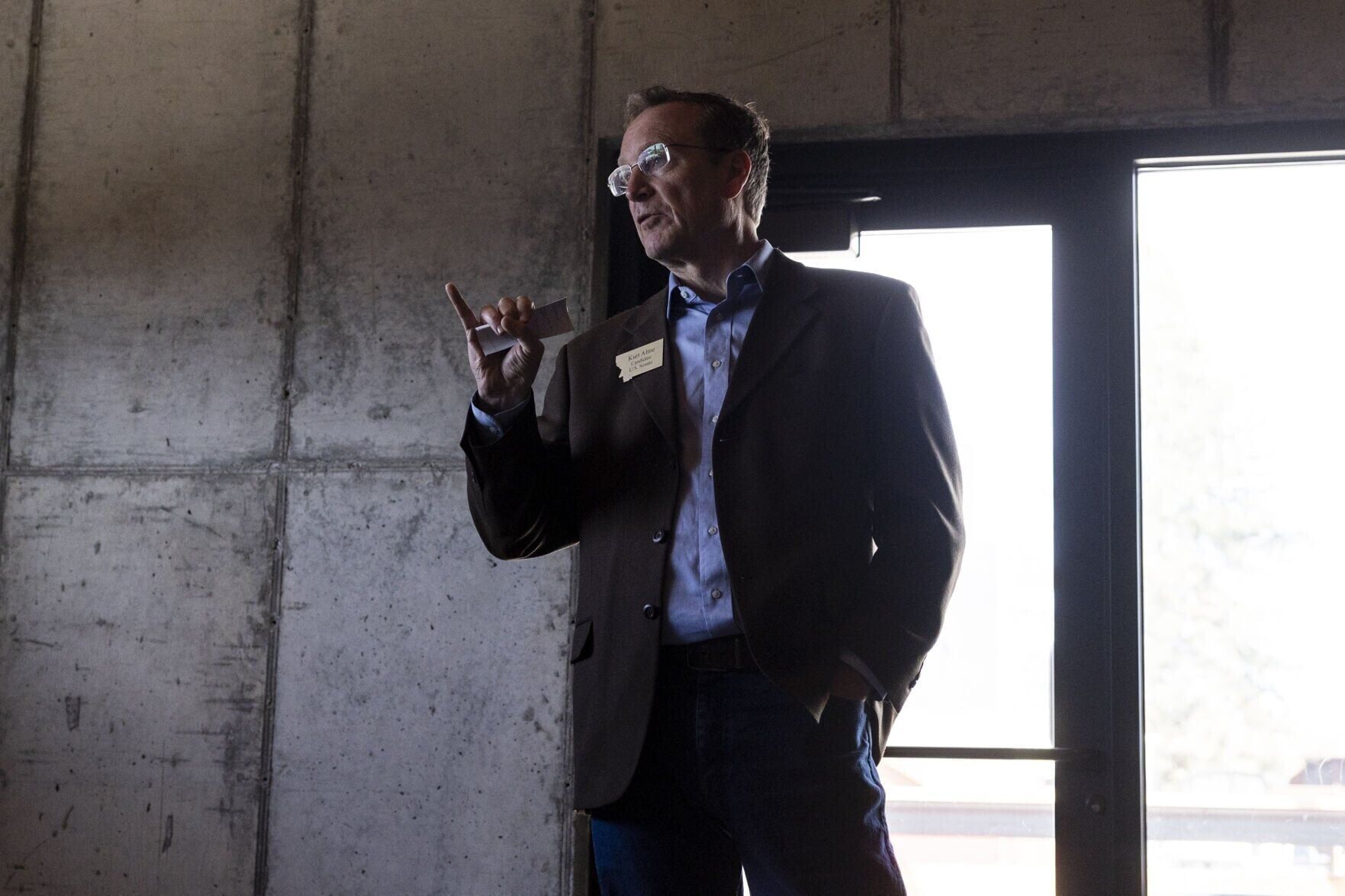
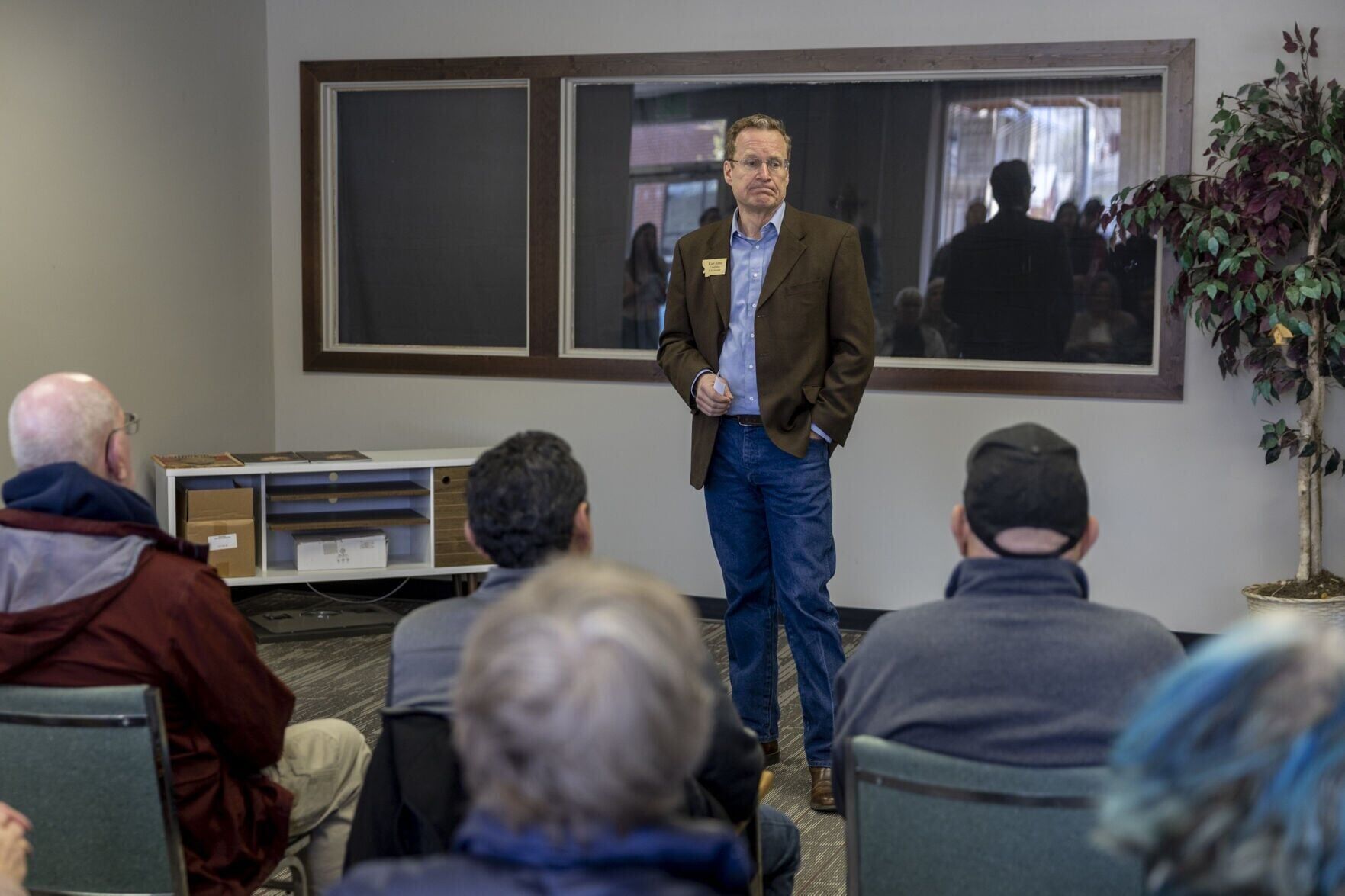
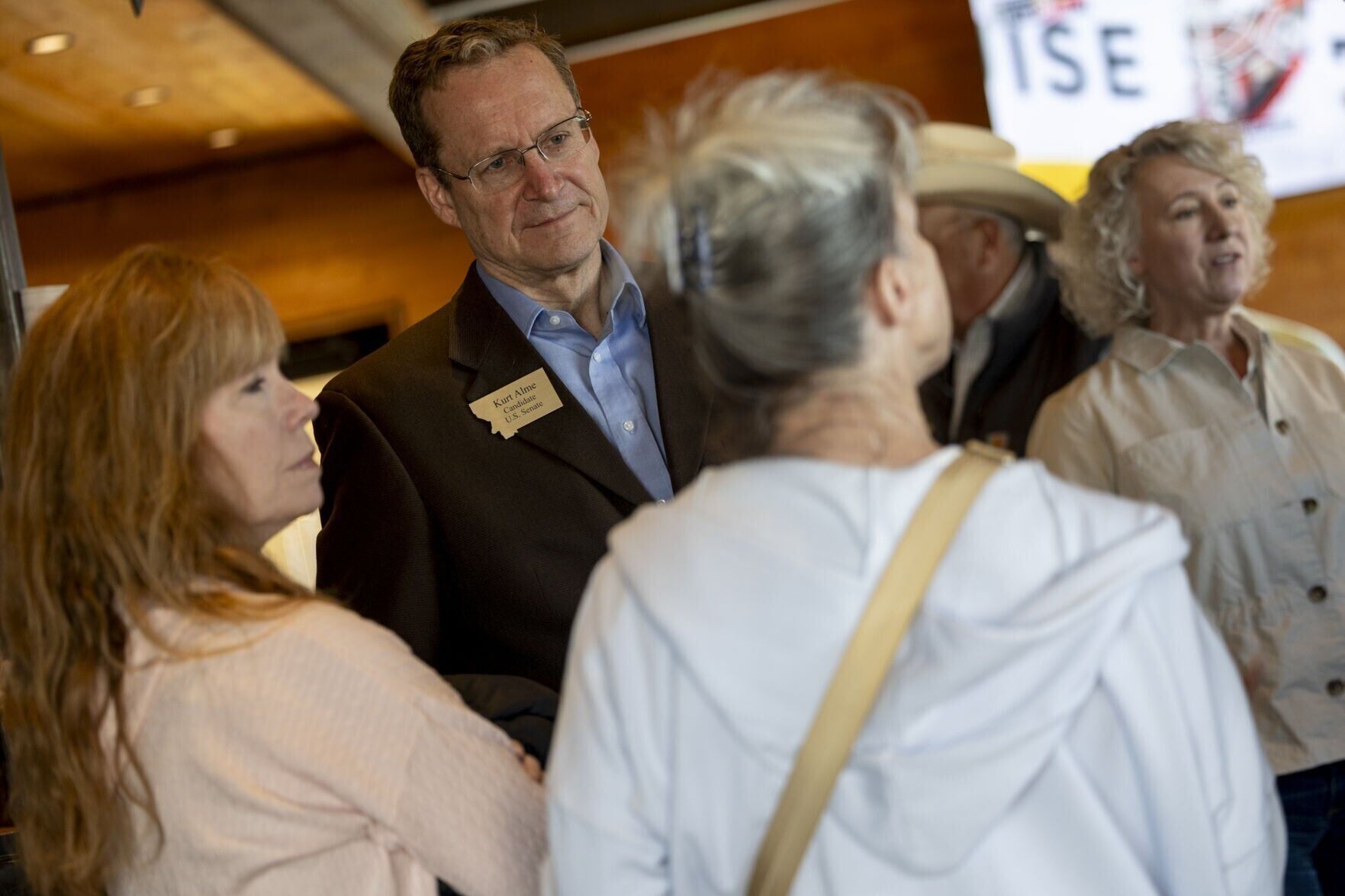
It took weeks for Alme to break the silence on his own campaign after officially filing to run for office. His early absence left many GOP voters wondering what the first-time candidate believes, and they have since started to show up, a couple dozen at a time, to events hosted by the campaign in coffee shops, breweries and storefronts throughout the state to find out.
Ever lawyerly, Alme has rolled out a platform organized neatly around three planks — affordability, public safety and preserving “the Montana way of life” — and an unwaveringly disciplined and understated stump speech to go with it.
To address the cost-of-living crisis, Alme says the federal government needs to reel in the deficit, pass a balanced budget amendment, which would require Congress to spend no more than it earns, and crack down on fraud. He says his work as budget director means he knows how to trim spending.
Positioning himself squarely as a law and order candidate, Alme points to his track record of prosecuting violent criminals while at the U.S. Attorney’s office as proof he can address acute public safety concerns he believes are tied to illegal immigration and drug trafficking.
“We need to continue to keep that border secure, and we need to support our law enforcement, our local law enforcement, state and federal,” Alme said. “They’ve got a tough job.”
After he gets through the high school mascots, Alme makes sure voters know he has Trump’s endorsement, which arrived in the form of a splashy social media post only a couple hours following the Senate announcement. He weaves mention of the president’s support throughout his stump speech, a notable choice given Trump’s declining popularity nationwide.
Alme told the Montana State News Bureau that the campaign believes the president’s policies are popular with most “common sense conservatives,” especially on things like affordability and public safety, so that’s where he plans to focus his message.
Alme is in lockstep with Trump on Iran — he says there’s a compelling national interest in preventing the country from developing a nuclear weapon — and compliments the White House’s use of tariffs when they are used to leverage trade conditions.
Montana isn’t considered a battleground state, but Alme acknowledges that faltering here could prove costly to Republicans’ grip on the Senate.
“If we lose Montana, we’ll likely lose the U.S. Senate, and we know that if that happens, what’s going to happen to the rest of President Trump’s term is it’s going to be derailed by Democrats,” Alme said.
Listening to Alme campaign can feel less like a raucous political rally and more like a college seminar, a tone that’s fitting for the Harvard University law school graduate who moves deftly between wonky policy topics and can recite from memory legal fine print; but given the Montana electorate’s skepticism of out-of-state thinking, Alme is quick to joke that his diploma from an Ivy League institution shouldn’t be a mark against him.
“Don’t hold it against me,” he said to laughs in Livingston. “I always tell people that we were able to come back to Montana with our Christian faith and with our conservative principles still intact, in fact maybe a little bit sharper from having to defend it more frequently.”
Montana 'way of life'
Through the opening weeks on the trail, Alme appears to have grown more comfortable with his new role as a Senate candidate. He no longer references a notecard while giving remarks, and he’s started to sprinkle some off-the-cuff color into his delivery of the typical stump speech.
But where he seems most at home is when it comes time to talk about his Montana values and how he’d preserve them as a senator. It’s a perspective Alme says first took shape while reading John Steinbeck’s "Travels with Charley" in high school and later came into focus during his four-year tenure as president of the Yellowstone Boys and Girls Club Ranch Foundation.
Akin to his platform, Alme delivers “Montana values” in a set of three, and by his definition there’s much overlap with traditional GOP talking points.
“The first one is our faith. I think in Montana, we want the freedom to live according to our faith and according to our conscience with the least amount of government intervention,” he said in Livingston. “And then second, hard work. I think in Montana we still believe in the American dream. We still believe that you can succeed if you work hard, no matter where you start.”
The third value is service.
“I think we go out of our way to help each other and help people who are truly in need without waiting for the government to step in first,” Alme continued.
Republican response
Alme looks to replace Daines, who became Montana’s first Republican U.S. Senator in more than a century when he won in 2014. Six years later he handedly bested former Democratic governor Steve Bullock in a year where Republicans swept political offices at the federal, statewide and legislative level and have continued to do so.
But the Senate seat’s solidly Republican footing took a hit when Daines decided not to run, leaving the race without an incumbent and introducing a potential foothold for an intriguing independent candidate with a compelling resume and access to deep pockets.
The maneuver may have created some skeptics in the Republican voter base, but it doesn’t seem to be turning them away, according to those who spoke with the Montana State News Bureau at Alme events.
Mark Knox, an army veteran who lives in Shields Valley, said he “wasn’t crazy” about the way things unfolded, but that after listening to Alme, he was encouraged by the Republican’s faith-first message and his version of Montana values.
At an event in Kalispell a couple weeks later, Debra Kuha-McPherson raised her hand to ask Alme why the kickoff of his campaign had been so “stinky,” referencing the last-minute changeup. The Flathead County Republican Central Committee officer wouldn’t dare vote for a Democrat, she said in an interview, but Kuha-McPherson still wanted to understand why voters had been cut out of the process.
Alme launched into his practiced response to the question he’s received time and time again in the first months since his campaign launched: Daines was ready to walk away, but didn’t want to lose the seat to a Democrat, so with only a few days notice, he asked Alme about replacing him.
“We had a lot of thinking to do quickly,” Alme said. “For us, it was about whether we were going to step up.”
Whether that answer passes the smell test for general election voters who aren’t reliably Republican and feel disenfranchised by the status quo remains to be seen. Bodnar, for one, is banking on it adding fuel to his campaign’s fire. But it was enough for Kuha-McPherson.
“I agree with everything he said,” Kuha-McPherson said after the event. “He’s a real Republican.”
Kal Munis, a political scientist at Auburn University who grew up in Philipsburg, suspects the handwringing will subside if Alme can just ride things out a little longer.
“A lot of that will be water under the bridge,” he said. “They might be a bit peeved, but voting against your party? That’s a big ask.”
Neither Walking Child nor Calhoun have raised enough to require reporting their campaign contributions, and they have been largely absent at candidate forums and other events.
Absentee ballots go out May 8. The Montana primary is June 2.




Comments ()