
Missoula County moves forward with Seeley Lake trail funding
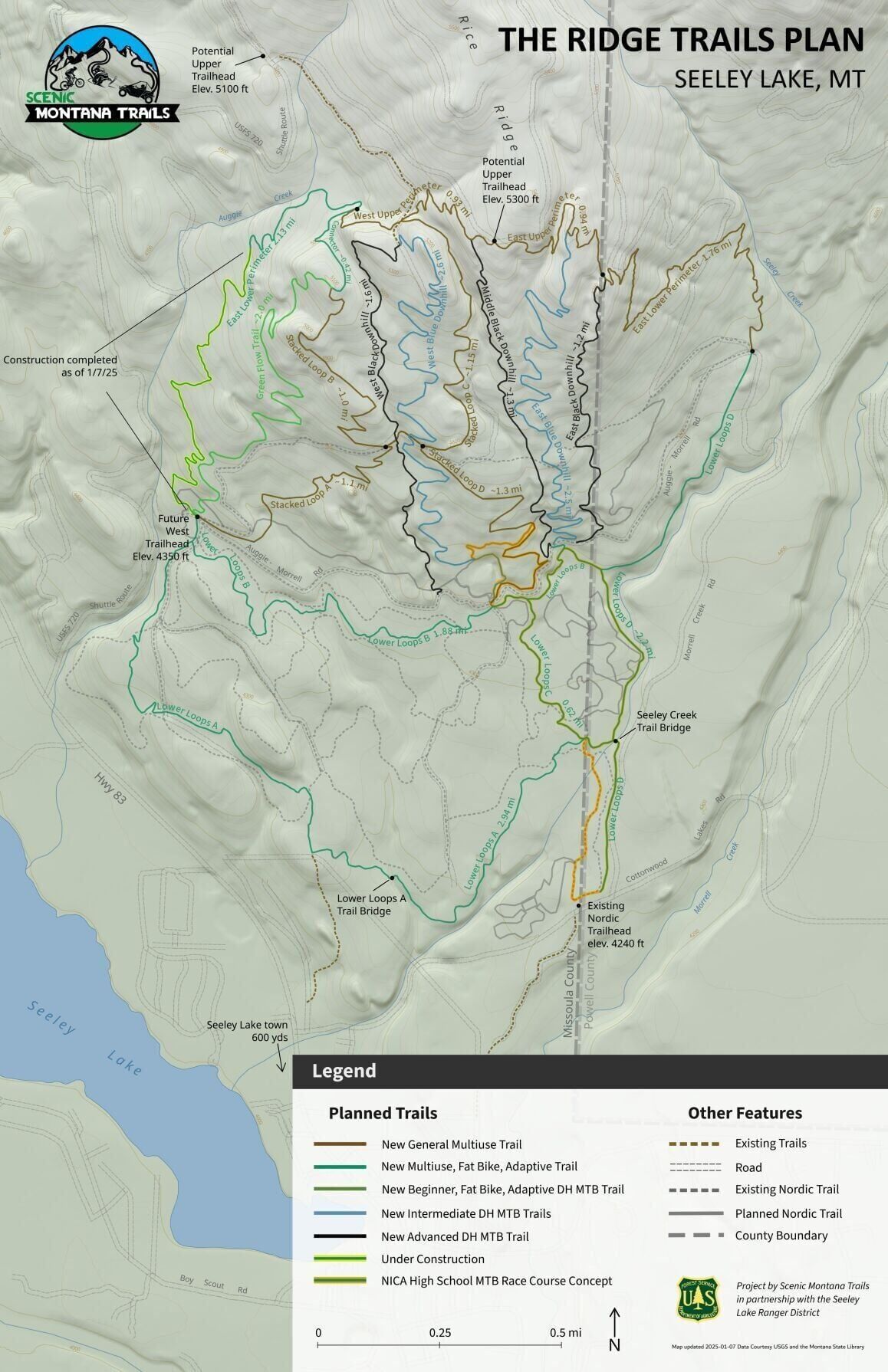
Missoula County officials recommitted their plans to partially fund a 30-mile trail system near Seeley Lake after a coalition of environmental groups urged the county to pull out of the project last month.
On Tuesday, the Missoula County commissioners sent a letter acknowledging concerns over the Forest Service's environmental review for the new trails, but said the project aligns with county goals of boosting the local recreation economy.
"Regarding the use of County trail bond funds, we believe this project fits within the purposes approved by voters, and the allocation followed our standard review and due-diligence process," the commissioners wrote.
The debate is pedaled by a larger Forest Service project to reduce wildfire risk near Seeley Lake through logging and vegetation reduction. The plan also authorized a 30-mile trail project, largely catered to mountain bikers.
Missoula County approved spending $250,000 in open space dollars to partially fund the project, which has a total cost of $1.5 million, the Missoulian reported.
Seeley Lake nonprofit Scenic Montana Trails is spearheading the project. Work on the trails started in 2025, and the county money will be used to cut a main loop on the trail that will be expanded over the next few years.
The project is one effort to boost economic development in the area following the closure in 2024 of Pyramid Mountain Lumber, Seeley Lake's largest employer.
Roughly 70 environmental advocacy groups and individuals then penned a letter in April asking Missoula County to rescind the money, arguing the new trails would negatively affect grizzly bear and Canadian lynx habitat.
"Mechanized and motorized use is a significant threat to grizzly bears," the April letter said. "... Unlimited recreation use is a threat to grizzly bears. It also affects other wildlife, soils, water quality and other recreation users."
Missoula County said in its response that the local government has historically deferred decision-making to federal land management agencies when dealing with projects related to federal lands like national forests.
The letter said there were no indications the decision by the Forest Service is out of line, but noted the county does not approve of the process used by the Forest Service.
"Our deference should not be interpreted as an endorsement of the Forest Service’s environmental review process or their analysis; it simply reflects the delineation of roles and authority among local, state and federal entities," the commissioners wrote.
The commissioners wrote that the county can help reduce potential impacts to wildlife by requiring certain-sized trails and consultation with Montana Fish, Wildlife and Parks in exchange for the open space funding.
Lolo National Forest also penned a letter in April justifying the project, which used an emergency regulatory process related to wildfire risk to speed up the public review timeline.
The letter argued the impact of the mountain biking trail was analyzed in an environmental assessment, which complied with all federal regulations.
"The (U.S. Fish and Wildlife Service) concluded that the project is not likely to jeopardize the continued existence of grizzly bears and lynx and is not likely to result in the destruction or adverse modification of designated lynx critical habitat," the letter from Lolo National Forest Supervisor Ben Johnson said.
A response letter from the environmental groups continues to contend the emergency fire provisions used should not contain additional work related to recreational trails.
Commissioner Dave Strohmaier said during a meeting on Tuesday that the county is not defending the Forest Service's process, but said ultimately the project will benefit the county.
"The bottom line is that we are in alignment with how we have addressed requests with other trail bond dollars," Strohmaier said.



Comments ()