
Montana Democrats charge ahead in U.S. Senate race scattered with surprises, conspiracy
BILLINGS — When a barrage of postcards slamming Reilly Neill started hitting voter mailboxes last week, the frontrunner in the Democratic primary for Montana’s U.S. Senate seat laughed.
Plastered onto the mailer is a photo of Neill holding a “Kamala” sign from the former vice president’s White House bid and a list of policy proposals that have found their home in the Democratic Party’s progressive camp. Think universal healthcare, impeaching President Donald Trump and increasing the minimum wage.
Negative messaging wasn’t a surprise to Neill, but finding her personal cell phone number at the bottom of the flyer was. She said her phone had been ringing off the hook since the mailers went out. Neill estimated she had received up to 400 phone calls, almost all positive, and she scrolled through her voicemails to prove it with the kind of defiance that’s fitting for a person who has run in multiple statewide races as a Democrat facing long odds.
“They thought that Montana Democrats are poison, so their message must be poison,” Neill said while chuckling after a debate last week in Billings. “These have been a net positive for me.”
A Washington D.C.-based dark money group called the American Leadership Fund footed the bill for the mailers. Campaign finance law does not require these groups to disclose their donors; federal tax records show the organization has funneled money to conservative causes, and it publicly supports Montana U.S. Sen. Steve Daines and Kurt Alme, the former U.S. Attorney who was anointed the GOP favorite when Daines bowed out of the race at the last minute.
At the same time these postcards were mailed, the American Leadership Fund also sent a batch propping up Alme’s candidacy and launched social media videos targeting Neill.
Political action committees running antagonistic ads against opponents is far from novel in election season, but pouring resources into a contest where the chances of flipping the seat are widely seen as slim is somewhat out of the ordinary.
The mailers marked the latest twist in what’s already been a Senate race full of them, chiefly the shrewd maneuver to line up Republican establishment support for Alme ahead of Daines’ departure. There was also the entrance of independent candidate Seth Bodnar, who many expect to siphon votes from Democrats in the November general election.
The result is a field of five Democratic primary contenders who find themselves trying to convince voters that they can defeat the Republican nominee on their own merits even as they find themselves painted as potential pawns in an electoral chess game.
Other than Neill, a former state lawmaker from Livingston, the lineup of Democrats features individuals with little name recognition statewide who have struggled to break into the mainstream so far. There’s Alani Bankhead, a former Pentagon human trafficking expert now living in Helena; Michael Hummert, a veteran and small business owner from Helena; Michael Black Wolf, a tribal historic preservation officer from Hays; and Christopher Kehoe, an arts administrator and thespian in Missoula.
At a series of forums and meet-and-greets throughout the state, the field has largely agreed on most key issues. They champion healthcare reform, boast a skepticism of data centers and readily rebuke the status quo under a Republican-led Congress and White House. The group also gets applause from Democrat-heavy crowds when they call for overhauling the immigration system, and there’s frequent mention of “Montana values” being at stake.
When they’ve tried to separate themselves, it’s often been by leaning into biography.
Neill says she’s the best fit for the job because she’s the only candidate with legislative experience — she served in the 2013 Legislature — and she’s been working the ground game since she declared her candidacy in 2024. She also campaigned for governor in 2020.
Bankhead drills into voters her background as a military veteran and Pentagon special agent to show she’s not afraid to stand up to people in power. She says she's got the know-how to navigate the maze that is Washington, D.C. while promoting ideas like increasing the capital gains ceiling to boost housing supply and redirecting money from the defense budget into healthcare.
Black Wolf emphasizes his status as the lone Native American candidate when making his case that he has the strongest path to victory in a statewide race. He says he entered to create a better future for his grandchildren.
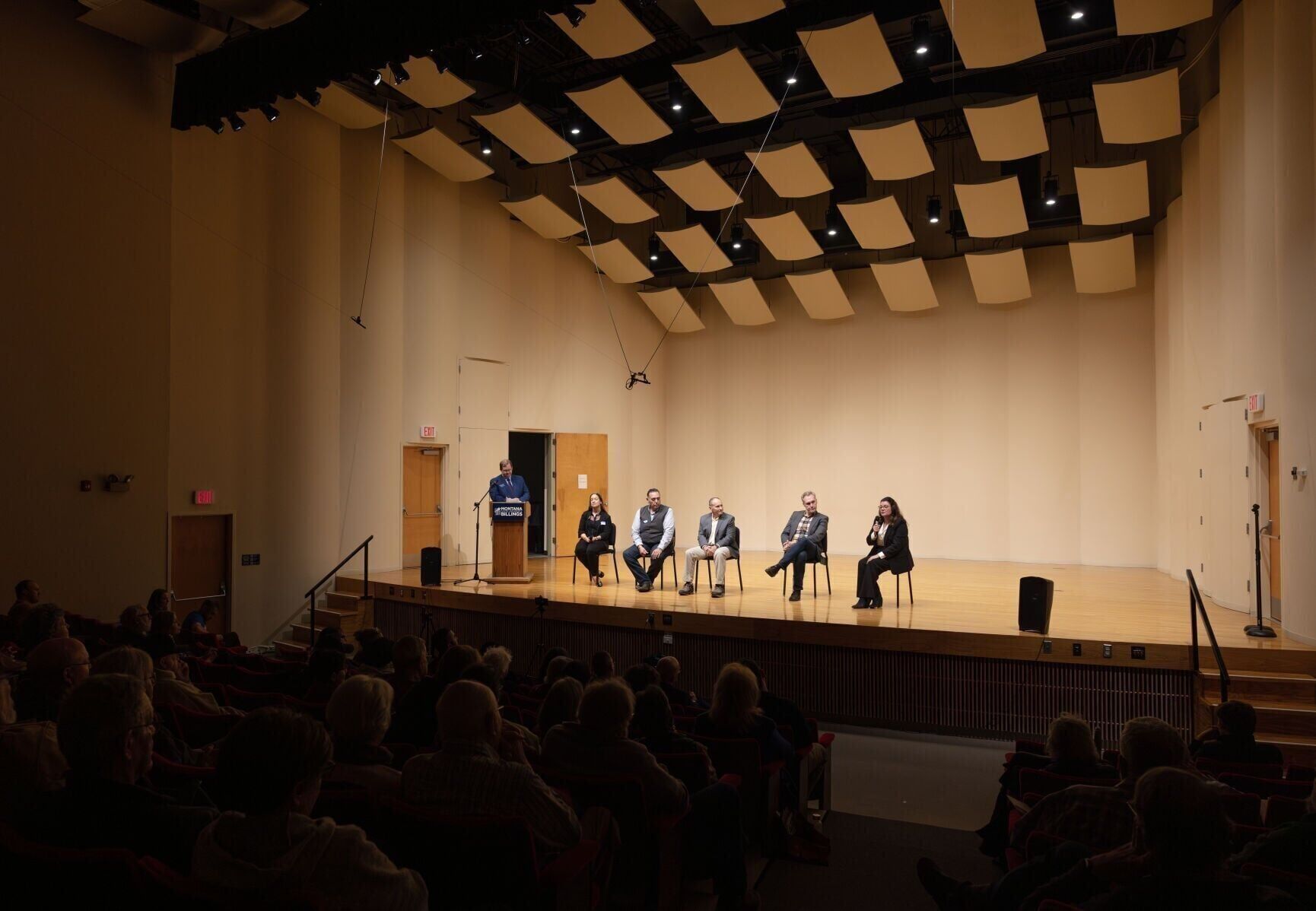
Kehoe frames himself as a reluctant political newcomer who decided to run after seeing Renee Good was shot and killed by an immigration enforcement officer in his hometown of Minneapolis. When he speaks, Kehoe’s theatrical flair is evident. On stage in Billings, the trained orator put aside his microphone and tied much of his political philosophy back to the arts.
On policy, Hummert, who has run for federal office before, has carved a niche for himself as the moderate of the bunch, making his main pitch his plans to pass a balanced budget amendment and reel in the national debt. He said in a phone interview he's the only Democrat on the ticket who is realistic about what kinds of policies could garner enough support to pass Congress and will readily work with the other side of the aisle.
Where all five agree most resoundingly is that Democrats will take back this U.S. Senate seat. It has been held by a Republican since Daines won it in 2014 and, even after the candidate changeups, is still seen by political analysts as a likely GOP win.
“I really try hard to check my blind spots, but all the rumblings we’re hearing everywhere is 'now is the time,'” Bankhead said during an interview earlier this month. “Obviously with Daines in, it was David and Goliath, but now it’s a pretty level playing field.”
It’s a sentiment shared by state party officials who say declining approval ratings for Trump, the affordability crisis and the present military conflict with Iran will buoy Democrats up and down the ballot.
When asked if they could realistically win this seat, Shannon O’Brien, chair of the Montana Democratic Party, answered simply: “Yes, because people want Democrats in office right now.”
Yet the level playing field Bankhead speaks of hasn’t borne out in fundraising numbers.
As of March 31, all five Democrats in the primary had raised a total of $329,373 so far this year. They had $123,611 combined in cash on hand. By comparison, Alme and Bodnar ended the campaign finance filing period with about $1.1 million and $909,000 in the bank, respectively.
Neill leads Democrats in donations — she raised $277,089 between Jan. 1 and March 31 — and name recognition. She added that the latest mailer campaign against her has boosted incoming funds that will be reflected in the next campaign finance reports.
She also believes her progressive message reflects what she’s hearing on the ground in school gymnasiums, American Legions and community centers as she’s been touring the state, so she trusts it will resonate when people go to the ballot box and cast a vote not just for Democrats, but for her.
“I have put in the time and energy. Not that I deserve to win because of that, but because Montanans deserve that kind of voice, someone who shows up and returns to listen to them time and again,” Neill said in an interview in Missoula. “And I can’t say any of the other candidates have proven that they could do that.”
But if there’s a blue wave coming, political analysts don’t believe that Montana’s Senate Democratic hopefuls are the ones riding it.
“It’s going to be a terrific election cycle for Democrats, but the way that things have shaped up in Montana, I think especially the Senate race will be something of a snoozer,” said Kal Munis, a political scientist who grew up in Philipsburg and currently teaches at Auburn University.
Asked to describe the quality of the Democratic field, Munis said “in a word, low.”
He described the collection of candidates as “peripheral figures within the party” who have yet to prove they can generate major donor support, nor can they fund their own competitive campaigns.
Munis joined the chorus of pundits who have speculated that the independent candidacy of Bodnar, the former University of Montana president with a resume that also includes time as a Green Beret and business executive, undermines any chance of Republican defeat for the Senate seat.
He described Bodnar and Democrats as falling into one bucket — the opposition. Splitting that voting bloc makes it even harder for longshot Democrats to whittle out a path to victory.
Those fears have breathed life into theories running amok in political spheres that there’s a grand plan at play orchestrated by the interests backing Bodnar, which allegedly include big money Democratic donors and party standard bearers like former U.S. Sen. Jon Tester. In this hypothetical plan, whispers of which have been aired out on social media and made their way to the candidates, whoever wins the Democratic primary would step away to clear the path for a tighter race between Bodnar and Alme.
Bodnar’s campaign has denied being a part of any such plan, and O’Brien has said the party's bylaws wouldn’t allow them to support any candidate who doesn’t have a "D" behind their name.
However, in a race that’s already had its fair share of conspiracies, the Democratic candidates themselves are at least taking the theory seriously enough to come out swinging against it.
Hummert and Black Wolf both criticized Bodnar and Tester, who sent text messages encouraging party insiders to coalesce around the independent’s Senate bid, as being no better than the GOP in their calculated politicking and beholdenness to outside interests.
“I am just as furious at what Tester did with Bodnar as to what Daines did with Alme,” Black Wolf said.
Neill said she would “absolutely not” consider exiting the race, even when faced with the prospect that it might make a Republican victory more likely.
“I will not be demeaned,” she said. “I will not be bullied out of some race; not some race, one of the most important races in America.”
Asked if she would ever step aside, Bankhead offered a similar answer.
“Hell no,” she said.
The Montana primary is June 2.




Comments ()