
MSU addresses student removal from library event
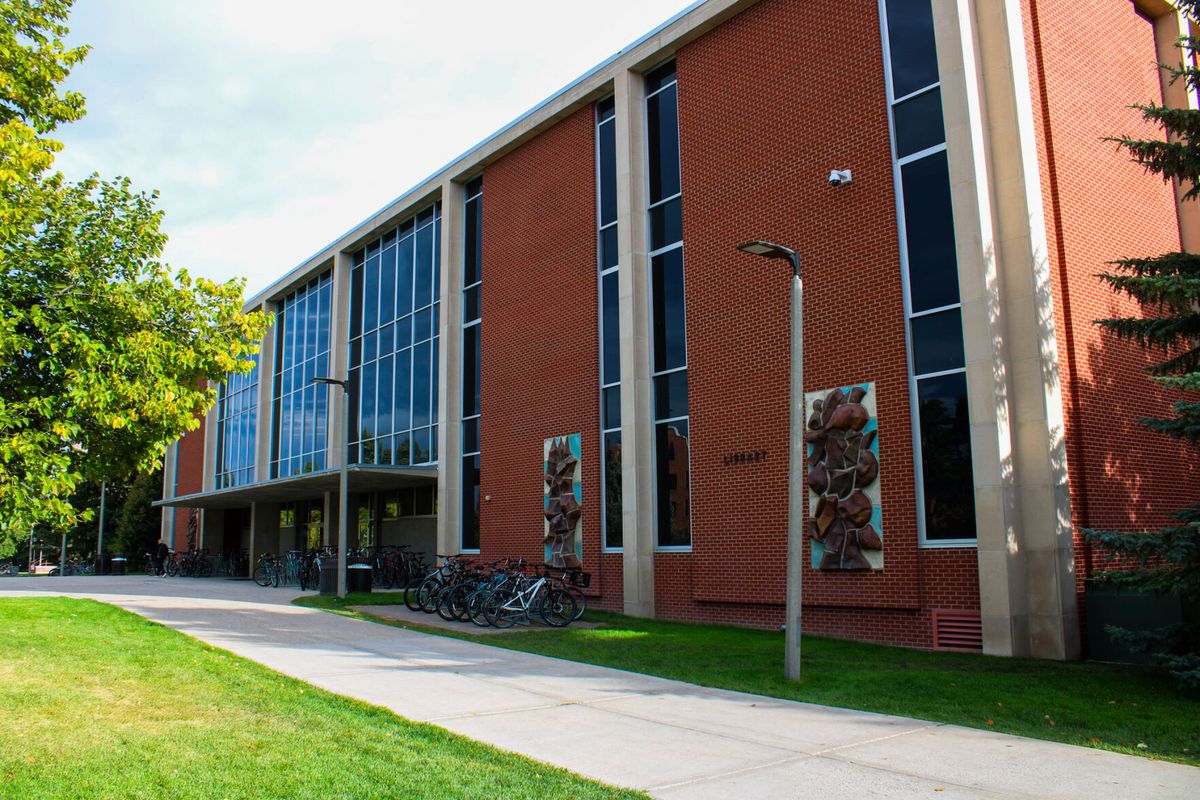
Students for a Democratic Society (SDS) and Montana 4 Palestine (MT4P) members were turned away from the U.S.–Israel agricultural research info session at Renne Library on Oct. 17 after attempting to raise concerns about the program’s ties to Israel.
According to the University, there was an issue with the registration list and at least one student had carried in a protest sign. Per MSU's Freedom of Expression Policy, protesting inside campus buildings is not permitted.
The U.S.–Israel Binational Agricultural Research and Development (BARD) fund is a competitive program for mutually beneficial, mission-oriented, strategic and applied research of agricultural problems jointly conducted by American and Israeli scientists, according to its website. BARD is a third-party organization, independent of any university.
At the BARD funding opportunities information session, several members from SDS and MT4P tried to enter the meeting to ask questions pertaining to the situation in Gaza, but were turned away. “At first they told us that we hadn’t RSVPed,” said SDS representative Homa Masood. “The majority of us pointed out that we were on their list of attendees. We had formally been accepted.”
According to Mike Becker, interim vice president of University Communications, there was confusion regarding the event’s registration. The info session had been rescheduled from Wednesday to Friday to accommodate one of the guest speakers.
“People who registered after the date change weren’t on the list the organizer printed Friday morning, so some who registered after the date change were not let in,” Becker said.
Masood explained that the BARD event was trying to recruit MSU researchers to do agricultural research that would benefit Israel. “We were protesting that, because that's not something that is ethical — that we're using our researchers here in Montana and their hard work to contribute to the food security of a state that is actively committing a famine in Gaza right now,” she said.
Masood said that the SDS and MT4P members planned to take two forms of action, with some students going into the event and some protesting outside of the library. “We had RSVPed far in advance. The event was on the MSU website, on their calendar of events. It was open to everyone,” she said.
The group inside then planned to ask questions pertaining to the situation in Gaza to bring attention to the issue while still maintaining the Student Code of Conduct and respect to those involved, according to Masood.
Masood said that event organizers had the intention of letting the students in at first, as long as they did not protest.
“We [said] we wouldn't disrupt the event, but then they changed their minds and they told us that we couldn't come in as students,” Masood said, adding that the group was told at that point that only faculty were allowed to attend the event in person.
In an Instagram post released by SDS and MT4P on Oct. 18, the groups accused MSU of associating with a genocidal regime and excluding students who have issues with that fact. They claimed that there was no indication in the event’s advertisement that students were not welcome.
Students are prohibited from politically protesting inside campus buildings, except where space is reserved in accordance with facility use policies, according to MSU’s Freedom of Expression Policy.
“A UPD officer spoke with the students inside the library after the group came in,” Becker said. “At least one had carried in a protest sign. The officer explained the University’s Freedom of Expression policy. [The students] told the officer they understood.”
According to Becker, BARD is not associated with any country and is not funded by MSU. “Faculty, doctoral students or post-doctoral researchers in agricultural fields with an applicable research proposal could choose to apply for funding from BARD via a competitive process, just as they could apply for a federal or private grant,” he said.
According to Masood, SDS supported the scientific aspects of the event but not the program’s ties to Israel. “We wanted to show MSU this is not something that students are going to be complicit in,” she said.
After being told they could no longer attend the event in person but could join the meeting via Microsoft Teams, the group left to join the protestors outside the library, according to Masood.
“We gave speeches about MSU’s involvement in organizations that are contributing to the situation in Gaza,” Masood said. “We want to encourage full disclosure that MSU has with its investors. We want students to be able to know where their tuition dollars are going.”

Comments ()