
MT senate bill “tries to take a smack” at student regent position, gets tabled
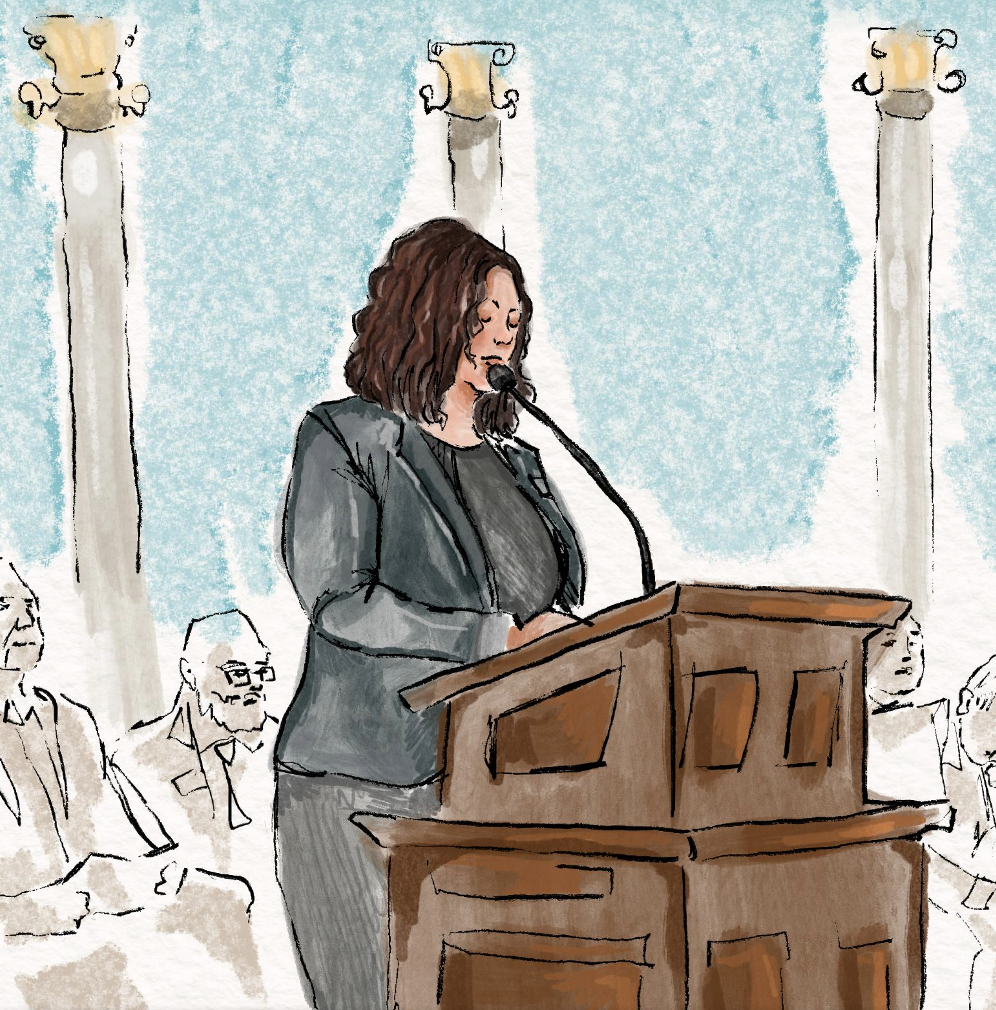
Montana Senate Bill 210 (SB 210), introduced on Jan. 30, threatened to remove the student regent position from the Montana Board of Regents (BOR), the state’s governing body of higher education. However, a push from student representatives led to the bill’s tabling in committee on Feb. 4.
The BOR is a group of appointed individuals responsible for making decisions regarding the governance and administration of the Montana University System (MUS) and has the authority to supervise and control the 16 public colleges and universities in the state, according to the MUS website. The BOR is run by seven regents appointed by the state’s governor and confirmed by the state Senate. In 1972, the Montana Constitution that one of the regent positions ought to be set aside for a student enrolled in a university overseen by the BOR. Student regents serve one-year terms, while the other appointments are for seven years.
"The student regent [position] is our only form of direct representation from students,” said the Associated Students of MSU (ASMSU) Government Affairs Director Kai Hegna. “The student representative on the BOR — more than anything — brings that student voice and the student experience to a board of people who haven't been in the university system for 40 years.”
The discussion surrounding SB 210 began in late 2024. According to Hegna, ASMSU began hearing about the prospective bill in November. "What we heard at first was there was talk of removing the student regent without much compromise," he said.
On Jan. 30, 2025, the bill was formally introduced and assigned to the Senate Education and Cultural Resources (SECR) Committee, according to the Montana Legislature. Senator John Fuller (R) sponsored the bill at the request of the Governor’s Office, according to Hegna. The primary rationale for SB 210, as articulated by Fuller and the Governor’s Office, was the ineffectiveness of the student regent position due to its one-year term.
“It was kind of like the guy who took off all his clothes and jumped on a cactus,” Fuller explained to the committee when he introduced the bill. “When asked why, he said it seemed like a good idea at the time. And after some twenty years [of having a student regent], it appears it’s not working as well as we planned.”
However, student representatives heard conflicting perspectives during legislative hearings. ASMSU President Jacob Zink said that when a different education committee member asked the governor’s office if the student regent position is effective, the office said it has had nothing but success. “They’re always showing up, always actively participating,” he recalled.
“If it wasn't effective, then I was willing to sit down and explore [the question:] how do you make the student regent more effective so that it would benefit everybody? But in the end, that wasn't what they were interested in,” said Izzy Watson, a student lobbyist for ASMSU who was present in Helena during the bill’s first reading.
Watson explained that student voice is important on the BOR not only because the student regent represents every university in the MUS, but also since students contribute 67 percent of the MUS’s total budget through tuition and fees. “The state does appropriate a lot of money to us and yes, we do appreciate the money, but it will remain a fact that the students contribute the majority of [the MUS’s] total budget. All we’re asking for is one position on the governing board,” she said.
“That student regent offers something that nobody else can — a first-hand perspective,” Zink said.
Student leaders across Montana began immediately working to counter SB 210. Representatives from various student governments — like ASMSU and the Associated Students of the University of Montana (ASUM) — gathered for the announcement of the bill at committee.
"We basically read the bill and had to start fighting it in the time of about three days," Hegna said. The Montana Associated Students (MAS) — a group that represents the MUS’s student governments — also convened, and each group began to implement its own approach to combat the bill.
Hegna detailed ASMSU’s strategy: "We did everything — from President Zink emailing legislators, I wrote out memos to be handed out to each Democrat and Republican on that committee, we contacted people and wrote speeches for our lobbyists. We really did everything we could."
“Each campus did something different,” Zink said. “We took the option of directly contacting the legislators just to sit down and have a conversation.” He explained that the campuses also sent their student lobbyists to testify against the bill in Helena.
Watson said that to testify against a bill, lobbyists go into the committee where a bill is being introduced and give a speech on why they want legislators to vote a certain way on the legislation at hand. In the case of SB 210, three lobbyists — Watson from ASMSU, Hope Morrison from ASUM and Emmett Jeschke from MAS — testified against the bill at the first reading on Jan. 30.
On Feb. 4, the SECR committee ultimately voted to table SB 210, halting further progression or consideration. "Each bill, before it gets taken to the floor to be voted on by the members of the House or the Senate, gets assigned a committee,” Hegna said. “The committee members decided to table it, which means you basically set it off to the side and it will sit there until either a later date — or it dies there, which is what we were hoping for.”
During the Feb. 4 committee meeting,Hegna explained that before the senators voted on SB 210, some said that hearing student voices had changed their opinions. “I had a number of conversations with students regarding this bill, and they were thoughtful, they were very persuasive,” said Republican Senator Sue Vinton during the comment portion of the hearing.
“I understand the concern that was pointed out about young people being entrusted with millions — billions — of dollars, but the people we are talking about are of the age where they could be elected to this body if they run,” Senator Forrest Mandeville (R) said. “I’m reminded of the words of the Apostle Paul to Timothy — let no one look down upon you because you are young. So, I’m going to be a no on this bill.”
"We ended up flipping it to a 10-4 vote in our favor,” Watson said. “We flipped five Republicans.”
When contacted by the Exponent for comment, Fuller stated: “Referenced bill was tabled in committee,” and did not elaborate further.
When asked if this result was a win for student lobbying, Hegna said: "I don't want to [count] wins just yet because it is tabled, but I would call this a win because we get another two years of student representation until the legislature tries to take a smack at us again."
Overall, Watson encouraged students to stay engaged in legislative processes. "The way that students can be represented in the legislature is by interacting with their student government. It’s just a really great way to have a better connection with the MSU community as a whole,” she said.
"I always tell folks, no matter your background, if you're a part of a political group or not, if you're interested, come talk to us,” Zink said. “We actively solicit student input and voices. We have vacancies on our legislative action committee. Anybody with any level of experience, there's a spot for you."
To find more information on ASMSU, visit its website at montana.edu/asmsu/. To learn more about current or past bills in the Montana Legislature, head to https://www.legmt.gov/bills/.

Comments ()