
No one thinks a Democrat can win Montana’s eastern U.S. House seat — except the two Democrats facing off for a chance to try
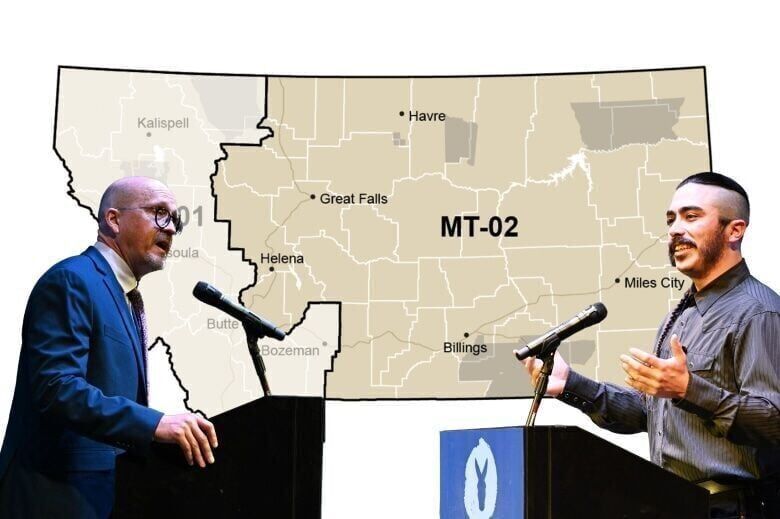
State Sen. Jonathan Windy Boy’s abrupt departure from the race for Montana’s Eastern Congressional District leaves two remaining candidates in the June 2 Democratic primary: Brian Miller and Sam Lux.
The winner will join Libertarian Patrick McCracken and possibly independent Mike Eisenhauer in challenging incumbent Republican Rep. Troy Downing in the Nov. 3 general election. Downing was first elected to the seat by a 32-point margin in 2024.
But no matter who emerges from the primary with the Democratic nomination, political prognosticators agree, they’ll have neither history, money, or momentum on their side in attempting to unseat Downing.
“I don’t really see a way that a Democrat would win that seat,” said Jessi Bennion, a political scientist who teaches at Montana State University and Carroll College. Based on previous election outcomes and demographics, Bennion said, the district looks “absolutely solidly Republican.”
Bennion is quick to acknowledge that any bid for public office, no matter how quixotic, is “a wonderful, civic-minded thing,” but she also expressed genuine curiosity about why a Democrat might choose to compete in eastern Montana at all.
“What is it that makes someone who doesn’t really have a chance of winning put themselves out there to run for a seat?” Bennion said. “Sometimes you think, are they trying to build their presence within the party? Are they trying to get their name out there to build their name ID?”
Both Lux and Miller shrugged off any suggestion they might have a motive other than winning.
Both express confidence that President Donald Trump’s low approval rating, in combination with a historical voter preference for minority-party candidates in midterm elections, will translate to a swell of Democratic votes in November.
“The political scientists that I’ve heard in Montana,” Miller said, “have no idea what they’re talking about right now.”
Lauren Miller, Montana Free Press, CatchLight Local/Report for America
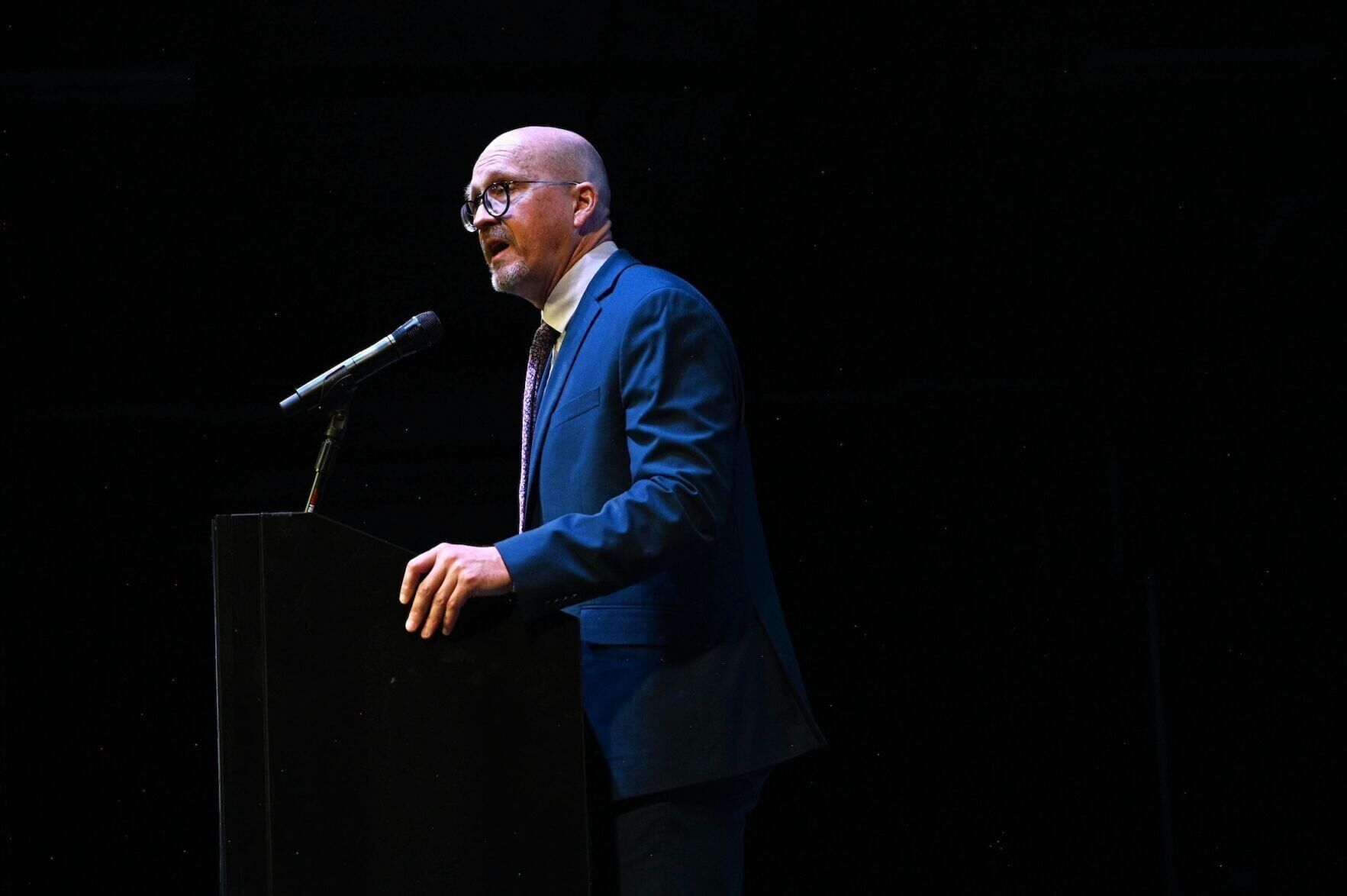
Brian Miller, a Democratic candidate for U.S. House representing Montana’s Eastern Congressional District, talks about his background and policy stances during the 48th annual Mansfield Metcalf Dinner on March 7, 2026, in Helena.
Credit: Lauren Miller, Montana Free Press, CatchLight Local/Report for America
WHY IS THE EASTERN DISTRICT SO HARD FOR DEMOCRATS?
Jeremy Johnson, a political scientist at Carroll College, said the Eastern District — which became a distinct congressional seat in its current form in the 2022 elections — was never built to elect a Democrat.
“It was just generally understood by all the people who participated in the process that this district was not drawn to be competitive. It was essentially drawn as a safe Republican district,” Johnson told Montana Free Press.
In its brief new life, the district has been dominated by Republicans — as was the single at-large congressional district that preceded it going back to 1996. In the 2026 edition of “Big Sky Politics,” elections historian Jon Bennion (Jessi Bennion’s husband) wrote, “the Eastern Congressional District never really seemed to strike Democrats as a viable goal.”
“Incumbent at-large Congressman Matt Rosendale opted to run in the east because of his Glendive and Great Falls connections, and there was little political energy aligned against his reelection,” Bennion wrote of the eastern district’s first election in 2022, when Democratic candidate Penny Ronning lost every county in the district.
There just don’t seem to be many Democratic voters in the district.
Lauren Miller, Montana Free Press, CatchLight Local/Report for America
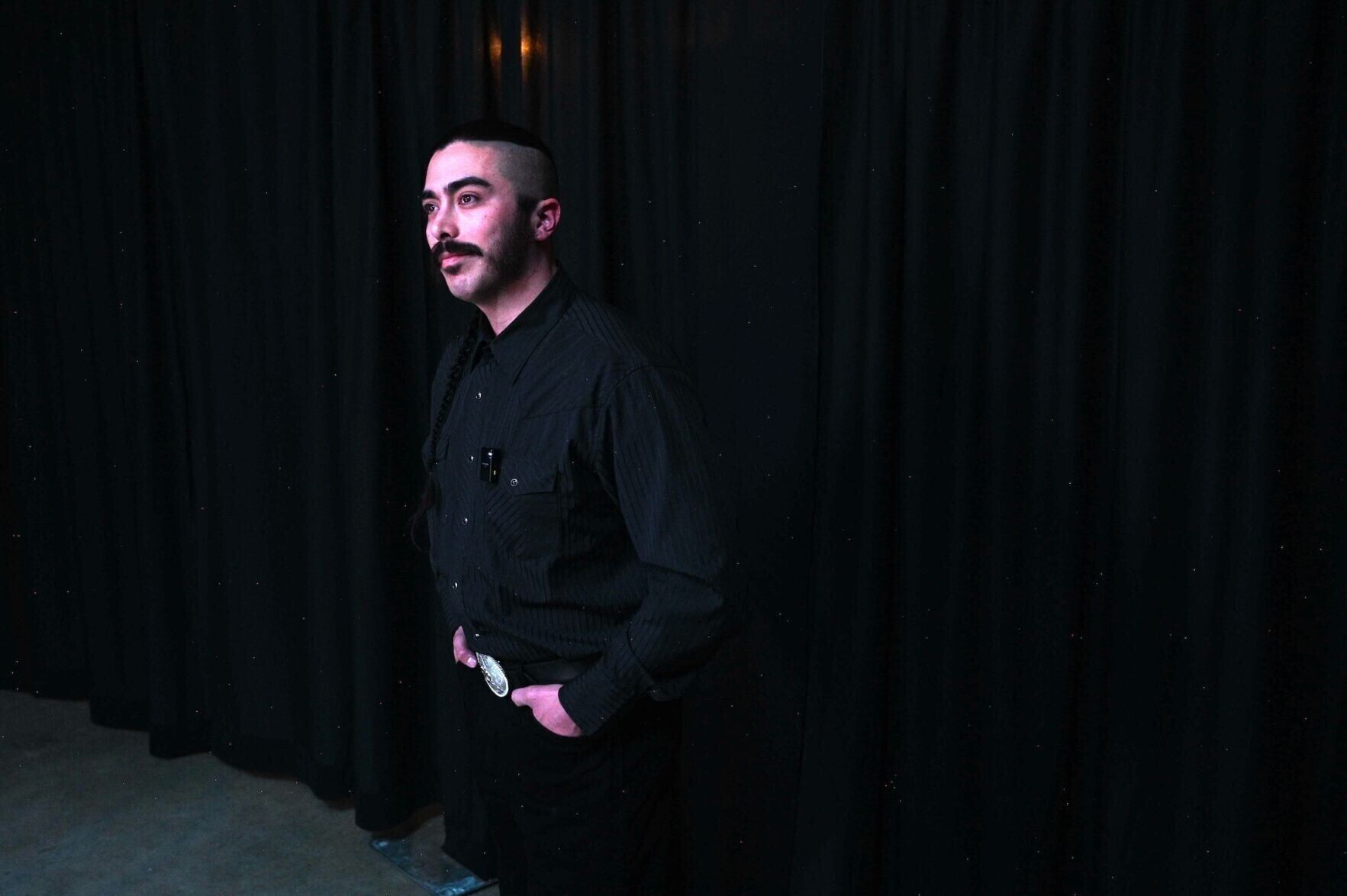
Sam Lux, a Democratic candidate for U.S. House representing Montana’s Eastern Congressional District, waits to take the stage during the 48th annual Mansfield Metcalf Dinner on March 7, 2026, in Helena.
Credit: Lauren Miller, Montana Free Press, CatchLight Local/Report for America
While the state’s Western Congressional District contains urban pockets of reliable Democratic support, the eastern district’s largest cities — Billings and Great Falls — don’t offer Democrats much purchase.
In Billings, Montana’s largest city by population, 11 of 14 local members of the Montana House of Representatives and six of the city’s seven senators are Republicans. The numbers — at least recently — are even starker in Great Falls, where four of five representatives and all three state senators are Republicans.
Helena, which in 2025 sent only one Republican among its nine lawmakers to the Montana Legislature, is the district’s most Democrat-friendly city.
The district also includes five of the seven Native American reservations in Montana, which typically lean toward Democratic candidates.
Johnson, the political science professor, said a Democrat would have to win “remarkable margins in the cities” and avoid losing by “overwhelming majorities” everywhere else to turn the tables.
COULD 2026 BE DIFFERENT FOR DEMOCRATS?
Not likely. While Johnson acknowledged that voter disapproval of the war in Iran, high gas prices and Trump’s low approval rating could give Democrats an edge in some races around the country in 2026, those factors aren’t likely to make a dent in the Eastern District.
“Even with these favorable conditions, it would be an upset for a Democrat to win this district — a significant upset,” Johnson said.
And more potentially competitive races in other areas of the country make donor investments in long-shot campaigns less appealing, undermining Eastern District campaigns even further by starving them of funding, according to Johnson.
“There’s a lot of other districts across the country, including the [Montana] Western District, that would have more favorable demographics for Democratic candidates,” Johnson said.
That fact shows up on the financial reports for both Democratic candidates in MT-02. As of March 31, Miller had raised about $15,000, according to Federal Election Commission filings. By the same date, Lux had reported roughly $8,000. Each of the four Democratic candidates in the Western District has raised at least ten times more than either Democrat in the east.
When Downing won the eastern district in 2024, he spent the lion’s share of his $3 million war chest.


Comments ()