
On March 28, thousands of people joined ‘No Kings’ demonstrations across Montana. But how many thousands?
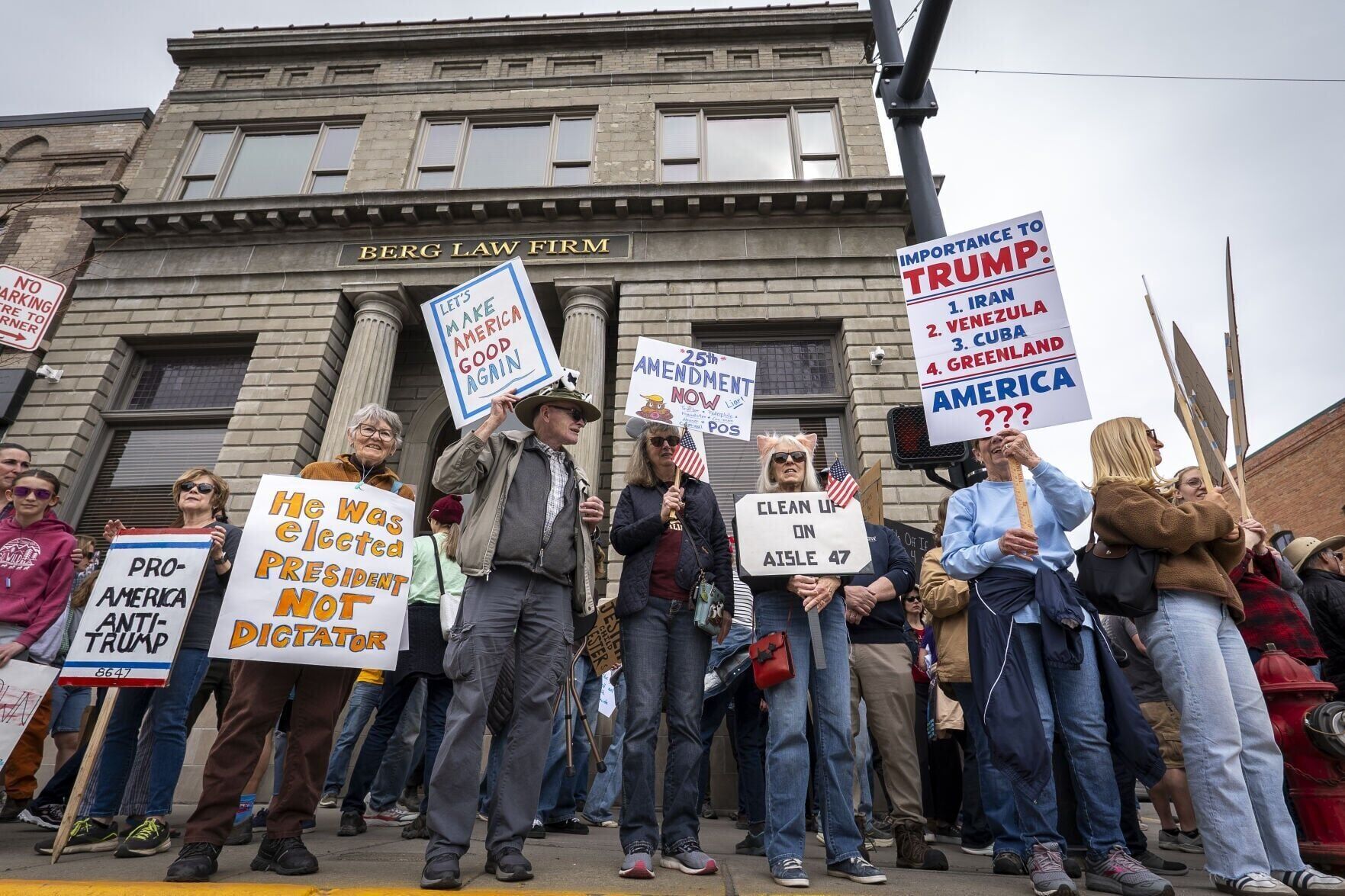
On March 28, thousands of people joined “No Kings” demonstrations across Montana to protest the agenda of President Donald Trump. But how many thousands?
Many readers asked that question on Montana Free Press’ Facebook post of our coverage, which had garnered 5,800 comments as of Wednesday.
“Sorry, but there were way more than ‘a few dozen’ people in Hamilton,” Facebook user Kate Stone commented. Jana Branch emailed MTFP with a request to change the phrase “at least a few dozen” — the figure in the story — to 662, the number released by Indivisible Bitterroot, a local group that helped organize the protest.
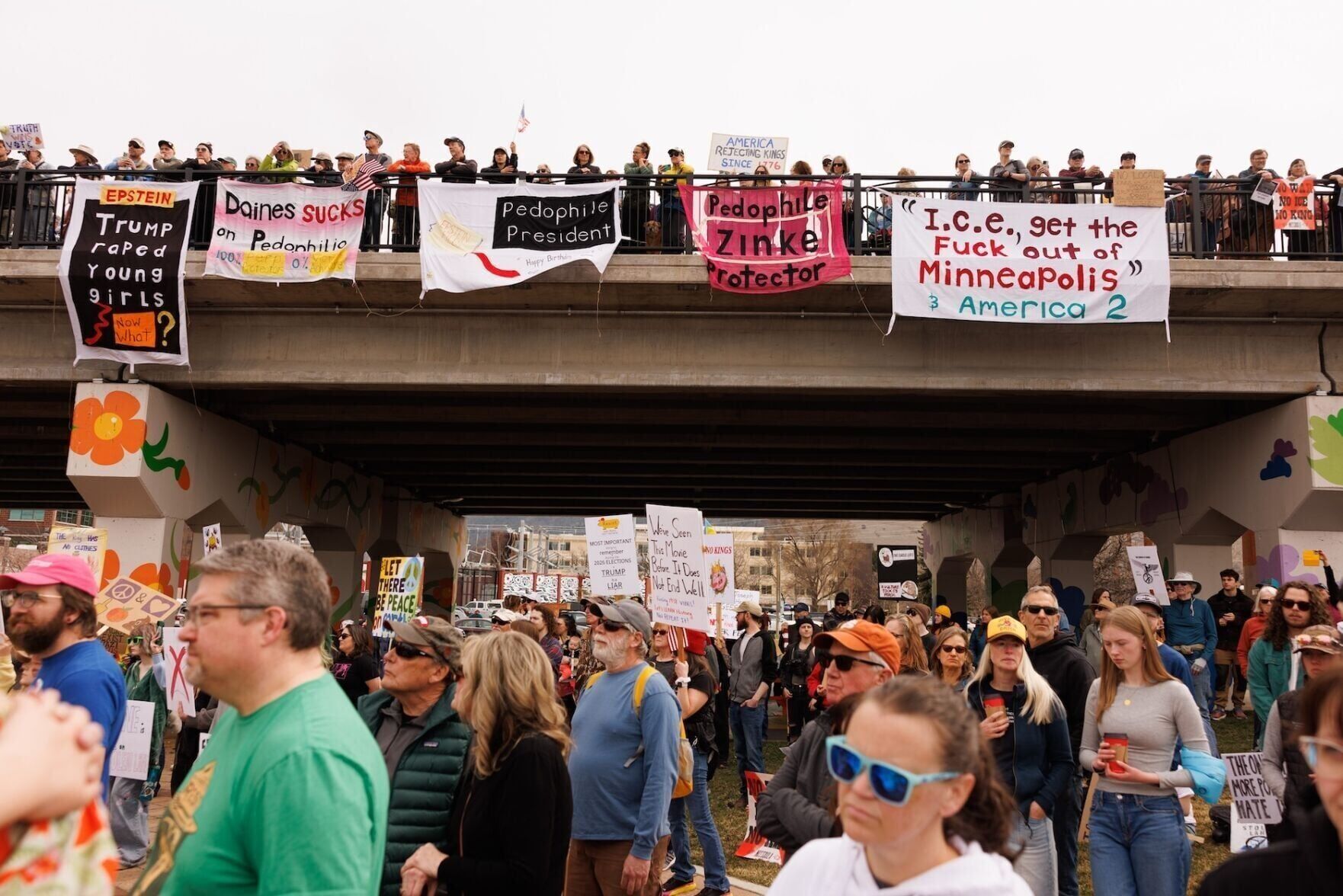
And user Ildi White claimed that close to 15,000 people attended the rally in Missoula — far higher than the 3,500 estimated and reported by MTFP. Still others suggested that MTFP’s 3,500 must have been inflated, based on their assessment of an aerial video accompanying our story.
“There aren’t 1000s of em hahaha,” Chris Bentley commented.
(It’s worth noting that the aerial video shows fewer than half the total participants, according to photojournalist John Stember, who covered the Missoula event for MTFP.)
Given all the inquiries and debate, we went looking for answers from crowd-counting experts. Why, we wanted to know, are crowd-size estimates from a single event so often — and often so dramatically — so different? How should journalists count crowds? Are some methods more reliable than others?
And based on what we learned, do we know for certain how many people attended Montana’s No Kings protests last weekend?
Fortunately, a small number of journalists, academics and mathematicians have become experts in this subset of data journalism.
Charles Seife, a journalism professor at New York University who specializes in counting crowds, told MTFP he finds the process of solving crowd-size mysteries invigorating — not least because there’s so much inaccurate reporting on the question.
“It’s always great to catch a whopper of a lie and then show it,” Seife told MTFP Tuesday. “But there’s also a level of despair. It’s like being a homicide detective.”
How to count a crowd
Experts interviewed by MTFP all recommended a density-by-area method for counting a stationary crowd. That means dividing an aerial image of a crowd into zones based on how densely people are packed into them, estimating the number of people in each zone, and totaling the populations of the zones. For marches, in which people are on the move, experts recommend that a counter stand in one place as the crowd passes by and multiply the rate at which people pass by the time it takes for the parade to conclude.
Steve Doig, a journalism professor and crowd-counting expert at Arizona State University, spent 20 years at the Miami Herald. He calculated the attendance at Pope John Paul II’s 1987 Miami mass and the number of people who visited the annual Calle Ocho Music Festival in Little Havana.
“Unless people are going through a turnstile and being counted that way, it’s always going to be approximate to some degree,” Doig said.
But density-by-area can get journalists close, he said.
“The secret formula to crowd counting is to get a decent estimate of the size of the area that the crowd is in, and then a decent estimate of the density,” Doig said.
For measuring area, Doig recommends Google Maps.
And for density, it’s about elbow room. Can people move around comfortably? That’s about 20 square feet per person. Can people reach out and touch the person next to them? That’s about 10 square feet per person. A shoulder-to-shoulder crowd? That’s about 5 square feet per person.
“Anything more than that starts getting into mosh-pit territory. But some of the more inflated crowd estimates I’ve seen, you’d have to be down to one square foot per person, which is a death trap, basically. That would not be happening,” Doig said.
The International Journalists’ Network recommended methods similar to those described by the experts interviewed by MTFP, including the Jacobs Method, a formula for calculating density by area or the number of people who pass by a given location.
The Crowd Counting Consortium, a joint project between the University of Connecticut and the Harvard Kennedy School in association with Harvard’s Nonviolent Action Lab, specializes in analyzing protests. Consortium data demonstrated that the 2017 Women’s March was the largest single-day demonstration in U.S. history to date, and that the 2018 March for Our Lives and related #EnoughWalkouts were the most widespread single-day demonstration in U.S. history.
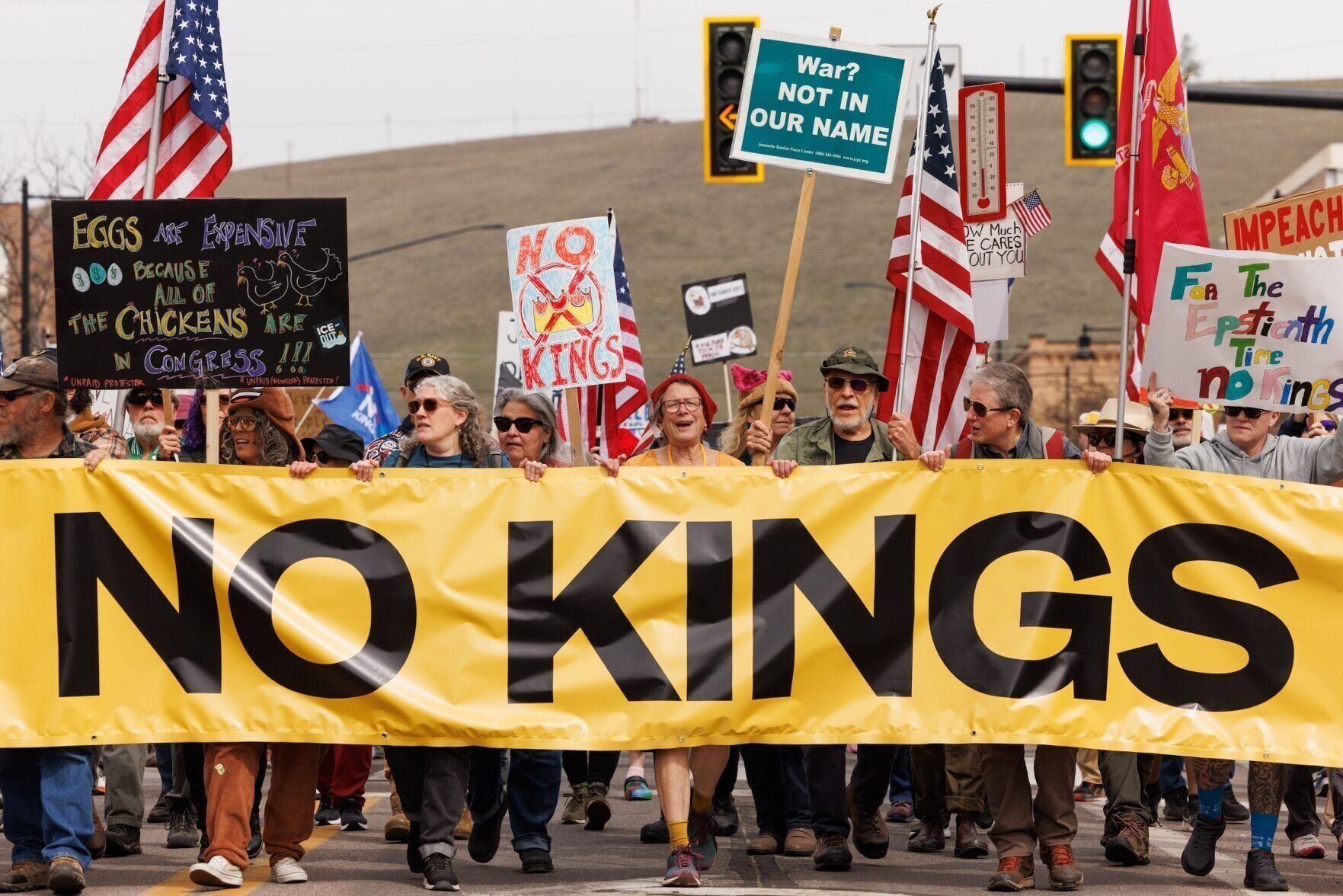
As part of a nationwide rally, thousands of protesters walked down Higgins Avenue to Caras Park in downtown Missoula on Saturday, March 28, 2026. The protest was a rebuke of the current Trump administration. Speakers touched on the U.S. Constitution, broken promises to Indigenous people, ICE, and the history of immigrants in the United States. Credit: John Stember
Tools of the trade
Drones and Google Maps are critical crowd-counting resources, according to Doig, who said it’s easiest to assess population density in a given area with an aerial view.
“The problem is, when you are down at ground level and shooting video across the crowd, it looks huge. You can’t really estimate the density that way,” Doig said.
Doig, who worked as a reporter before videography drones were available for journalists, said he aimed to take pictures from elevated vantage points.
“I could take a print of it, mark it off in quadrants based on what I knew about the size of the area, do some looking with a magnifying glass,” Doig said. “I’m going to try to count the heads in the area in a couple of the areas that I had squared off, and then expand that outwards into an estimate.”
G. Keith Still, a British crowd-counting expert, told MTFP in an email coauthored with his daughter Erin that recent crowd-counting technology is good, but often not worth the effort. It requires setting up specific camera angles, installing software and paying for programs. He said he prefers to do it manually.
“It’s not that complex to do, easy to teach and more reliable/cost effective than technology,” the Stills wrote.
How were crowds estimated?
According to organizers’ best estimations of protests in Billings, Bozeman, Helena, Missoula, Hamilton and Whitefish, between 27,000 and 30,000 people attended Saturday’s rallies in those locations.
Danica Nelson, an organizer with Indivisible Missoula, a primary part of the coalition that organized Saturday’s No Kings event in Missoula, told MTFP she gave journalists two estimates for total attendance. One volunteer stood in place and counted people marching down Higgins Avenue to Caras Park. Nelson said that figure was 9,000. Nelson also posted a 15,000-person estimate for the total number of people in Caras Park on Facebook, but later told MTFP that wasn’t a careful calculation.
Indivisible Helena’s Barbara Barnes said Tuesday that she performed a density-by-area analysis of Saturday’s crowd at the state Capitol that yielded an estimate of 3,000 to 3,500. She called her day-of estimate of 3,500, which was based on the aggregate estimates of several organizers, “a really good guess.”
MTFP dispatched three journalists to cover the rallies — one in Helena, one in Missoula and one in Great Falls. Inspired in part by the feedback on numbers over the weekend, MTFP is now fine-tuning a standardized policy for generating crowd-size estimates.
On Saturday, two MTFP reporters used versions of the density-by-area methodology. Another used their own aerial images and estimated based on previous protests in the same location. All erred toward conservative estimates and used language like “at least” to convey that their estimates accurately reflected minimum confirmable attendance.
In Hamilton, where MTFP had only videos taken at a moment in time by a reporter — MTFP counted the people visible in those videos. As in other situations, we included “at least” language in recognition that there may have been more attendees outside the frame of those videos and at different times during the rally.
Why crowd size is politically important
Politicians, political organizers and public safety officials are among those most concerned with crowd size, according to Seife.
Nation of Islam leader Louis Farrakhan, for instance, threatened legal action against the National Park Service for its estimate of the number of people attending the Farrakhan-led Million Man March in 1995.
“That’s a very clear example of the politicization of these numbers,” Seife said. “That when your Million Man March doesn’t come close to a million men, it’s embarrassing for those who are rallying around the message of the million men.”
Congress soon passed a law banning the park service from spending money to count crowds. There is no federal agency currently tasked with counting crowds.
In 2017, President Donald Trump disputed the Washington Post’s reporting of the size of the crowd at his inauguration.
Trump continued to exaggerate crowd sizes over the next nine years. In 2020, Trump’s “Million MAGA March” did not draw 1 million supporters, as he claimed, but instead had closer to 11,000 to 15,000 attendees. On the campaign trail in 2024, he incorrectly claimed that he had “the biggest rallies in the history of any country. Every rally’s full. You don’t have any seats that are empty.” They were not the biggest rallies. There were empty seats.
“His crowd estimates are totally off, and have been since he’s been inaugurated,” Seife said. “So I would take his numbers with a much greater grain of salt than a neutral observer.”
Crowd counts are also important for organizers of protests and rallies like No Kings.
“People are using these rallies, in particular, as a gauge of how significant resistance to the federal government’s policies are,” Siefe said. “And so, if these are large turnouts, then it’s a measure of unpopularity, or if it’s small and scattered, it’s a measure that the dissidents are not having a lot of traction.”


Comments ()