
Order pauses planned water supply for Yellowstone Club developer’s Flathead plans
A judge pressed pause late last week on the state’s process for considering a permit to provide water to a controversial new private development on Flathead Lake.
And the effects could be felt across Montana, as the judge’s ruling appears to have broader implications for how the state considers public comment on water-rights decisions.
In an order filed Friday, Helena District Court Judge Michael F. McMahon found that the state Department of Natural Resources and Conservation failed to adequately incorporate comments, concerns and objections from the public as part of its administrative process for permitting a proposal to divert up to 249 acre feet — or 81 million gallons — of water per year to Discovery Land Co.'s Territory 1889 development south of Lakeside.
McMahon also issued a “stay” that temporarily halts DNRC’s consideration of the water-use permit for Territory 1889 while the case is transferred to district court in Flathead County and objections are heard there.
Citizens for a Better Flathead, a nonprofit that joined with three other petitioners to ask for a judicial review of the permitting process, argued that the order could slow down Discovery’s progress on the 1,700-acre site where it has reportedly already begun construction and that is the centerpiece of a multi-part development plan.
“By granting the stay, the court has effectively disconnected the development's proposed water supply from its local permitting track,” Citizens for a Better Flathead wrote in a press release. “Because local subdivision approval depends heavily on proving a dependable, legally available, and environmentally sound water and sewage infrastructure, Flathead County cannot legally or practically move forward with approving the Flathead Lake Club subdivision permit while its underlying water rights proceedings are frozen and under careful judicial scrutiny."
But Bill VanCanagan, an attorney who represents both Discovery and the Lakeside County Water and Sewer District, called the nonprofit’s claims "inaccurate" in an emailed response to questions from the Missoulian.
"The Court did not issue a determination regarding dependable, legally available, or environmentally sound water and sewage infrastructure. Sewage infrastructure is not at issue in the case," wrote VanCanagan, an attorney with the Missoula-based law firm Datsopoulos MacDonald & Lind. "The Court's ruling does not invalidate or directly challenge the DRNC's technical analysis which determined the Lakeside County Water & Sewer District's proposed use will not harm other water users and that water is physically and legally available. The ruling has no effect on each phase of the Territory 1889 subdivision approved as part of the Preliminary Plat nor does the ruling prevent Flathead County from approving the Final Plat."
Michelle Bryan, a University of Montana law professor who specializes in water rights, wrote that the order indicates that DNRC’s hearing on a water permit for Territory 1889 should be “paused” while Citizens for a Better Flathead and its fellow petitioners “can provide additional evidence concerning their objections to the water right application.”
“This means the DNRC can't issue a final decision granting the permit application until the Petitioners have added their evidence to the record,” Bryan wrote.
'Overwhelming public rights ... at stake'
Discovery Land Co. is no stranger to controversy.
The company develops private resorts around the globe, and its Yellowstone Club and Crazy Mountain Ranch projects have been the subject of intense scrutiny and legal wrangling in Montana.
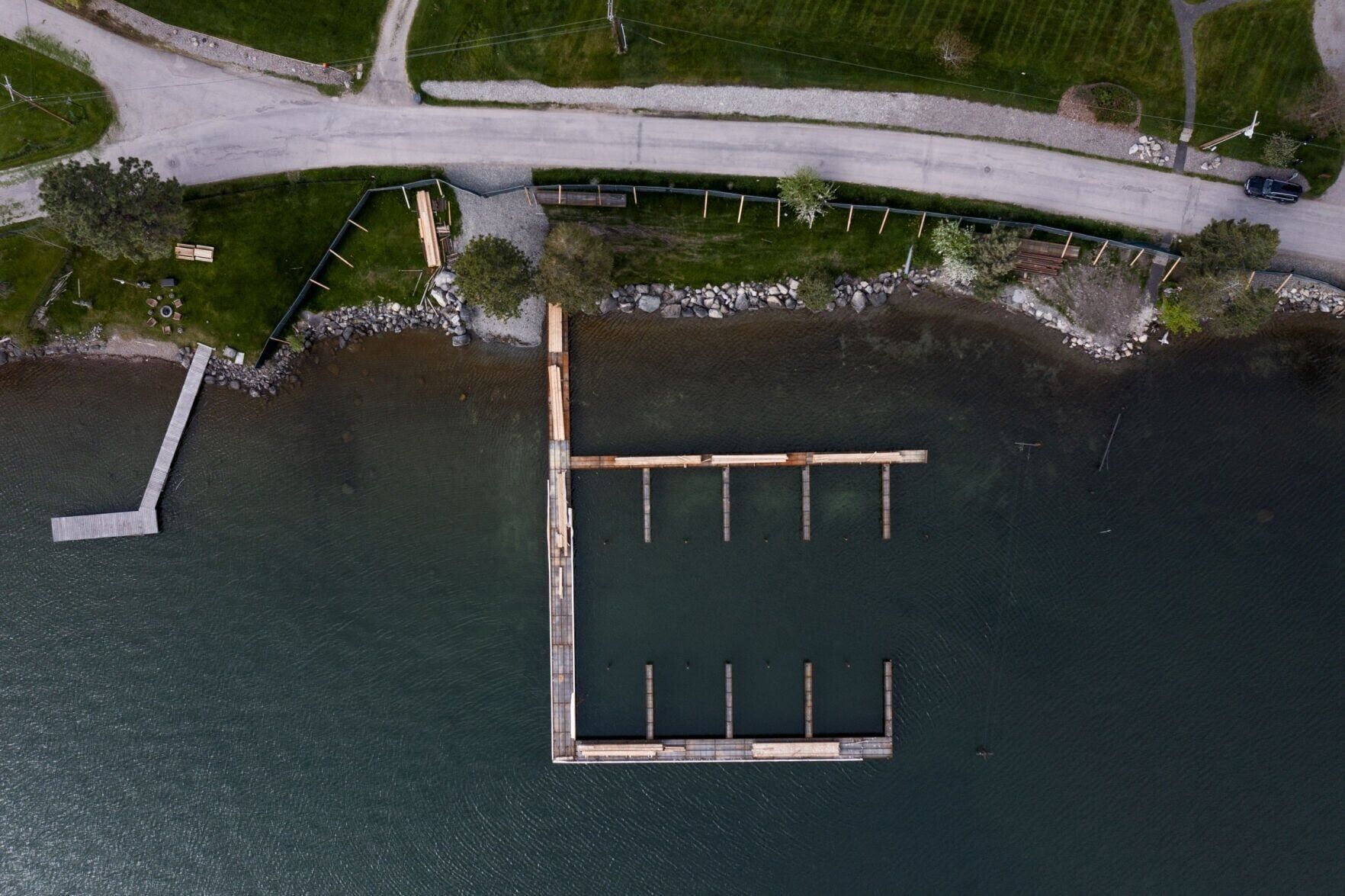
Territory 1889 — which is slated to include 359 homes, two golf courses, a marina and other amenities on several disconnected parcels — has also been the subject of criticism and litigation.
Citizens for a Better Flathead has been at the heart of the efforts to push back on Discovery’s plan in Lakeside, filing multiple lawsuits over the developer’s plans as well as over the decision-making processes of local and state agencies tasked with regulating those plans.
On March 23, the group joined with several other petitioners to ask for an “immediate judicial review” to determine whether the DNRC and the Lakeside County Water and Sewer District erred when they denied their objections to the permit granting a water right for Territory 1889 and rejected their bid to participate in the permitting process going forward.
In court filings, the petitioners wrote that they brought their “case to protect its and its members’ interests in the fundamental right to participate in agency decision-making, due process of water users, and the lawful administration of Montana’s water resources.”
They argued that their “rights to participate in the permitting process” had been violated by DNRC when it decided to “arbitrarily deny portions of certain Petitioners’ objections” to the water-rights permit and when it decided to “severely limit their participation” in the process that led the state to approve LCSWD’s application to supply water to Territory 1889.
Citizens for a Better Flathead’s objections were based on various claims, including that DNRC:
- “relied on an outdated aquifer test,”
- “mischaracterizes the availability of water in Flathead Lake and ignores the trending impacts from climate change and drought,”
- “fails to quantify surface water sources previously considered hydraulically connected” to the groundwater,"
- and “excludes (the Confederated Salish and Kootenai Tribes’) reserved water rights” from consideration.
McMahon’s order stated that he “agrees with Petitioners that there appears to be significant and material factual and legal deficiencies intertwined and connected with (DNRC’s) unilateral decision to forever muzzle Petitioners’ public comments and objections (as well as participation in the underlying contested case proceeding) ….”
Moira David, DNRC’s communications director, said her department “does not generally comment on litigation” but “remains committed to considering all public input through its established review processes.”
While he declined to “determine the ultimate merits of this judicial review,” McMahon wrote that Citizens for a Better Flathead and its co-petitioners “have made a strong showing that they are likely to succeed on the merits in this judicial review proceeding ….”
McMahon wrote that he “certainly understands and appreciates that (Discovery) would like to proceed as quickly as possible to getting shovels in the ground on its project.” But he also noted that the petitioners have “more than sufficiently established that they (and others similarly situated) will be irreparably injured and harmed … if a stay of the underlying contested case administrative proceeding is not imposed.”
To that end, McMahon ordered that new hearings about DNRC’s permitting decision and the public-participation concerns of Citizens for a Better Flathead and its fellow petitioners be held in Flathead County District Court within 45 days.
While that process plays out, Mayre Flowers, co-chair of Citizens for a Better Flathead, said the ruling should be seen “in a larger context.”
“This holds the Montana Department of Natural Resources and Conservation accountable to meaningful public participation,” Flowers said. “And that's a huge win across the state, and not only for the immediate issue of Lakeside development but for all water-right objections before the agency.”
McMahon signaled the broader implications of the case in his order, writing, “There is unquestionably tremendous and overwhelming public rights and interest at stake in this proceeding.”



Comments ()