
Paradise Valley to get more public land
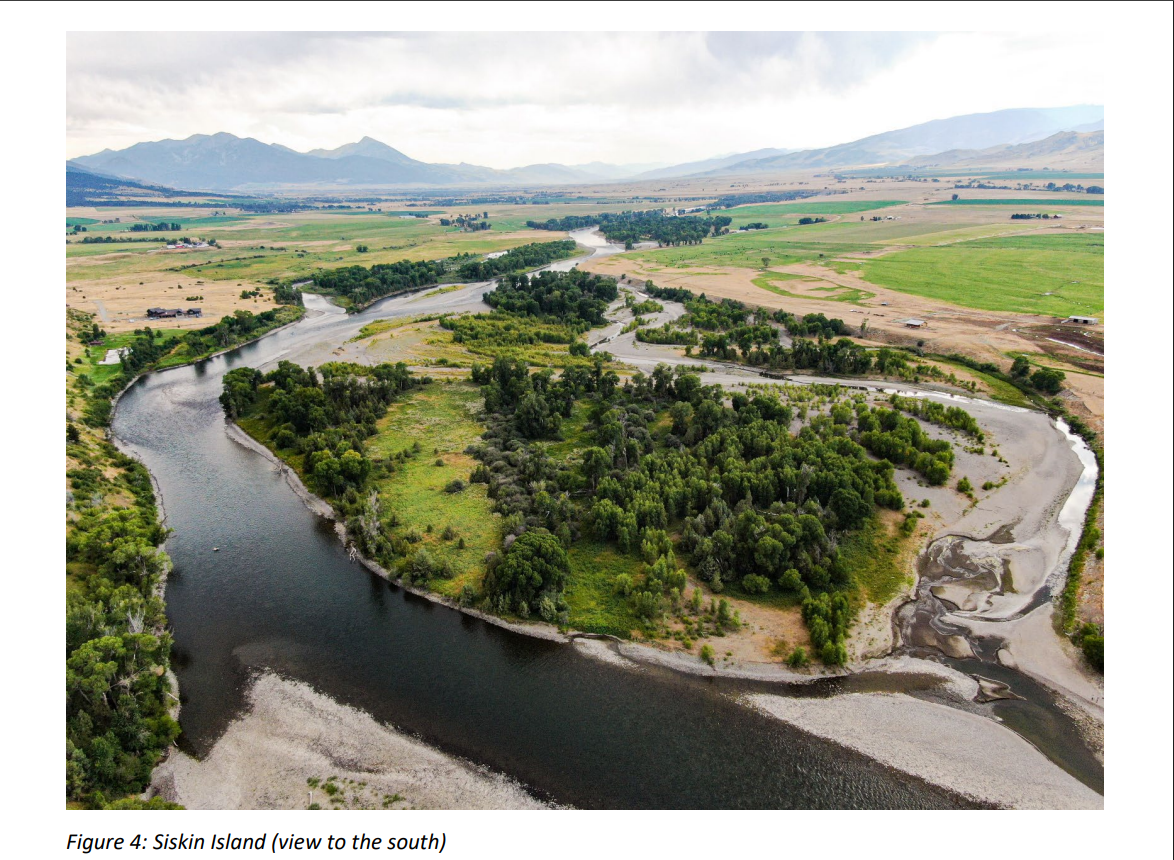
There will be more than 80 acres of public land newly available for hunting, fishing, camping, and more in Paradise Valley.
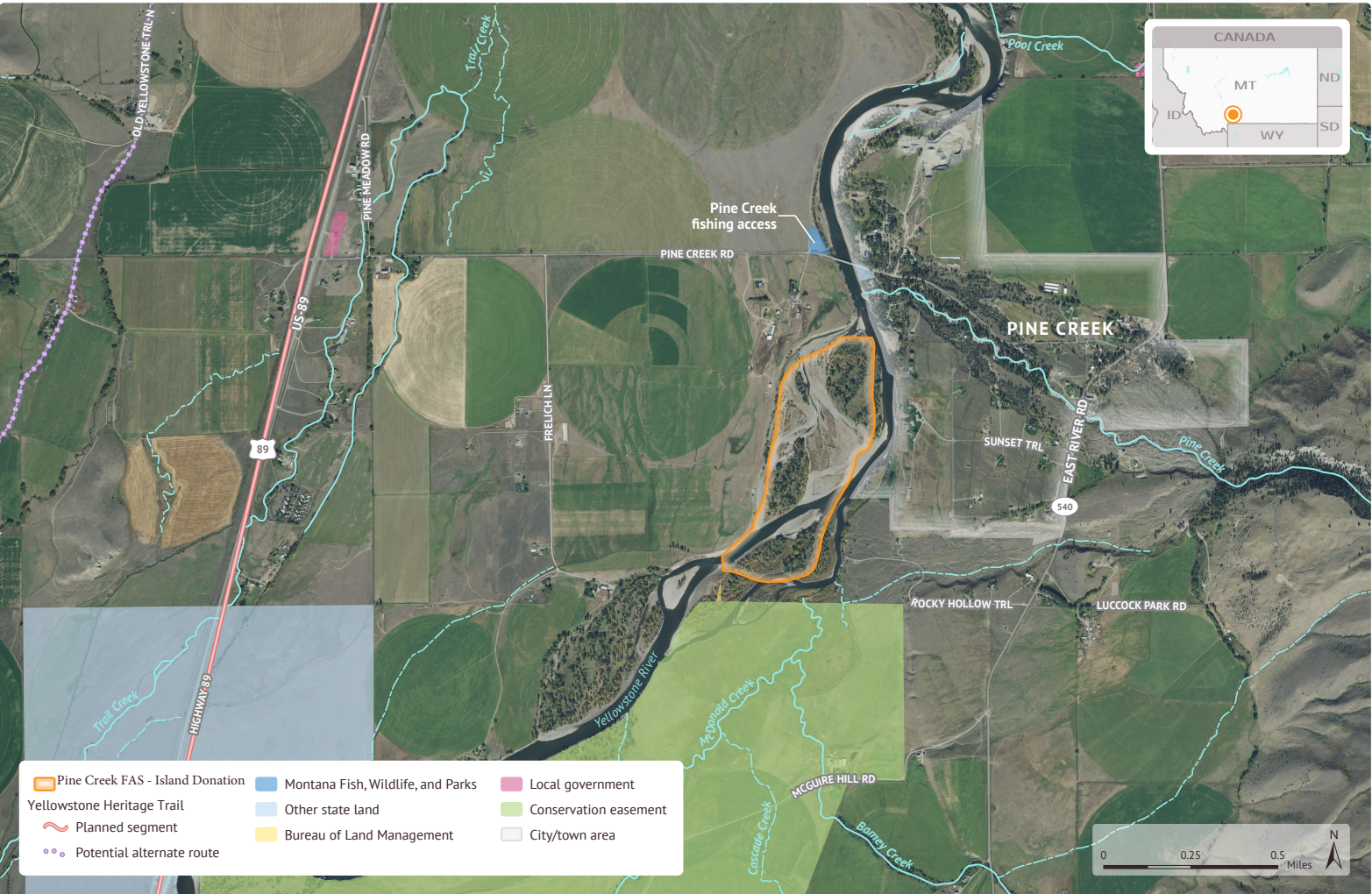
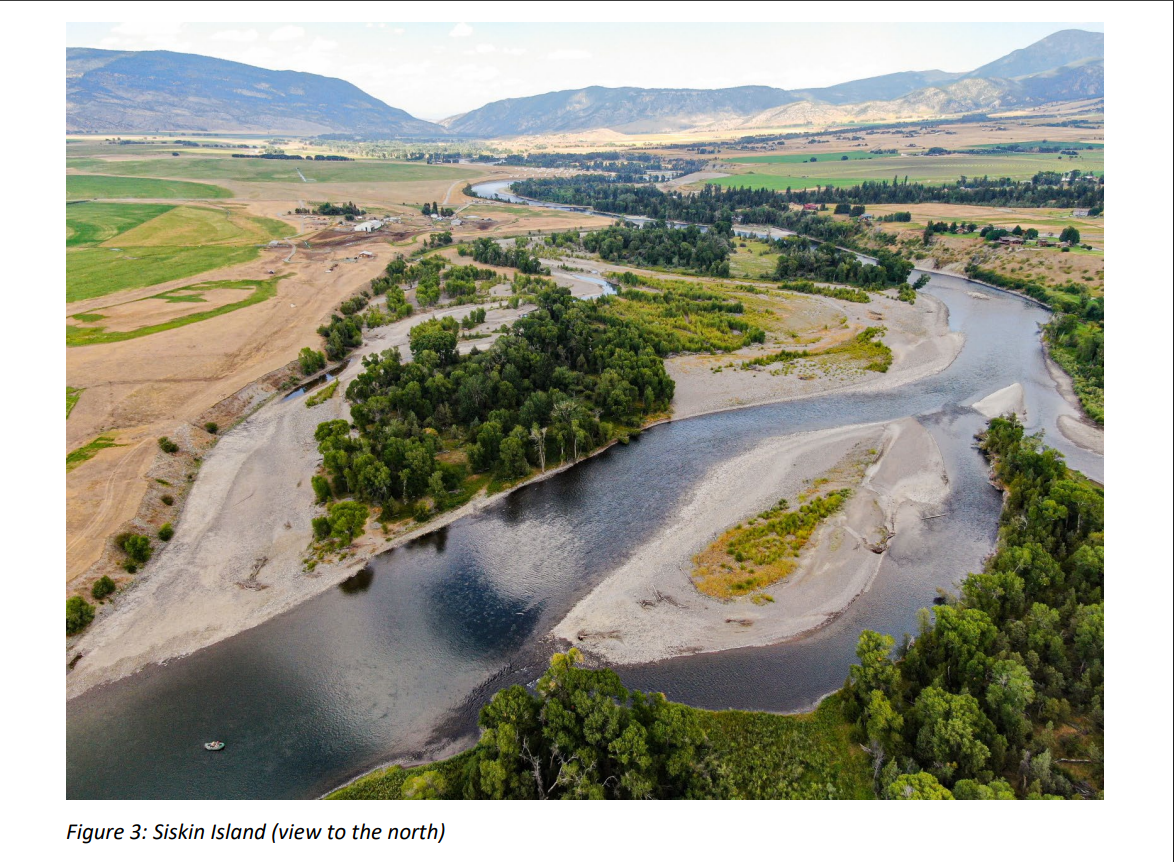
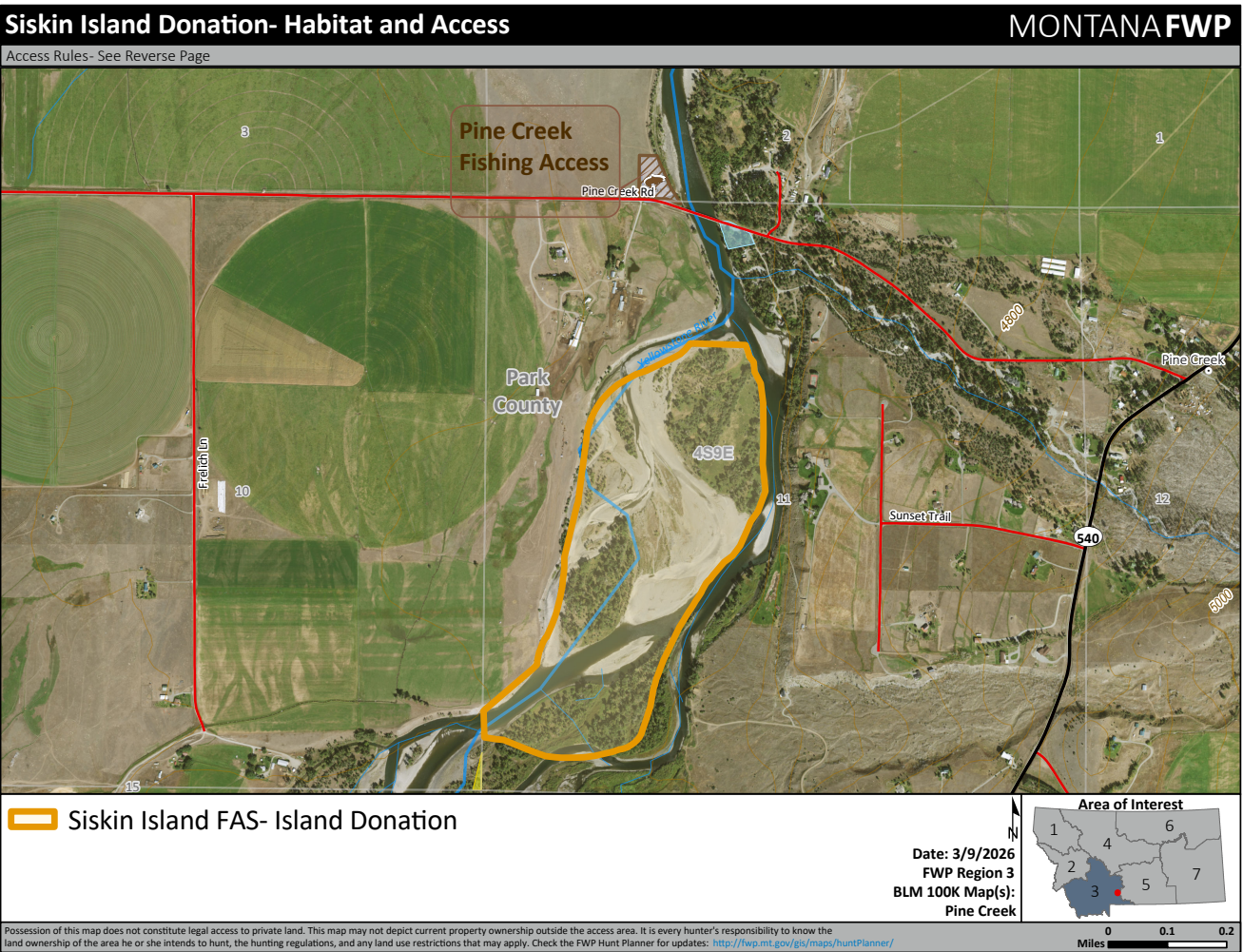
The Montana Fish and Wildlife Commission voted unanimously on June 12 to accept the Trust for Public Land’s donation of an 82-acre island area near the Pine Creek Fishing Access Site (FAS).
The Montana Department of Fish, Wildlife and Parks (FWP) will take ownership of the new fishing site, the Siskin Island FAS, to provide the public with recreational opportunities and to help preserve the health of the Yellowstone River and conserve wildlife habitat, according to an FWP project summary. The name of the new FAS refers to Pine Siskin, a native finch species found in Paradise Valley year-round.
Initially, there will be camping allowed at two designated sites, according to the commission’s June 12 discussion. More camping may be allowed later, FWP officials indicated. Open camping will not be allowed on the riverbanks in the new FAS. Currently, the public can legally camp on the island below the normal high-water mark. With the FWP’s acquisition, the agency has the authority to regulate camping there to a greater extent.
The proposal to allow more public camping and hunting in the area caused a stir among some people who own property adjacent to the site. FWP officials, responding to concerns about trespassing, stray projectiles, litter, noise, sanitation, and fires, since indicated camping will be allowed by reservation.
Landowners and county residents appeared before the Park County Commission in March to discuss the project.
“I’d like to work with Fish, Wildlife, Parks or whoever, to make sure that the people that are coming into that fishing access from the north are not on our property,” said landowner Laura Mitchell during that discussion. “We have dogs and people and stuff all over the place, and so I think that that’s a concern.”
Landowner Gwen O’Hair told county commissioners her family already has had BBs hit their windows from hunters. Speaking before commissioners in March, she opposed allowing camping and hunting at the site.
“Eighty acres may sound like a lot of land, but it’s truly not,” O’Hair told commissioners. “And there are landowners on both sides of the river right there who have livestock, who have homes, who have children out in the yard playing, et cetera.”
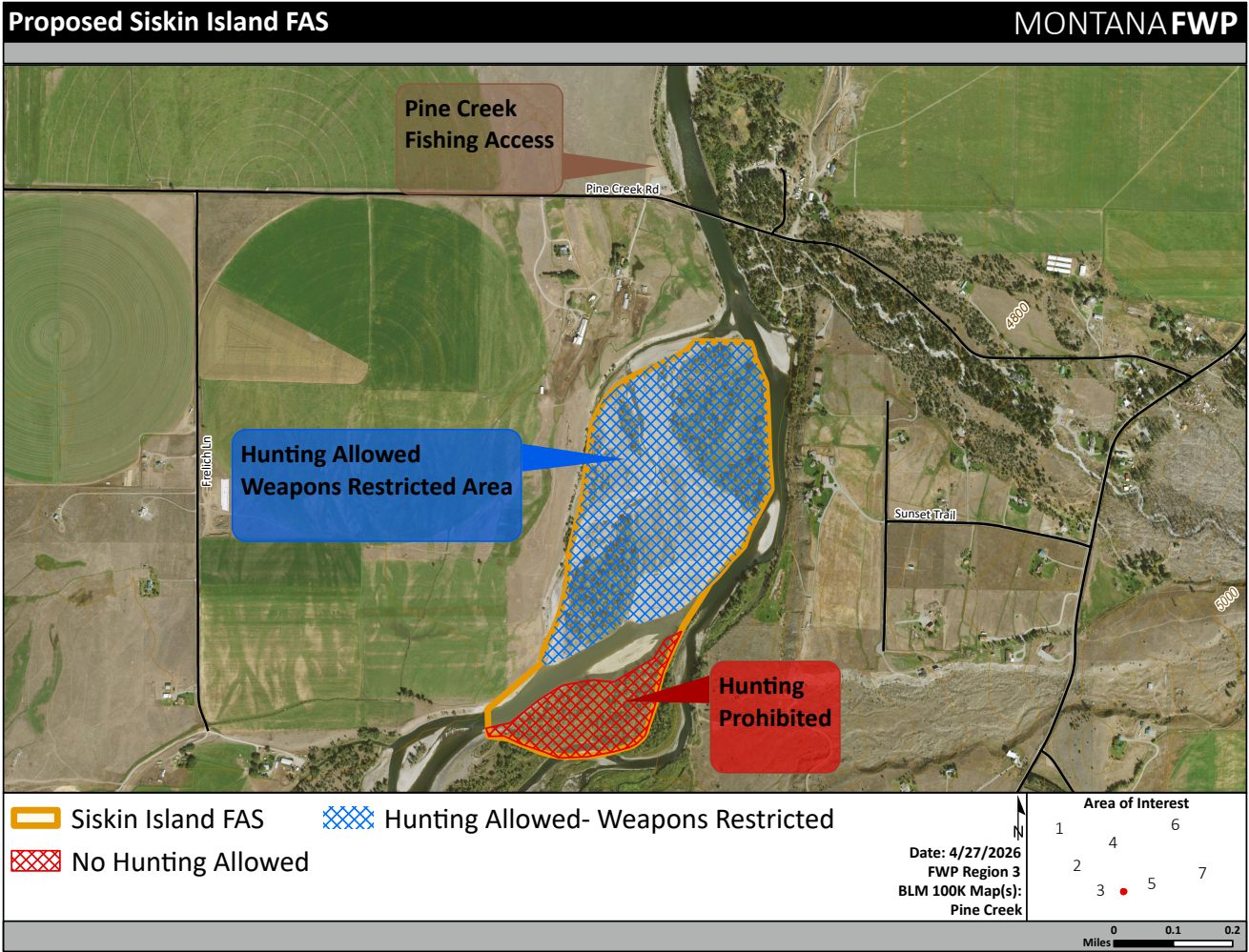
FWP will prohibit walk-in big game hunting and the use of rifles at the site. Discharge of weapons would only be allowed for hunting.
After hearing public concerns about hunting, FWP modified the proposed management approach to only allow hunting on portions of the site west of the main river channel.
“If river conditions or channel location change over time, FWP will reevaluate the hunting boundary and continue working with neighbors and other stakeholders as needed,” reads an FWP Decision Notice on the project. “FWP recognizes that commenters specifically raised concerns regarding shotgun slugs and projectile travel distance. The final hunting-area restriction is intended to address those safety concerns through location-based limits that better separate hunting activity from nearby homes and common areas. FWP will monitor hunting pressure, rule compliance, continued safety concerns and other factors and re-evaluate as necessary.”
The agency initially had proposed that campers be allowed to stay at the site for up to seven nights.
“In response to public comment, FWP revised the proposal from dispersed camping to boat-in-only camping at designated campsites, reduced the maximum stay to one night within a 30-day period, reduced the group size threshold to 10 people without a special use permit, and will begin with one designated campsite before expanding to no more than three campsites if future conditions support that level of use,” reads the agency’s Decision Notice. “Camping will require reservations and applicable camping fees through FWP’s reservation system or another supported vendor. Designated camp sites will not have any infrastructure aside from signage.”
In response to public concerns about fires on the island — which already happen with campers there — FWP adjusted its proposed fire rule. Initially, the agency had offered to ban all fires, but “many commenters expressed concerns that campers would not follow this rule and unsafe fires would continue under FWP ownership,” according to the Decision Notice.
“Fires will be allowed on a trial basis only at designated campsites and only with the use of fire pans; ash must be packed out, and all county and FWP fire restrictions will apply,” the notice reads. “Fireworks remain prohibited, and that prohibition will be clearly communicated in signage and other site information. If compliance with the fire-pan requirement proves poor, FWP may prohibit fires entirely in the future.”
In response to concerns about trespassing on neighboring private property, FWP offered to place signage and offer maps letting people know where public areas are.
Responding to concerns about trash, the agency revised its proposed rules to prohibit the possession of glass at the site and committed to having FWP staff regularly monitor the property.
No one appeared — either in person or over the internet — before the Montana Fish and Wildlife Commission to oppose the project.
“I know this project generated quite a bit of public discussion, and my understanding is that there was some really productive conversations that went on,” said Alan Zackheim, FWP land agent, to the wildlife commission before its June 12 vote.
Organizations weigh in
The project has the support of the Park County Environmental Council.
“We want to ensure that the Greater Yellowstone Ecosystem continues to maintain its vital importance for wildlife, intact habitat and ecological diversity for generations to come,” reads a May 20 letter to the wildlife commission. “We encourage the FWP to manage Siskin Island in a manner that preserves its inherent natural qualities.”
The project also is supported by the Montana Outfitters & Guides Association, whose president-elect, Scott Vollmer, was on hand at the June 12 meeting to urge the wildlife commission to accept the donation.
“Thank you again to Trust for Public Land for the generous donation of this property,” Vollmer said. “It’s going to be a pretty welcome, pretty unique addition to our FAS system in the state, and we fully support it and fully support the department’s recommendations on how to manage the site properly.”
The project also is supported by Montana Freshwater Partners, which argues that public ownership of the property will help preserve riparian habitat, aquatic habitat, and prevent human-caused bank modification.
“As an organization working to protect and restore the Yellowstone River for over a decade, we view this as one of the most ecologically significant conservation opportunities on the Upper Yellowstone in recent memory,” reads the May 20 letter from Montana Freshwater Partners.
The Montana Wildlife Federation also supported FWP’s acquisition of the 82 acres.
Frank Szollosi, representing the federation, said FWP’s ownership and management of the area will help prevent harmful land uses.
“What doesn’t get built in places like this is more important than what does get built,” Szollosi told the wildlife commission on June 12.
The project also has the support of Montana Trout Unlimited and Trout Unlimited. Jeff Lukas, representing those entities, said having more fishing areas in the region helps spread out people using the area, reducing crowding and the effects of human activity on the land. He said the area “provides excellent habitat for game and non-game species, excellent spawning grounds for trout, and permanent access for the public to enjoy.”
Although the land will be owned by the public, FWP will pay property taxes on the acreage, according to Zackheim.
History
The project is made possible by descendants of the late Bob and Jean Simkins, who started a lumberyard in the 1940s in Gallatin County, and whose descendants have been heavily involved in developing the Big Sky area.
Trust for Public Land acquired the Siskin Island FAS property from Bozeman-based Westland Enterprises Inc. last November. As of March 31 — the last annual report filing — Westland Enterprises was overseen by William G. Simkins as president, Brodey Simkins as vice president, Thomas R. Simkins as secretary, and Richard Simkins as treasurer.
The Siskin Island FAS project began “with a cup of coffee around a conference table” with the family, according to Lucas Cain, project manager for Trust for Public Land’s Northern Rockies Program.
“Their vision was to see this donated for public benefit, and we were thrilled and honored to play a role in doing that,” Cain said.
Opportunities like the Siskin Island donation don’t come often, Cain remarked.
“So to have the ability to protect an island complex and a resource that has a myriad of those benefits is just fantastic and at minimal cost to the state and the taxpayers,” he said. “We feel very fortunate to be able to help shepherd this one through.”



Comments ()