
Park County commissioners now oppose proposed Paradise Valley gravel pit
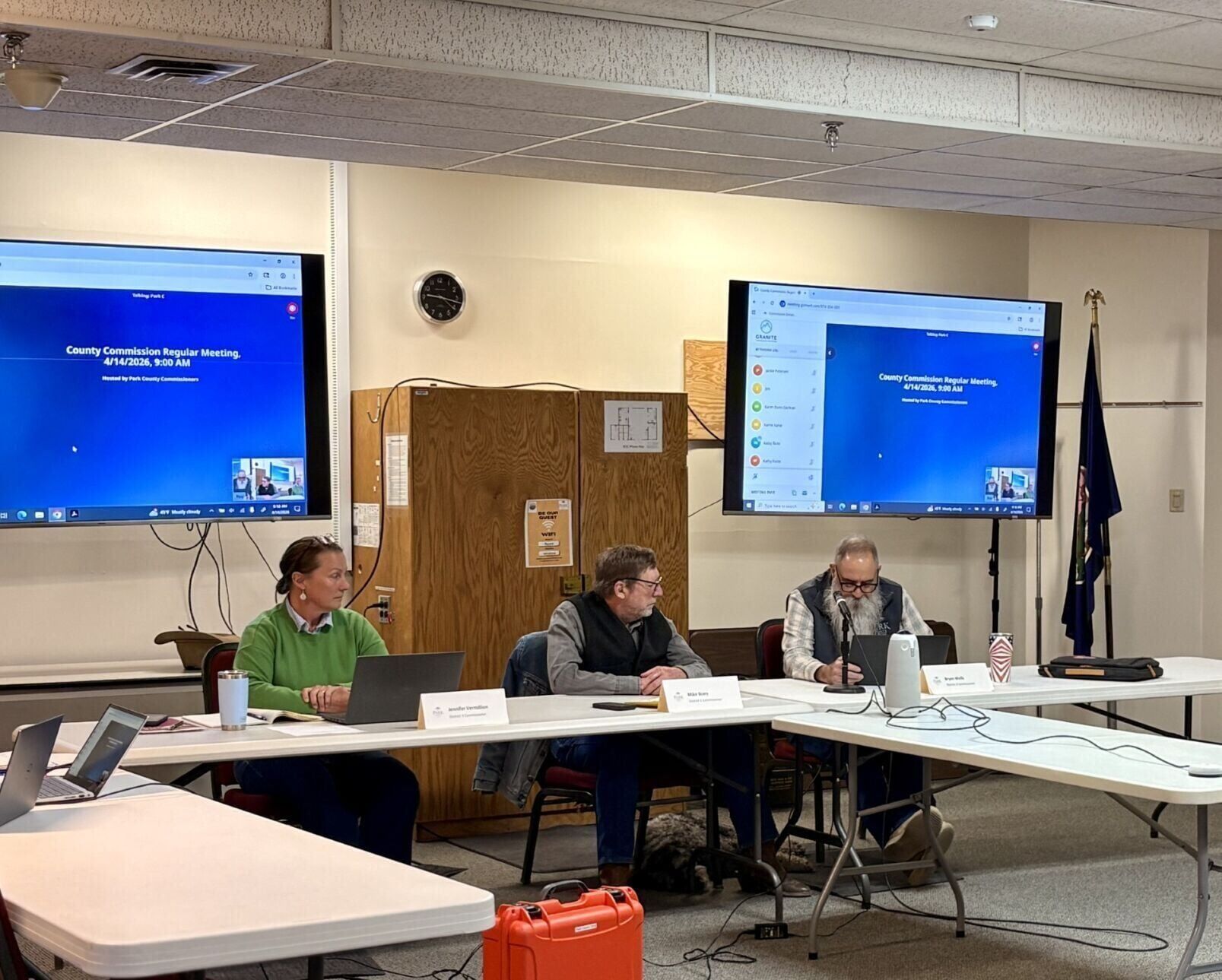
LIVINGSTON — Park County Commissioners voted unanimously to sign an opposition letter to a proposed gravel pit on state trust land about one mile north of Emigrant.
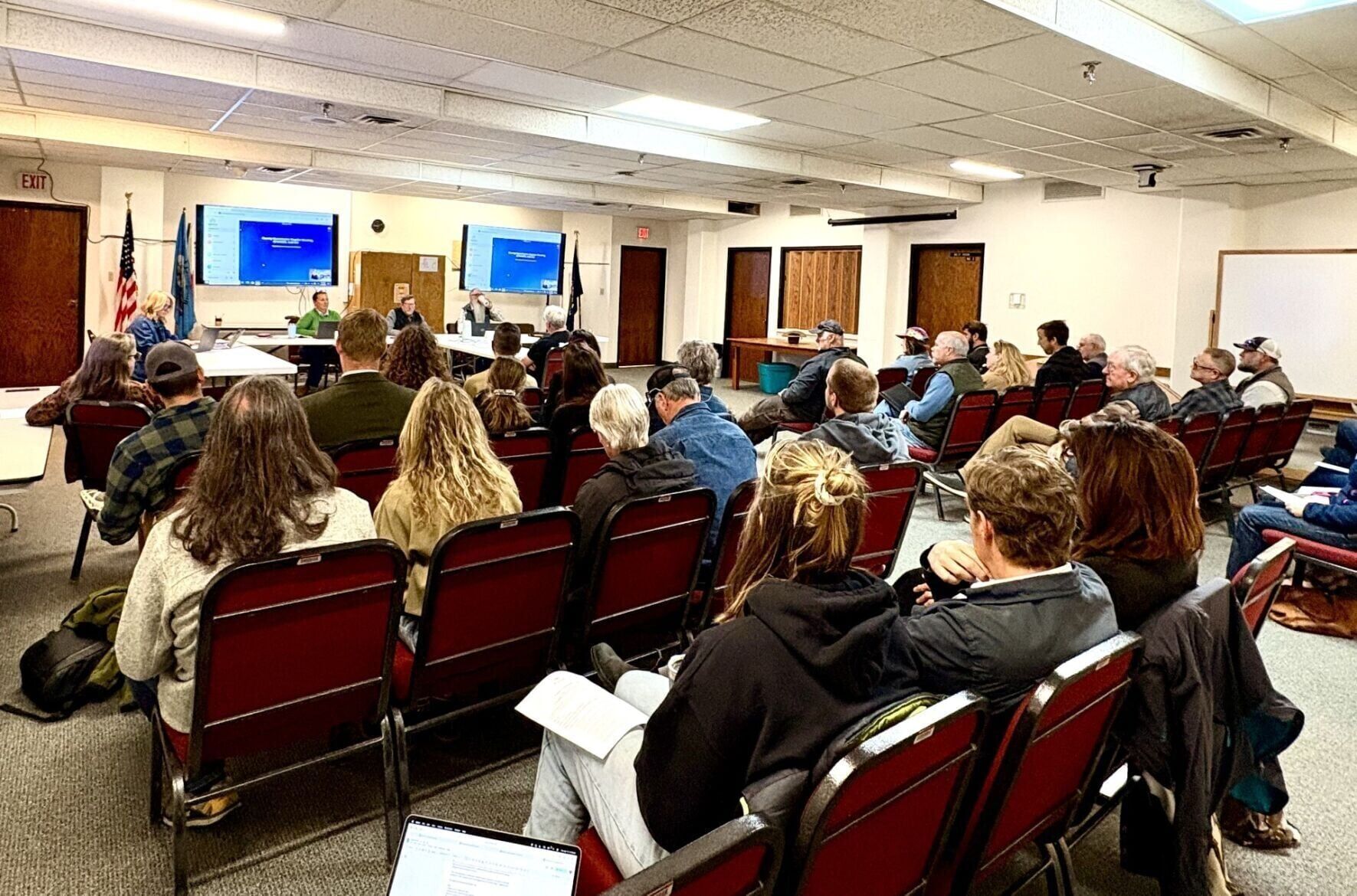
The meeting drew about three dozen community members, six of whom expressed support for the letter during public comment.
Commenters included state Rep. Scott Rosenzweig, the manager of Eight Mile Ranch in Livingston and managing director of Park County Environmental Council.
“Whatever disagreements people may have on other issues, this decision shows something important: When the citizens of Park County speak clearly in large numbers, and with real knowledge, you are willing to listen,” said Ken Cochrane, founder of the nonprofit Friends of Park County. “It builds trust. And it matters especially here, because Section 22 and all of Paradise Valley are not the right place for an industrial gravel pit.
The opposition letter marks a stark contrast from a drafted support letter the commissioners discussed in a Feb. 10 meeting. Nearly 100 in-person and virtual community members gathered that night, the majority opposing the support letter.
District 1 commissioner Mike Story said that due to an outpouring of public concern and a lack of information from the Montana Department of Natural Resources and Conservation about the proposed pit, the commissioners voted to table the support letter draft in February.
In the interim, Story says the commissioners have identified established gravel pits in Paradise Valley that can be brought up to county standards for road maintenance.
“We found that we did have some type of gravel source for the county,” Story said. “As soon as we could find out the other permits were there, there was no reason to have a new gravel pit put in.”
Utilizing these gravel sources, the commissioners anticipate moving away from hauling gravel from Fisher Sand & Gravel in Livingston into Paradise Valley, therefore reducing transportation distances and associated fiscal costs and safety risks.
“The supply of gravel isn’t the issue. The money to actually put the gravel on the road is the issue,” District 3 Commissioner Jennifer Vermillion said.
Vermillion said the county has strict requirements for the gravel it can use, centered primarily on an absence of noxious weeds and material quality. Once existing Paradise Valley gravel pits meet the criteria, they will be eligible for county use.
The opposition letter states the county can meet gravel needs with existing pits in Paradise Valley, “which reduces the cost of road repair for taxpayers while also supporting a local business.”
The language reflects points voiced by community members, many of whom were surprised by the support letter in February.
“We have existing sources of gravel by family-run businesses and long-standing local businesses, and we don’t need a new commercial pit or asphalt plant operating in Paradise Valley,” Erica Lighthiser, PCEC’s managing director, said.
The commissioners’ position marks a 180-degree turn from the unsent support letter draft that stated the “proposed gravel pit offers significant public safety, fiscal, and environmental benefits for Park County and the greater region.”
The letter suggested the Section 22 pit would lower heavy truck traffic, cut hauling costs, and support environmental goals by cutting CO2 emissions.
Notably, the signed opposition letter makes similar claims against the pit, arguing that permitting existing Paradise Valley gravel pits for county use will have the same impact without having to open a new pit and disturb the recreational value of Section 22.
The opposition letter mentions Yellowstone National Park seven times, concluding with the Park County commissioners’ “respectfully requesting that Yellowstone National Park and its gravel suppliers identify sources within or near the park boundary.”
YNP did not respond to Chronicle requests for comment.
“Yellowstone Park did not ask for this, or say they needed gravel there,” Wells said during the April 12 meeting. “It was in the application by the contractor who applied to have the gravel pit on Section 22. In the application, they said it was because of future gravel needs in Yellowstone Park, so that’s where that claim comes from.”
Yellowstone County-based company Riverside Contracting applied for an aggregate and rock mining lease on State Section 22 from the State of Montana in March 2025. Wells said he received a call from the lieutenant governor’s office earlier this year, requesting the Park County Commission support the proposed pit.
It was this request that prompted the commissioners to draft the February support letter.
Riverside Contracting holds several contracts with Yellowstone National Park through 2029. Story believes this correlation may have contributed to the buzz around the unfounded claim that the park needed the gravel from the proposed pit.
In addition to the realization that county gravel could be sourced locally, Vermillion said the public comment in response to the February support letter draft prompted the commissioners to reevaluate their position.
“There was overwhelming pushback from the community that the parcel is heavily used for recreation by locals,” Vermillion said. “The truck traffic on 89 is a real danger, but there’s also value in trying to maintain the character of the Paradise Valley.”
Park County is a rural county characterized by its surrounding mountain ranges, being a corridor to Yellowstone National Park, and being a mosaic of working ranches, rural residences, and public lands.
“Park County is really unique. And the fact that the community kind of shows all facets of the political spectrum, and people can really come together and work for what’s important to the common good,” Rebecca Henson, owner and operator of Follow Yer’ Nose BBQ and Wildflower Bakery in Emigrant, said.
Cochrane stressed the value of land in Park County as a community legacy, rather than a commodity to be simply bought, sold and used.
“The decisions made about one piece of land affect neighbors, working lands, water, roads, wildlife, scenery, and the character of the valley as a whole,” he said.
While Riverside Contracting applied for permits on 80 acres of the State Section 22 parcel, the full lot covers several hundred acres. Lighthiser said the public uses the land for hunting, hiking and other recreational activities.
“The concerning thing is if that area is leased for gravel operation, they could cut off wider sections for ‘safety reasons’, and we could lose access to the whole thing,” Lighthiser said.
With all three commissioners voting “aye” on signing and sending the opposition letter, Vermillion said it isn’t guaranteed the pit won’t still move forward. The ultimate decision will be made by the DNRC, and a timeline for a decision is not clear.
“We’re saying we don’t support it as the governing body of the county, but the state could still approve the permit,” she said.
Despite uncertainty regarding the future of Section 22, many community members left the meeting encouraged.
“This is a big win for public lands,” Henson said. “At a time when public lands are being sold off nationally, achieving this outcome at the local level sends a strong message.”



Comments ()