
Part two: Democratic Senate candidate debate recap

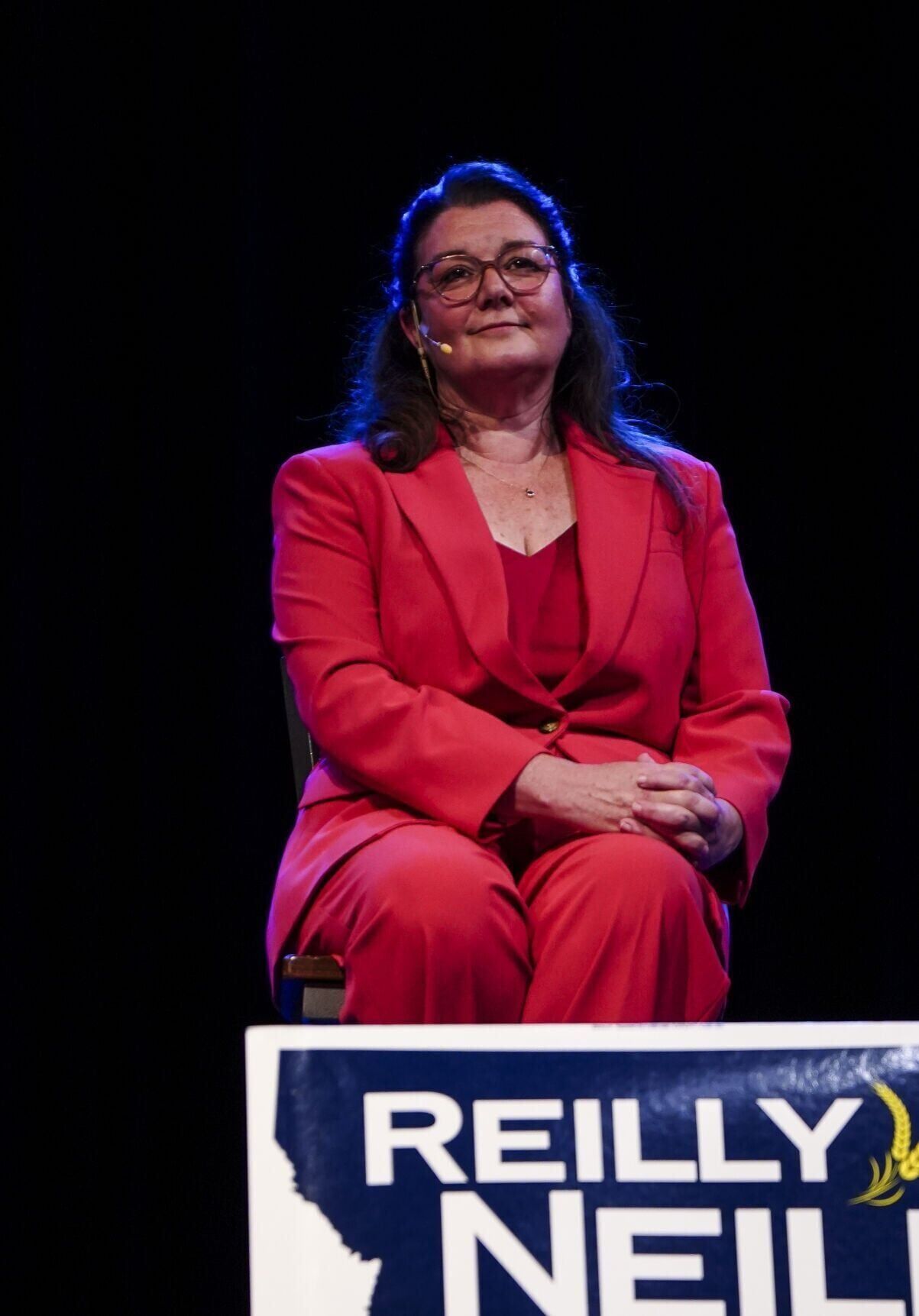
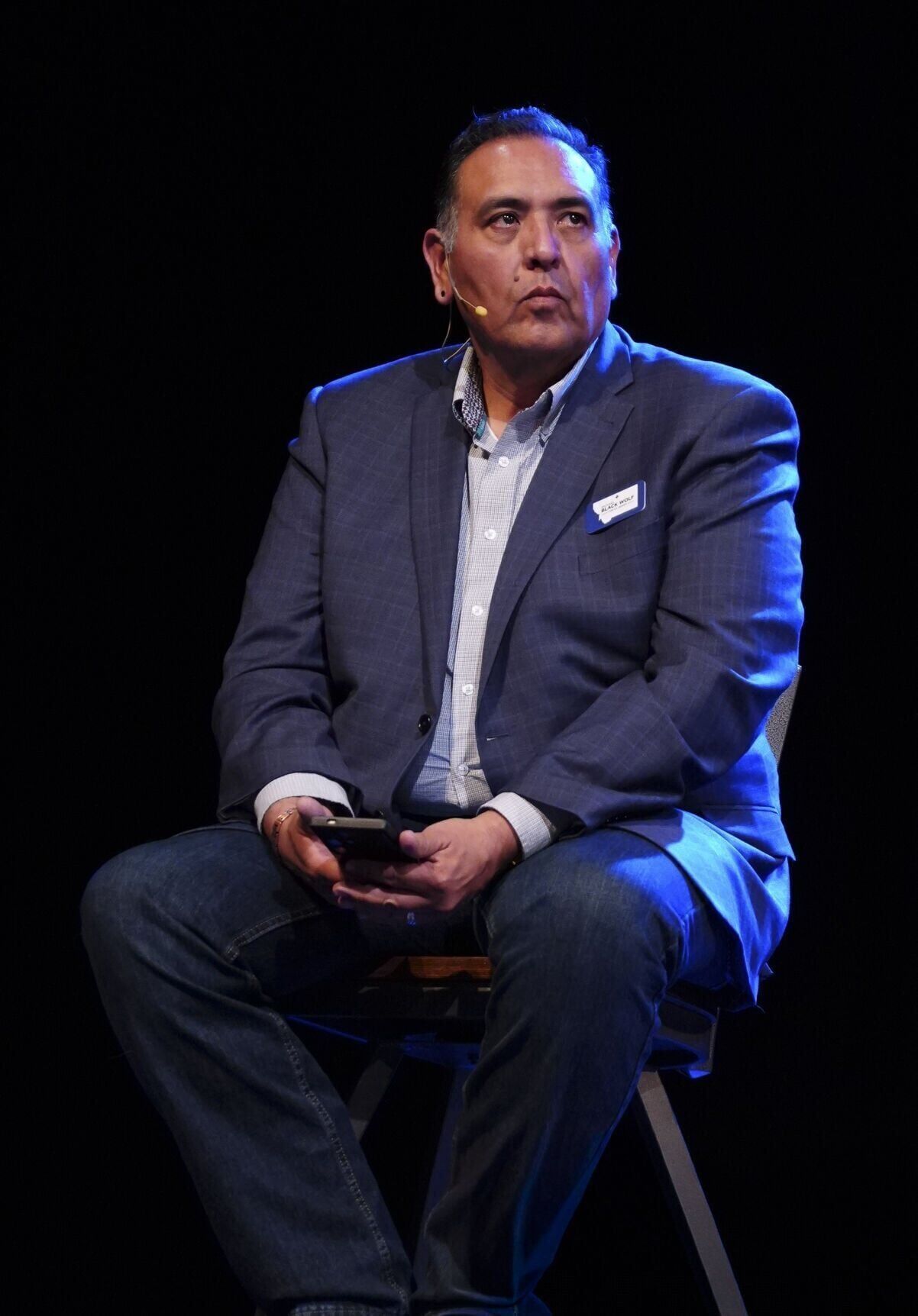
All five Democrat candidates vying to succeed sitting Sen. Steve Daines were on hand: Veteran Air Force commander, special agent, and leadership coach Alani Bankhead; tribal historic preservation officer Michael Black Wolf; Navy veteran and businessman Michael Hummer; former state Representative Reilly Neill; and actor, director, arts administrator and teacher Christopher Kehoe.
The nearly 2 1/2-hour event last Thursday, hosted by the Gallatin County Democrats, drew approximately 200 patrons in the 735-seat theater. After a pre-debate reception and post-debate social hour, former Montana Supreme Court Justice Mike Wheat moderated candidate panel. Issues included energy, housing, the Iran war, healthcare and childcare affordability.
Senate candidates answered the following questions after introductions and a similar line of questioning for Democrat 1st Congressional District candidates Matt Rains, Russell Cleveland, Sam Forstag, and Ryan Busse. Candidate responses are edited for clarity and brevity.
What can solve the housing crisis and unaffordability?Kehoe: “We could increase taxation on second, third, fourth homes within the state. The strain on additional properties can be flexed to disincentivize owning too many homes.”
“Getting private equity out of the housing market is also crucial. We can also use revenue to extend water, gas, and sewer lines into undeveloped areas. Sometimes there is simply no way to build on a property because the utilities don’t go there yet.”
Bankhead: “We’re moving private equity out of housing and healthcare. The capital gains tax says you cannot pay taxes up to $250,000 on the sale of a house, but that law has not been updated since the 1990s.”
“If we raise that limit from $250,000 to $500,000, that will open inventory. There a lot of folks we’ve already spoken to that are really excited about selling their houses and not paying taxes. The last thing they need is to pay more tax.”
“The same thing goes for providing incentives to construction companies and construction adjacent companies building these houses. We’ve talked to several company owners who say taxes are their biggest burden. We’re proposing if construction company portfolios are 30% or more affordable housing, selling for $350,000 or less, companies will see tax breaks.”
Hummer: “The only way we’re ever gonna stabilize this nation is not by catchy gimmicks or spending more money. It’s just the opposite. It’s getting a balanced budget amendment to stabilize our economy so we can hit that 2% mandate the federal reserve has for inflation.”
“Every year that inflation gets added to last year. It’s not just housing, it’s inflation, and that’s what we need to work on, the core of our economy.”
Neill: “At the base of this are the wages. I ran a business and I knew if I wanted to have solid employees who stuck around, I had to pay them fairly and give them good benefits. We must put some of that onus on the business owners.”
“This is an unsustainable real estate market. If we can send one billion dollars daily to Iran, we can work with the U.S. Department of Housing and Urban Development for the relief of our veterans, low-income families, for them to be able to compete in this housing market. Otherwise, it’s unsustainable.”
Black Wolf: “We need to cut out these corporate investment companies coming in and buying up these single-family homes as investments. As Reilly mentioned, we had a great program in the 1970s-1980s, HUD. We need to bring it back for people on fixed incomes, including tribal communities.”
“When Ronald Reagan became the president, he essentially killed the HUD program. What that did to the tribal communities is a precursor to what is happening right now. Reagan, by cutting HUD programs serving low-income communities in all tribal nations, creating housing deserts.”
‘We’re starting to see that effect happening everywhere, especially in rural Montana. We need to get those investments back, tax billionaires out of existence, and we need to reinvest those funds into programs like HUD that will get hardworking Montanans back into owning homes.”
What can make healthcare more affordable?
Kehoe: “Is it an American system going wrong or a capitalist system going right? If it’s a capitalist system going right, then the only solution is some kind of a socialized answer. That is basic universal healthcare.”
“It is humane, it is a basic human right, and it is byzantine that we don’t have it.”
Bankhead: “I’m proponent of progressing to universal healthcare. If we start with Medicaid for all, which is going to cost $2.5 trillion per year, we can work our way up.”
“When I talk to fiscal conservatives, they ask ‘How are you gonna pay for it? You Democrats always like to give everything away for free.’ It’s simple. It’s the defense budget.”
“I’m a retired lieutenant colonel. I was the bodyguard to the Secretary of the Air Force. I understand how the highest levels of the Pentagon’s budget work.”
“In Sept. 2025 the Pentagon spent $91 billion on lobster tails and baby grand pianos. That’s what we call use, lose spending. Every unit has a budget. If they don’t spend it by the end of September every year, they lose what they didn’t spend. They get less the next year.”
“All Congress must do is change that one policy to say they are not going to get penalized if they don’t spend all that money, and they give those taxpayer dollars back. We can use that to pay for 2/3 of Medicaid for all. That is the easiest way.”
“The other third of the money could come from ending the illegal war in Iran that is costing almost $2 billion.”
Hummer: “Healthcare is about 18% of our entire gross domestic product, approximately $5.7 trillion. Let’s not pretend the government is not in the healthcare business. It spends about $2.5 trillion on Medicaid, Medicare, the Affordable Care Act.”
“We’re already halfway there. Much of the money spent on Medicaid is on long-term healthcare for the elderly and hospitalization. Just a small fraction are doctor visits to keep people healthy.”
“It’s about $6,700 per average person on Medicaid annually. I’m sure everyone would like to buy into a program where they don’t have any deductible, that covers dental and eyeglasses for $6,700 dollars.”
“Why can’t we let people buy into it? That is a better process.”
Neill: “We can expand the age people can stay on family insurance from 26 to 35 years old. That could be a huge change, because it avoids the 26-year-old cutoff cliff.”
“What we need to do is basic universal healthcare, a single payer system. 77,000 people lost their healthcare in Montana with this ACA implosion. We need to not only bring those people back online to have healthcare, but we also need to offer them something better.”
Black Wolf: “Healthcare is one of our fundamental human rights. I fully understand we are a capitalistic society. However, it is fundamentally and morally wrong putting a price tag on our health.”
“How do we take care of that? Medicare, Medicaid for all, and universal healthcare. Almost half of that annual budget Michael Hummer was talking about goes to insurance companies to implement all our healthcare programs. We simply need to cut out the middleman and invest that money where it needs to go, making sure everyone has 100% healthcare coverage.”
How could you make childcare more affordable?
Kehoe: “We are a more pro-life nation now. I don’t think we’re more pro-children, pro-mothers or pro-families. These are things programs like federally mandated paternity and maternity leave could address.”
“Pre-k is all about school readiness. If it’s school readiness programs, that means we have kids hitting kindergarten, first grade, second grade, and they are more emotionally, mentally and behaviorally attuned to start their educational journeys. That pays off in high school, college, and the trades.”
Bankhead: “No one in this world works harder than an American. We’ve gone to the norm of needing both parents to go to work to maintain a roof over their children’s heads and put food on the table.”
“We have a history of providing these types of social safety nets. President Roosevelt went against the wishes of his own party, setting up Social Security and food stamps. The economy flourished as a result.”
“The government should subsidize childcare, support families and generate stress-free income. We know there is a shortage of childcare facilities in the state, because people don’t make the required wages to put their children in these facilities.”
Hummer: “Instead of paying for childcare, I would like to see a world where we take those funds, send it directly to the parents, giving them an opportunity to stay home and take care of their own children. It’s a complicated subject, but it doesn’t always mean people have to put their children in daycare.”
“Another option to fix this problem is having a year-round school. It’s unconscionable that people must find daycare. Why don’t we just have school year-round like so many other countries.’
Neill: “People talk to us about childcare before healthcare and housing. They want to see parental leave, the ability for a family to stay home for the first essential months of a child’s life. Universal pre-k, parental leave, these are things we need to build strong families and communities.”
Black Wolf: “As the richest country in the world, it is unimaginable we are making people pay for childcare. We have the resources, the time, the energy, and the people to provide that care.”
“If we take money and invest it in universal pre-k, childcare, we are going to be creating a lot of jobs for people taking care of those babies. We also absolutely need maternity leave for mothers.”
“I would love to see a three-month minimum maternity leave for mothers so they can spend that crucial time with their babies. If we do this, we have to be united. Everyone must believe in it. When we take the Senate and the House back, we can do a lot of things that have been pushed aside by the Republicans.”
Are you prepared to rein in Trump’s war in Iran? How can international relations be restored?
Kehoe: “Donald Trump blew past the War Powers Resolution. To me, that is an impeachable offense. I am in support of reducing the War Powers Resolution down to seven days.”
“In 2026, war moves fast. The consequences are huge. We have boots on the ground, cyber-warfare. There are so many vectors, so many definitions of war now. Anything more than seven days causes way too much havoc.”
“Rebuilding our reputation with allies is going to be tough because we’ve ceded humanitarian efforts, we’ve dismantled United States Agency for International Development in the name of government efficiency. We’ve pulled back from the world stage in the name of isolationism, and China is there to fill the void.”
Bankhead: “The only way to hold people accountable is by taking their money away. We will absolutely hold the President accountable. One of the first orders is to impeach him, restoring the balance between the legislative house and the executive branch.”
“When we talk about national security, we have diplomacy, economics, information, and military power. Military power should absolutely be the last instrument we use.”
Hummer: “What Donald Trump did to this nation and the world by attacking Iran goes far deeper. In 1974, we had a compact with Saudi Arabia to sell them arms and to protect them in exchange for the petrodollar.”
“A country like China must exchange its currency for dollars to purchase oil from Saudi Arabia. This is at risk now because Saudi Arabia uses those dollars to buy our debt.”
“What Trump has done is put our entire global financial system on a razor edge, continuing this system of insanity, attacking Iran to get concessions. Now we’re going to have a nuclear arms race in the Middle East if Trump doesn’t get that nuclear material away from them.”
Neill: “I’m just going to level; our President is an idiot. Right now, is the time we need our U.S. senators specifically to stand up and say no to this military action.”
“This might take generations to restore our international credibility. This is why I called that man an idiot. What he has broken and torn asunder cannot be easily fixed. It is going to take grit, determination, and courage of convictions.”
Black Wolf: “Regardless of who we send to the Senate, and we will send a Democrat there this November, you have my word I’ll hold this president and his administration accountable for what he is doing with this illegal war.”
“Rebuilding our relationships, that one is going to be hard. I don’t know long it is going to take. If we have an overwhelming blue wave to take back the Senate and the House, it will make that relationship building much easier.”
How can you control the growing national debt?
Kehoe: “Our tax code can be a beautiful thing if we let it. There were more tax brackets. They went higher, more imagination and innovation.”
“The progressive side of our tax system was surprisingly robust when America was great. I propose bringing that back to our tax code. Let’s have a mixture of 0-5% liability to earners of $75,000 annually.”
“Let’s introduce more tax brackets every $100,000. Let’s look at a wealth tax after one billion or one trillion dollars. Let’s set corporate taxation at 25-30%. Let’s bring capital gains tax in line with wages and regular income.
Bankhead: “We need the millionaires and billionaires to pay their fair share. Accountability is my primary platform. It is the legislators’ job ensuring we have a balanced budget, that we are living within our means as a country. They need to be held accountable when they’re not doing that.”
Hummer: “It’ll take five years of consistent cuts to get to a balanced budget, but the effort’s worth it. We must stop spending money we don’t have, because this is an existential threat.”
Neill: “We just talked about Iran. We’re wasting money there, spending one billion dollars daily. That needs to end. The Senate can end it. It has the power.”
“There is so much that was illegally done with the Department of Government Efficiency cuts. We are wasting money in Iran, on these cuts, and we are not taxing billionaires and trillionaires.”
Black Wolf: “We need to tax the hell out of billionaires and reinvest that money. We have to have a balanced budget every single year for Congress. We need to hold ourselves responsible to make sure we have a balanced budget moving forward.”






Comments ()