
Polson man sentenced to 50 years for murder over inheritance
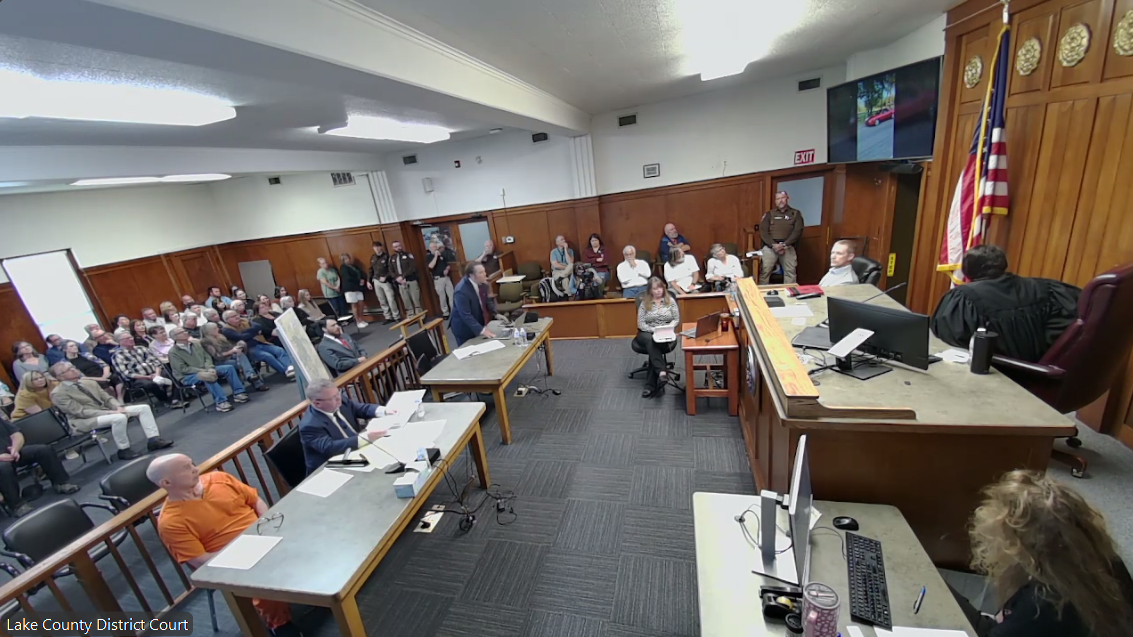
A Polson man who killed a Ronan resident in 2024 over an inheritance dispute was sentenced to 50 years in prison Friday.
James Lawrence, 71, appeared for sentencing before Judge Molly Owen and a packed gallery in Lake County District Court on Friday morning for one count of deliberate homicide and one count of evidence tampering in the death of Ed Loder, 67.
Lawrence pleaded guilty to the charges in April of this year. At sentencing, the primary issue of dispute between the prosecution and defense was how premeditated the murder was.
County Attorney James Lapotka argued the murder was planned ahead of time, while Lawrence's defense attorney Benjamin Darrow cast the killing as a momentary mistake caused by sudden rage.
Some facts were undisputed by both the prosecution and defense.
On Sept. 4, 2024, a deputy came to investigate suspicious blood on Loder's property. Loder hadn't been seen since Aug. 30. At the scene, detectives observed blood in a ditch, at least five shell casings and a pair of bloody glasses matching a description from Loder's eye clinic.
Deputies tracked the movements of Loder's cellphone around the time of his disappearance all the way to Arlee. When they searched for video footage along the likely route the phone took on Aug. 31, the same distinctive red truck kept showing up, charging documents state.
Detectives then learned there could be a financial motivation to the crime. In 2020, Mary Mendenhall died, leaving behind an estate worth millions. Her will designated Loder as the primary beneficiary and gave $5,000 each to Lawrence and his wife Debra Lawrence.
Law enforcement checked the vehicles of those named in the will starting with the Lawrences and found that James Lawrence owned the distinctive red truck identified on the camera footage.
Lawrence was apprehended and confessed to the murder to law enforcement, saying he was angry at Loder, believing he'd tricked Mendenhall into signing the will. He said he'd then gone to Arlee to a car wash and cleaned his vehicle. He informed law enforcement of where he'd dropped Loder's body, and was taken out to Jocko Canyon to show officers the location, where the victim was found. He was then charged on Sept. 11, 2024.
Lawrence said that his murder of Loder wasn't intentional, and his attorney argued that Lawrence's crime should be treated as mitigated deliberate homicide.
"He did not go there intending to kill Ed Loder," Darrow said. "There was never an intention to commit homicide here."
Darrow said Lawrence had stopped his car impulsively upon seeing Loder out for his morning walk and asked Loder about the will, which turned into a heated conversation. Then, Darrow said, Loder told Lawrence "she was never gonna give you the money," which Lawrence, who is Native American, interpreted as racial. Darrow said Lawrence then blacked out from anger and shot Loder, then made the mistake of hiding the body instead of reporting the crime to law enforcement.
Darrow pointed out that Lawrence had confessed to law enforcement and showed them where the body was, and then read a note from Lawrence stating there were too many stupid mistakes made for it to be premeditated, and if he wanted revenge for the inheritance it didn't make sense to wait four years after Mendenhall's death.
Lapotka called Detective Brandon Gale with the Lake County Sheriff's Office to the stand to show evidence of premeditation.
Gale said Lawrence's phone records showed he'd made calls to Jonathan Drennan-Beck the day before and the morning of the murder. Drennan-Beck later pleaded guilty to deleting videos and phone records related to the case and was sentenced to 20 years in prison in May. Gale said the evidence was consistent with both Lawrence's and Drennan-Beck's phones sitting in Drennan-Beck's home for three hours at the time of the murder.
Gale testified that, because of Loder's phone records, law enforcement were able to build a fairly fleshed-out timeline of the route Lawrence would have taken to Arlee. Gale said that the timeline didn't leave much room for Lawrence to speak with Loder.
According to court documents, Lawrence told officers he believed Loder had coerced Mendenhall into signing her will on a hospital deathbed. Prosecutors brought in Angela Collins, an office manager and notary, who testified that Mendenhall was of sound mind and body about two months before her death when she signed her will in the law firm where Collins works.
"She was a very spry lady," Collins said.
Collins said Mendenhall had said she was uncomfortable with the Lawrences having information about her bank accounts.
The final state's witness was Loder's son, Greg Loder.
He described his father as a friendly family man who was planning to build himself a small cabin to live independently into his old age. Greg Loder said his father also took daily walks to keep healthy, and it was on one of these walks that Lawrence had killed him.
"He had plans for the future. Mr. Lawrence ripped them away," Greg Loder said.
He urged Owen to impose the maximum possible sentence.
"Ed didn't get to grow old at home, and neither should the man who murdered him," he said.
Lawrence gave a short statement to the court.
"I am truly very, very sorry for your loss," Lawrence said. "It was horrible and I hate that it happened."
Darrow argued for a 20-year sentence with 20 years of probation, which he said was warranted given Lawrence's age and the lack of premeditation.
Lapotka disputed the idea there was no premeditation and pointed to Lawrence's actions after the crime.
"He didn't have to go hide a body in the woods at perhaps the best place in Lake County to hide a body," Lapotka said.
He also pointed to sentencing data showing the average deliberate homicide sentence in Montana is 80 years.
"I think the court has to take very seriously that a life was taken," Lapotka said. "This is a case where the defendant has manufactured a story in which he's the victim."
In the end, Owen found the state more persuasive.
"I did find Deputy Gale's testimony very convincing, and I'm going to go along with the state's recommendation," Owen said. "I do not believe Mr. Lawrence's account of what happened, and there was premeditation that occurred."



Comments ()