
Renowned appraiser values Montana Historical Society's collection of modern art
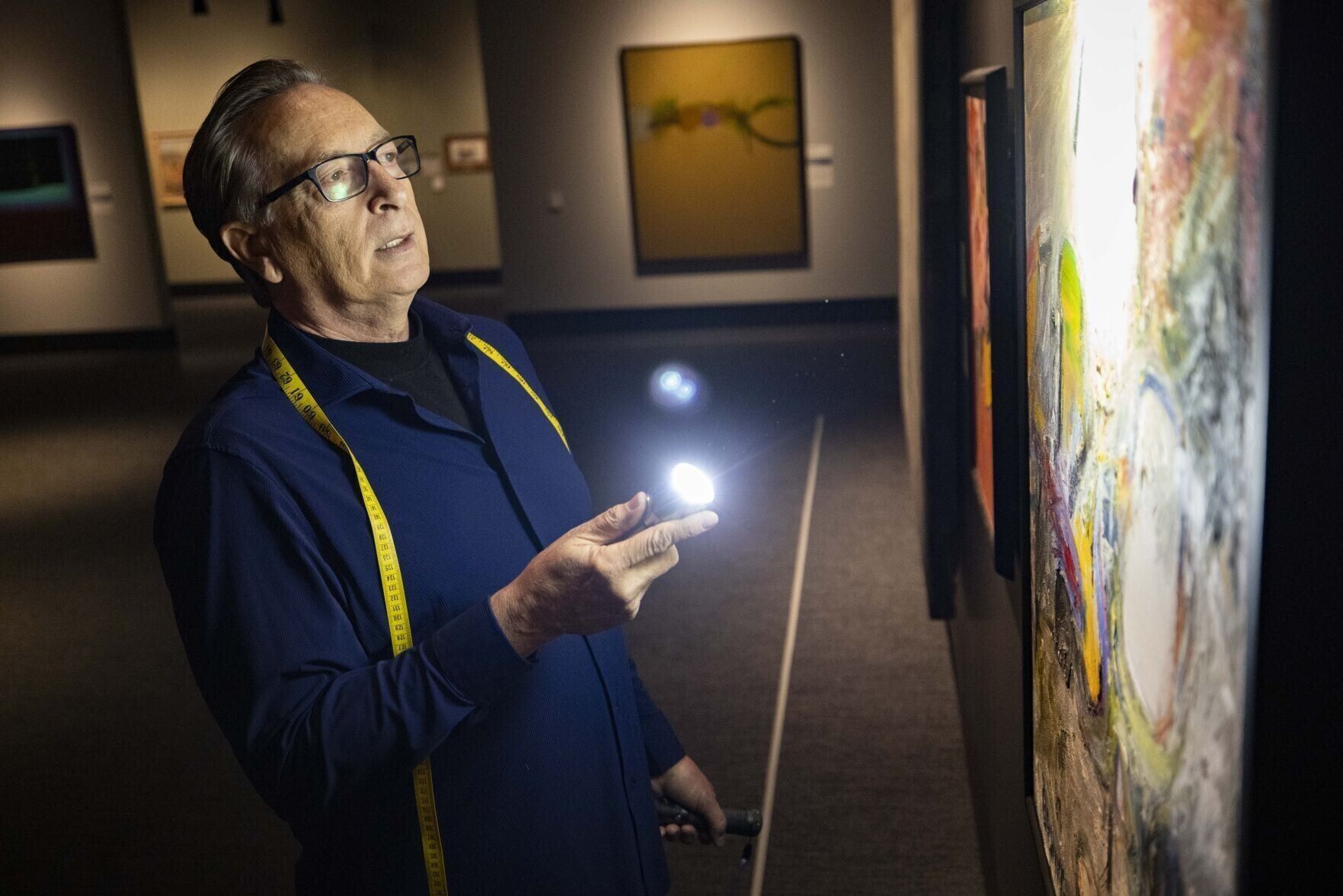
Timothy Gordon looks at art so closely, he said Montana Historical Society staff had to help him make sure he didn’t fall through any of the paintings this week at the Montana Heritage Center.
The reason Gordon was getting up close and personal with the pieces in the historical society’s Poindexter Collection of Midcentury Modern Art? He’s donating his time to help the museum get a ballpark dollar figure on the collection’s value.
Gordon, who said he spends most of his time in airplanes, calls Missoula home and has spent his career appraising collections from Princess Diana’s gowns to Jim Morrison songs.
It’s not like the historical society doesn’t already have an idea of the collection's worth. But, it’s a good idea to have as up-to-date an appraisal as possible, said Kendra Newhall, head of collections for MHS; and it’s been several years since they have freshened it up with new figures.
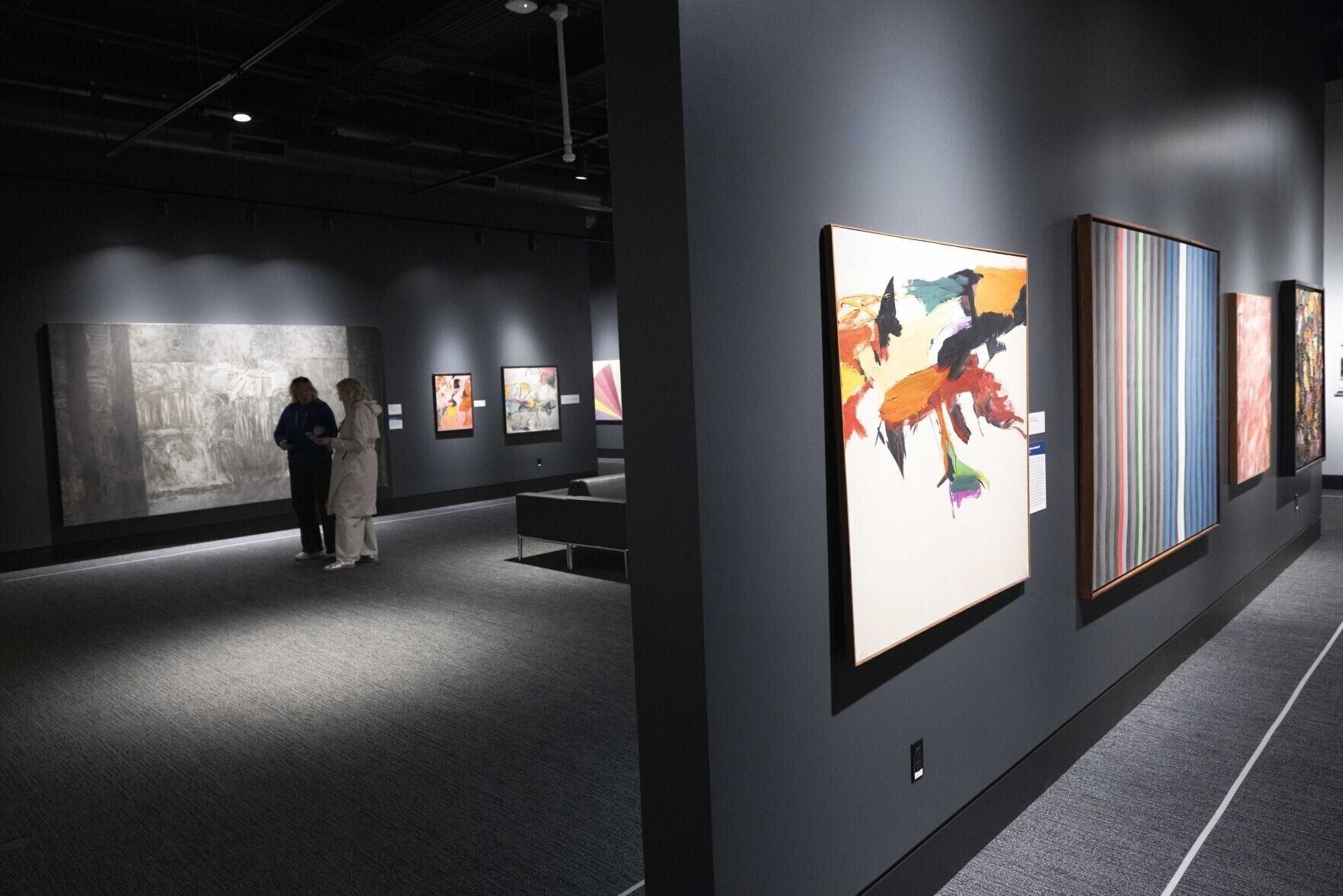
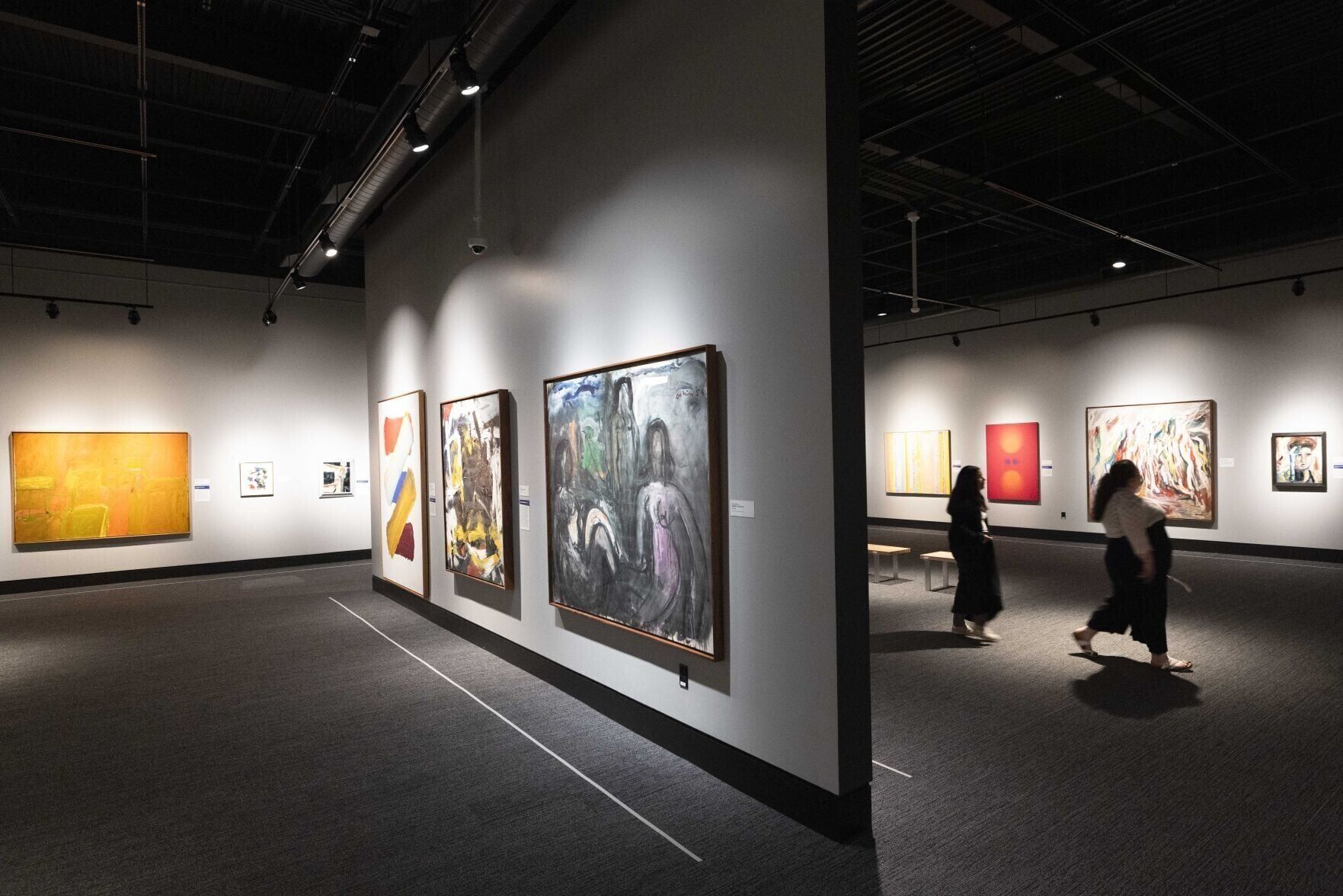
The collection is 90 pieces of abstract expressionist art donated to the historical society in the 1960s by Montana native George Poindexter and his wife Elinor. It contains works from artists such as Jackson Pollock, Willem de Kooning and Robert De Niro Sr.
“This is a big, famous collection,” Gordon said. “This collection is known all over the country.”
The appraisal process
Gordon admires the Poindexter Collection and is donating his services to the historical society to estimate a replacement cost of the artworks.
“It brings several benefits to the historical society and the people in Montana in that it helps to bring it up to current market value,” Gordon said. “The values that we place will be what it would cost to replace them, should a catastrophe happen and one is lost, and replace them within an orderly time frame and adequately.”
The process of appraising art is complex and amorphous but can generally be summed up into two contributed processes: the inspection and the analysis, according to Gordon.
The first step in evaluating the value of a piece of art is to inspect its physical condition and deduce contextual information from the piece itself, like confirming the artist, medium, time period, etc.
When examining a piece, Gordon uses tools like a black light to examine the reflectivity of the paint and a magnifying glass to look closer at brushstrokes.
He goes over every piece inch by inch.
Once he’s documented all the observations in person, he takes the information and researches databases, art dealers and auctions to build a list of comparable values.
About Gordon
Gordon started this work when he was a child. He and his brother used to travel around rural Montana in a red Camaro asking farmers and ranchers to rummage around their barns for collectible antique bottles. He said it was a time when the collectible market was booming in the United States.
By the age of 10, he was a dealer because he wanted to go to shows to see more collectibles and buy them.
Fast forward into his 20s, Gordon became a self-proclaimed expert in Western art, Native artifacts and saddles.
“I had a coterie of about 300 collectors who I would send things out to them through a catalog format,” Gordon said. “Then I became kind of their expert, their mini-guru. So that led to me being recognized as a source for information, because I'd seen so much.”
His first big project was appraising Virginia City when the state purchased it from the Bovey family.
In his career that has spanned more than three decades, Gordon has a long resume of appraisals, including The Yellowstone National Park Collections, Nevada state museums, the Al Capone family collection, the Ronald Reagan Ranch, the Wyoming State Museum and more.
He was also a featured appraiser for 12 years on the PBS production of "Antiques Roadshow" and a consultant on PBS's "Frontier House."
The Poindexter Collection
Everton Gentry “George” Poindexter was a native Montanan from the Dillon area who became a commodities broker in Manhattan. It was there that he met his wife Elinor, who eventually operated an art gallery in New York City “where she provided support, exposure, and sales for many up-and-coming artists," according to an MHS biography on the couple.
As a result, the Poindexters collected a lot of the abstract art from the time.
"The most difficult journey I ever undertook ... was the torturous trail I blazed through unexplored areas of my none too erudite mind. It took me six years to go the whole distance and much of the time I was completely lost ... It was my journey into abstract art,” Poindexter wrote in 1962.
Later in life, Poindexter wanted to give back to his home state, so he gave Montana the gift of abstract expressionism.
“I have been collecting these pictures for ten years and I love them all,” Poindexter wrote. “My reason for giving them away is because my whole family were always Montanans at heart and I’d like to do something for the state. I believe the collection is good enough and varied enough to have an effect on Montana's cultural climate.”
The historical society currently has 64 pieces from the collection on display in the Heritage Center Changing Gallery. The Yellowstone Art Museum in Billings has 382 works from the collection in its possession.
“I'm helping to preserve these for the state of Montana, for the people of Montana,” Gordon said.



Comments ()