
Researchers at MSU find success in new wolverine monitoring system
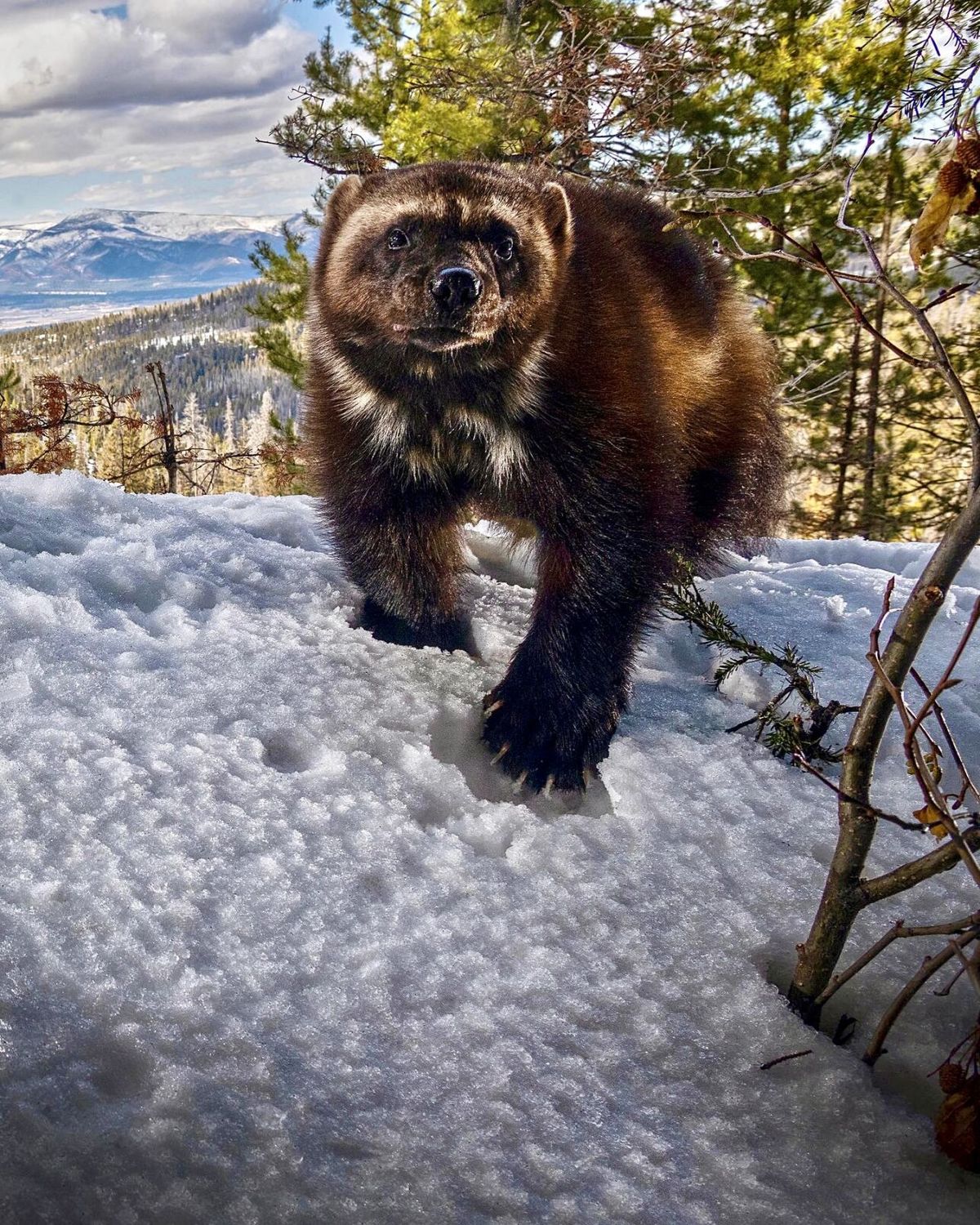
Elusive, fierce and built to survive, wolverines are an iconic symbol of the West, but in recent years their population has drastically decreased. With an estimated 50 breeding individuals left in the lower 48, the species is now facing extinction in the U.S., according to the Endangered Species Coalition.
Researchers at MSU are working to monitor wolverine populations by developing a new system to identify individual members of the species. In a study conducted from 2020 to 2024, the research team identified 19 individual wolverines, according to their paper published in The Journal of Wildlife Management on June 15.
Given their conservation status and importance as an indicator species, individual wolverine identification is crucial for accurately monitoring their population and tracking the health of the animals, according to Bret Davis, one of the lead researchers on the project.
Until 2024, Davis was co-owner of Wild Ideas, LLC, a company founded by Kalon Baughan, another lead researcher on the project. The company was created to develop noninvasive methods for monitoring wildlife and organized the research project.
Their new research methods use portable camera stations that follow all state and national forest regulations. Stations are used to monitor animals in four zones across northern Montana, where many wolverines reside, according to Davis and Baughan.
“Researchers and management agencies are looking for low-cost, effective, efficient methods of keeping track of individuals,” Davis said. “If you know the number of individuals in the area, that gives you information about not only the presence of that species, but its density. That’s an important thing to track if you’re wanting to keep up with the highs and lows of the population, or certain trends that the population is going through.”
According to Davis, each camera station consists of a ladder-like structure set between two trees with bait hanging above. The structures are equipped with copper brushes and trail cameras to collect hair samples and images of individual wolverines.
All wolverines have unique patterns of white fur on their chests and necks, which researchers photograph as the animals climb the structures.
“These [white patches] are persistent through time,” Davis said. “Year after year, the marks don’t change. So if you have the pattern, you can keep track of that individual year after year.”
Researchers can match these photographs with DNA from the hair samples collected from the structures to better identify individual animals, according to Davis.
According to Baughan, the loss of wolverines in the U.S. is concerning because they serve as an indicator species for the ecosystems they inhabit. “They indicate broader environmental problems, such as habitat loss, pollution and climate change,” he said
Climate change is one of the largest threats to wolverine populations. The animals require arctic to subarctic climates to survive and the large snowpack in this region allows them to build snow dens and preserve food, according to Baughan and Davis.
“The climate is changing. Who knows what will adapt or not, but wolverines probably are not going to adapt very well without snow,” Baughan said.
According to Baughan, Wild Ideas also aims to provide fieldwork opportunities for young professionals in biology and ecology. One such individual is MSU Ph.D student Carlisle Segal.
In early 2025, Segal established her first camera station in the Hyalite Canyon area. There, she captured images and genetic material from a male wolverine.
Segal's volunteer work has benefitted the overall research project by allowing the methodology to be tested in different regions of Montana. According to Baughan, Segal’s wolverine detection in the Hyalite Basin provides important information for wildlife management agencies.
The researchers urge outdoorsmen to be aware of wolverines when exploring backcountry areas and mitigate their impact on habitats by payingattention to tracks, carcasses and animals.
“We should give thought to conservation and the impact that we leave when we’re up there,” Davis said. “For anybody that recreates in the backcountry in the winter, you’re interfacing with these animals, and that’s both exciting and humbling.”
Off-trail travel can have a devastating effect on wolverines, Baughan said. When the animals feel threatened, they are likely to abandon their offspring. With so few breeding individuals left, losing a single litter could effectively wipe out entire generations of wolverines, according to Baughan.
“I don’t want to stop doing the best that we can,” Baughan said. “If we follow along the cleaner trajectory, then it would be probable that everything will follow — the animals, the wildlife, humans — we can all live, we can cohabitate.”
To read more about the team’s research, visit https://wildlife.onlinelibrary.wiley.com/doi/full/10.1002/jwmg.70053.
Comments ()