
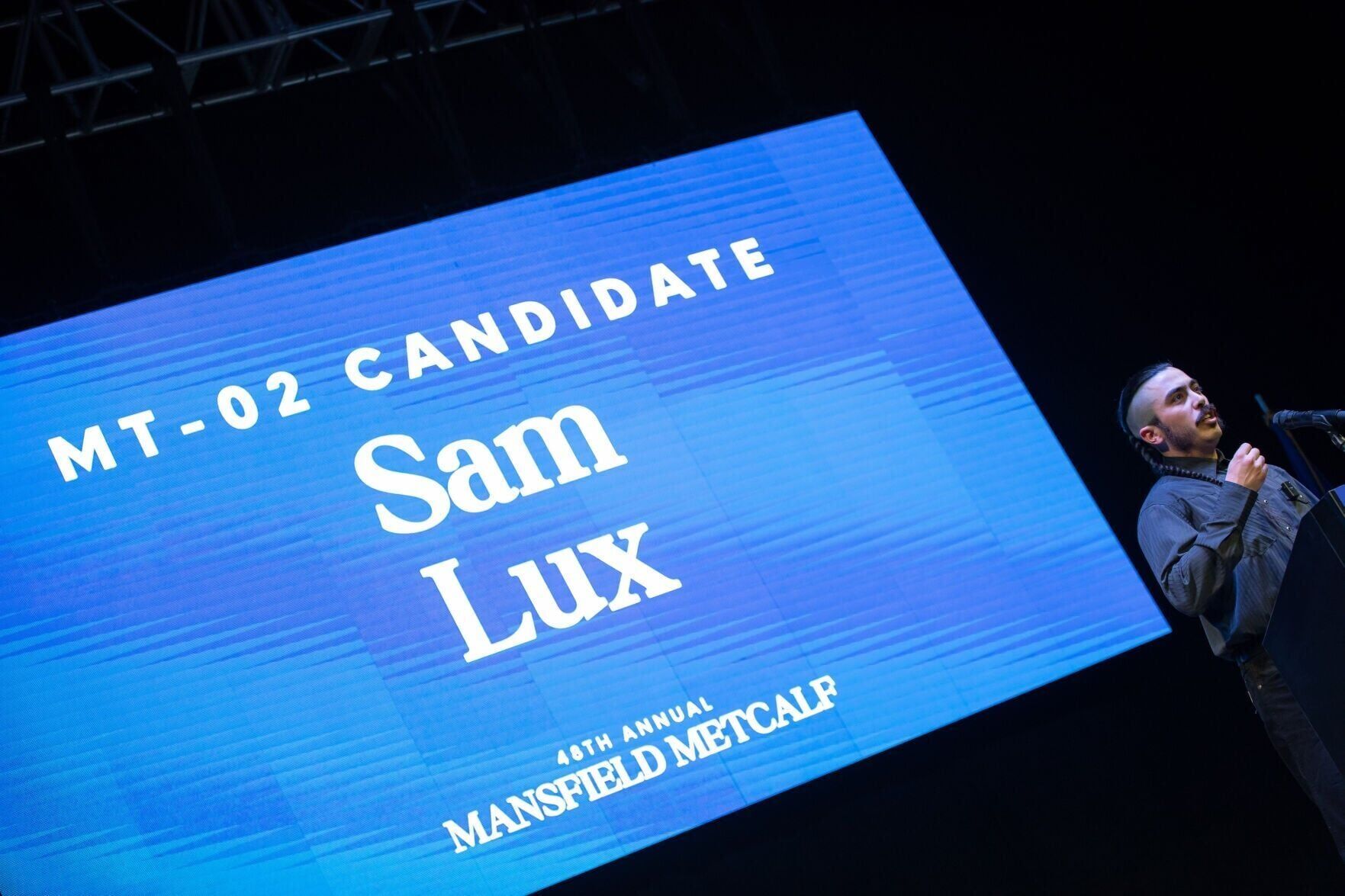
Sam Lux looks to earn his spurs in Montana’s eastern congressional Democratic primary
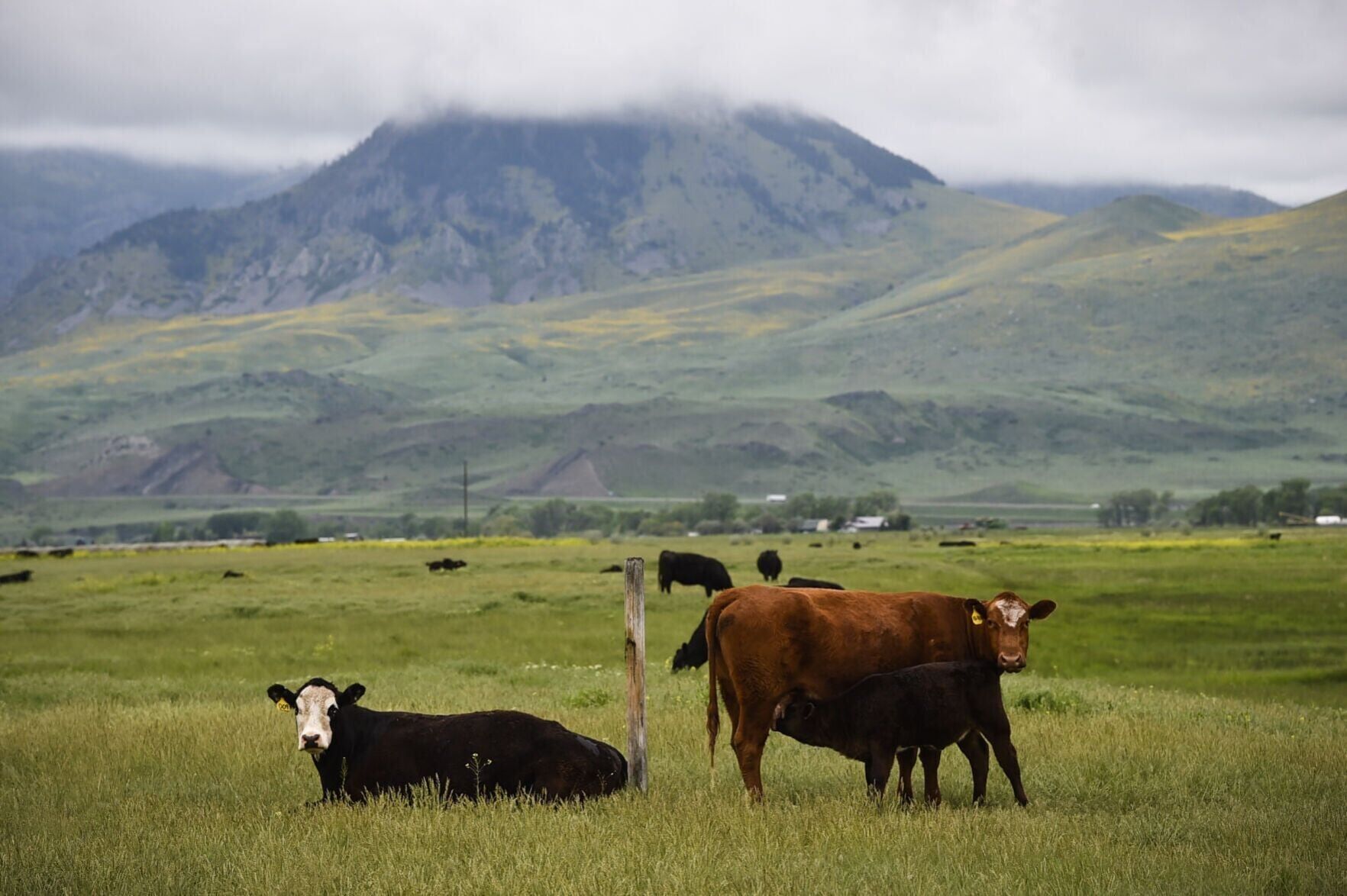
For years, Sam Lux has been visiting people’s farms from Bozeman to Lewistown as a farrier caring for their horses. Increasingly he’s hearing a common refrain from his clients: “Life is getting harder.”
For many of those farmers, he said there was little hope of future improvements.
For Lux, 30, it reached a boiling point when it felt like none of the farmers he interacted with daily could get a hold of Montana’s congregational delegation. In Billings last March, nearly 1,000 people showed up to a town hall hosted by Yellowstone Indivisible, a progressive group that’s held rallies protesting President Donald Trump’s agenda. On stage were empty seats labeled for the absent Congress members, including incumbent Republican Rep. Troy Downing.
Lux, a Great Falls resident, estimated around 30 of his clients traveled to Billings for the town hall that night, concerned about the impacts of looming tariffs. Without the congressional leaders there, many attendees used it to vent their ongoing frustrations.
“They didn't know what they were going to do, and when they went for help, the people who were supposed to help them that they put in office didn't show up to their own townhall,” Lux told the Gazette. “That's not okay. Growing up in a ranching community, you're always taught, if you see something wrong, you help them. That was hurting my neighbors, so I'm gonna help.”
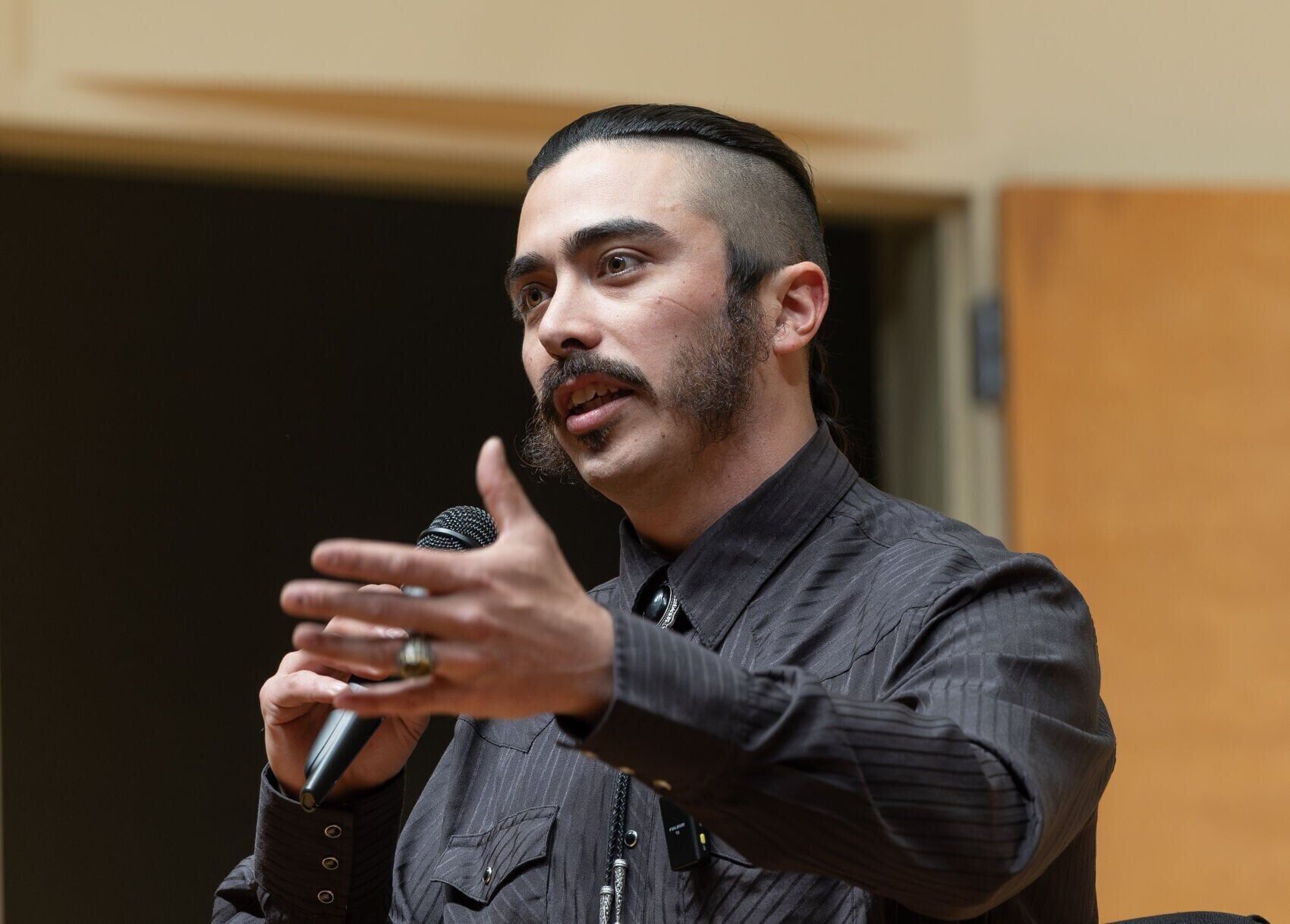
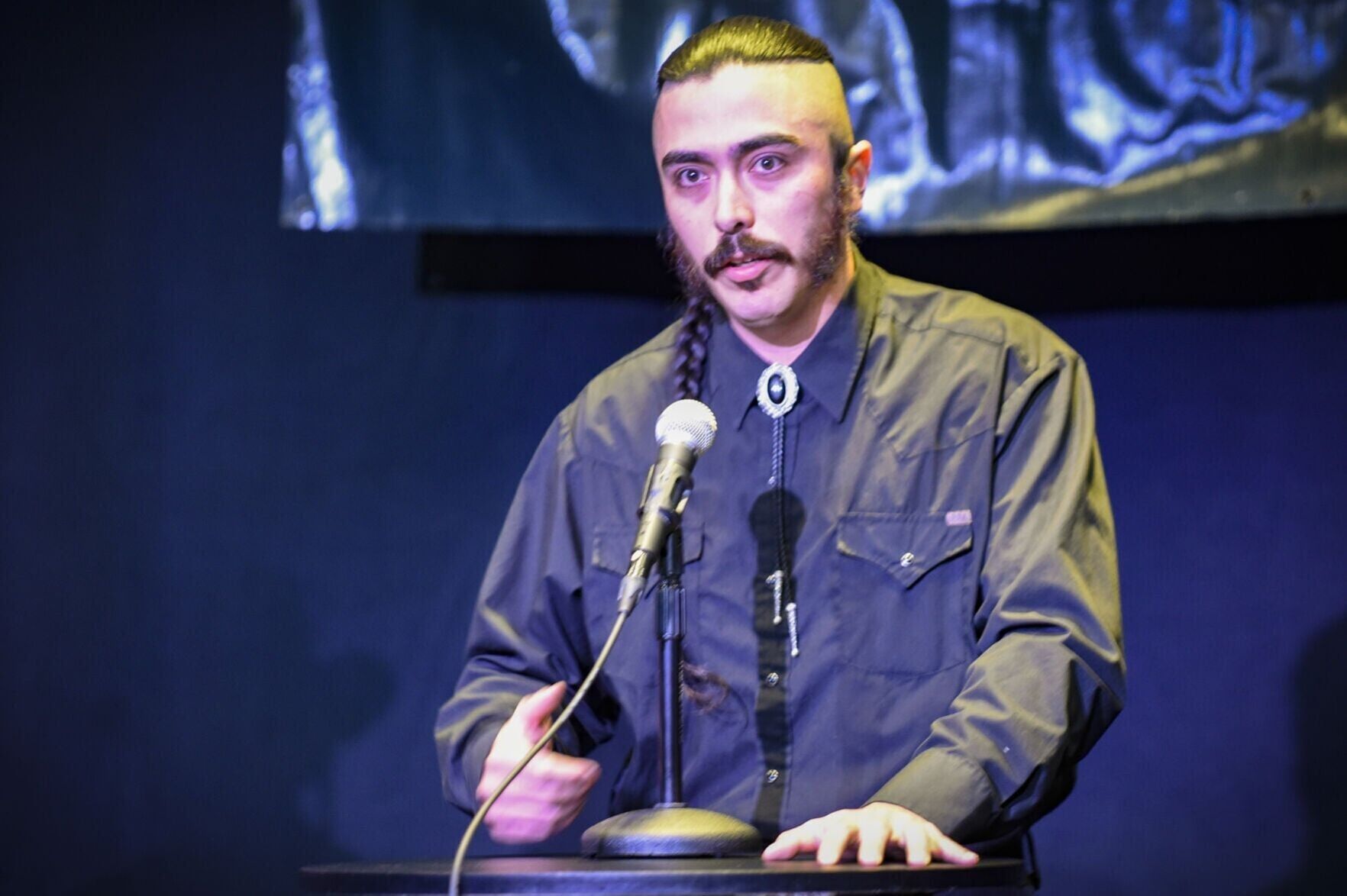
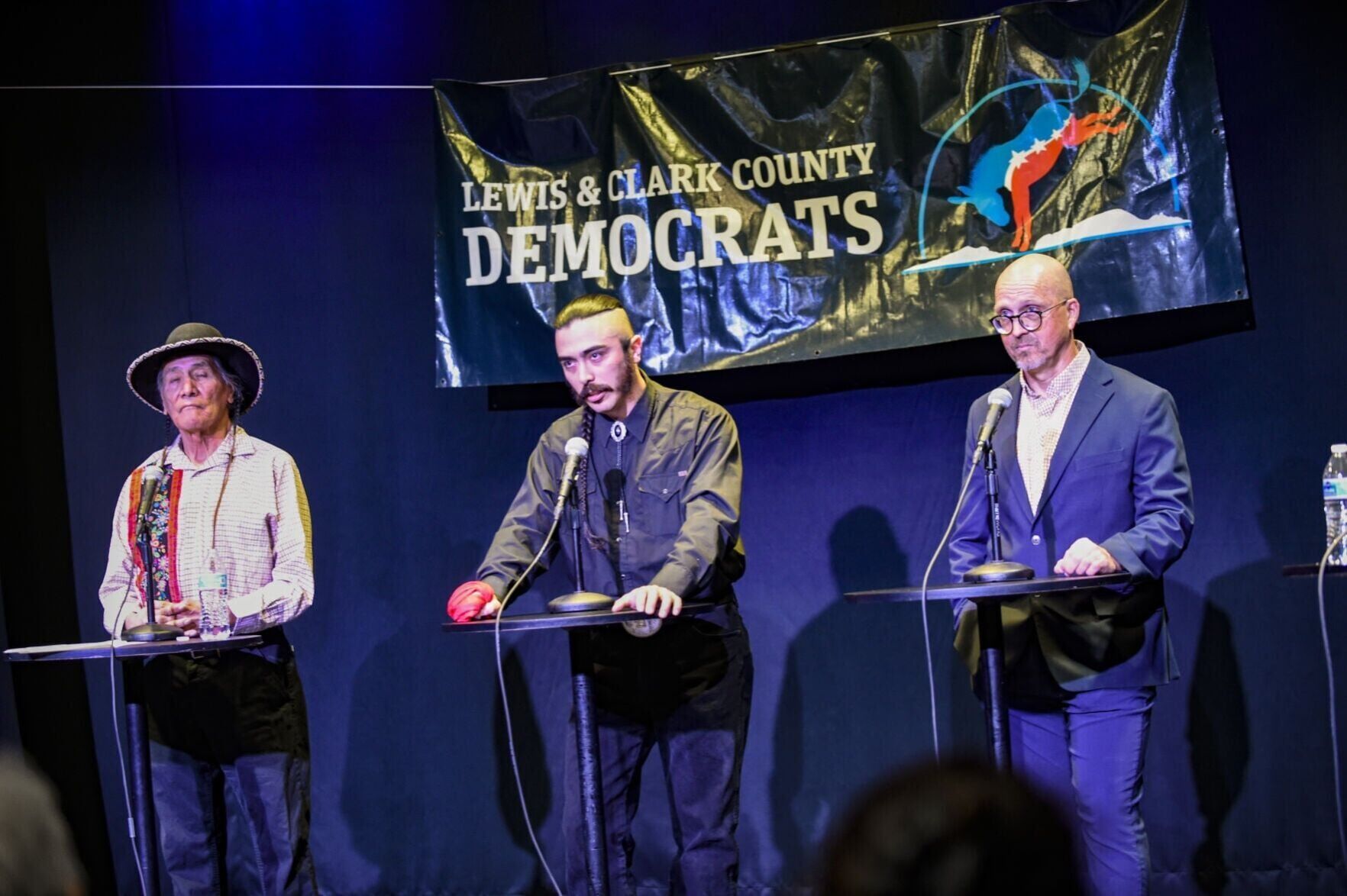
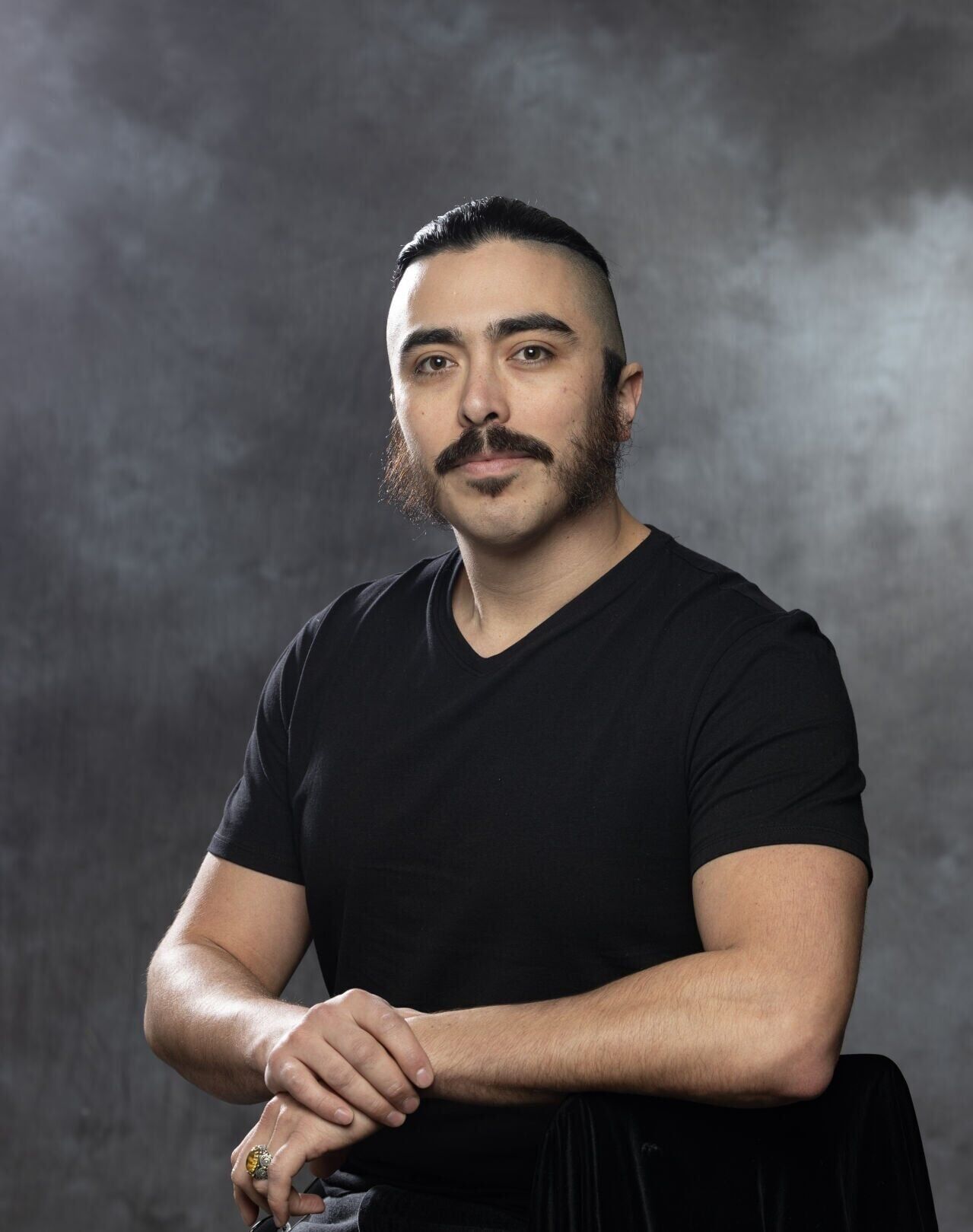
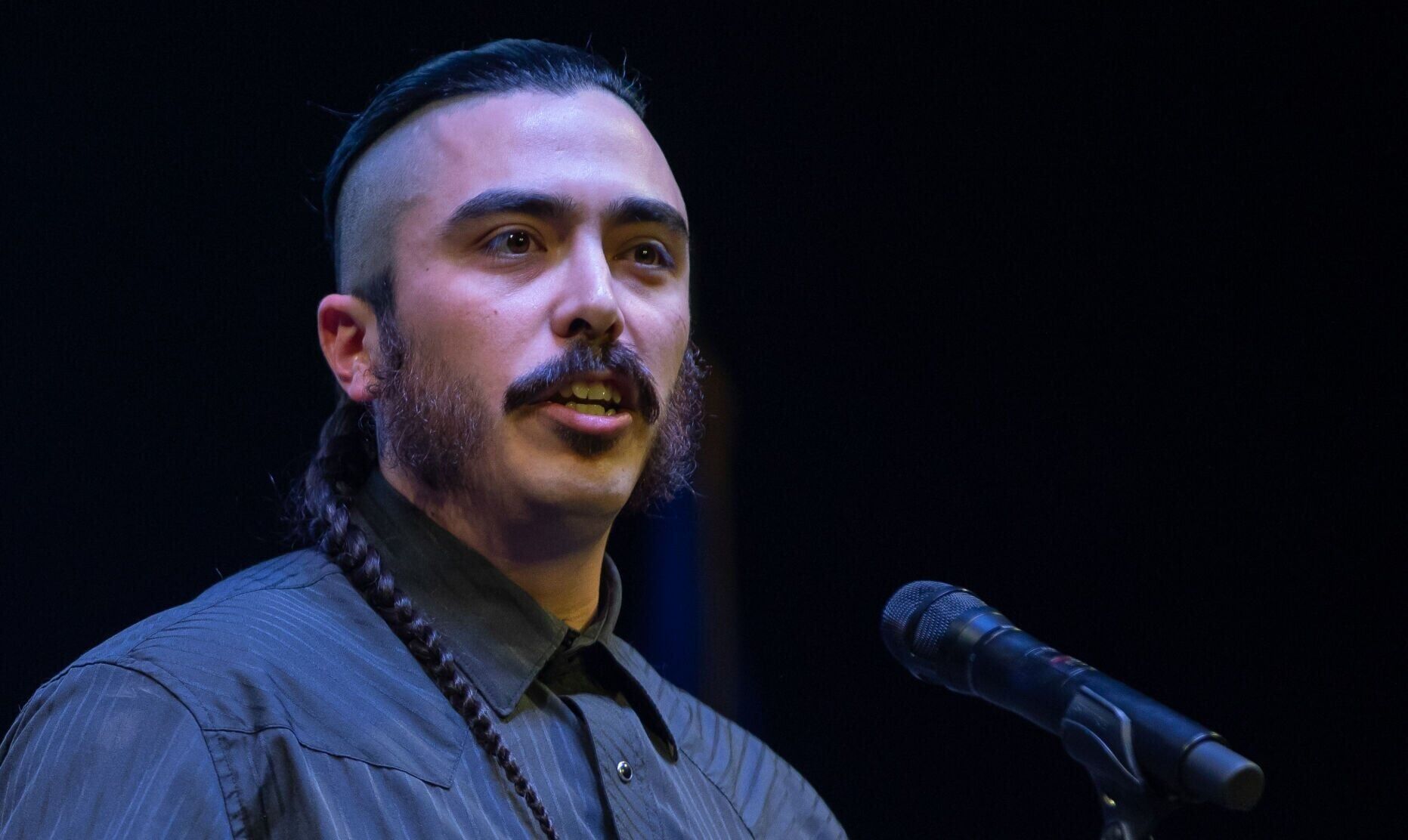
Lux’s approach contrasts his primary opponent Brian Miller, who has taken a combative tone against Downing. Lux doesn’t acknowledge the incumbent by name. Instead, Lux with attention-grabbing sideburns and a braided ponytail has mainly touted his policies and background on the campaign trail under the slogan “working for the working class.”
Whoever emerges from the June 2 primary will face a steep uphill battle in a district widely seen as safe for Downing’s reelection. But some of the policies Lux is latching onto are tied directly to growing hesitation with the current party in power.
Some of Lux’s key policy offerings include addressing the cost of living, taking a more active role in data center regulations and standing up for Congress’ check on the presidency. On that last point, Lux talks about the removal of federal tariffs and a cessation to the Iran War.
“The things that I'm told across the board, that constituents want me to focus on, is this cost of living crisis, which is absolutely the biggest issue that we see, no matter where we go,” Lux said. “That includes addressing the out-of-control cost of health care, which is also part of the cost of living.”
Healthcare subsidies have already been targeted by Republicans as the party gestures toward a future, yet-to-materialize healthcare plan. Lux wants to see those government subsidies rerouted to a single-payer healthcare system to provide basic care to all Americans.
“That would help to reduce the huge amount of medical debt that, especially here in Montana and rural communities, we're building up all the time,” Lux said.
There was a roughly 6% decrease in enrollment in Affordable Care Act marketplace plans in Montana this year after the elimination of COVID-era subsidies. More will likely be disenrolled by new work requirements on Medicaid expansion plans set to be implemented by Montana this July.
Lux considers public concerns about healthcare costs as a nationwide call for action, but one that hasn’t been addressed meaningfully.
He referenced his own childhood in northern California, saying it can be hard for people to know what policies are working against them. He hopes that can be addressed with direct messaging to people to further rally support on sometimes complex policies.
“When you don't have a lot of money in the bank, you're not paying attention,” Lux said. “What's going on in politics – you don't care. You got bigger priorities. What we need to do is start a direct message, marketing that message to the actual people.”
A progressive redneck
Lux estimates that he has tallied up 43,000 miles as he drives his Harley Davidson, an electric sedan and rental cars to market himself to voters in one of the largest House districts in the nation.
Before finding his home in Montana, Lux grew up impoverished in mountainous northern California. The candidate got his high school diploma at 13 through an equivalency test and began working at ranches in California. It was the only way for him to “keep the lights on” for his family, he said.
Before long, he met a veterinarian at one of those ranches and then helped in the emergency room. He worked in various capacities at ranches and veterinarians’ offices before coming to Great Falls, where he ultimately settled into the uncommon career of a farrier, working on about 80 to 100 horses, often on the cusp of death. He has worked out of Great Falls as a farrier for roughly five years.
“I’ve always really liked working with horses,” Lux said. “Primarily, I like the fact that they're honest. When it comes to working with horses, if you're doing something wrong, they're gonna let you know about it, and you're not going to get away with it. And if you're doing it right, they're going to work with you.”
Like his entrance as a political candidate, he is a fairly young farrier in a field where most are older. In both, youth has its advantages, Lux said.
“What I know are the struggles of trying to build and protect a family in a world that is increasingly hard to survive in,” Lux said. “At the same time, I'm also young enough to still have perspective of what that actually looks like for the current generation. I'm not an out-of-touch millionaire. I'm not somebody who's 70 years old, and who hasn't actually lived that working struggle for the past 40 years. I'm actively there right now, and I can represent the people as one of them.”
During his campaign stops, Lux regularly waves a red handkerchief, describing himself as a progressive “redneck,” a reference to the word’s historical ties to unions. Campaign pamphlets feature him standing with union members.
Lux’s support of unions and opposition to certain types of data centers will be something of a tightrope he’ll have to walk as he campaigns. Unions have urged Democrats to back off negative messaging around data centers, hopeful for the job opportunities.
Lux describes a moratorium that some data center opponents have floated as “lipstick on a pig.” People are already aware of the impacts data centers can have and he said the U.S. can’t afford to fall further behind as a technological superpower.
Still, Lux opposes the development of “open loop” data centers. The technology uses far more water than the recently advanced “closed loop” systems, which keeps the water meant for cooling, but also uses more electricity. All of Montana’s publicly proposed data centers plan to use a closed-loop system. The Democrat said he would advance legislation to force the remaining data centers using open-loop systems to transition.
Lux also wants to require the development of renewable energy infrastructure to cover energy demands and then some. That would be in addition to revised taxation assessed on automated properties. Currently, data centers in Montana have 0.9% of their property value taxed annually, one of the lowest rates in the state.
“Because, quite frankly, as long as we all have one of these,” Lux said, gesturing to his phone, “we're not banning data centers. But what we can do is make them sustainable and make it so that progress does not come at the expense of our communities.”
Cascade
When Lux first attended a Cascade County Democratic Central Committee meeting, the political newcomer said no one recognized him sitting quietly with a cowboy hat and spurs, as he had arrived straight from work.
He said the group moved to end the meeting early, believing he was a Republican.
“And quite frankly, if you're scared of a cowboy hat in Montana, leave,” Lux said.
But he said he’s not trying to convince anyone what a Democrat or a Republican should be.
“The thing is, that's not the majority. It's not the majority in either party,” Lux said. “And I have sat down with just as many Republican groups that have been willing to really sit down and talk about the issues, and really, like, have the conversation about what's actually going to be best for the people of Montana.”
In Lux’s county of Cascade it wasn’t long ago when the general population would vote for a Democrat. A plurality voted for President Barack Obama in 2008 and voters there supported U.S. Sen. Jon Tester in 2018. Yet, like much of Montana, the once purple county has turned more Republican since then. In 2024, Downing got 62% of the vote in the county and President Donald Trump got 59% of the vote in the county, one percent higher than the state’s total share.
Chair of the county’s Democratic central committee, Matt Pipinich, grew up in Great Falls back when it was a union-based blue county. The 43-year-old said Democrats lost their ability to talk “like a normal human being.” He said they need to refocus on those issues as they pertain to voters.
“Just hitting the nail on the head with them, and being like: ‘Hey, taxes are too high. Rents are too high. Our government isn't functioning,’” he said. “It’s not being afraid to say the truth. And we like to polish things, make things sound good and be politically correct about things. And that's not what we need to be anymore.”
Pipinich said Tester failed to build relationships with constituents in Montana as he faded into national politics and began leaning to the right in his final term. Tester ultimately lost Cascade County in 2024.
“We keep becoming something we're not,” Pipinich said. “You kind of just need to be a good policymaker, a good advocate for your community. So I see that in candidates like Sam Lux — arguably all of them — but Sam, I think he brings a different perspective.”
Lux explained the shift as Democrats forgetting and ignoring relevant issues where people have developed bitter associations with the party. He also referred to Tester as someone he does not want to become.
“This year, we are seeing a change in the Democratic Party, and we're seeing a return to the focus on working-class issues,” Lux said. “And I genuinely believe that returning to that will allow us to flip the state purple again.”



Comments ()