
'Sense of brotherhood': 'The neo-Nazi and the Rabbi' talk breaking down barriers
An orthodox rabbi and a former skinhead gang member came together at Chabad Lubavitch of Montana on Sunday for a discussion some would not have thought possible.
Rabbi Avrohom Perlstein and Cameron Hayes have seemingly nothing in common. Perlstein was born to two educators in Chicago and grew up in a Chabad Jewish community. Hayes had a tumultuous childhood with “an addict mom and an absent father,” which led to him to do drugs and commit crime throughout his teenage years.
They were brought together at the Oregon State Penitentiary in Salem, where Perlstein was a chaplain and Hayes was a member of a white-supremacist prison gang.
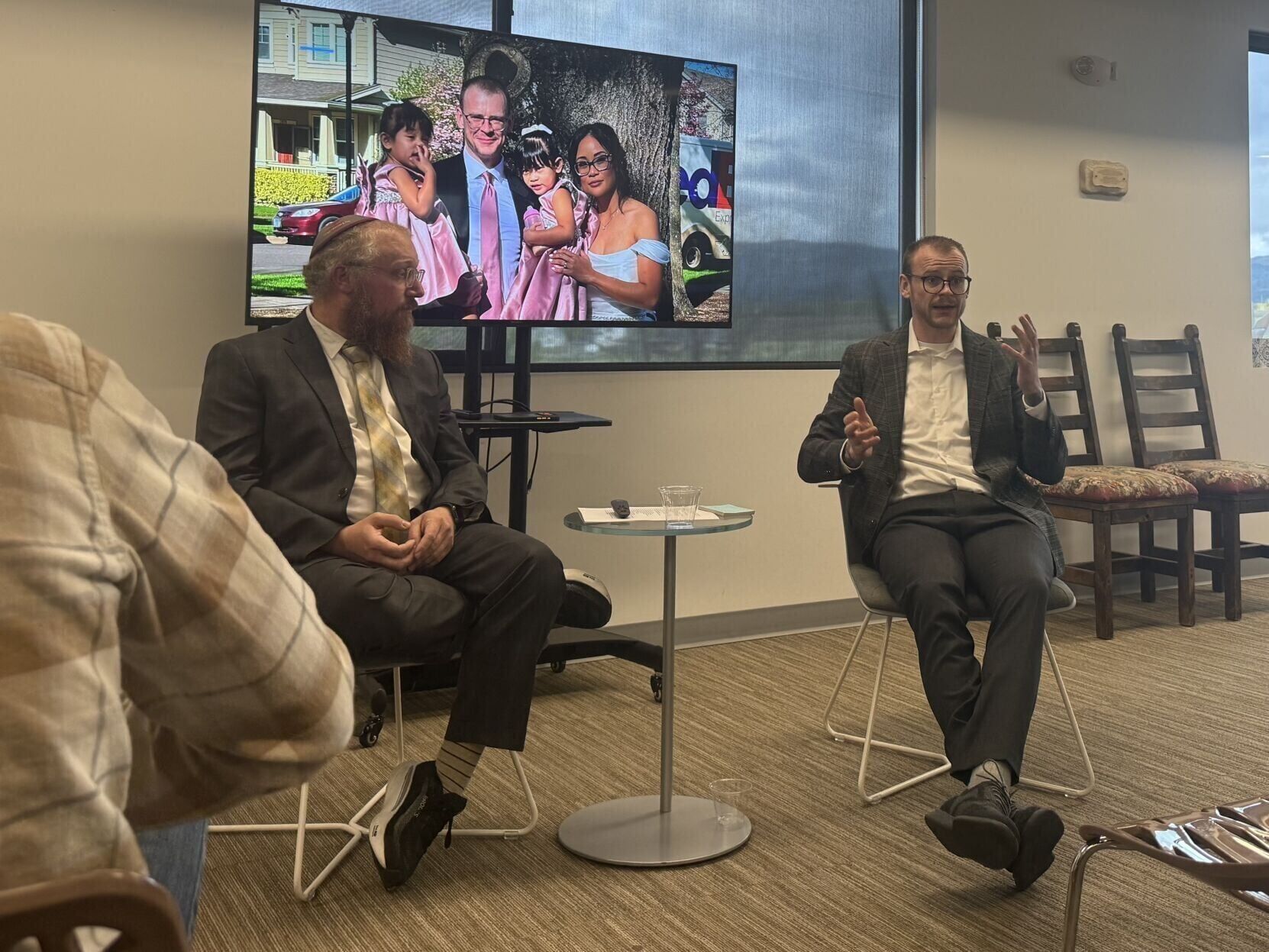
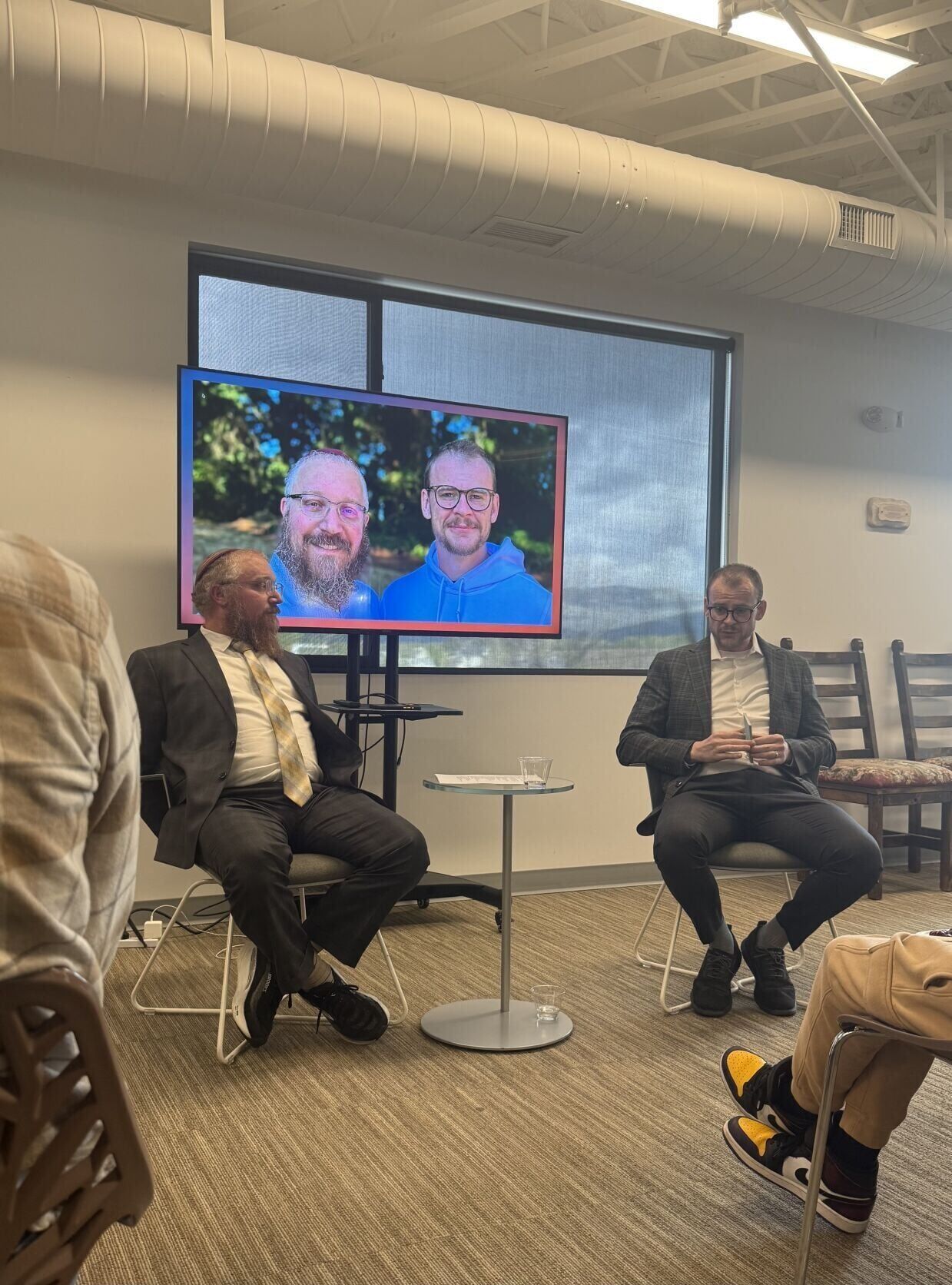
During Sunday’s event, the two men took turns speaking about their separate experiences in the prison as they got to know each other. They sat in front of a TV screen and shared wildly different images of their lives as they spoke to the roughly 75 people in attendance.
On his first day in prison, Hayes recalled, he was approached by “a giant dude with a shaved head and face tattoos” who asked Hayes if he had a problem with skinheads. Hayes felt he shouldn’t say no, and that started his affiliation.
Hayes landed behind bars at Eastern Oregon Correctional Institution at age 19. Convicted of robbery, he was serving a sentence of 12 years when a 2014 fight altered the trajectory of his life.
He and a friend and fellow gang member were assaulting a “rat” in the prison yard when his friend was shot by a tower guard.
“An officer came over, handcuffed me, sat on my back, and I sat there on a prison yard and watched my best friend bleed to death,” Hayes said.
Because of this incident, he was transferred to the state penitentiary, given two more years on his sentence, and placed in solitary confinement.
At the time, Perlstein was working at the same prison with a restorative justice program.
“My job is to interact with even the worst people and bring the good out of them,” he said.
After his time in solitary confinement ended, Hayes visited Perlstein’s office. Having adopted the views and rhetoric of his gang, Hayes questioned Perlstein about Judaism and started asking him gotcha questions. Those questions first intended as a trap soon turned into genuine interest.
Then Hayes landed in solitary again.
Shortly after that, Hayes found himself in solitary confinement again.
While in solitary, a man across the hall saw Hayes’ white supremacist tattoos and started speaking hateful rhetoric, thinking Hayes would agree with him.
After that moment, Hayes started taking steps away from his gang and “started a road to change.”
He no longer wanted to be an “open symbol for hate, for destruction,” and returned to Perlstein’s office to discuss Jewish concept of “Tikkun Olam” — a shared responsibility to heal and fix the world.
“Something kept pulling me toward him,” Hayes said of Perlstein.
Hayes wanted to make amends with the Jewish community. Perlstein assigned him homework to read books about Judaism.
Hayes read a biography about Rabbi Menachem Mendel Schneerson, known as “the Rebbe” and became inspired by his mission to be a “guide for all people.” He started working for the Rabbi in the prison chapel, and taking classes with the African American Culture Club, eventually becoming a class facilitator.
Hayes was released from prison on Aug. 13, 2024, after 14 years behind bars.
While in prison, he got his GED and his bachelor’s degree and is working towards a master’s degree in nonprofit management. He’s now married with twin daughters and a baby on the way and works as the director of ReGroup, a program that helps people with reentry after prison.
Near the end of the session, Hayes circled back to a story with which he had started.
He was sitting in the chapel library in the prison, watching a Dallas Cowboys football game with Perlstein and a light-skinned Black inmate named Sterling. Together, the trio bantered about the Cowboys’ lineup.
“I was a very recently removed skinhead, and it was sitting there with those two that I realized that in all of my life I had never felt a sense of belonging and brotherhood like I did right then with those two men that were seemingly so different from me,” he said.



Comments ()