
Shifting perspective: American Prairie founder suggests a new, more positive mindset
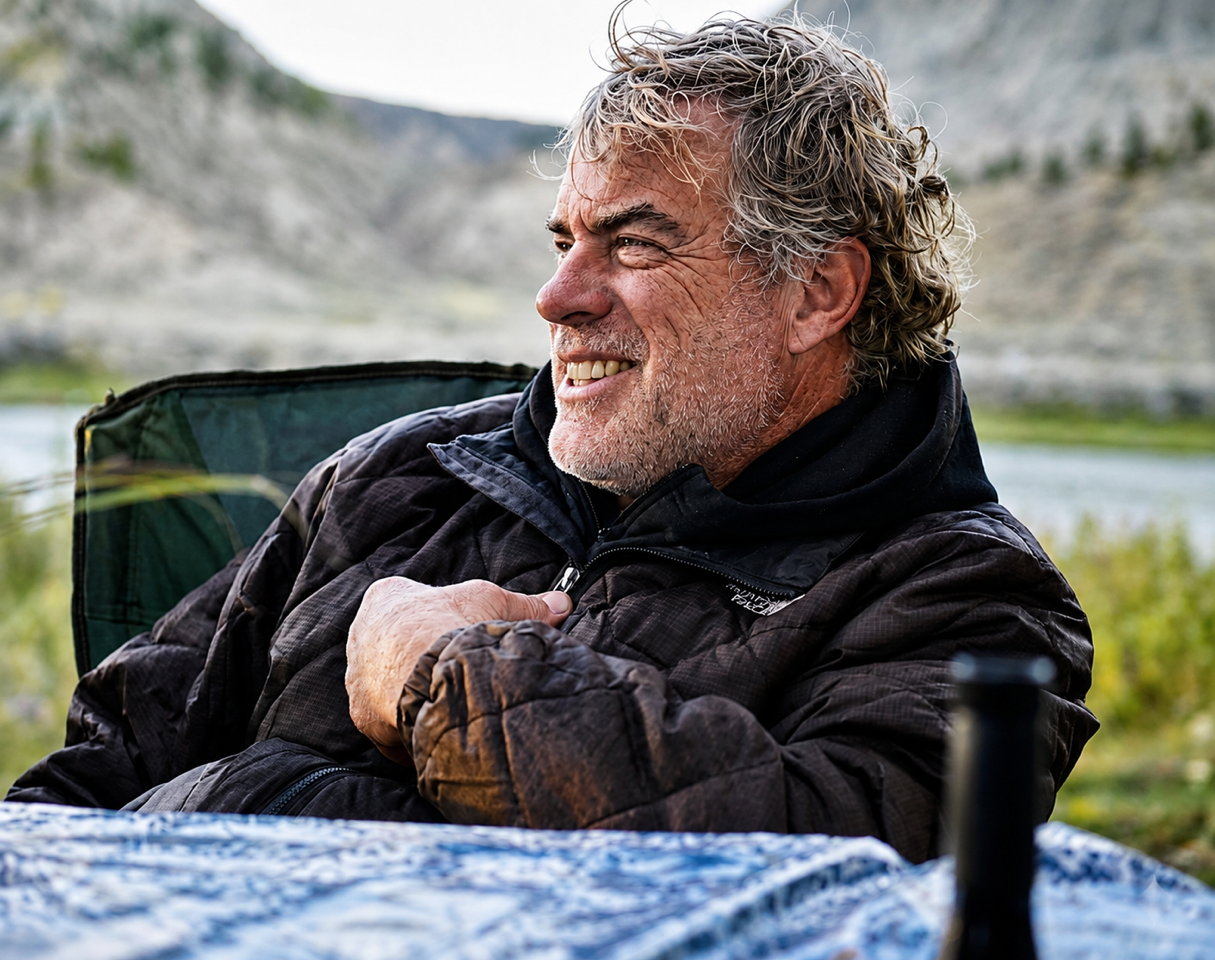
Amid the rise of unregulated artificial intelligence, climate change, war, and economic decline, it can be difficult to feel optimistic about the future. American Prairie founder Sean Gerrity is accentuating the positive.
“You have to reconfigure the lens through which you view things,” Gerrity said. “The content served to you on social media, or The Guardian, or The New York Times is crafted to make you upset. It’s crafted to hook your emotions.”
Gerrity said we’re hardwired to focus on the negative.
“It’s a survival instinct. Sixty thousand years ago, when people were living in caves, the first thing they thought about when they woke up was, ‘What’s going to go wrong today?’ Today, you open a newspaper, and here they are.”
While Gerrity acknowledges the value in staying informed, he suggests consciously seeking out good news, consuming the “stories that don’t make the front page.”
“I’m trying to search around through the lens of what’s good that’s happening here,” Gerrity said.
In 2024, Gerrity launched “The Answers Are Out There,” a podcast capturing entrepreneurs leading nature, wildlife, and culture conservation initiatives around the world.
“If you look in the right places, you will see that there are a lot of people doing a lot of good environmentally,” Gerrity said. “You have to adopt the mindset that there are opportunities to get involved. You can be reporting on it, which is an amplification of it.
“You could be in the field trying to reintroduce species, or you can be trying to push green energy through public policies and working with like-minded people.”
While the podcast and Gerrity’s messaging apply to audiences of all ages, he said he is particularly interested in the younger generations.
The second half of his book, “Wild on Purpose: The American Prairie Story and the Art of Thinking Bigger,” is geared toward this target audience.
“I’d like young people to feel safe and lit up and excited about the next 30 years or so, particularly in terms of work,” Gerrity said. “If you have the right transferable skills, they’ll make you resilient and marketable. They don’t have a short half-life to them, and you’ll be less impacted by the presence of AI.”
He stresses the importance of soft skills as the world moves into an era increasingly defined by AI.
“You have to be able to work with sociology and psychology and be able to understand people,” Gerrity said. “Being astute in terms of communications is like gold; it’s really hard to find.”
Gerrity graduated from Montana State University with a degree in psychology in 1983. Two years later, he founded Catalyst, a Santa Cruz-based consulting company that worked with clients such as Levi Strauss and 20th Century Pictures.
During his time running Catalyst, Gerrity developed organizational models to help companies identify and achieve their goals using clear, actionable steps and open lines of communication.
When conservation biologist Dr. Curt Freese approached him to help start the American Prairie project in the early 2000s, Gerrity said he was uniquely positioned to step into the role.
“I realized that people across the world were, by and large, the same, and the philosophy we put together to build great, lasting organizations at Catalyst was universal,” Gerrity said. “I didn’t have a background in biology or conservation, but understanding sociology helped us build an organization that’s still standing 25 years later.”
Since its genesis in 2002, American Prairie has been the focus of controversy regarding the perceived loss of traditional agriculture and the reintroduction of bison populations to a region from which they have been absent for more than a century.
Most recently, the Bureau of Land Management issued a final decision revoking American Prairie’s bison grazing permits on nearly 63,000 acres of federal land across Phillips County.
Despite political controversies and the natural ebbs and flows of an organization that has been around for two decades, the model and mission behind American Prairie remain steadfast.
American Prairie aims to conserve 3.5 million acres of grassland habitat across Montana. The reserve comprises private land purchased by the nonprofit, federally and state-managed lands.
If fully realized, the 3.5 million-acre reserve could encompass 1.6% of the Northern Great Plains, which stretches across 180 million acres. Half a million prairie acres are plowed for agriculture and development annually, per Gerrity.
American Prairie focuses on prioritizing wildlife and restoring an intact prairie ecosystem “before it’s all gone.”
The landmass of the American Prairie completes the “Montana Triangle,” a connectivity model connecting three base ecosystems across the state. The triangle establishes connectivity corridors stretching between the Northern Continental Divide Ecosystem in northwestern Montana, the Greater Yellowstone Ecosystem, and the Northern Great Plains Ecosystem in eastern Montana, largely comprised of American Prairie lands.
For Gerrity, who grew up in Great Falls, the wilderness and wildlife unique to Montana and the prairie ecosystem hold a special place in his heart.
While he lacked a background in conservation prior to helping launch American Prairie, Gerrity’s familiarity and appreciation for Montana’s wilderness, coupled with his established understanding of human sociology, guided him through the early days of fundraising for the nonprofit.
In the early days, Gerrity devised a safari model, bringing potential donors out to the prairie and allowing them to experience the ecosystem and the life it sustains. The raw, tangible experience helped donors fully understand the scope of American Prairie’s mission. Interacting firsthand with Gerrity and his colleagues instilled confidence in the team’s ability to execute the project.
Largely successful in building strong relationships with clients and donors throughout his career, Gerrity concedes that there are many people on his teams who are more attuned to sensing when a deal is sweet and when it is beginning to sour.
“I would think, ‘Yeah, things are going great,’ and then ‘boom,’ they were out, and I never understood why,” Gerrity said. “It was the most frustrating thing.”
In the consulting world, Gerrity could tell when a conversation was going downhill, but something about fundraising required a different knack.
Fortunately, Gerrity hired several people, including current American Prairie president Allison Fox, who were more gifted fundraisers.
“I’ve built two organizations, hired a ton of people, and fired more than I care to remember,” Gerrity said. “The good hires are people with transferable skills. If you can learn about creating a common vision, if you can learn how to take more frequent and more intelligent risks, and if you can readjust your sense of purpose and your values as you go through phases in life, you will be highly valuable to an organization.”
Rather than being dismayed by negative headlines and measuring up against arbitrary timelines of success, Gerrity suggests young people focus on the positives; the projects that uphold their values and the transferable skills they possess.
“I’m not saying it’s going to be a cakewalk for the rest of your life, but if you find the things that feel meaningful and rewarding, it’ll lead you to what you want to do. And if you have those communication skills, you don’t have to worry about being replaced,” Gerrity said.
For him, getting on the ground floor of American Prairie was the perfect opportunity to combine a lifetime of cultivated values and skills into a meaningful project that still has legs a quarter of a century later.
While Gerrity is no longer affiliated with American Prairie, he still stays connected to the people running it.
“I still absolutely love the project to my bones,” Gerrity said. “Year after year, I watch it unfold like a movie. I pay attention, but it’s more from a gratification standpoint. I’m not running anything.”


Comments ()