
'Show me the money': Tester, Racicot and others talk corporate influence in politics
What happens when a former senator, a prior governor, a previous representative, and a political advocate talk about corporate money in politics?
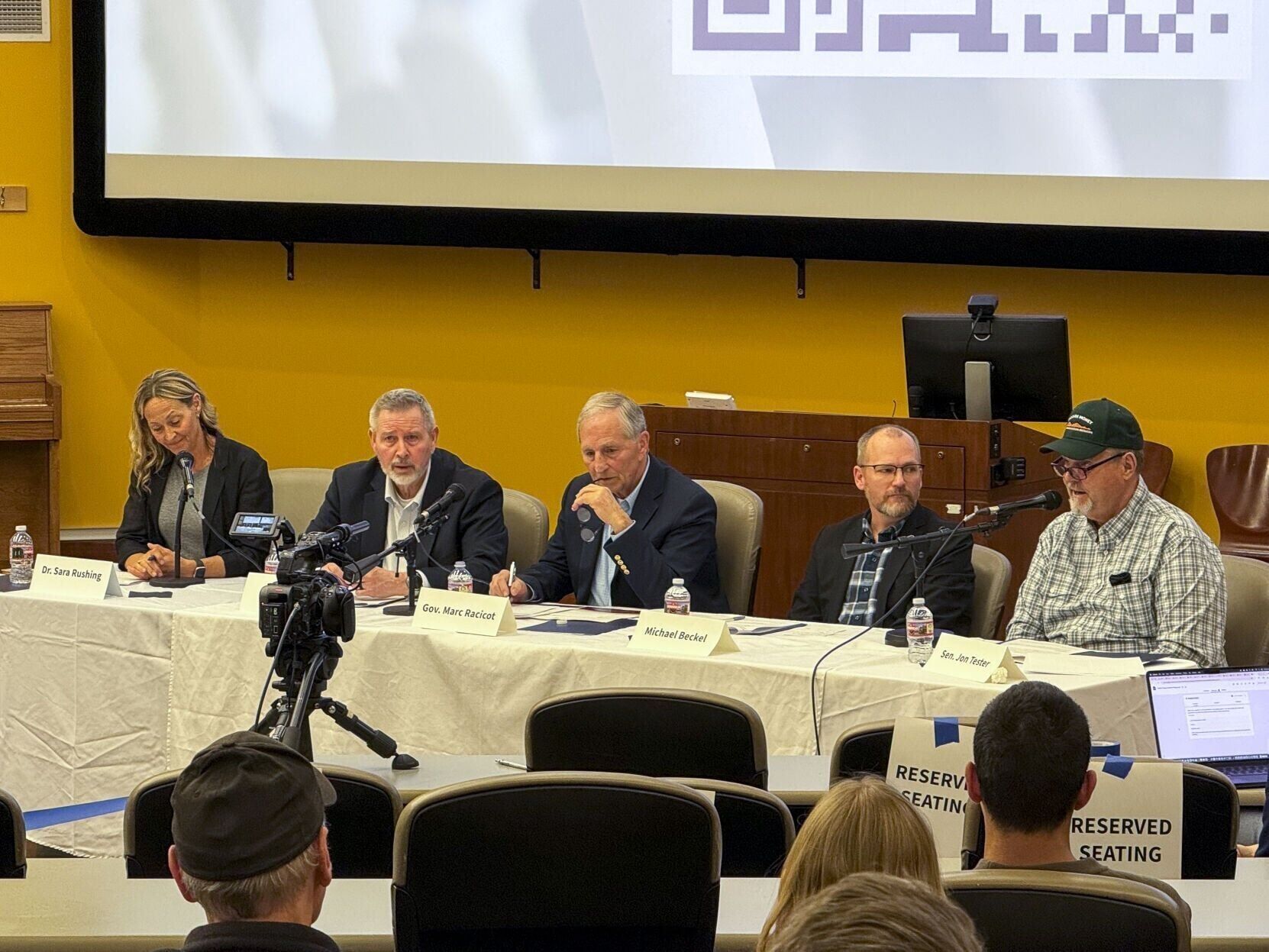
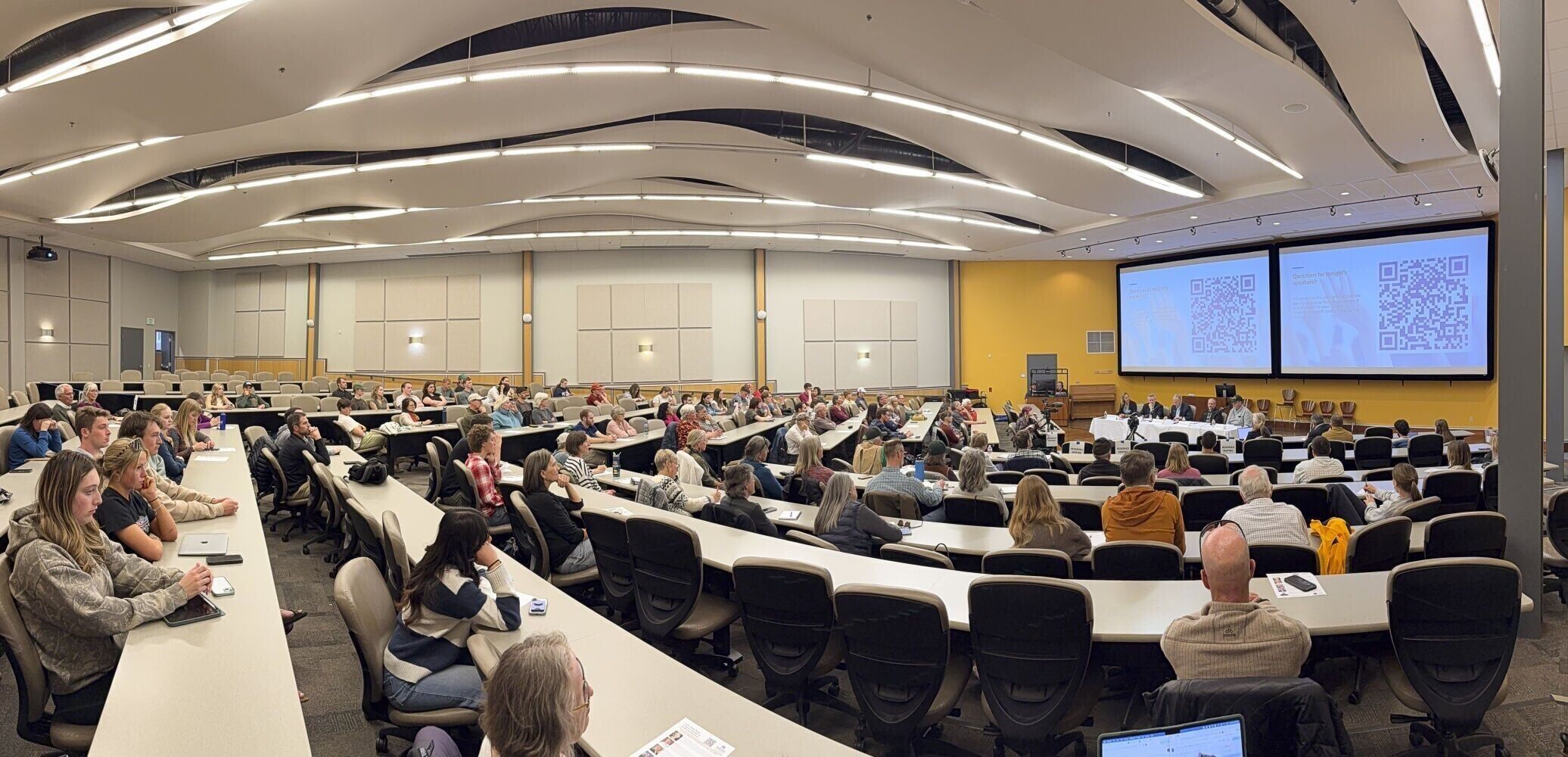
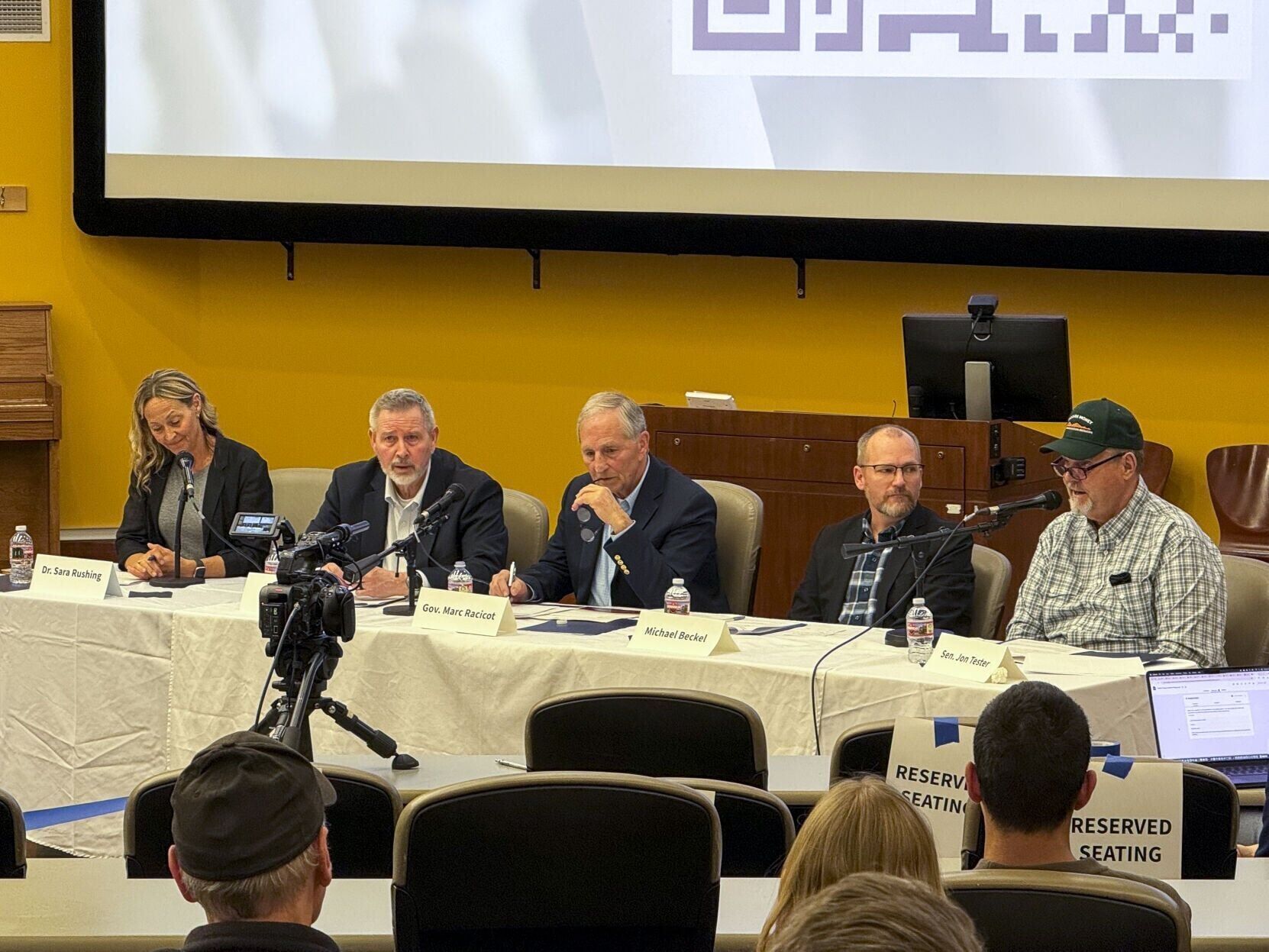
The exact scenario played out at the MSU-hosted discussion titled “Money, Transparent Elections and the Montana Experience,” at the end of last week.
Audience members experienced a bipartisan glimpse into corporate influence, how it is built, spent on campaigns and challenged by voters. A candid conversation emerged between guest speakers former Montana U.S. Senator Jon Tester, former Attorney General and Governor Marc Racicot, previous state senator and representative Jeff Mangan, and political advocate Michael Beckel.
The conversation between the four guests circled back to Citizens United v. Federal Election Commission, a landmark 2010 Supreme Court ruling allowing corporations, unions, and associations to spend unlimited amounts of money influencing elections. The decision concluded independent political spending is a form of free speech protected by the First Amendment, directly leading to the rise of massive political action committees and ‘dark money’ in U.S. elections spending.
Tester was the first to address the ‘black elephant’ in the room. Responses to moderator questions are edited for clarity and brevity.
“We are seeing unbelievable sums of money being put out trying to influence people on how to vote,” Tester said. “Oftentimes the truth goes out the window before the campaigning even starts.”
‘Dark money’ is political spending designed to influence elections or public policy where the donor’s identity is not immediately disclosed. The funds are often funneled through social welfare non-profits or LLCs, which are not legally required to reveal donor identities, yet can spend money on ads or donate to political action committees for candidates.
“This isn’t Montana’s first rodeo when it comes to fighting campaign finance,” Tester said. His unsuccessful 2024 campaign against now Senator Tim Sheehy was reported the most expensive election in Montana history and the most expensive on a per-vote basis in U.S. history.
The race featured an influx of more than $250 million in total spending. With only approximately 1 million voters, campaign expenditures averaged more than $300 per Montanan, according to news at the time.
“Fast forward to 2024, $280 million was spent just for the general election,” Tester said. “They can buy the message. They can put it on T.V., on the radio, on the internet. Candidates don’t have to look at you in the eye. They can get their message out without tough questions.”
“We want to shut off the river of corporate funds that leaves our political system dirty and disrespected,” Racicot said. “These are the titans of industry we’re talking about. They’re afraid to put their name on the line. They take some solace in making these corporate contributions washed through a political action committee.”
Open Secrets, a group tracking election spending, estimates more than $1 billion in undisclosed funds was spent at the federal level in the 2020 election cycle. The same source estimated the 2024 federal election cycle cost nearly $16 billion in total.
Research indicates dark money spending in U.S. federal elections broke records in 2024, with total undisclosed spending estimated at $1.9 billion. That’s roughly double the previous $1 billion record, per Beckel, whose team at Issue One researches federal campaign finance filings.
“Part of Citizens United v. Federal Election Commission said corporate spending could not be limited because of the First Amendment,” Beckel said. “This not only applied to companies, but it also led to the creation of all sorts of nonprofit organizations that pop up under obscure sections of the tax code, spend a lot of money on attack ads and disappear.”
Late-2025 polling indicates a broad, bipartisan consensus among Americans, including a significant majority of Montanans rejecting the Citizens United ruling, per Issue One.
“We’ve crunched the numbers. The typical House member is under pressure to raise $3,000 daily to get their message out,” Beckel said. “If it is one of the most competitive House districts, that number climbs to about $10,000 daily on average that candidates are just thinking about fundraising. If it is a senator running for reelection, that is about $15,000 daily. This is a huge amount of pressure lawmakers are under.”
“This unlimited spending, the Supreme Court thought it never caused an appearance of corruption. There are deep blue and red states agreeing this is getting out of control.”
Alaska passed a campaign finance reform law designed to counteract the influence dark money had in the state. The 2020 law requires donors contributing more than $2,000 to disclose identities and advertisements funded by out-of-state organizations. The measure is among the most aggressive state-level responses to Citizens United regarding financial campaign disclosures.
Mangan, a former Montana commissioner of political processes, is the founder of the Transparent Election Initiative. The measure, still in the signature gathering phase for the 2026 ballot, aims to leverage Montana’s authority to define corporate powers, creating a pathway to campaign finance reform that is not reliant on restricting speech.
It instead focuses on not granting political spending powers to corporations, per the TEI website.
“Voters should be more important than the dollar,” Mangan said. “When we’re talking about ‘dark money’, the question is who is spending, and why is it so important to them that they remain anonymous? The corporation isn’t voting, the dollar isn’t voting, the person is.”
Montana has a storied history of political lobbying corruption and citizens voting to counteract it.
The Montana Corrupt Practices Act of 1912 was a landmark citizen initiative. Passing with more than 76% of the vote, the policy was designed to curb corporate bribery and influence in state elections. The law banned corporate financial contributions to political campaigns for nearly a century, per Harvard.
The 1972 Montana Constitution is regarded as a highly progressive, citizen-driven document resulting from frustration with the state’s 1889 constitution and bourgeoning corporate political influence.
Voters passed the Montana Lobbyist Disclosure Initiative, known as Initiative 85, in 1980. The measure required public disclosure of money spent influencing public officials.
Individuals or businesses employing lobbyists and spending more than $1,000 annually were also required to provide a complete account of funds. The initiative was approved with 77% support, marking a major effort to increase lobbying transparency, according to the Montana legislature.
“We have this history going back to the early 1900’s of fighting corruption and putting forth good campaign finance reform and regulation on the ballot,” Mangan said. “No loopholes, no carveouts, that’s the only way we’re going to get corporate money out of politics.”


Comments ()