
Spending spree: PAC money in Montana legislative races crests the $2 million mark
Montana’s legislative races have become multi-million-dollar dogfights, a staggering departure from a time when those campaigns lived comfortably on $10,000.
The bulk of spending this election cycle isn’t coming from candidates; it’s coming through political action committees, a mix of dark money groups and others with ties to out-of-state donors that pay to influence races all over the country. And while it’s not the first time PACs have entered the fray in Montana politics, many political veterans say this year’s activities seem to be at a scale that the state hasn’t seen before.
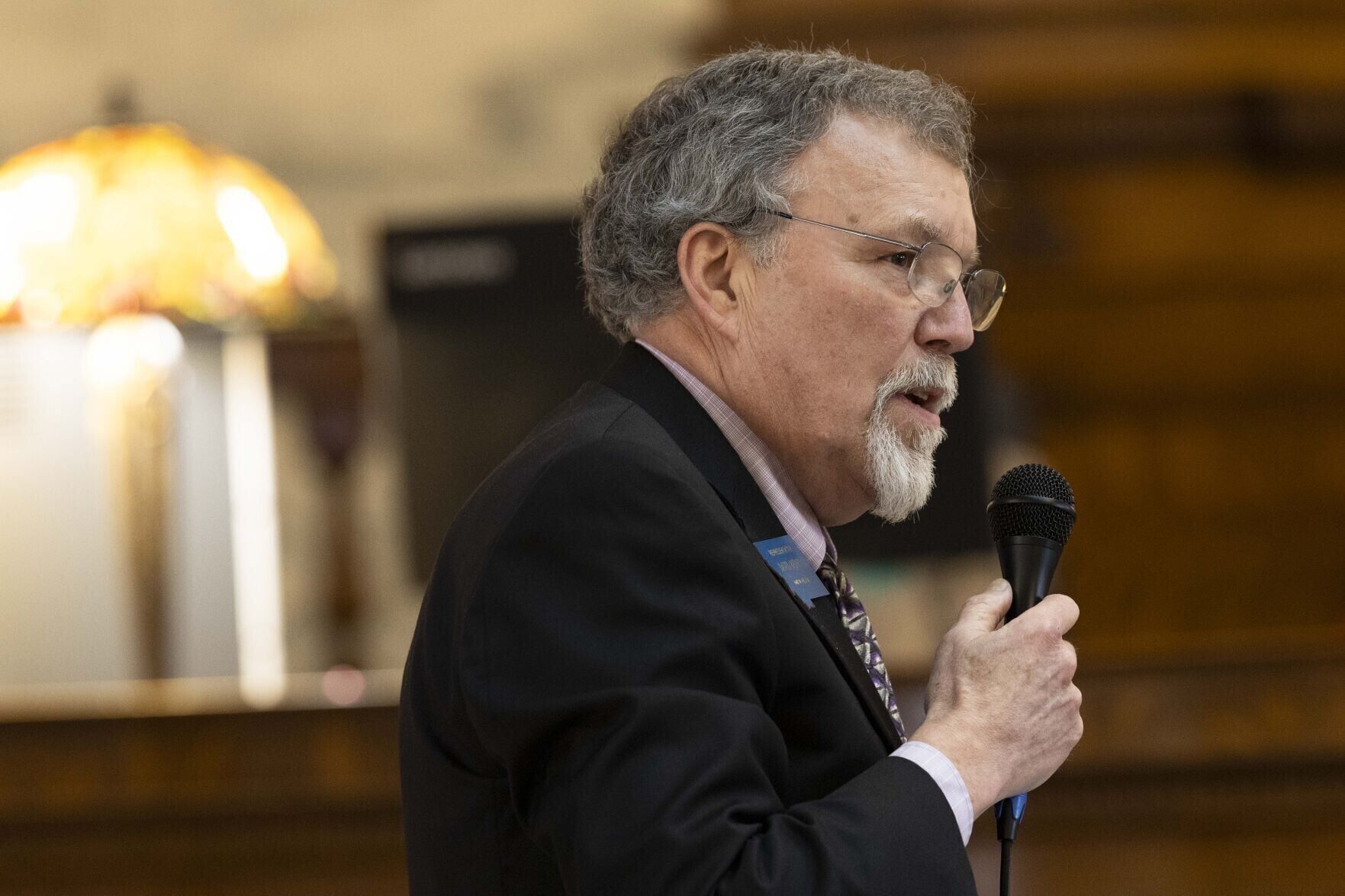
“It’s been pretty intense,” said Rep. George Nikolakakos, R-Great Falls. “What we will find out tomorrow is what happens when there is just massive amounts of out-of-state spending.”
One of the top-dollar PACs is Conservatives4MT, a political action committee created in 2024 to back Republicans more willing to collaborate across the aisle on bipartisan priorities. Across a four-week period that ended in late May, the organization spent nearly $1.1 million. It hammered dozens of districts seeing contested GOP primaries with mailers and digital ads bolstering their chosen campaigns.
Conservatives4MT appears to be the biggest single spender this primary season with $1.8 million out the door since January, though it’s been outspent by a trio of political committees aligned with hardline Republicans.
Americans for Prosperity, a household name in conservative politics, set the tone for this year’s high-dollar legislative contests, taking advantage of a technicality in campaign finance law that allows political action committees to spend money on activities that don’t expressly oppose or endorse a candidate and to do so without reporting expenditures until 60 days before Election Day.
Since that date when the Koch brother-affiliated PAC had to start disclosing its expenditures in the state, Americans for Prosperity has spent $635,592 on print materials, radio spots and doorknocking efforts to support conservative GOP candidates.
Accountability in State Government was created this year by Dan Bartel, a former GOP legislator from Lewistown. Spending $757,413 this cycle, the PAC has created its own run of ads, including some that have drawn formal complaints from incumbents.
Spending by both political committees, which led the race out of the gate this cycle, has slowed considerably in the last couple reporting periods. That mantle was taken up by the School Freedom Fund, a new-to-Montana political committee whose only known donor is a Pennsylvania billionaire. In a seven-week stretch captured by the two most recent campaign finance reports, School Freedom Fund has spent more than $1.3 million.
One of its primary targets has been Nikolakakos, the Republican from Great Falls running for an open Senate seat and an open combatant against the far-right flank of his party. The PAC dropped more than $94,000 against him in a single month.
On the flip side, one of Conservatives4MT’s biggest beneficiaries is Rep. David Bedey, a four-term legislator from the Bitterroot Valley now facing a fierce primary for a Senate seat. Bedey is well known around the Capitol as an effective lieutenant for Rep. Llew Jones, the de facto leader of the bipartisan coalition that took hold of both chambers last session.
Not every bit of PAC spending has fallen on a clean-cut, hardliner-versus-moderate election.
House Speaker Brandon Ler, a Republican from Savage, is decidedly not a moderate, but parleyed with them on occasion and now gets the support of Conservatives4MT.
This year, Billings GOP Rep. Katie Zolnikov and others formed the Montana House Conservative Alliance PAC. It has doled out a far smaller pot than the other committees, having spent a little less than $20,000 this cycle, but almost half has supported Ler’s opponent, Ric Holden.
“We’re seeing unprecedented money being spent in legislative races,” Zolnikov said on Monday. “We saw a lot from Conservatives4MT last go-round. Now there’s just more PACs popping up on the other side that are spending.”
Each faction has tried to blame the other for the avalanche of outside spending.
Senate President Matt Regier, R-Kalispell, said if a cohort of Republicans hadn’t sided with Democrats to undermine the GOP agenda during the 2025 Legislature, big money wouldn’t have to fight a proxy war to make sure party faithfuls get elected.
“I think it’s pretty straightforward,” Regier said. “There are a lot of conservative dollars that want us to follow through with conservative legislators, and now it’s obvious there are a lot of liberal dollars that want to back liberal legislators.”
In interviews throughout this election cycle, those sympathetic to or, in some cases helped by, the rash of expenditures from Conservatives4MT say the move is a natural response to the attacks they’ve weathered for more than a year from a well-oiled national machine.
“I see this as a David v. Goliath,” Nikolakakos said. “We have what feels to me like a hastily organized defensive operation to save the group.”
Both coalitions have decried the flood of out-of-state money into politics, even as they’ve benefited greatly from it. Conservatives4MT in the last reporting period raised funds exclusively from political committees with deep ties to national politics and funding from left-leaning billionaires. On the other side, the groups have enjoyed paydays from well-known conservative political action committees that don’t have to disclose their donors.
Ross Fitzgerald, the treasurer of Conservatives4MT and a former legislator, acknowledged that groups on either side of this GOP fracture are backed by dark money. He drew the line, though, on each camp’s willingness to reform the way Montana politics can be influenced by outside spending.
“The primary difference between us and them is that we would support ending the onslaught of out-of-state money,” Fitzgerald said in a text message. “Would they?”
Testing legal limits
What’s more common than million-dollar PAC spending in state legislative elections are the campaign complaints flying back and forth.
Several of the PACs spending big money in this year’s primaries have faced, or are facing, allegations of violating Montana’s campaign laws. Conservatives4MT has had to respond to two complaints this primary season, one of which alleged the organization was part of a network of PACs that improperly registered as incidental committees in order to avoid disclosing the groups’ donors, despite sharing financial officers and banking infrastructure.
Roger Hagan, deputy treasurer of all four groups, wrote in a May 14 response to the complaint that those three “incidental” groups — Big Sky Fiscal Guardians, Treasure State Stewards and Montana Business Advocates for Sensible Elections — were all established prior to the 2026 cycle and have valid business outside of elections that warrant their disclosure requirements.
Like much of the finger-pointing in this PAC fight, Hagan's response turned the allegations back on Americans for Prosperity. He suggested AFP, which is not a party to the complaint against Conservatives4MT, may have illegally coordinated with the candidates it’s supporting due to the communications required to obtain AFP’s endorsement.
Montana Commissioner of Political Practices Chris Gallus has not yet issued a decision on that case.
The antagonism has also spun up to a federal lawsuit over Accountability in State Government’s use of AI-generated images against candidates who have benefited from Conservatives4MT spending.
Three candidates filed campaign practice complaints against Bartel, the former Republican lawmaker behind Accountability in State Government, alleging postcards opposing them failed to disclose use of artificial intelligence in generating images of those Republicans waving pride flags. That would be in violation of a new law passed by the state Legislature in 2025. Three such violations would subject the accused to a felony prosecution.
Bartel filed a lawsuit in federal court at the beginning of May alleging the new law violates his First Amendment rights. The defendants in that case, Gallus and Montana Attorney General Austin Knudsen, who is charged with defending the state’s laws, have not yet responded to the lawsuit.
The price tag attached to these Republican primaries could be explained by the implications the results will have for the tone of the 2027 Legislature.
As a result of Montana’s redistricting process in 2022, there are very few competitive races on the board once the November general election comes around. That means where primary GOP voters fall in the ongoing clash between hardliners and moderates in the primary will largely determine the party’s outlook for the next session.
“Most of our state elections are determined in the primary, not in November,” said Republican Gov. Greg Gianforte at a press conference on Monday. “I would just say to folks, don’t wait until November to cast your ballot because often that means you’ve given your voice to somebody else and your authority to someone else.”



Comments ()