Analysts: Redistricting to cost taxpayers, while slowly shifting election outcomes Altered maps cost Alabama taxpayers $4.45 million for special election. Other states still considering redistricting
Why political gerrymandering in the South will likely continue to consider voters’ race despite Supreme Court ruling (CHARLESTON, S.C.) The outrage was swift and severe when the U.S. Supreme Court, by an ideologically divided 6-3 vote, recently struck down Louisiana’s majority Black congressional district as an unconstitutional racial gerrymander. Critics lambasted the court for gutting the Voting Rights Act, the federal law that
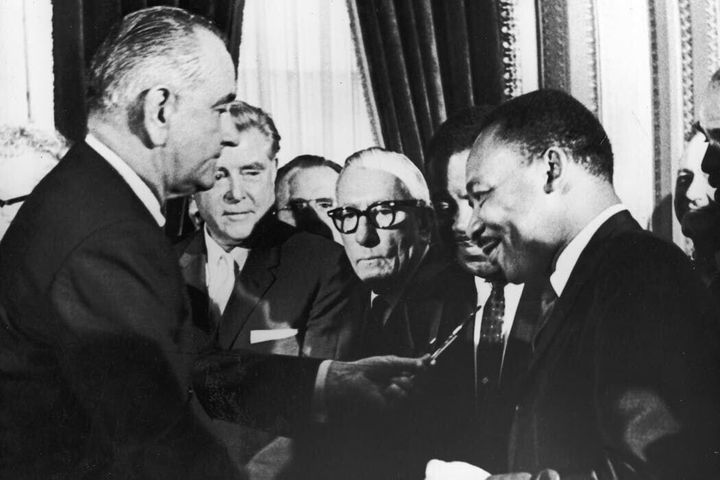
Supreme Court ruling: The latest in history of diminishing minority voting rights (KNOXVILLE, TN) Divided along ideological lines, the U.S. Supreme Court on April 29, 2026, issued a ruling that severely weakens a provision of the landmark Voting Rights Act of 1965. That provision, known as Section 2, prohibited any discriminatory voting practice or election rule that results in less opportunity
US Supreme Court limits use of race in congressional district remaps Florida Gov. Ron DeSantis’ office on Monday invoked an upcoming landmark U.S. Supreme Court decision on the role of race in drawing congressional districts to justify the Republican’s proposed gerrymander. “The use of race in redistricting should never happen,” the governor’s general counsel, David Axelman, wrote in
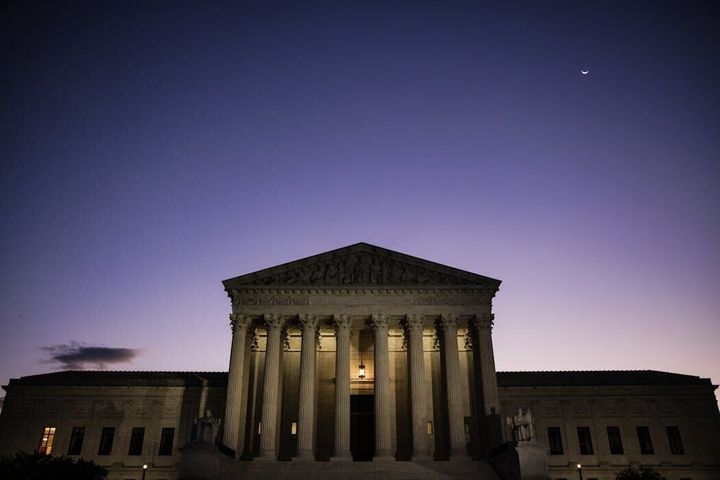
Supreme Court’s ruling in Louisiana gerrymandering case redefines Voting Rights Act, making it harder to protect minority voting power and altering the landscape of future elections In a major ruling that would permit weakening the voting power of minorities in the United States, the Supreme Court on April 29, 2026, struck down a Black-majority district in Louisiana’s congressional map as “an unconstitutional gerrymander” and altered the court’s interpretation of the Voting Rights Act.
Murrill: Seismic decision vindicates congressional redistricting (The Center Square) – Federal courts overstepped when they required the state to draw a second majority-Black congressional district, the U.S. Supreme Court ruled Wednesday in a high-stakes Louisiana redistricting dispute. State Attorney General Liz Murrill called the ruling a “seismic decision,” saying it reaffirms equal protection principles
Whoopi Goldberg Has Fiery Reaction to VA Redistricting Results The cohosts of The View were, like many Americans, split on the issue of Virginia’s successful measure to redistrict the state’s Congressional seats in a way that strongly favors Democrats. Whoopi Goldberg, in particular, was majorly on the fence about the matter. First, she fired back at those