The Importance of Free Speech with Dean Erwin Chemerinsky
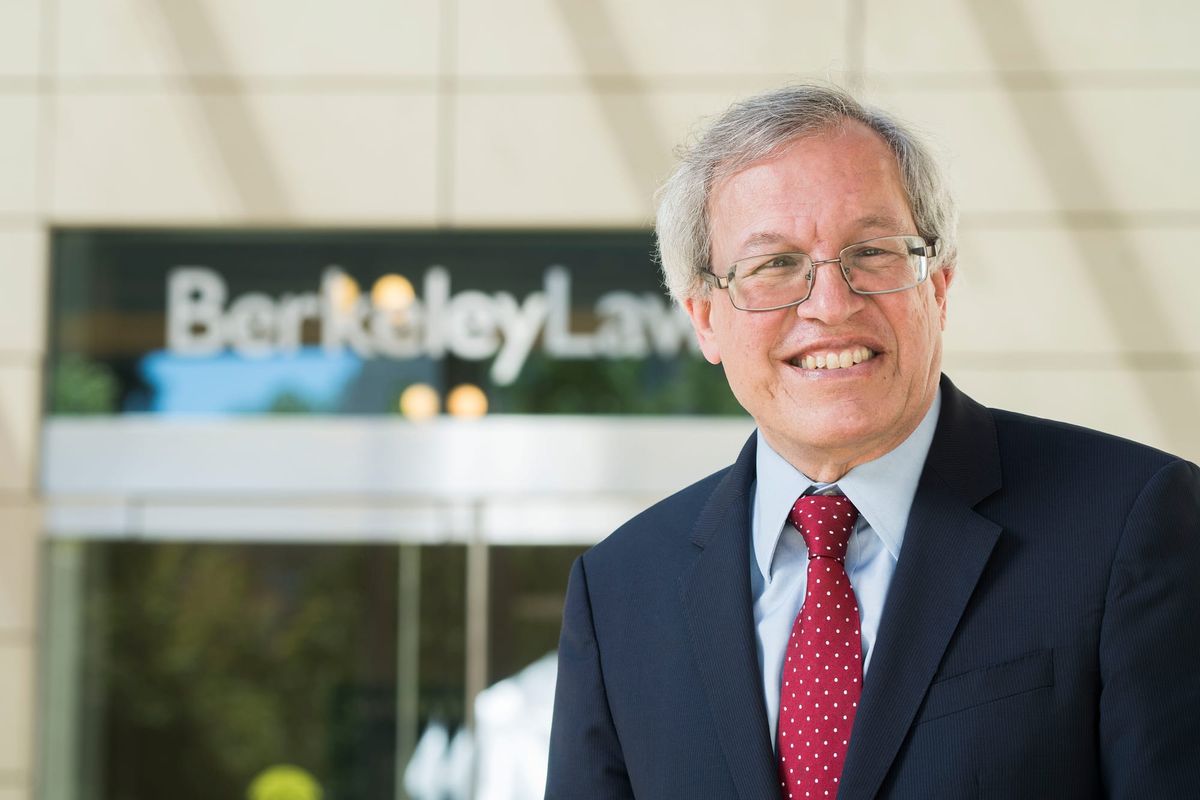
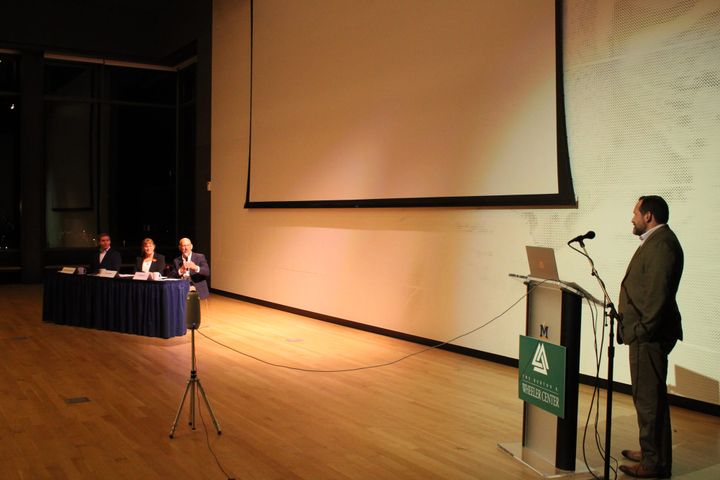
On Thursday Oct. 22, Erwin Chemerinsky addressed the complexities and importance of protected free speech at public universities. The event was hosted by MSU’s Office of the President.
Chemerinsky is the Dean of the University of California, Berkeley, School of Law. He has published over 20 books around constitutional law, free speech and civic rights.
In 2024, he was regarded as the most influential person in legal education by the National Jurist — a publication and resource for current and aspiring law students. Chemerinsky’s most recent book, “Campus Speech and Academic Freedom: A Guide for Difficult Times” was published in 2026 with Howard Gillman.
MSU President Brock Tessman introduced Chemerinsky. In his opening remarks, Tessman said that conversations around contentious subjects with disagreements are crucial.
According to Chemerinsky, public universities like MSU are safeguarded under the same constitutional protections as the U.S.
Chemerinsky highlighted four important considerations around free speech: The importance of protecting all ideas and viewpoints; protection is not absolute; universities may impose content-neutral time, manner and place restrictions; and new and evolving considerations exist and are important to be aware of.
“We need the First Amendment to protect the speech that we detest, even the speech that we find is vile,” Chemerinsky said. “It's based on the faith that we are better off letting all ideas and views be expressed than to give those in power the ability to stop the expression of views, to stop the expression of ideas.” Although some ideas may be inappropriate and repulsive, Chemerinsky argued that limiting one's speech could hurt your own expression in the future.
In an interview with the Exponent, Tessman said impactful change around free speech comes from much more than policy. “What got me thinking from Dean Chemerinsky's talk is really what can we do to move beyond having a good policy and a strong framework and move toward the real embrace of free speech and the promotion of free speech activity,” he said.
According to the MSU News Service, 50 percent of students at MSU are not from Montana. Because of this, MSU students have a diverse set of experiences and opinions. Important aspects of public universities include creating spaces of dialogue for the next leaders.
Tessman said he believes that supporting the cultural side of free speech includes hosting events like these. “Our job is to make sure we promote the heck out of these opportunities [and] communicate why we think they’re valuable," Tessman said.
Tabay Atkins, is a MSU student studying paleontology and local business owner of Tabay’s Mindful Kitchen. In an interview with the Exponent, Atkins said he appreciated that the University hosted this event because the information is valuable now and throughout history. “It's really something that we need to familiarize ourselves with because I personally did not know most of what was taught tonight," he said.
According to Atkins, he believes the University community grows stronger when more people understand the issues around free speech.
Atkins said social media is a large aspect of the cultural issue around free speech and hate speech has become increasingly normalized in online spaces and amongst political leaders. Atkins said that many hot topics get brought up in ineffective ways on social media platforms, and even though social media opens the floor for conversation around controversial topics — it is not done in a productive manner.
“You feel the freedom to be able to say what you want to say, no matter how controversial it is, because you have that wall of protection,” he said.
Chemerinsky noted that although hate speech is protected, that doesn’t make it right for people to participate in. “Just because there's a right to say something, doesn't mean you should say it, and my hope is that when people choose to speak, they'll do so with consideration of feelings of others and kindness,” he said.
Responding to a question from an audience member, Chemerinsky acknowledged that universities are typically dominated by liberal faculty members.
The Foundation for Individual Rights and Expression, found that there are more conservative-leaning students at MSU than liberal. Professors are protected to talk about topics that fall under their realm of profession. According to Chemerinsky, even when professors attempt to remain neutral and support open discussions, students still self-censor under social pressures.
During the Q&A session following the lecture, student activist Julian Staggs asked Chemerinsky what he sees as the balance between conscious disruption and civil disobedience as a tactic of student activists in a democracy, versus free speech regulations preventing disruptions.
“I think what's most important to answer your question is to remember that civil disobedience means that you're violating the rules of the law, and you accept that you can be punished for violating the rules of the law,” Chemerinsky said in response to Staggs’ question.
In an interview with the Exponent, Staggs said he is aware of the consequences but believes disruptive actions are still important and necessary. “I think there's a role for actions that do rise to disruptive disobedience, in changing policy and democratic process,” he said.
“I think it's important we discuss free speech and we actually actively practice it in building up student movements,” Staggs said.
Comments ()