
Underfunded Senate Democratic candidates try to fend off a challenge from the middle
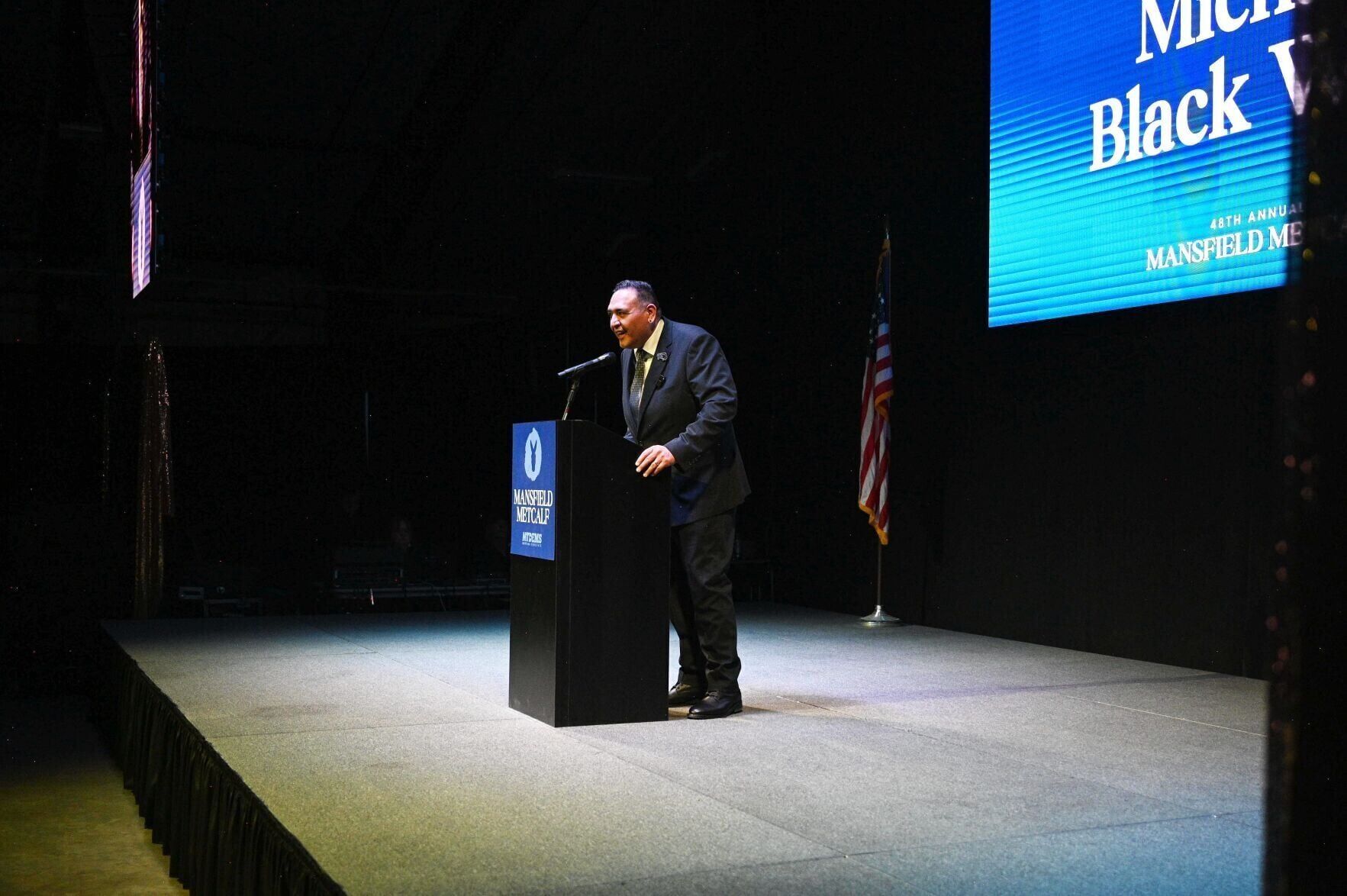
It’s the humbling relatability of Michael Black Wolf’s opener that gets the chuckle, even from his opponents, at Democratic forums for Montana’s U.S. Senate candidates.
“I am just an everyday Montanan like everybody else you know,” the Gros Ventre tribal member says. “My truck is parked right across the street. My check engine light is on.”
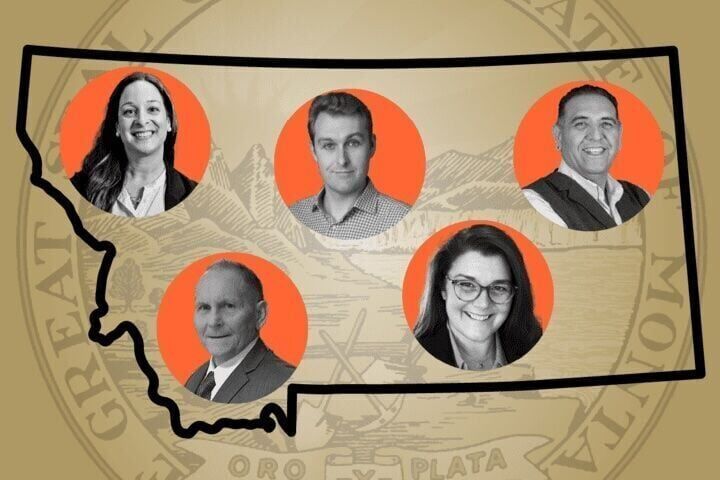
The same might be said about the dashboard lights of Black Wolf’s party, which seems ill-prepared for just the third Montana U.S. Senate election in half a century without an incumbent. The five Democrats in the race — Black Wolf, Alani Bankhead, Michael Hummert, Christopher Kehoe and Reilly Neill — reported a combined $123,629.43 in cash on hand at the end of March, with Neill accounting for $103,000 of that sum.
The sparse donations to these campaigns — a combined 85 contributions from Montana residents — suggests a weak appetite among Democratic funders for another no-holds-barred battle like the $300 million fight Democratic former U.S. Sen. Jon Tester lost to Republican Tim Sheehy in 2024.
That enthusiasm gap has left the party and its would-be nominees vulnerable to a run down the middle by independent candidate Seth Bodnar.
Bodnar, with a campaign staffed by former members of Tester’s team, has a tenfold cash-on-hand advantage over the combined Democratic field, and 329 Montana contributors. He also leads outgoing Republican Sen. Steve Daines’ handpicked presumptive frontrunner Kurt Alme in fundraising by $400,000. Daines shocked the field by withdrawing from the race minutes before the candidate filing deadline. Both the independent and the Republican hit the million-dollar mark just weeks after launching their campaigns. Alme has donations from 159 Montanans.
Democratic diehards like former Gov. Brian Schweitzer, who has endorsed Neill, expect Bodnar to siphon votes from whoever wins the Democratic primary, to be decided June 2. Outside observers say Democrats themselves are the spoilers.
“The Montana Democrats who don’t like Bodnar’s candidacy aren’t going to want to hear this, but at this point, I think it’d clearly be the Democrats siphoning votes from Bodnar in the general election, as opposed to Bodnar siphoning votes from the Democrats,” said Kyle Kondik, managing editor of Sabato’s Crystal Ball at the University of Virginia Center for Politics. “Regardless, if Bodnar and Democrats can’t get on the same page, Republicans are going to win this seat anyway.”
Kondik said Bodnar is the only non-Republican capable of winning the race, though he considers him a significant underdog in any scenario. No Democrat can assemble the kind of fully-staffed and robustly resourced campaign Bodnar is assembling, even though the independent, who left his job as University of Montana president to run, is still gathering signatures to qualify for the ballot.
Three political committees that in prior elections backed Montana Democrats both for U.S. House and Senate seats have so far backed Bodnar exclusively.
“Independents running in lieu of Democrats have been able to do better than an actual Democrat would have because I think it’s just easier to try to run to the middle of the electorate when you don’t have a formal party label,” Kondik said. “That said, doing better than expected is one thing — actually winning is another. While red-state independent candidates such as Greg Orman in Kansas (2014), Evan McMullin in Utah (2022), and Dan Osborn in Nebraska (2024) have run ahead of what one would’ve expected a Democrat to get in those races, none came within even 5 points of actually winning.”
In Montana’s last two U.S. Senate elections, Democrats seemed to hit their ceiling of support, with three-term incumbent Tester mustering 276,305 votes in 2024, and Steve Bullock, a two-term Democratic Montana governor, mustering 272,463 votes in 2020. Both men, suffering the first losses of their political careers, trailed their winning Republican competitors by no less than 43,000 votes.
Five Democrats are vying in the June 2 primary for the chance to try to top those performances in November’s general election.
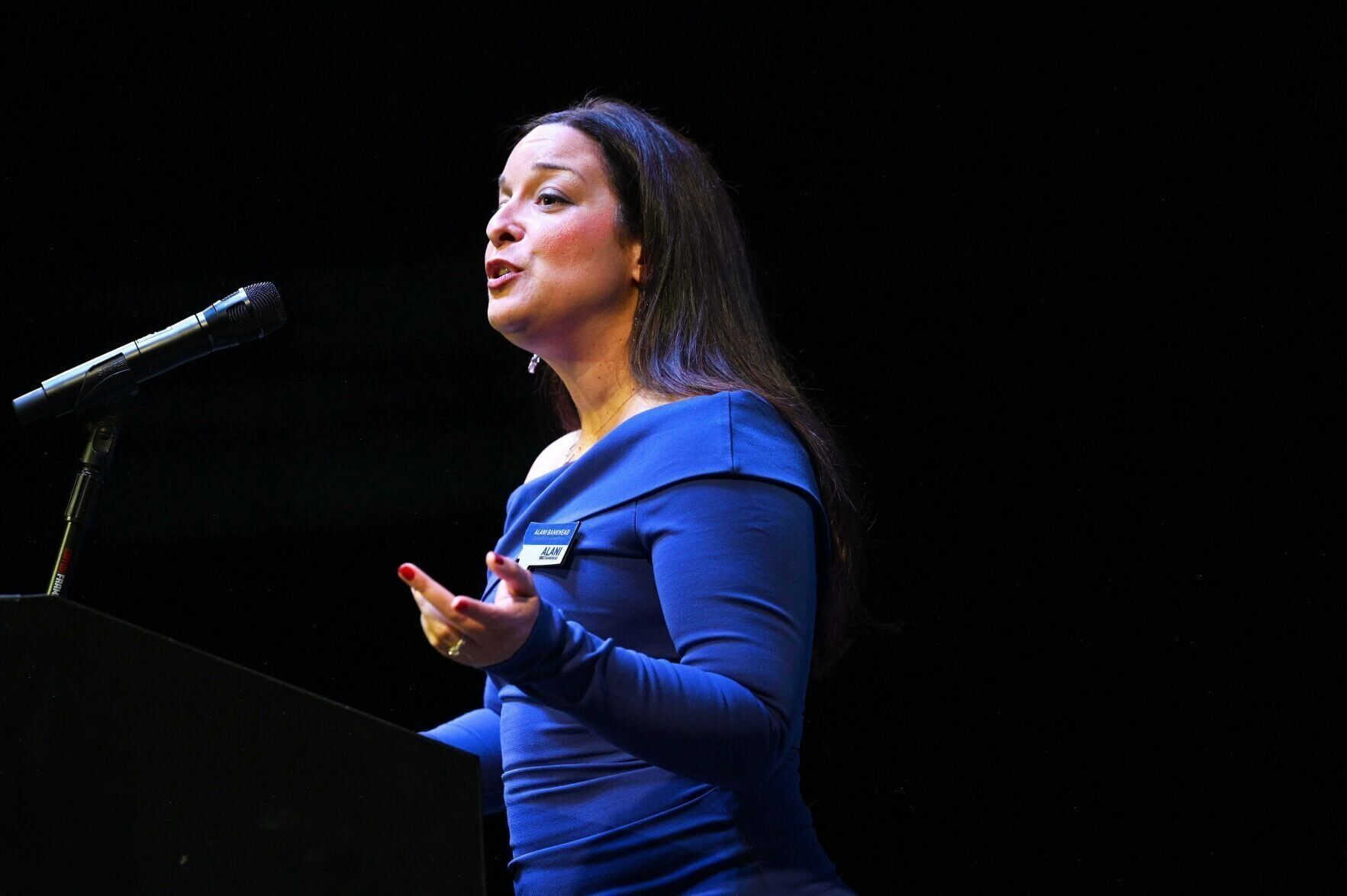
ALANI BANKHEADBankhead is an Air Force veteran of 21 years who has worked professionally on everything from terrorism investigations to cyber threats targeting children.
After her time in the service, Bankhead, of Helena, worked for International Justice Mission, a nonprofit watchdog group focused on ending slavery, including child sex trafficking. Bankhead oversaw IJM’s South American operations aimed at preventing child sex trafficking and child rape.
At campaign events she tells audiences that getting to the bottom of President Trump’s relationship with convicted sex criminal Jeffrey Epstein will be among her priorities if she’s elected.
She describes her approach to government reform as practical and focused on small gains.
“Historically, in my career, we have always worked up to the big goal,” Bankhead told MTFP. “A multi-tiered approach is what I look at. In health care, the first step is Medicaid for all, then Medicare for all, then we get to universal health care. We make sure that folks have baseline, good quality health care that they don’t have to pay additional for. Their taxes already cover it.”
She said there is enough wasteful government spending in the Pentagon to cover incremental improvements to public health care coverage, pointing to a use-it-or-return-it Defense Department budgeting policy she said encourages excessive spending.
MICHAEL BLACK WOLF
Black Wolf, of Hays, told Montana Free Press he decided to run for Senate because Montana’s federal officeholders have ceded too much congressional power to President Donald Trump. As of May 1, Trump has issued 258 executive orders in the first 16 months of his second term — more than during the entire four years of his first term. Those orders to impose tariffs, curtail birthright citizenship and impose control over federal elections exerted power over areas in which courts have ruled that Congress, not the president, has authority.
Black Wolf, the historic preservation officer for the Fort Belknap Reservation in his day job, is running on what he calls “core values and fundamental human rights,” meaning clean air and water, food security, shelter, and Medicare for all. You shouldn’t have to “pay to be healthy,” Black Wolf said.
Tribal relationships with the federal government are rooted in treaties, which Black Wolf said gives him a unique understanding of the federal government’s role in Montana. Every major clean water and irrigation project on the Hi-Line exists because of treaty commitments to tribes, like the Winters Doctrine, which secured tribal water rights and also provides water to predominately White communities across more than 300 miles.
On the day he spoke with MTFP, Black Wolf was in Oklahoma City meeting with federal government representatives about the return of skeletal remains of Indigenous children who died at boarding schools more than a century ago.
“You will never see a tribe, or a tribal nation, or a tribal department go in and dig up and tear up a cemetery, a non-Native cemetery, just to get to the minerals underneath, or to build this big, fancy new business that’s going to bring in a quadrillion dollars. You will never see Natives do that, because we have the utmost respect for our deceased,” Black Wolf said.
Tribes, Black Wolf said, have repeatedly told the federal government “no” to protect sacred values and human life.
“At what environmental cost are we willing to sacrifice the greater good of everyday Americans for a particular company, you know, to just reap the benefits just for that company and their shareholders?” Black Wolf said.
MICHAEL HUMMERT
Hummert, of Helena, is the apparent wonk of the Democratic field. He’s posted detailed policy papers on his campaign website. Like Neill, he’s run for federal office before — he challenged Jon Tester in the 2024 Democratic primary and won 3% of the vote — but has never won a primary election. Hummert now accuses Tester of orchestrating Seth Bodnar’s campaign to weaken Democrats’ chances of returning a candidate to the Senate in 2026. Hummert describes himself as a fiscal conservative whose support for a balanced federal budget — an ambition every Montana federal officeholder except former Sen. Max Baucus has espoused since at least 1996 — keeps powerful interests from supporting his campaign.
“Let’s not be naive about what our government’s made up of,” Hummert told MTFP. “It’s made up of corporate overlords. It’s made up of people that have way too much influence in our government, and that’s why our corporations are the ones that benefit from trillions of dollars in deficit spending.
Hummert offers five top priorities to voters. First: to require that the federal budget be balanced. Second: that immigration policy be “clean, fair, and reasonable to all immigrants.” Third: to establish term limits and age limits on service in Congress. Fourth: to ban corporate spending in federal campaigns. And fifth: to ban political action committees altogether.
“We are in a Jeffersonian moment. We need to fix these problems, or we will cease to exist,” Hummert told MTFP. He’s identified an additional priority for regulating artificial intelligence.
“The federal Democrat Party, they fear another person like [Pennsylvania Sen.] John Fetterman, that can think for themselves and doesn’t fall in line, hitting the floor of the U.S. Senate and having an actual voice for the people,” Hummert said. “And that’s why Seth Bodnar is running as an independent, because if he ran as a Democrat, then there was a possibility that he would not win, and I would, and that would make the difference nationally.”
Hummert, of Helena, is the apparent wonk of the Democratic field. He’s posted detailed policy papers on his campaign website. Like Neill, he’s run for federal office before — he challenged Jon Tester in the 2024 Democratic primary and won 3% of the vote — but has never won a primary election. Hummert now accuses Tester of orchestrating Seth Bodnar’s campaign to weaken Democrats’ chances of returning a candidate to the Senate in 2026. Hummert describes himself as a fiscal conservative whose support for a balanced federal budget — an ambition every Montana federal officeholder except former Sen. Max Baucus has espoused since at least 1996 — keeps powerful interests from supporting his campaign.
“Let’s not be naive about what our government’s made up of,” Hummert told MTFP. “It’s made up of corporate overlords. It’s made up of people that have way too much influence in our government, and that’s why our corporations are the ones that benefit from trillions of dollars in deficit spending.
Hummert offers five top priorities to voters. First: to require that the federal budget be balanced. Second: that immigration policy be “clean, fair, and reasonable to all immigrants.” Third: to establish term limits and age limits on service in Congress. Fourth: to ban corporate spending in federal campaigns. And fifth: to ban political action committees altogether.
“We are in a Jeffersonian moment. We need to fix these problems, or we will cease to exist,” Hummert told MTFP. He’s identified an additional priority for regulating artificial intelligence.
“The federal Democrat Party, they fear another person like [Pennsylvania Sen.] John Fetterman, that can think for themselves and doesn’t fall in line, hitting the floor of the U.S. Senate and having an actual voice for the people,” Hummert said. “And that’s why Seth Bodnar is running as an independent, because if he ran as a Democrat, then there was a possibility that he would not win, and I would, and that would make the difference nationally.”
CHRISTOPHER KEHOE
It was the killing of protesters in Minneapolis by ICE agents that prompted Christopher Kehoe to run for U.S. Senate in Montana. A Minnesota native, Kehoe decided he had to get involved.
“I saw neighbors get shot in the street. I saw Second Amendment rights get trampled. I saw local businesses, immigrant-run businesses, be disrupted,” Kehoe told a Bozeman debate audience in early May. “I saw neighborhoods being terrorized. I saw hypocrisy. I think we all see this hypocrisy, and for me, this hypocrisy stems out of an executive branch that is not being held to account by the legislative branch, regardless of party.”
An actor and arts administrator who lives in Missoula, Kehoe, whose website says he isn’t soliciting campaign donations, emphasizes a recurring theme in his platform: “Our tax code can be a beautiful thing, if we let it.” From universal health care to affordable housing to affordable childcare and transitioning to a renewable energy-based economy, taxes can provide the revenue necessary to accomplish big goals, he said.
Kehoe argues that the Trump mantra “make America great again” should mean returning to a time when federal taxes were higher.
“There were more tax brackets, they went higher. There was just more imagination and more innovation,” Kehoe told his Bozeman audience. “The progressive side of our progressive tax system was surprisingly robust back when America was great again.”
REILLY NEILL
Neill, of Livingston, is the fundraising leader among the race’s Democratic candidates. And she’s been running for Senate longer than anyone currently seeking the office, having formed a campaign committee immediately following Tester’s loss to Republican Sen. Tim Sheehy in 2024.
The 2024 election cycle was pivotal for Neill, who launched a write-in candidacy for Montana’s Eastern District U.S. House seat in disgust after Democratic candidate John Driscoll announced that he wouldn’t raise or spend more than $5,000 on his campaign. Driscoll seems to be a cautionary tale for underfunded Democratic candidates, having twice ridden undetectably small sums of money to victory over primary candidates with superior, if still shallow, war chests. Driscoll, with less than $5,000, defeated his 2008 Democratic primary opponents, Jim Hunt and Bill Kennedy, each of whom had raised roughly $200,000.
Neill acknowledges that it shouldn’t necessarily take big money to win a U.S. Senate race.
“The thing about winning elections in Montana, No. 1 thing, you need humility, and I don’t believe there’s a lot of that in modern politics, and so I don’t think we’ve even seen what that could look like on the ground in Montana,” Neill said.
Neill said the cost of health care is the concern voters share with her most, but notes that high health care costs can also make it more difficult to afford rent or a mortgage.
“They want universal health care,” she said of voters. “They want agricultural infrastructure. You know, they want things right now because it feels urgent and it feels like some of the security that we depend on is slipping away,” Neill said.
Neill asserts that the federal government has the resources to spend on things like health care and housing. “If we have $1 billion a day to spend on Iran, we can figure it out,” she said.
She said she approaches cost-of-living issues as a former publisher of an alternative newspaper in Livingston and a former state legislator. She says the state’s affordability nut could be cracked by better hourly pay, which she argues Congress can accomplish by raising the federal minimum wage in balance with what small business owners can afford.



Comments ()