
Volatile Weather Damages Our Mental Health
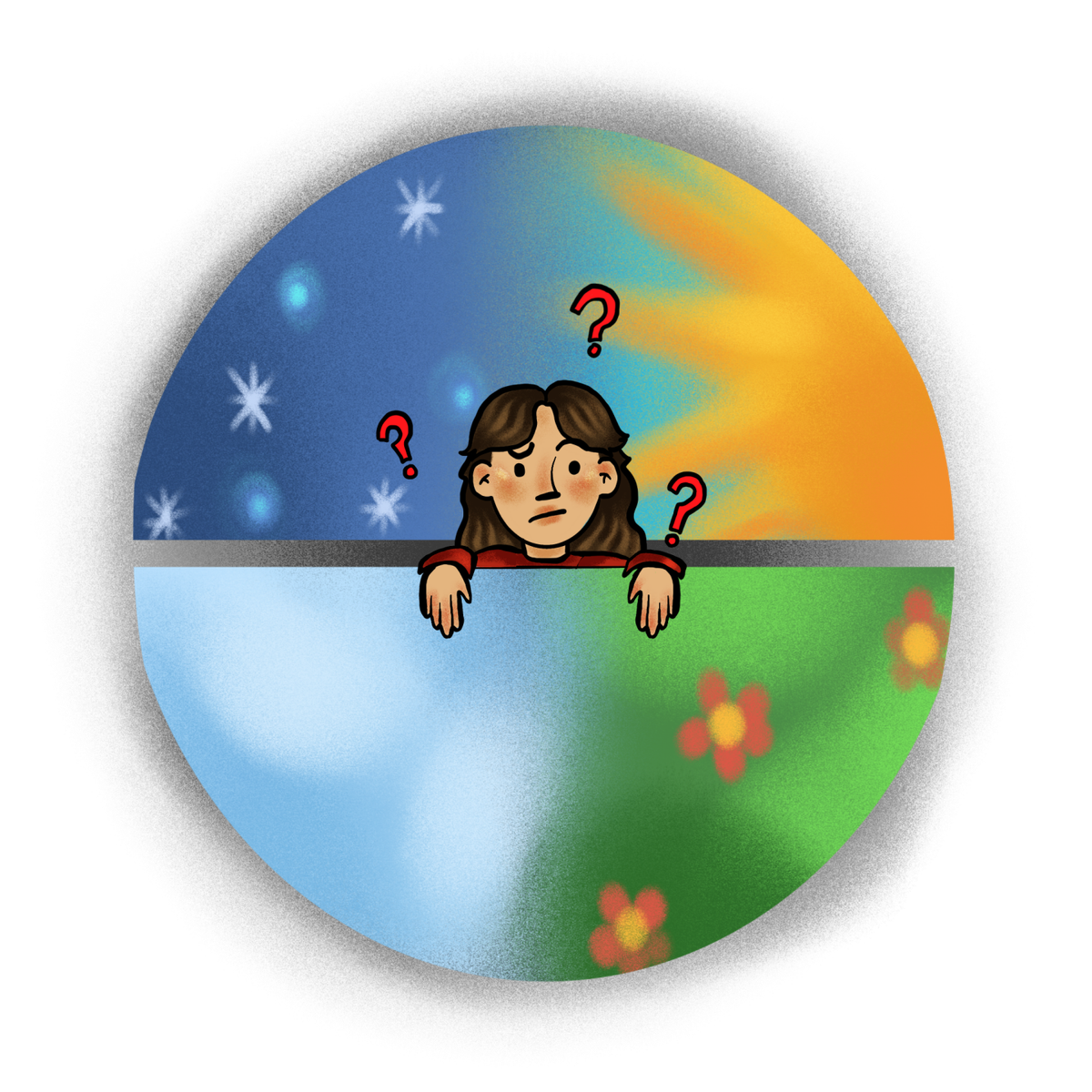
In 2024, I experienced my first Christmas Day without snow in both Bozeman and my hometown of Polson. A year later, I witnessed falling snow in June while digging up dinosaurs. These rapid changes in weather patterns are a sign of climate change — a sign that I dreaded seeing.
As climate change steals our winters here in Bozeman, the anxiety it fuels isn’t helping us; it's causing us to freeze and stalling our action. Instead of internalizing our fear for the future, we need to institute economic, political and communal change.
Sidney Sillers, a junior psychology major and avid skier, said that for her, warm weather signals a time to be outside with friends and have fun. However, the recent back-and-forth temperatures have taken a toll on her energy.
“[After a sunny day] I’ll wake up the next morning and there will be snow on the ground,” she said. “Anytime the weather changes, I definitely feel a mood decrease.”
Like Sillers, my mood changes with the weather. However, my stress comes from the sudden freezes and thaws that make roads slick and random blizzards that shock my garden plants.
According to Sillers, this winter was a tremendous wakeup call for her. “We’ve been living in this world of talking about climate change. Then all of a sudden, we started seeing the effects of it,” she said.
Cascade Tuholske, an assistant professor who studies the link between climate change and urbanization, said that this winter season has been especially difficult. “It’s hard to see such a hot winter happen in 2026 knowing that climate change is going to make winters like this much more frequent,” he said.
Despite this, Tuholske said he no longer has anxiety about the warming winters. He explained that he used to, but realized that the increased anxiety just made taking action more difficult.
“We've all acculturated to feel guilty and ashamed for owning a truck or eating meat, whatever it is,” Tuholske said. “That’s been a fight created that we don’t need to have with ourselves.”
I agree. I grew up hearing constant fearmongering about the warming climate and was convinced that this was just a part of modern life. I was taught that there were very few ways to live comfortably without burning carbon.
However, the truth is that everybody can take action against climate change. This winter inspired me to make small, meaningful changes in my own life to benefit the planet, such as starting a compost bin and walking instead of driving.
While there are small things the individual citizen can do to decrease their own carbon footprint, Tuholske and I both agreed that there are greater ways to combat climate change.
“The best way to improve my mental health and reduce anxiety is to start working on climate change.” He noted that the best first step is to talk about it — and the second step is to become professionally and politically engaged.
According to him, reaching out to your representatives, company leaders and others in power to advocate for practices that lower carbon emissions can be good for your mental health and effective for change.
In the modern world, there are so many resources available to help us be more conscious of our emissions — a healthier alternative to despairing over the actions of companies that have not yet been forced to change.
Tuholske, who has had to handle serious mental health issues related to climate change in the past, offered some advice to those suffering from climate anxiety.
“Seek help and talk to friends,” he said. “The more community you can build around this anxiety, the faster people can move and exercise their agency.”

Comments ()