
Wages, reserve and debate: ASMSU’s practices and culture called into question
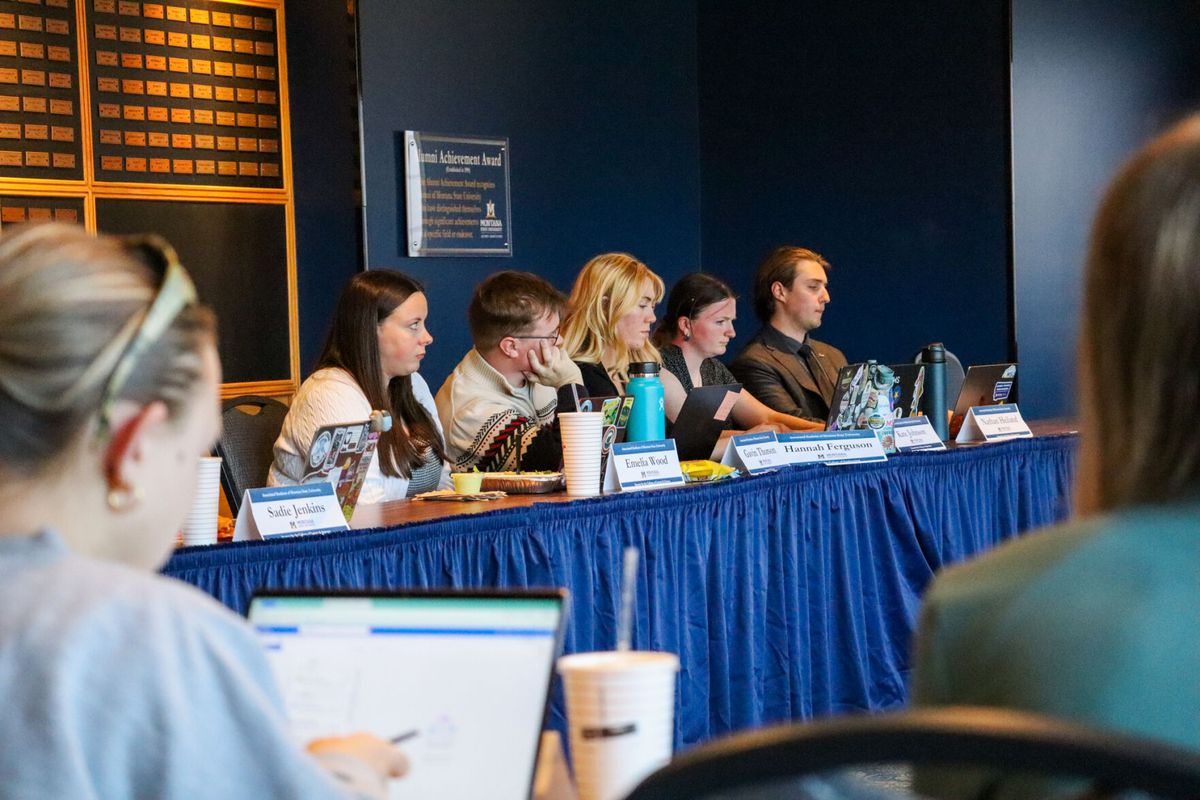
As the Associated Students of MSU (ASMSU) works to finalize its budget for the coming year, one member of the student government says the organization is mismanaging its finances by allowing a $1.2 million reserve to grow while continuing to raise student wages instead of expanding programs or lowering student fees.
“I'm the only one who is advocating for reduced wages, advocating that our money should be put into more productive uses or advocating for the fee cut,” said senior finance student Chase Koller, a senator for the College of Business and a member of ASMSU’s Finance Board.
While Koller believes that ASMSU is misusing its resources — which he claims is compounded by a culture that discourages debate — details from other members of the organization suggest the full picture may be more complex.
Understanding the Budget Process
This year, ASMSU has operated on a $1.169 million budget. Students enrolled in seven credits or more pay an $83.50 student activity fee each semester, $42.71 of which goes to ASMSU. Revenue from that portion of the fee makes up the organization’s annual operating budget.
Every spring, ASMSU must create a new budget for the next fiscal year. This process starts at the beginning of the semester and typically concludes in late April, according to ASMSU Business Manager and Finance Board Chair Kirstin Jones.
The business manager drafts an initial budget template in early January. Program directors then review the draft and submit recommendations, followed by a similar review and recommendation process from the executive team, according to Jones.
The proposal is then sent to the Finance Board, which Jones said is composed of senators and at-large members of the student body and advised by professional staff. The board reviews the budget for three to four weeks before forwarding it to the ASMSU Senate, which conducts a final review over several weeks before approving the budget in late April.
The Senate held its first review of the proposed fiscal year (FY) 27 budget last Thursday and has two more weeks to work through it before adjourning on April 23.
In addition to its operating budget, ASMSU possesses a reserve of about $1.2 million. One-third of this reserve balance is also placed in investment pools that accrue annual interest, according to Molly Lammers, the administrative manager of the ASMSU Business Office.
Lammers said she serves as formal staff support for the student government and is not paid by ASMSU. Instead, the Business Office helps the body spend student fee dollars appropriately and ensures it remains up to date on University policies.
However, she stressed that all financial decision-making power — including setting ASMSU student employee wages up to $18.50 an hour, a level that begins to compete with professional staff pay — ultimately rests with the students.
Lammers said that executives, program directors and members of the Finance Board and Senate — all of whom are students — determine spending and what is feasible, though decisions must comply with MSU policy and purchasing guidelines.
“They’re student-led. All those decisions are happening by students, for students,” she said. “There’s a team of advisors, and a team of doers, but they’re not supervised by professional staff.”
Reserve Fund Draws Scrutiny
In the past five years, ASMSU’s reserve has more than doubled, increasing about 161 percent from $477,000 in 2020 to a balance of $1.2 million in 2026. According to Koller, ASMSU’s large reserve encourages internal spending increases rather than careful budgeting.
“There's always been this consensus that, ‘Right, we have this budget. We have [$1.2 million in reserve], it's growing, it's growing, programs are requesting less, so why not put the money towards our wages?’ Well, that's simply the wrong philosophy and wrong way to think about it,” he said.
In addition to generating interest, the reserve has grown because ASMSU has historically underspent its budgeted amounts, and the residual is deposited into the account at the end of each year, according to ASMSU Business Manager Kirstin Jones.
“Like this year, we have not spent as much money as we budgeted for, so a lot will be getting swept into the reserve,” she said.
Compensation for Student Leaders
Koller also alleged that student government leaders at MSU receive significantly higher compensation than those at other institutions.
He pointed to examples such as the University of Texas at Austin, where the student body president and vice president each earn $6,840, the communications director receives $3,420 and the speaker of the assembly makes $2,992.50, according to the assembly’s 2025–26 budget.
At ASMSU, the student body president and vice president each receive $17,680 annually, while the communications director is paid $13,600 and the Senate speaker receives $10,710, according to the FY26 budget.
“You can kind of get a consensus that we are paying almost double or triple the prices that a lot of these bigger institutions are paying for,” Koller said.
At the University of Montana (UM), the president and vice president are budgeted to earn about $14,000 in FY26, according to Associated Students of UM (ASUM) President Buddy Wilson. While ASUM does not have a Senate speaker or a communications director, its marketing and outreach director earns $3,500.
Hourly pay for the ASMSU president has steadily increased from $11 in FY23 to $17 in FY26, growing by $2 each year, according to ASMSU’s budget documents. However, total compensation has varied due to changes in hours and wage structure.
In FY25, the hourly rate increased to $15 and the budget rose to $19,500 for an August through May contract. For FY26, the role shifted to a year-round schedule at $17 per hour, with a budget of $17,680 — reflecting overall fewer hours but a higher wage.
Koller also stated that the president and vice president receive free tuition in addition to their position’s wages. He said he believes there should be more transparency about this reimbursement.
“They already get free tuition. Why do they need — on top of that — another incentive of $16,000 that is more than triple the going rate at some of the bigger universities that I found?” he said.
The president and the vice president’s tuition is paid by the University’s Administration & Finance Division — not ASMSU — and if the students in question are not residents, they don’t get full coverage, according to MSU’s Vice President of Administration & Finance Terry Leist.
Leist said the ASMSU president and vice president have both received a tuition waiver equal to resident tuition since 2015. He stated this is not an uncommon practice at universities.
“If the president or vice president are nonresident students, then we still only waive the equivalent of a resident portion of their tuition,” he said.
Lammers said she does not know why information about these tuition waivers for ASMSU’s president and vice president is not in any public-facing materials. “It's something that we can work towards,” she said.
Internal Debate Over Wages
Koller argued that student government roles, in general, should not be seen as high-paying positions, as they are public-facing jobs meant to serve students.
“We have raised the wages for the past several years, from what I can track down in our budget every single year, basically, in one way or another,” he said. “Right now, the going rate at MSU is $15 an hour for just a janitorial position. Why do we need to be making anything more of that, considering that we're using student fee dollars to pay and fund our expeditions?”
Jones confirmed that ASMSU’s wages have risen across the board since FY23.
In its recent budget proposal, the Finance Board proposed a new tiered wage structure for all of ASMSU’s student employees, categorizing roles based on levels of managerial responsibility. If passed by the Senate, students would be paid standard hourly rates of $15 to $17, according to Kate Johnson, Finance Board member and senator for the College of Agriculture.
Jones said that, as much as she thinks people should be getting paid more, she disagrees with the Finance Board’s proposed $17 wage for students in the highest leadership positions, saying the maximum hourly wage should be $16. As a non-voting member of the Finance Board, Jones can participate in discussions, but cannot vote on final decisions.
“I think if you took a poll of every student who was paying student fees in the school, and said, ‘Hey, how do you feel about this?’ I think the majority would agree that [$17] could be too high,” she said.
Jones added that being part of the organization is valuable beyond the compensation she receives.
“I do it as an opportunity to open doors and prepare me for my career outside of college,” she said. “And I think that's what this environment is. It's a learning environment — and I think with that, we're getting more benefit than just financial benefit.”
Johnson, however, said she believes that even $17 is not a competitive wage.
“Bozeman, Montana, is incredibly expensive to live in and it's not going to get any cheaper,” she said.
Johnson said that ASMSU’s current wages fall short of covering living costs in Bozeman, even for roles like student body president and vice president. Student employees are also capped at 20 hours per week, preventing them from taking additional campus jobs — but the heavy workload also makes working off-campus jobs impractical.
“I definitely see the argument of a student who's like, ‘Hey, I don't want $17 an hour going to an elected position. Shouldn't they just want to do this out of the goodness of their heart?’” she said. “And what I say to that is: They absolutely want to do it out of the goodness of their heart, but they want to do it in Bozeman, Montana.”
Questions about Event Programming
According to Koller, a more effective use of ASMSU’s funds would be to improve event programming because events help publicize ASMSU and engage students. Additionally, he said he believes that most of ASMSU's current events are ineffective.
“Battle of the Bands has failed. Pray for Snow [failed]. A lot of these events just don't get the attention they need, because they're not really thought out,” Koller said.
According to him, including items such as food vouchers in the event budget is an ineffective use of funds.
“How do we make events better? That’s been a serious question,” he said. “Well, you don’t make events better by issuing food vouchers and doing the same thing over and over again.”
Koller claimed that food vouchers make up a large part of event budgets and students sometimes attend events only to collect them and then leave.
According to Events Director Morgan Campany, part of the reason food vouchers were included at the recent Pray for Snow festival was because there was money left over after the program had to pivot from Rail Jam. She said $63,000 was originally allocated for the event, and any unused funds would have been placed in the reserve.
“We wanted to make sure people were still coming to the event, because it was so different from Rail Jam and we were still putting in time,” she said. “And to be honest, I don't see what the issue is if people show up for food vouchers and leave — because, ultimately, they pay with their student fees.”
Moreover, ASMSU Vice President Finn Growney expressed appreciation for the events team and said he was proud of the Pray for Snow festival.
“ASMSU's student-led teams put significant time and intention into creating student-centered events,” he said. “I’m proud of the hard work our student teams put into creating events that are relevant to students, and I’m proud of the outcomes. When the lack of snow made the Rail Jam impossible, we adapted and put on the Pray for Snow festival, which brought hundreds of students together.”
According to him, this week’s art market is a great example of a successful ASMSU-hosted event. “Over the last two days, we hosted our largest-ever Art Market, which brought 67 vendors — most of them students — together to showcase and sell their work to the MSU community,” he said.
Calls for a Possible Fee Reduction
Koller claimed that, with careful fiscal planning, ASMSU could potentially be one of the only organizations on campus to reduce its student fee.
“Showing that we are actually here for the students and trying to advocate for these fee decreases — I think that says a lot about us. And if we advocate for fee decreases, what does that show the rest of the University, who's increasing their fees?” he said. “It kind of sets some sort of precedent that I think is more useful, if we're not going to be using this for legitimate programming and we're just using it to raise our own wages.”
According to Koller, ASMSU — much like a business — should treat the student body as shareholders. He said that because the organization is currently growing its reserve while struggling to engage students, students are not seeing a proportional gain from ASMSU’s portion of their fees.
Consequently, he advocated for lowering student fees instead of raising internal wages, similar to how profitable businesses issue dividends rather than reinvesting their gains. He touched on two strategies that he believed could accomplish this: either aggressively cutting internal programming and personnel budgets or directly supplementing operating costs with reserve funds.
According to him, ASMSU also needs to find new ways to engage.
“We can't be stuck with the old stuff that we've been doing for years and years that's just not working,” Koller said. “We have to figure out a way to move forward from this, because it seems like we're still stuck in our old ways and the only thing that we really do successfully that everyone knows about is Rail Jam.”
Every two years is a fee year, aligning with the state’s legislative cycle, when universities in the Montana University System can request that the Board of Regents — the system’s governing body — approve or deny requests for fee changes. Jones said that last year — which was a fee year — ASMSU decided not to request an increase to the student activity fee due to the organization's overall fiscal health.
“With that said, I don't think we should decrease [the fee]. I think it's harder once we go back to go forward,” she said. “So if we did decide to decrease fees, and let's say in a few years we need more money, or things have gotten more expensive, so we're struggling financially — it's harder to get that fee increase passed, and it takes quite a bit of time.”
Lammers agreed that asking for a fee decrease would make it significantly harder to secure any future increases. She explained that although ASMSU can reduce its fee, she could not recommend whether it should, emphasizing that the decision ultimately rests with students.
“This is all their decision. I think the caution would be: you saw how quick that reserve grew. It could also be deplenished in the same amount of time,” she said.
A Culture of Limited Debate?
According to Koller, some of ASMSU’s problems stem from a culture that discourages dissent, thereby limiting transformative public debate over legislation or organizational actions.
He said that opposing viewpoints are often resolved in informal conversations before Senate meetings, so little genuine discussion occurs on the Senate floor. He cited a recent resolution supporting international and immigrant students — R-O4 — which he stated appeared contentious ahead of its debate on the Senate floor.
However, Koller claimed it passed easily once brought to a vote because much of the disagreement had been resolved outside formal proceedings.
“Because what happened is that all these conversations are happening outside of Senate, outside of a public forum. So when we're having these debates, they're not as authentic. They're not actually like debates, per se,” he said.
According to Koller, most of the Senate’s decisions on legislation are effectively made before formal meetings, meaning the public debates do not meaningfully shape outcomes.
“And so, on the Senate floor, when these debates happen, they’re not necessarily debates because they’re not changing anyone’s opinion. There have been conversations that have already happened outside of Senate that have already got [a senator’s] vote, or they know their vote walking in the door. That's why it's not as authentic. We have literally passed everything. There's not been a resolution that we've turned down this year,” Koller said.
However, At-Large Senator Sadie Jenkins said that while many senators take time before Senate meetings to fully understand legislation and clarify any questions they may have with their peers, this does not mean decisions on legislation are finalized beforehand.
“We continue to engage with material during meetings, and I have seen individuals change their positions after hearing additional discussions or new perspectives during debate. And since we rely on Robert's Rules of Order, there are clear opportunities during meetings for motions and discussions and reconsideration, which I think support thoughtful and flexible decision-making on the floor,” she said.
Robert's Rules of Order is the U.S.’s foremost guide to parliamentary procedure for conducting fair and orderly meetings, according to its website.
“In my experience, our Senate meetings consistently include meaningful discussions, questions — lots and lots of questions — and active debate that are visible and accessible to the public via our minutes that are posted on the ASMSU website,” Jenkins said.
Senate Speaker Izzy Watson said that, unlike the U.S. Congress, ASMSU does not have political parties and does not vote down party lines, meaning votes on legislation are often much closer to unanimous.
“I don't necessarily think it's inherently a bad sign when we see almost unanimous votes, because someone brings this idea and they're like, ‘I think this provides a demonstrable benefit to the students.’ Then debate normally is like, ‘Well, does or doesn't it provide a demonstrable benefit to students?’” she said.
According to Watson, though all legislation has passed this year, some have passed by a slim margin.
“Especially when we talk about something that provides a material benefit for students, I don't think it's necessarily a bad sign to see that all 19 of these [senators] agree the benefit outweighs the cost, and we should move forward with it,” she said.
Debate on the Senate floor tends to vary depending on the topic at hand, according to ASMSU President Lenny Triem, who said senators themselves are best positioned to speak to their experiences with discussion and dissent in the body.
“The best people to talk to would be the senators themselves,” he said. “On some legislation, there is a lot of substantive debate on the floor, and on other pieces of legislation there isn't, usually because the issue is straightforward or broadly popular. I think that is an area where there is room for improvement in some cases, and individual senators are the best people to speak to regarding their own experiences.”
Looking Ahead
When asked what she believes could be improved about ASMSU, Events Director Morgan Campany said that senators should be better informed about the programs they’re voting on. According to her, while this issue has improved from years past, it is still a problem.
“Senators don't really understand what the programs do, and they aren't really connected with the program,” she said. “They don't go out of their way to ask the program directors about specifics of their program — their budget or anything about that — and they come up with their own opinions based off of not knowing about programs.”
Campany also said that senators do not typically attend program events. “So, if there's a lot of disconnect, and these bodies aren't really merging, and it makes things a little difficult, right?” she said.
Johnson said the organization’s culture is impacted by a recurring divide between the Senate and the executive branch.
“It has to go both ways. Senators have to be willing to work with the admin team, and the admin team has to be willing to work with senators. So, just trying to figure out a way to establish that bridge early and to keep that bridge strong,” she said.
According to Johnson, members also tend to become entrenched in their own perspectives. However, she said that opposing viewpoints are inevitable in student government and that this is how it is meant to work, since members represent different student groups across campus.
“People just kind of get complacent in their bubble of rightness and they think, ‘Well, I'm right. I know what's right.’ And if somebody is telling you an opposing opinion to yours, it pops your bubble, which is scary — but that's the whole point of ASMSU, right?” she said. “It's supposed to be some of the most opinionated students in the entire University coming together to try their best to make the best decisions.”
Koller argued that, in order for positive change to occur at ASMSU, some serious self-reflection is in order.
“I don’t hold back in saying that it is a failing organization,” he said. “For things to change internally, I would say for just people to get their head out of their ass. And honestly, literally take a look inside. Look at themselves and understand that we’re all in this together. Working together requires us to understand both sides the best way that we can and I don’t think there’s enough of that.”
The ASMSU Senate will be debating the FY27 budget for the next two weeks before it adjourns on April 23. Meetings will be held on Thursdays at 6 p.m. in the SUB Alumni Lounge. To learn more about ASMSU, visit its website at https://www.montana.edu/asmsu/.

Comments ()