
‘We're designing contemporary’: Museum of the Rockies fashion show puts Indigenous design on the runway
This week the Museum of the Rockies (MOR) celebrated Indigenous People’s Day by hosting an Indigenous fashion show featuring internationally-recognized fashion designers Rebekah Jarvey and Angela Howe.
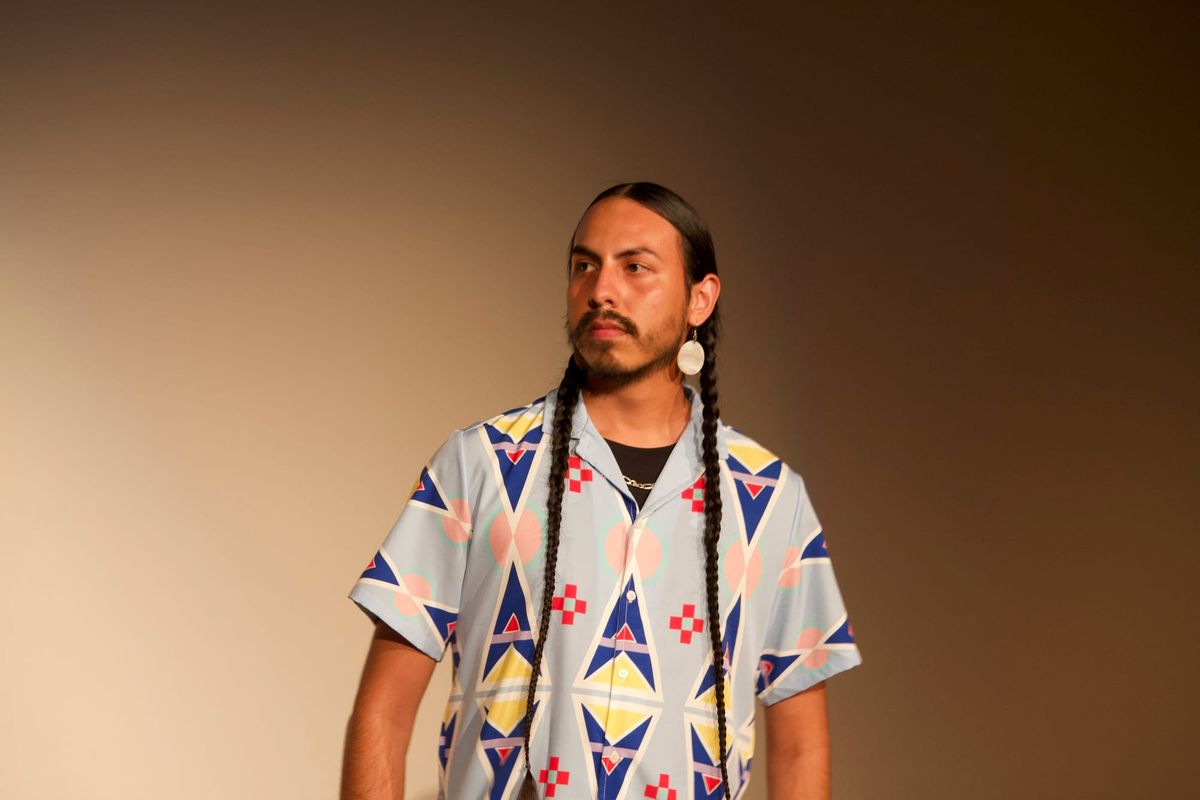
This week the Museum of the Rockies (MOR) celebrated Indigenous People’s Day by hosting an Indigenous fashion show featuring internationally-recognized fashion designers Rebekah Jarvey and Angela Howe. For an event held at 7 p.m., on a Monday, the venue was filled and the cheers were loud — the audience was captivated as soon as the first look stepped onto the runway.
This event marks the MOR’s first foray into the world of fashion shows, paired with the opening of the new “Getting Dressed” exhibit which features a selection of contemporary Indigenous fashion pieces. The stage and stairs of MOR’s Hager Auditorium became a runway for a cast of MSU students, community members and museum staff.
The pieces were a blend of traditional patterns, colors and contemporary forms. Howe’s process included first handmaking the full beadwork dress before transferring those designs onto clothes as prints. “We’re designing contemporary,” she said.
Howe’s collection “Creating the Future” was on display, which included outfits and styles for younger generations. “We're still honoring our past. We're still doing things like beadwork and artwork that links us to our ancestors, but still moving into the future.”
Both designers' work were contemporary in form: blazers, sweaters, T-shirts, earrings, purses, two couture dresses and even a few items worthy of a night out at the bars. One notable piece of Howe’s titled “Star in the Sky” featured bold, geometric patterns paired with a cropped long-sleeve top and flowing midi skirt.
After the show, attendees filed into the new exhibit to meet the designers and purchase items they had available. As the night came to a close and the crowd thinned, Howe explained the significance of the display and the novelty of her own work.
She emphasized the relationship between three pieces in the exhibit: a traditional elk-tooth dress, a pantsuit by designer Bethany Yellowtail and her own gold dress.
"It's a modern dress, but I still incorporated the elk teeth and beadwork into the dress and my designs," she said. "So it's a way of honoring the past, but we're also doing these contemporary looks."
"It's about community — it's not about getting to New York Fashion Week, getting a supplier or being this big, big designer,” she said. “My greatest joy is just to see others being so happy and wearing my clothes, feeling that pride of wearing something that directly links them to their ancestors.”
Howe also emphasized that Indigenous fashion is not only for Native people, highlighting how the runway included models of all races.
"Everyone can honor Native Americans," she said. "It's not cultural appropriation because they're appreciating us and supporting a Native business rather than supporting a non-Native business using our designs to profit."
Howe said she likes communities to see their own members on the runway, and that bringing tribal members along "opens doors for them, too."
Rebekah Jarvey has done over a hundred international runway shows, including fashion weeks in Paris and New York. She spoke about how future generations would look back on herself and her work, believing that they could find pride and connection through what she’s created.
Jarvey said she sees her involvement in fashion as more than just a job. “Fashion is a symbol of intergenerational healing,” she said in her opening speech. “One whole race of people was almost wiped out. When we go on those international stages, it's to show our presence. Our presence alone is showing them they didn't wipe out our race, we're still here. So my grandkids and my great-grandkids, they will have that form of healing.”
Audience member Catey Lockhart, a volunteer at MOR, said the show felt like reading a book by a Native author. When she reads, she said, "I often am able to predict the end, because I've seen it before, but then I read a book by a Native American author, and I can't predict what it's going to do, because I'm not used to that storytelling style." She said the show offered something similar: "not knowing how the story is going to go, and being surprised every time."
"We're on Native land," Lockhart added, saying attending events like this one means showing up "not just for really, really dire stuff, but let's show up for the little stuff, too."
Jarvey's message for Montana, she said, is “we're still here. And this is what we're doing. And it's pretty cool. Come check it out."
For an event placed in a museum, nothing about the fashion show was antiquated. The pieces presented and the dialogue they sparked among the crowd echoed sentiments that carried long-standing histories into the present with the ambition to push the envelope of the future.
To learn more about the Getting Dressed exhibit, visit museumoftherockies.org.
Comments ()