
The National Organization for Women Montana Chapter invite students to join their organization
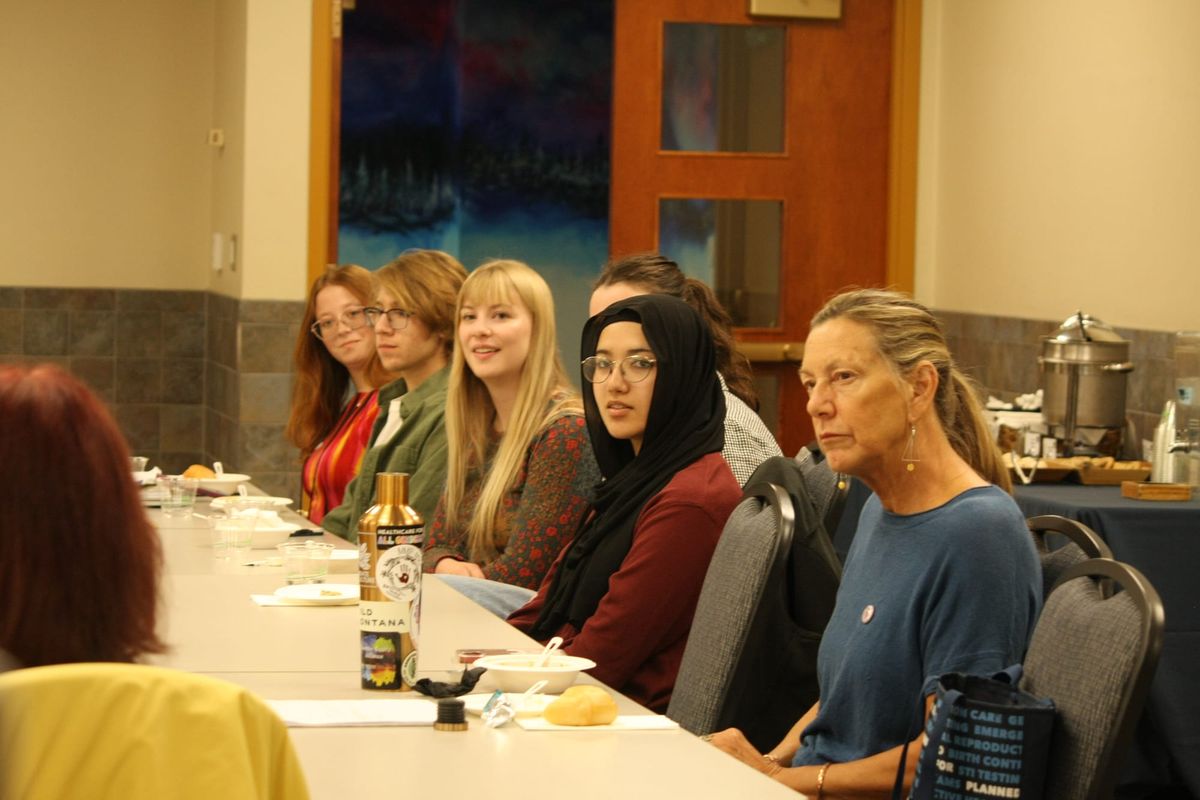
Montana’s chapter of the National Organization for Women (NOW) held an informative, discussion-based luncheon on Sept. 29 in the Strand Union Building, hosted by the MSU Women's Center and Student Advocates for Reproductive Rights (SARR) at MSU.
NOW was founded in 1966, and has been advocating for women in education and litigation ever since. According to NOW’s website: “NOW's purpose is to take action through intersectional grassroots activism to promote feminist ideals, lead societal change, eliminate discrimination and achieve and protect the equal rights of all women and girls in all aspects of social, political and economic life.”
The organization strives to bring awareness to young adults, in hopes students engage and promote gender equality.
Veteran political organizer and national NOW President Kim Villanueva led the conversation at the luncheon, discussing call-to-action possibilities regarding women's safety and rights on campus. She was accompanied by Jan Strount, Montana's NOW chapter president and Betsy Danforth, MSU’s Women’s Center director.
This panel was the first of four set up in Montana to bring awareness to NOW's programs, petitions and the organization's goals. Further, conversations at the panel focused largely on issues in Bozeman.
During the panel, some attendees mentioned they were concerned with the closure of MSU’s VOICE Center — which merged with the Office of Institutional Equity in 2024 to create Campus Civil Rights. Faculty members at the panel agreed the VOICE Center was a necessity to MSU campus and needs to be rehabilitated in some way.
“I think we all know people who know people, or have heard scenarios [from] when we were in the dorms of things happening. And it just feels like students — unfortunately, for whatever reason — don't feel like there's many places to go to after that,” said Siena Quesada, a junior representing the Women’s Center. “Or there's even people that just don't want to report, which totally makes sense because it's such a personal issue.”
Additionally, the participants discussed the recent news out of Cornell University — regarding the seven Chi Phi fraternity members accused of the alleged October 2024 drugging and gang rape of a female student, according to Time Magazine — and fraternity culture here in Bozeman.
“We all see that there's lots of toxic masculinity coming from these frats. We heard girls at the luncheon saying they don't like to walk down frat-row in the middle of the day. Why do we feel like we always have to be threatened everywhere we go?” Quesada said. “I'm not saying we can't have parties, but I just wish that people actually cared about each other and cared about safety and about what is going on under their roof.”
In this vein, the panelists also spoke about the red zone, which poses a significant threat to MSU students, and is a point of concern for the Women's Center and Montana NOW.
“The biggest argument from the frats is, ‘Oh, well, that's not people who are in our frat.’ Even if it's not people in their frat, it's still frustrating because it's men they're allowing to come in the doors,” Quesada said. “Most frats, you have to scan your cat card or prove you're a student. So either way, it’s obviously still students at the University.”
According to the Exponent’s Oct. 1 article on the red zone, the first six weeks of the fall semester is a dangerous time period where sexual violence reports spike.
Quesada said there is difficulty in drawing a line between MSU rules and intervention and fraternities' actions. Panelists found that questions of how much jurisdiction the University has over these organizations were left unresolved.
Despite the difficult conversations, attendees were curious to learn how they can get involved with NOW. However, many students are working full-time jobs while getting their degrees, so finding time to volunteer for organizations such as MSU’s Women’s Center or NOW can be difficult. To combat this, these organizations have launched programs to make being a part of movements more accessible to all walks of life.
“With our social media and with technology, we have a variety of ways for folks to get involved, which can include a political action team that we have,” Strount said. “We look at different policy issues, we endorse candidates, we help get out the vote and we're doing voter protection. We can do a lot of that online — if that makes it helpful for students.”
In addition, NOW has a Young Feminist program (NOWYF), dedicated to connecting undergraduate students, post-graduate students and young professionals. Opportunities as a NOWYF allow young adults to get involved in activism and organizing in their community, as well as joining networks and chapters.
For more information, visit NOW’s website https://now.org/.
Comments ()