
What happens to utility bills when data centers come to town?
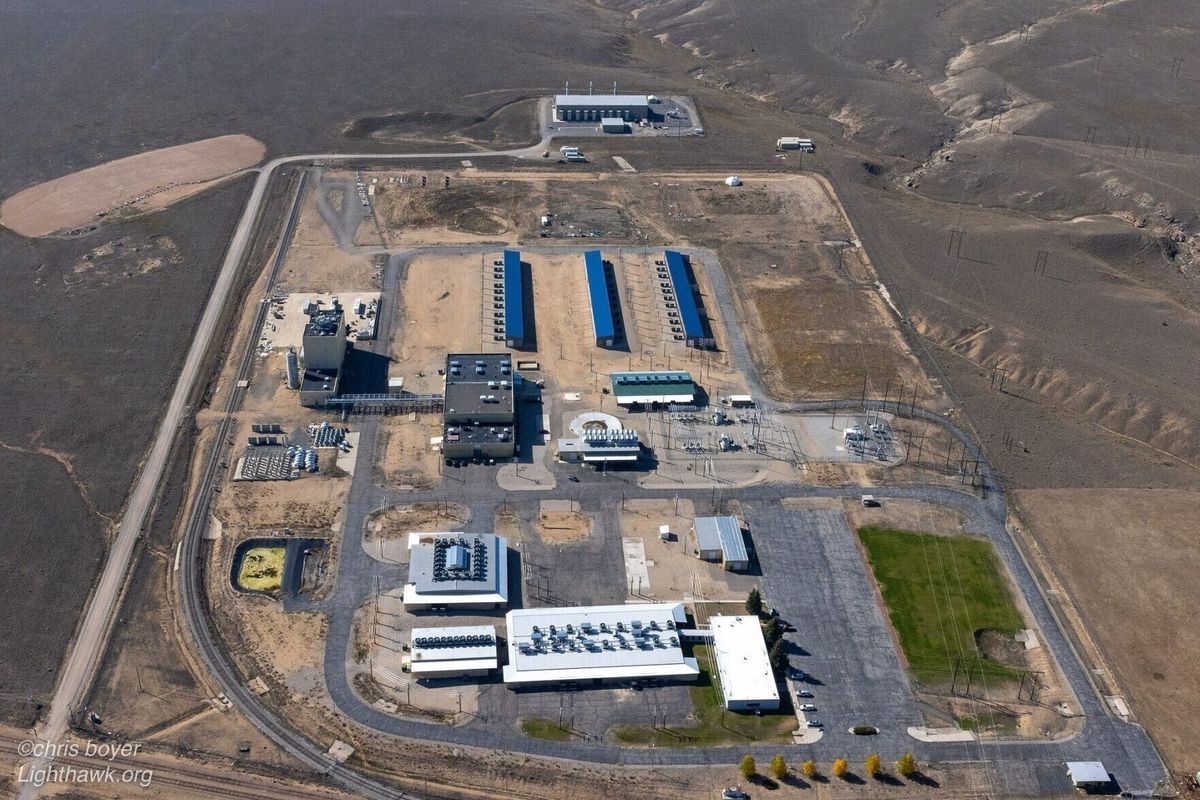
In the last 18 months, NorthWestern Energy has inked agreements with at least three data centers eager to set up shop in Montana. And as of February, at least 11 companies had shown interest in funneling electricity generated or transmitted by NorthWestern into data centers, microchip-stuffed warehouses that fuel artificial intelligence, cloud storage and cryptocurrency operations.
Shareholders for Montana’s largest utility welcome these partnerships because they’ll give NorthWestern what’s been described as a “once in a generation” opportunity to grow its revenue stream. But utility watchdogs and consumer advocates caution that the 413,000 Montanans NorthWestern already serves — many of whom are still reeling from recent rate hikes — might have to foot the bill for the power plants, substations and transmission lines necessary to serve these massive new data centers.
Those concerns have spilled over into the Public Service Commission’s hearing room in Helena, and surfaced at packed town hall-style meetings from Broadview to Great Falls. A coalition of consumer advocates wary of higher power bills and environmental groups leery of fossil fuel development are pushing the state’s all-Republican utility board to bring more transparency and scrutiny to the process.
In a November 2025 filing before the PSC, the coalition argued that NorthWestern has “short-circuited” the public’s right to know and that Montanans stand to get burned by the deals NorthWestern is executing in secret.
However, the Treasure State isn’t unique in dealing with these challenges.
To better understand how these tensions have played out in other states where data center development is already well underway, Montana Free Press spoke with Ari Peskoe, the director of the Electricity Law Initiative at Harvard.
Peskoe explored this issue in a March 2025 paper he co-authored titled “Extracting Profits from the Public: How Utility Ratepayers Are Paying for Big Tech’s Power.” The following Q&A has been edited for brevity and clarity.
MTFP: You’ve written about the risk that utilities are “socializing” Big Tech’s data center investments by raising electricity bills for American consumers. How does that work?
PESKOE: Utilities profit by building infrastructure: Power plants and power lines. This new generation of data centers can consume as much energy as a large city, and generating and delivering that power requires a lot of new infrastructure. A utility needs to recruit just one or two of these new customers to justify spending billions of dollars, and earning a tidy profit from it.
MTFP: How does a utility’s existing customer base help the utility earn that profit?
PESKOE: The utility business model was built more than 100 years ago, and the goal was to expand electricity service. Regulators decided they would give utilities monopolies, and to prevent them from exploiting consumers, the regulators would set the prices that utilities could charge.
The prices regulators set are designed to motivate investment for growth. They allow utilities to recover the costs of operating the system and provide a profit for building new infrastructure to expand it. That’s the basic business model.
I’m concerned that the model is being used against consumers today because utilities are expanding their system to serve a handful of big companies — Google or Meta, for example — but the traditional model is to charge everyone for the new infrastructure.
MTFP: Can you talk about the role of utility regulators like the Montana Public Service Commission?
PESKOE: The challenge for regulators is to isolate the costs a utility is spending to build new infrastructure to power data centers so data centers are paying for that new infrastructure.
The traditional utility model was designed to spread the cost of service to everyone based on the idea that growth means economic development and population growth — the hallmarks of Western civilization. But here it means growth for some of the wealthiest corporations in the world.
MTFP: Utility watchdogs often talk about the risks associated with ‘stranded assets,’ or expensive infrastructure that doesn’t earn back the money the utility spent building or buying it. Can you describe how the stranded asset risk features in the data center conversation?
PESKOE: There’s a lot of uncertainty around data center development. There’s been this boom in growth driven in part by AI. But no one knows how much computing power society is going to demand five, 10, 15 years from now, or what the business model is for AI deployment.
The concern is that utilities spend billions of dollars on new power infrastructure for these data centers and those data centers go out of business, or never operate at all. That’s an issue if utilities try to recover the costs of that infrastructure from the public and there’s no data center to pick up even a share of those costs.
MTFP: Montana’s largest utility, NorthWestern Energy, has established a subsidiary company in order to sell power directly to new customers. What are the benefits and risks of using an entity outside a utility’s regulated business to serve power-hungry new customers?
PESKOE: The potential benefit is that you can isolate the costs associated with serving the data center. The utility has the unique ability to spread costs to everyone. If, by contrast, there’s a private contract between the data center and a private developer — even if it’s a spinoff of the utility — then there ought not to be a way to spread those costs to everyone.
But if there’s a utility spinoff company, there’s a possibility that it’s being subsidized by the utility — and therefore subsidized by everyone. Regulators have to be very careful to make sure that that spinoff is fenced off from the rest of the utility’s operations and finances.
MTFP: The word “transparency” comes up in these conversations, too. Utility watchdogs want to see the contracts between the utility and its data center customers. How have you seen that play out in national conversations?
PESKOE: Generally, these agreements are confidential, or at least the key pricing terms are confidential.
One move that we’ve seen over the past year is a shift from one-off contracts between data centers and utilities to more standardized terms and conditions. At least the public can have a say in what those standard terms and conditions are.
Precise dollar figures may still be hidden, but some of the big issues about, for example, who bears the risk of these infrastructure investments may be more transparent if they’re standardized across agreements.
MTFP: As you’ve mentioned, the monopoly utility regulation model wasn’t designed to accommodate this class of new customers. Do you think utility regulators and their staff are equipped to take consumer concerns into account in this new landscape?
PESKOE: Data centers raise a lot of issues that regulators aren’t familiar with. Regulators have the tools to protect consumers. That said, there can be some unique political pressures around data centers.
I don’t know if this is the case in Montana, but in some states, there are extensive efforts by state government to attract new data center investment with economic development incentives, tax credits and other packages. Some of these investments are announced by the governor with great fanfare about how this is going to be beneficial to the state. So there may be pressure on regulators to approve this project that has this type of political support.
MTFP: You’ve argued in talks you’ve given that large-load tariffs can protect utility customers. How do they work?
PESKOE: A common feature of these large-load tariffs is that they establish standard terms and conditions for new data center customers. The key protection ratepayers get is limited risk from stranded assets. Typically, the new data center will have to sign a long-term deal, often between 10 and 15 years. That will guarantee some stream of payments to the utility regardless of whether that data center ever operates.
That should give consumers some protection from the possibility that the utility spends a lot of money and the data center doesn’t end up paying the utility to help cover the costs of those investments.
The details vary, including how much the data center is required to pay, but at least there’s some protection from this stranded asset risk.
MTFP: Is there anything else you’ve encountered in your research worth highlighting? Is there anything about this arena that’s underappreciated?
PESKOE: I would add that if the deal is structured the right way, large loads like data centers can put downward pressure on rates. But if they’re structured incorrectly, they can raise rates for everyone. The details matter here. It’s important to have strong oversight of these deals.


Comments ()