
Wood carvings to digital photos: How visual media has changed in Butte newspapers over time
News today rarely reaches our audiences without accompanying images, not only as an interesting addition to print journalism, but as a journalistic force in its own right.
Photojournalism, at its finest, aims to inform and educate the public with images that capture events, issues and stories as they unfold. Photojournalists have a responsibility to provide an accurate and unbiased representation of events.
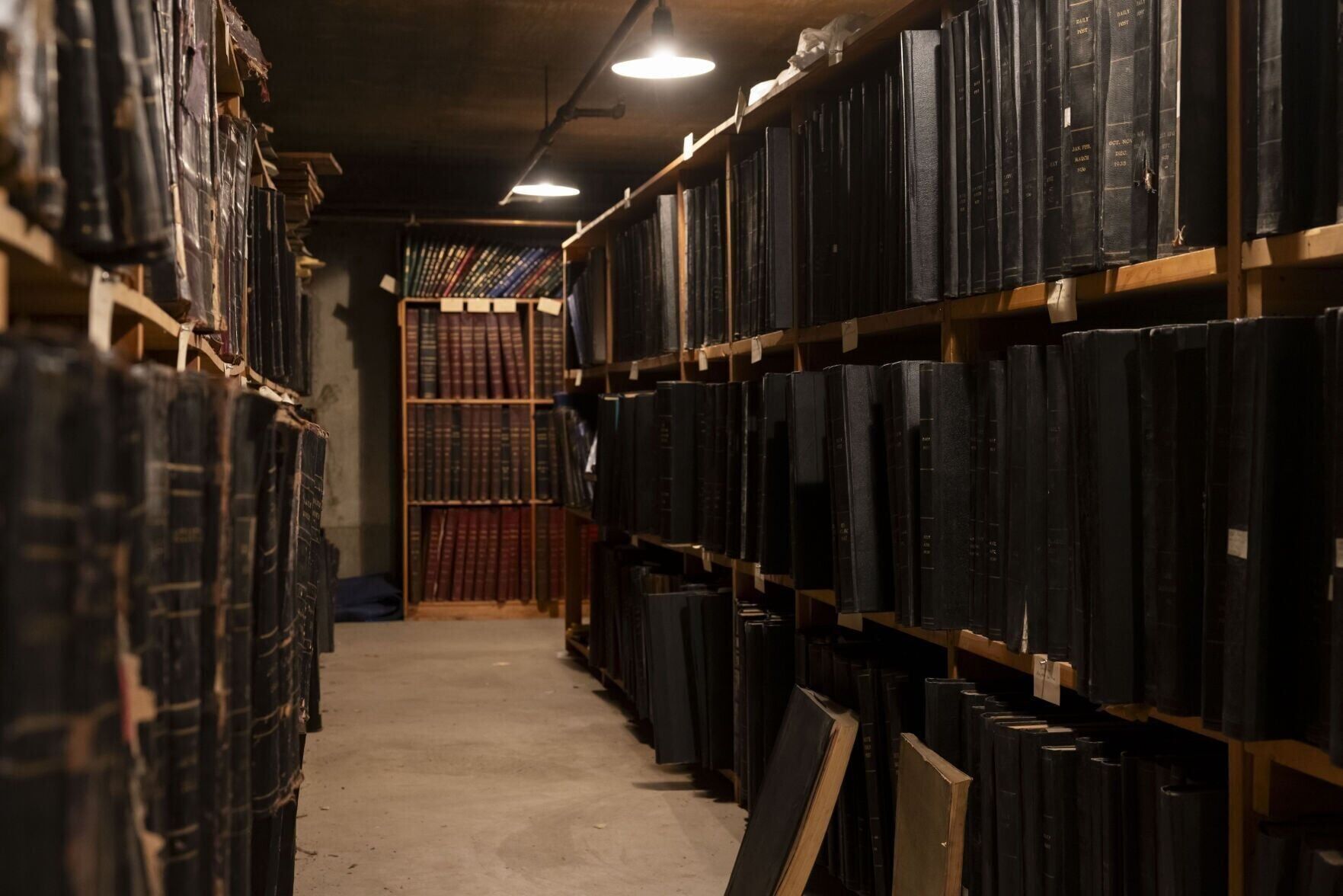
As The Montana Standard reflects on 150 years of newspapers in Butte, we did an examination on how the use of visuals in those newspapers has evolved over the years.
While visual storytelling looks different today than it did in the early days of newspapers, visuals have long played an important role in attracting readers' attention and deepening storytelling.
Photojournalists today abide by a code of ethics to publish images that document reality, while earlier artwork published in newspapers served more as a visual representation versus documentation.
A photographer or artist in the late 19th century may have been sent to a scene to bring back photographs or sketches. An engraver would then carve an illustration into a block of wood, often creating a composite of multiple moments and views.
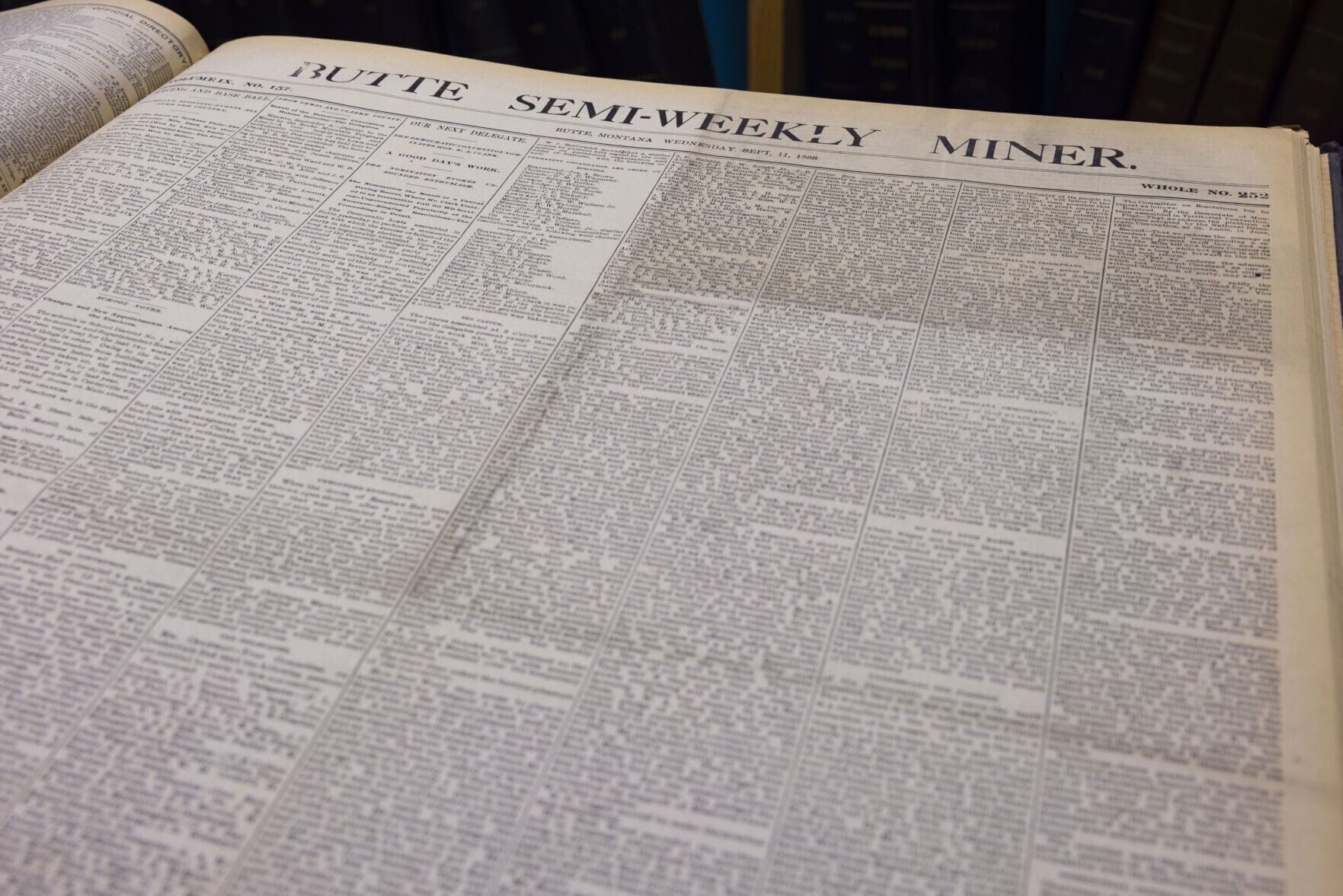
Early issues of The Butte Miner, first published in 1876, were extremely text heavy, including front pages that often displayed an array of headlines and stories with little to no art.
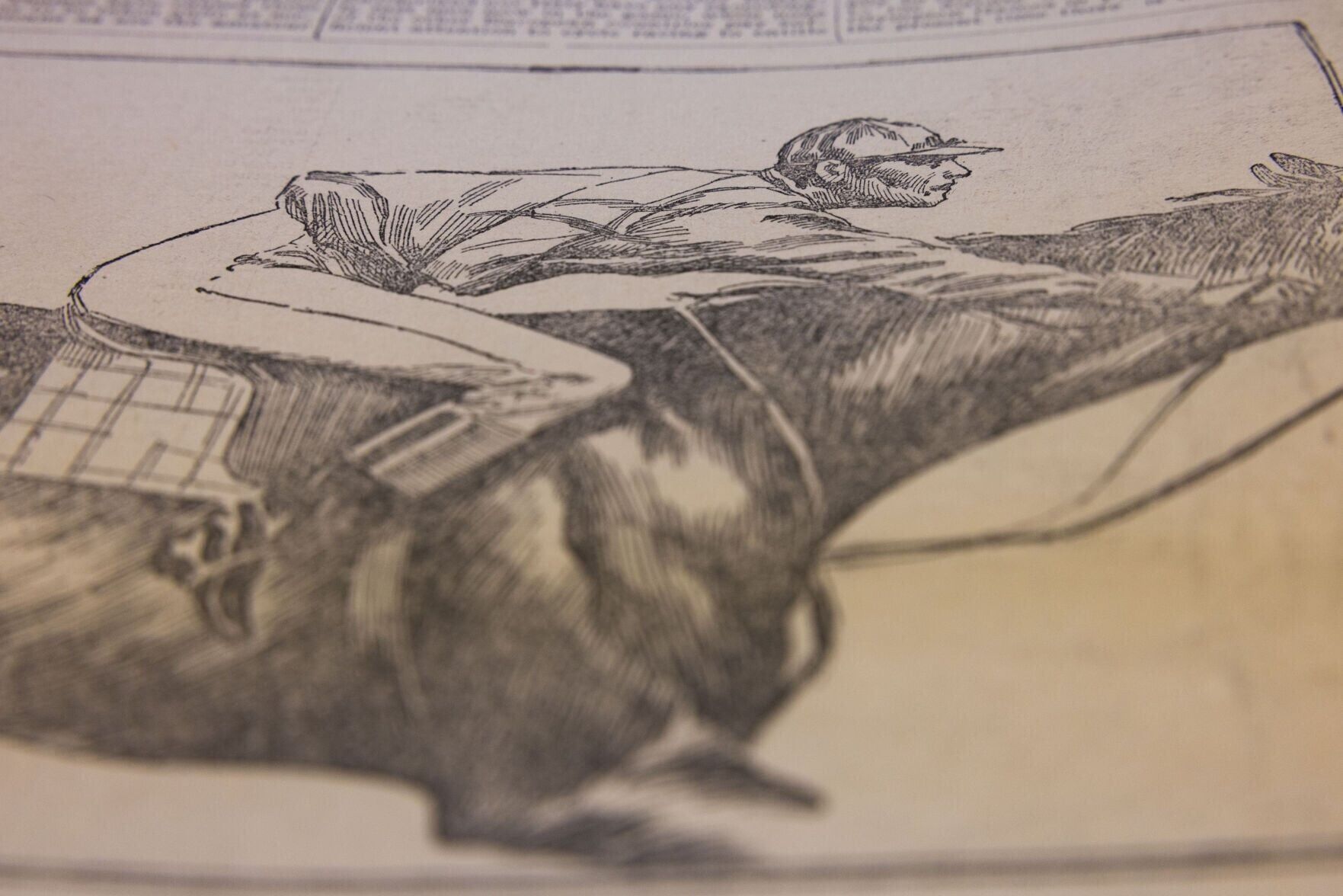
The first illustrations published in The Montana Standard’s predecessors were created with wood engravings, an artform that was central to newspapers at the time and their development as a visual mass medium.
Wood engravings allowed for fine lines and detailed imagery to be reproduced inexpensively for the masses. The engravings could withstand hundreds of thousands of impressions in a press.
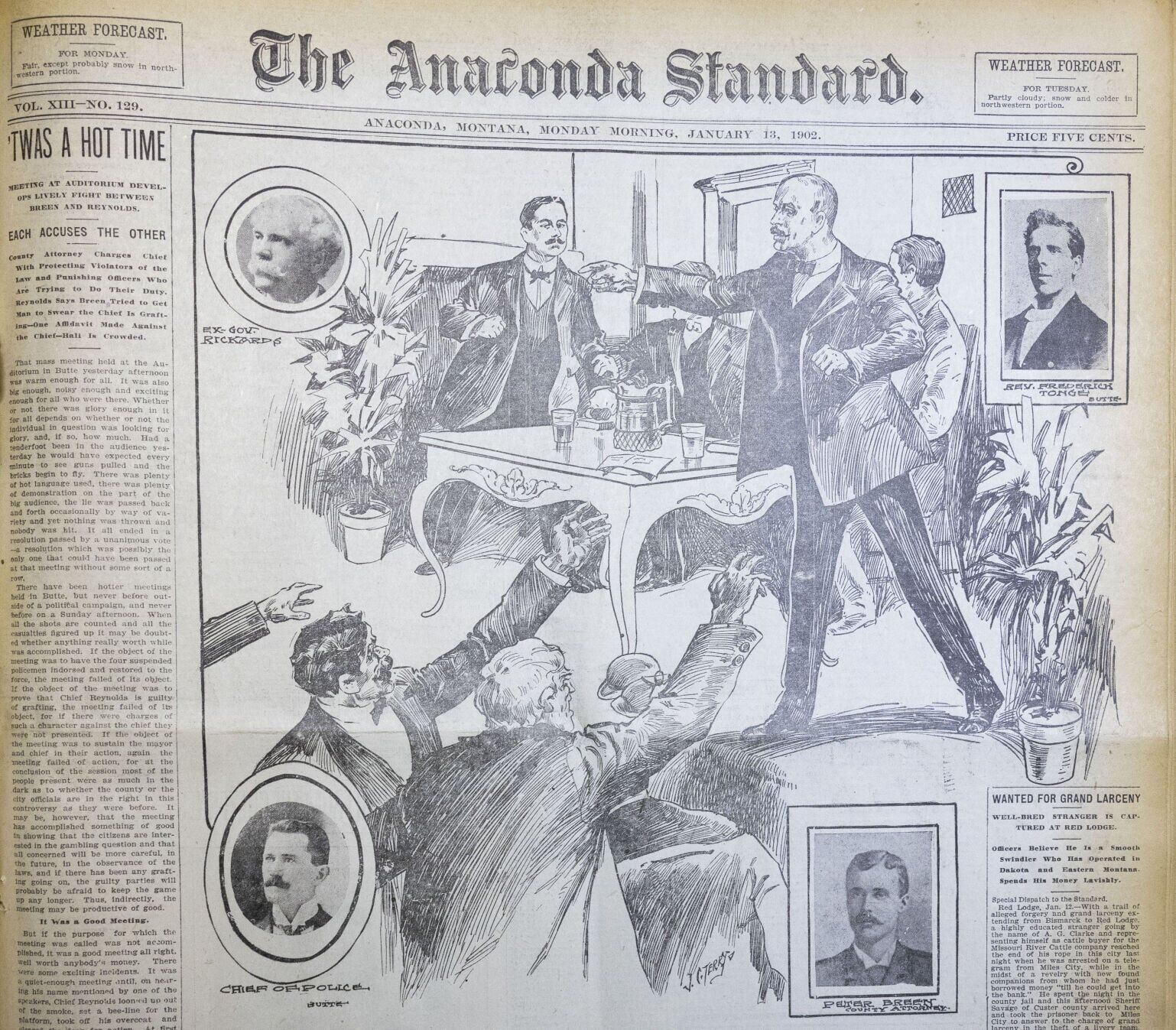
By 1900, Butte’s newspapers featured larger, more-detailed wood engravings accompanying national and international news stories, likely printed from printing plates sent from other newspapers.
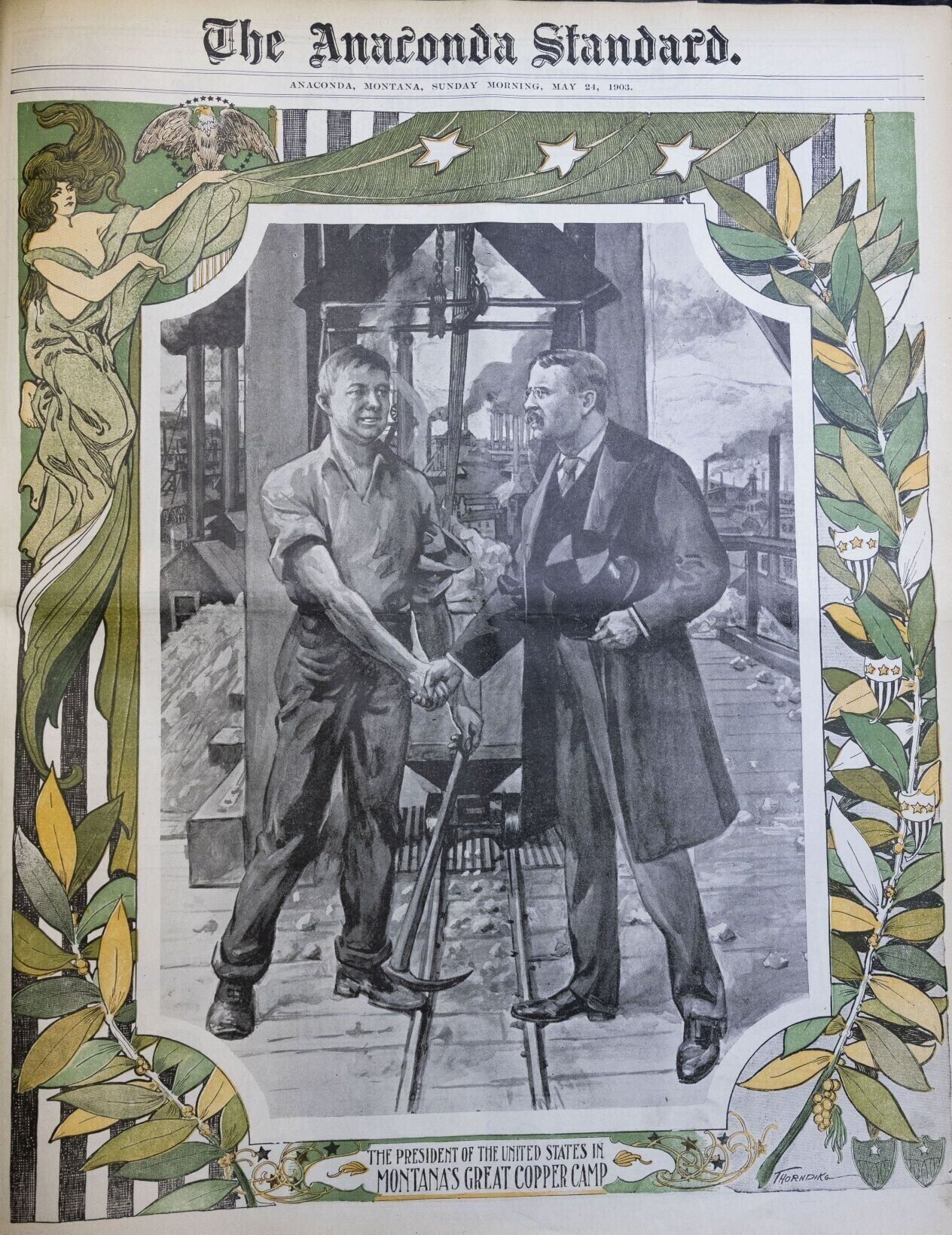
A few years later, both The Butte Miner and The Anaconda Standard were running full-page color illustrations for special issues, such as holidays and President Theodore Roosevelt's visit to Butte.
Competition between papers, owned by rival Copper Kings W.A. Clark and Marcus Daly, likely fueled decisions to invest in artwork.
The Anaconda Standard stood out among Butte newspapers. Staff artists including John W. Trowbridge, Willis Hale Thorndike and Rudolph Leppert made names for themselves sketching images of world events and capturing scenes of everyday life in the Butte area.
When the halftone — a technique that allowed photographs to be reproduced on a printing press through the use of small dots — had mostly replaced wood engraving in 1894, the Butte Miner ran an article from the Boston Advertiser interviewing H.E. Sylvester, a talented engraver about-to-turn restaurant proprietor.
“Well, of course, the direct product of brain and hand is superior to mechanical process,” Sylvester said of wood engraving in comparison to printing photographs.
“[The halftone] does not allow the direct impact of the mind of the artist upon the mind of the observer that makes the charm of art,” he said.
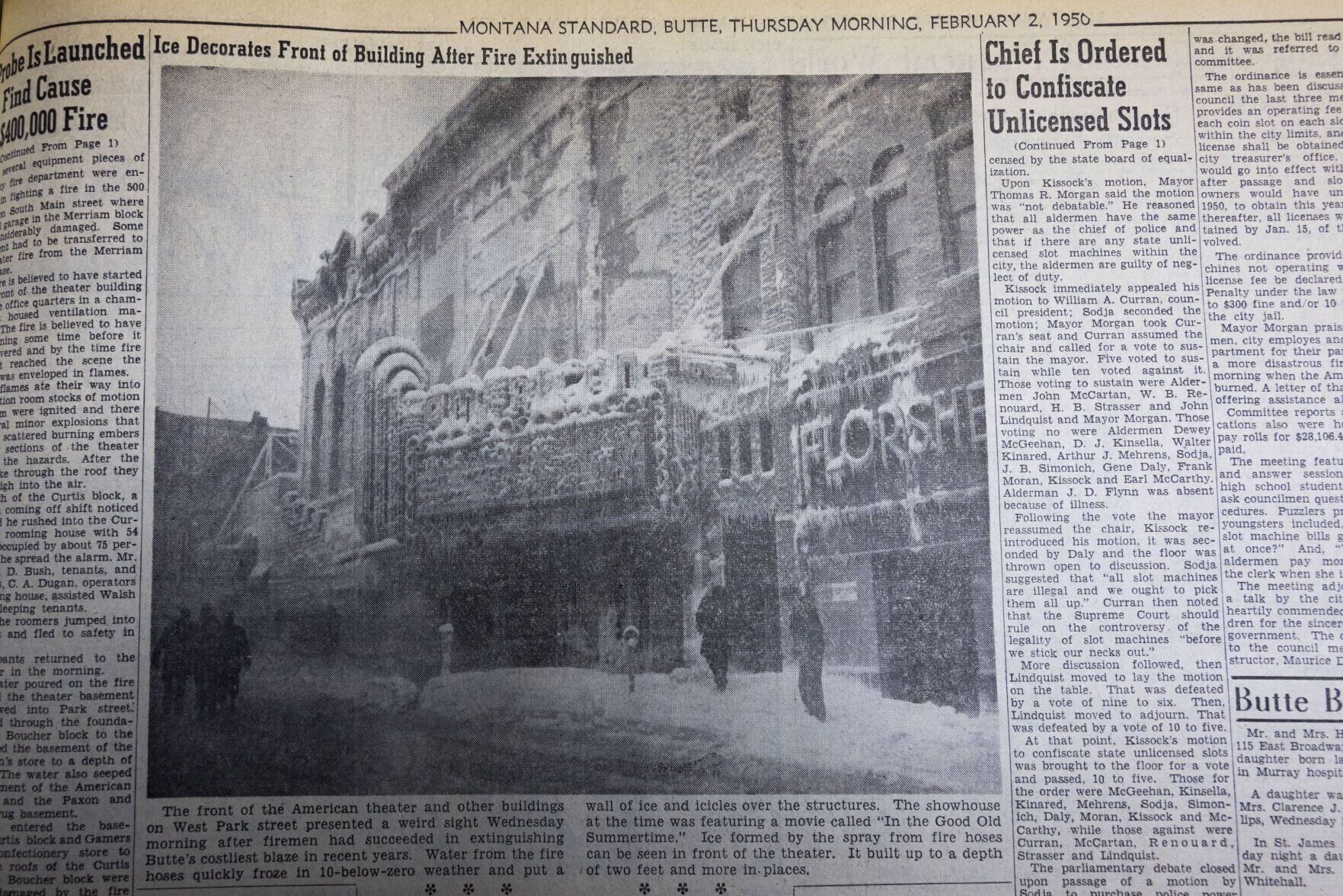
As technology continued to advance, photographs became more and more prevalent in Butte newspapers. Photographs of prominent local figures and larger local events ran in the papers, though the majority of photographs continued to come from national and international news coverage.
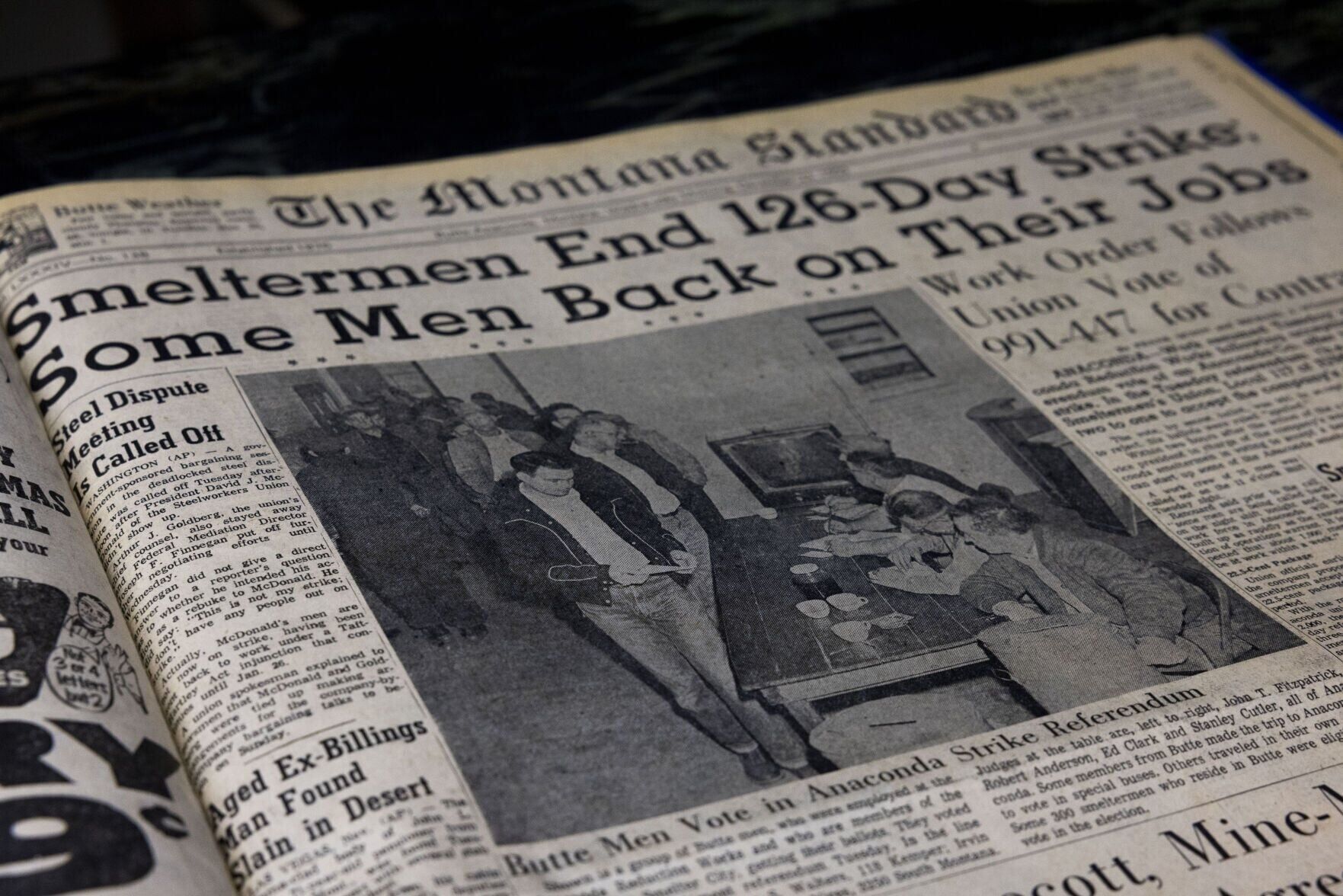
By the 1950s, The Montana Standard, which was introduced in 1928 as the consolidated form of The Butte Miner and The Anaconda Standard, began crediting its staff photographers and had an increasing visual presence for local reporting.
Photojournalists photographed visiting politicians, sports, fires and community events — a similar variety to what photographers cover at The Montana Standard today.
The introduction of computers, graphic design software and digital cameras in the late 20th century revolutionized newspaper visuals. Digital tools have allowed for faster and more versatile creation of visuals, and have been part of many newspapers' shift toward an online presence.
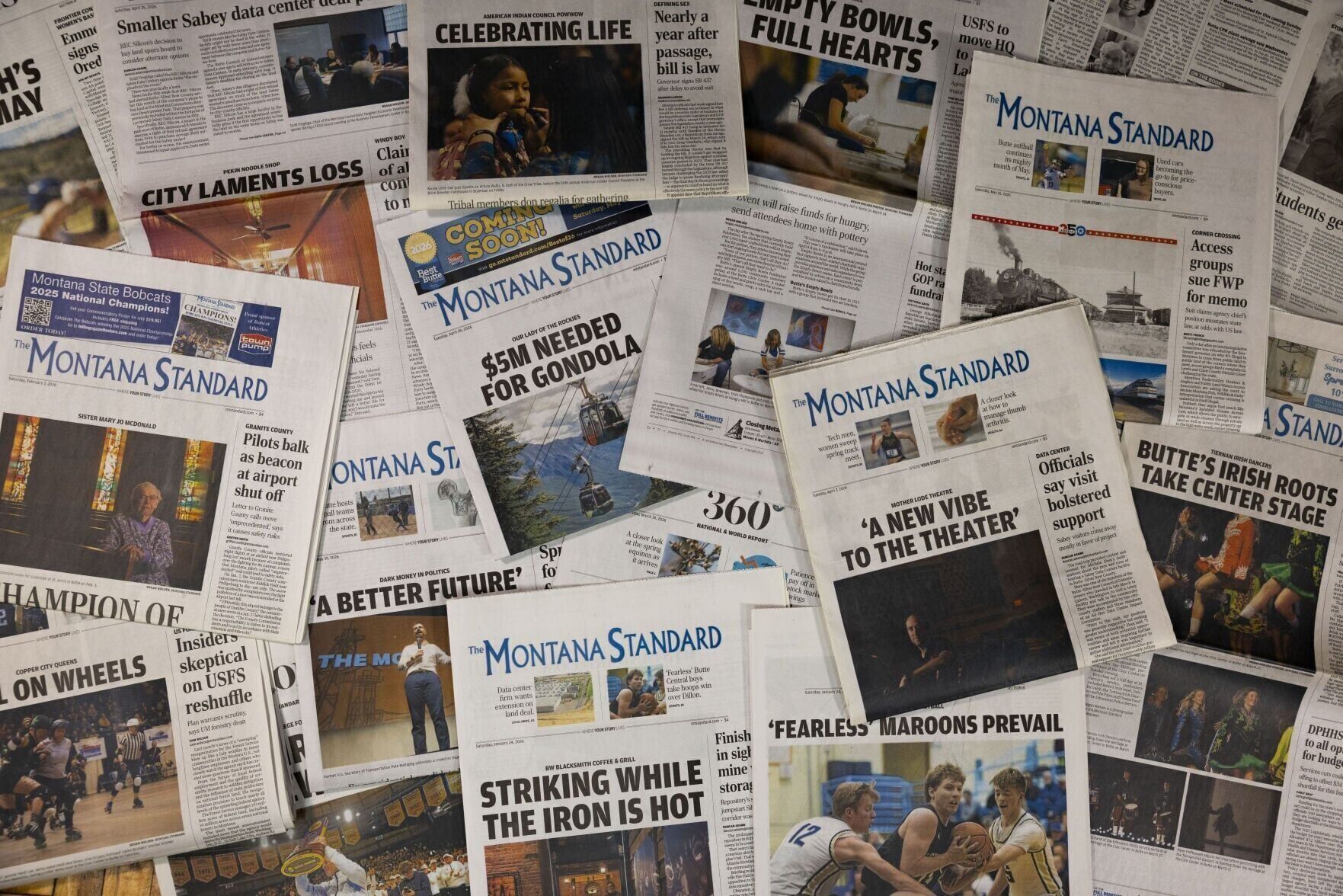
Most newspapers now have a digital-first approach to sharing news and engaging audiences. This strategy has influenced the way reporters and visual journalists at The Standard approach their jobs. Now, with three print editions a week — Tuesday, Thursday and Saturday — journalists aim to get accurate information out to their audiences online as quickly as possible.
In a news environment not limited by print space, visuals-led journalism has been able to flourish. In recent years, The Montana Standard's photographers have embarked to document Butte and the surrounding areas, capturing moments big and small.
One such photo essay by former Montana Standard photographer Joseph Scheller documented Wayne and Lynee Roberts’ journey with dementia, capturing the couple’s highs, lows and their final goodbyes in 2024.
While in different forms, art has helped illustrate the news to Butte’s audiences throughout the paper’s history.
In a time where AI-generated media runs rampant and the volume of content online makes it harder to distinguish credible journalism, the quest to share the truth through our lenses endures.



Comments ()