
Yellowstone Club developer’s new plan puts ‘soul of Flathead Lake’ at stake, locals say
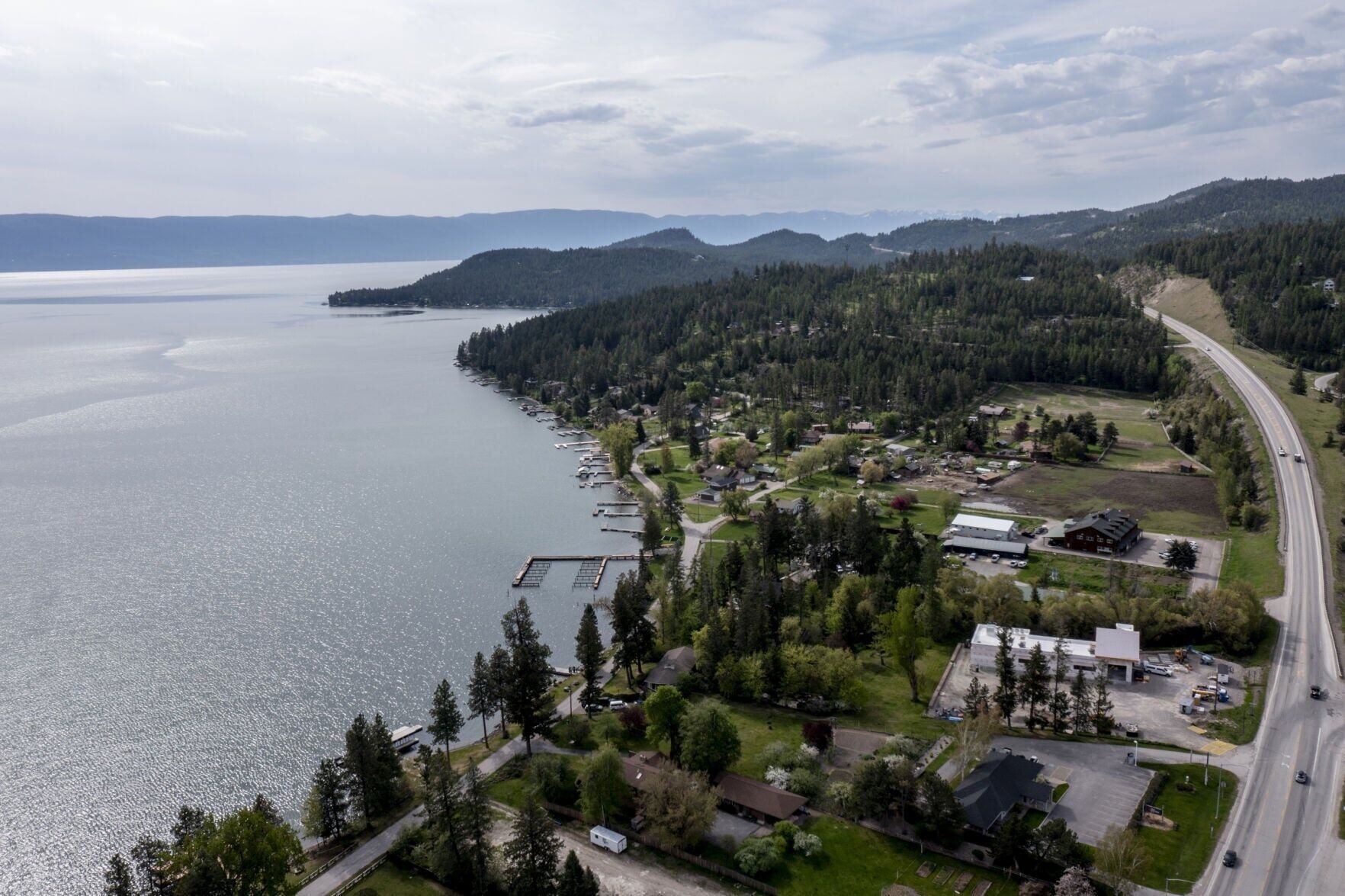
LAKESIDE — Call it a “Tale of Two Docks.”
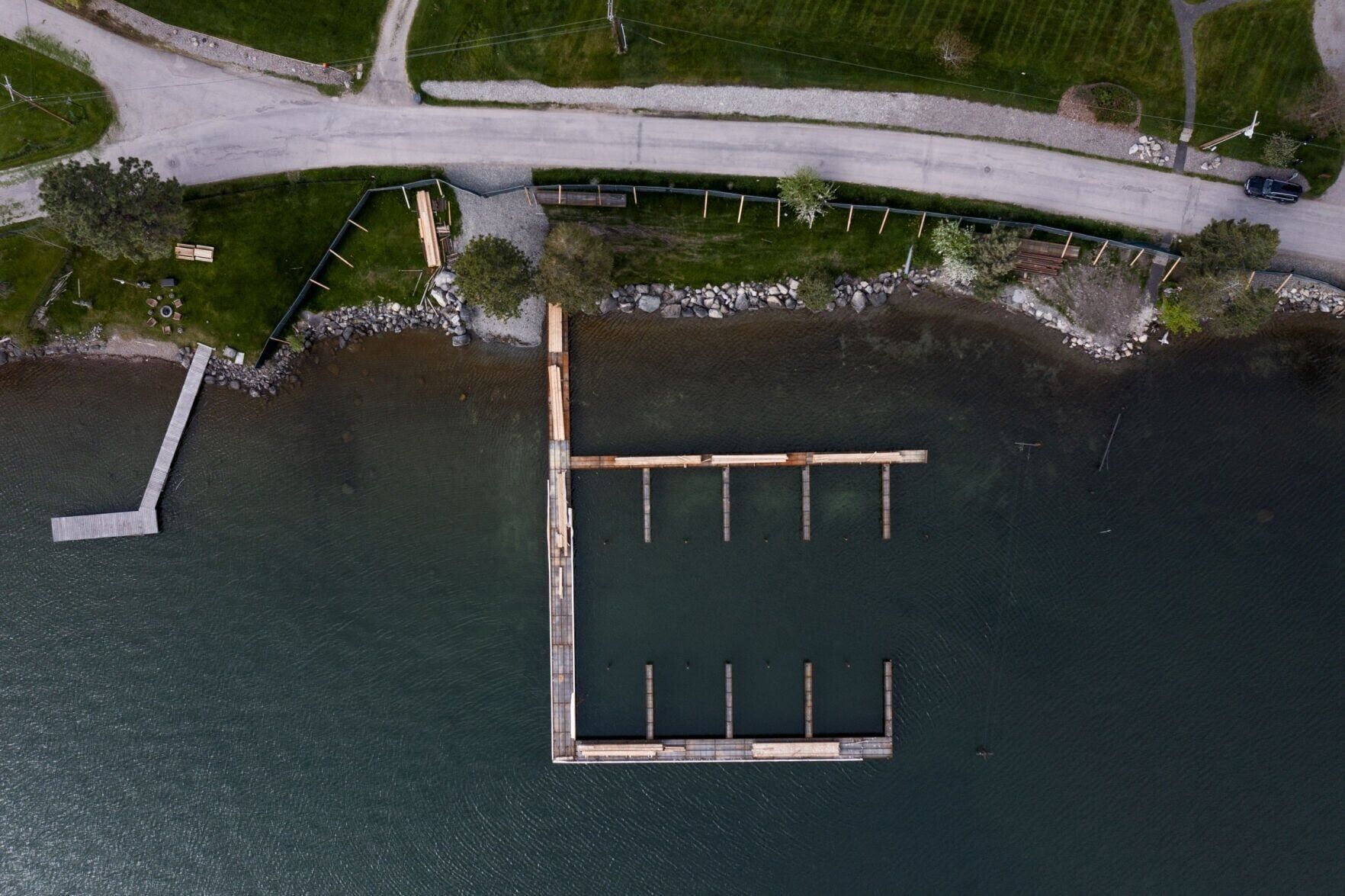
Built beside each other, they both extend into the clear, cold water of Flathead Lake from the shore of this idyllic community — but they tell entirely different stories.
One is about what this town has been.
The other is about where it is going.
One was crafted by Hugh Hockaday, late member of a legendary local family that produced cherries, paintings and other tangible things for the local community for over a century.
The other is being built by Discovery Land Co., which develops private and often controversial luxury communities, including the Yellowstone Club and Crazy Mountain Ranch, all over the state and globe.
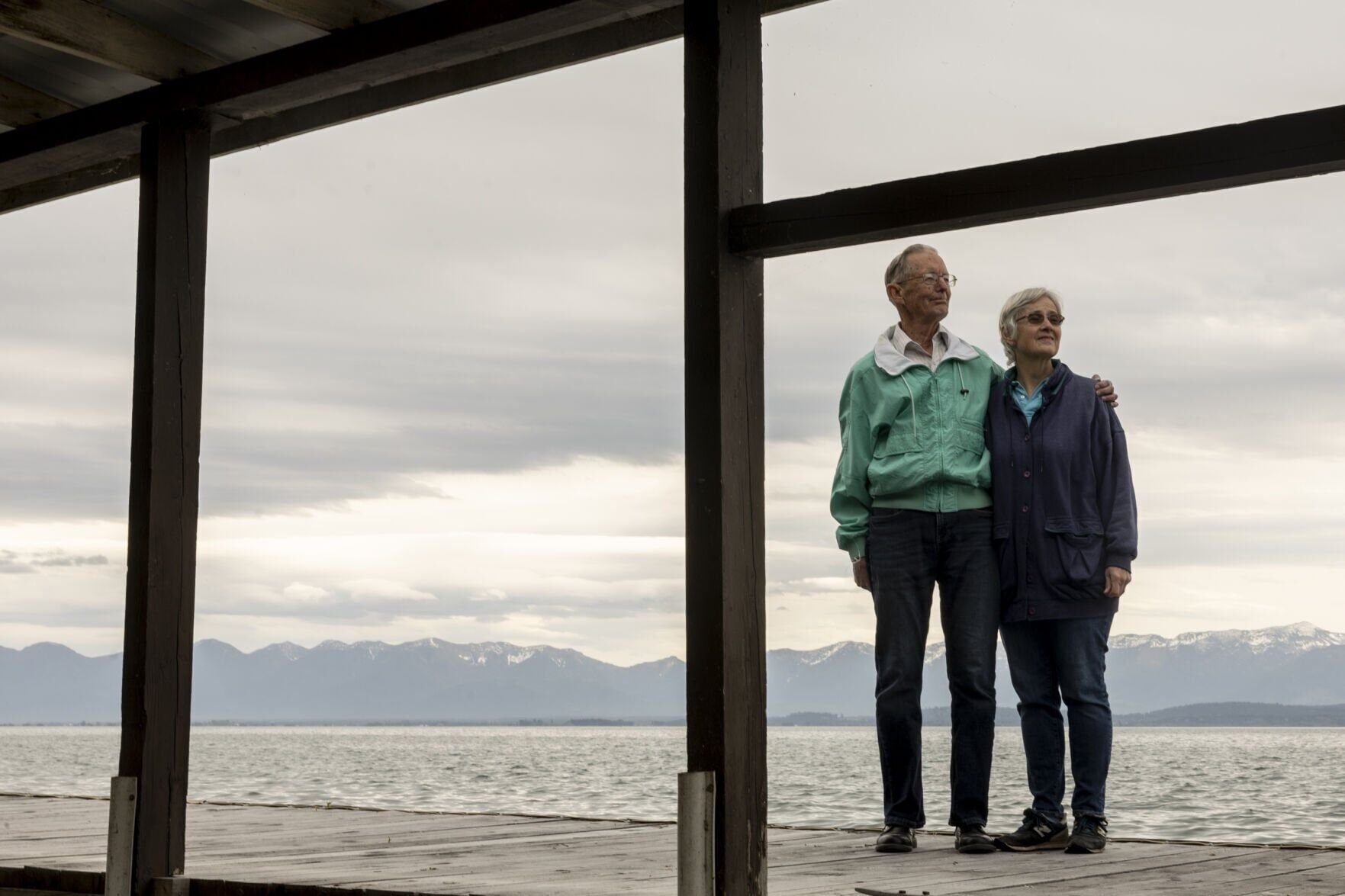
On a recent morning, a group of Lakeside residents gathered on the hand-built Hockaday dock to discuss their deep concerns about what Discovery is doing in their town — and their commitment to try to rein it in.
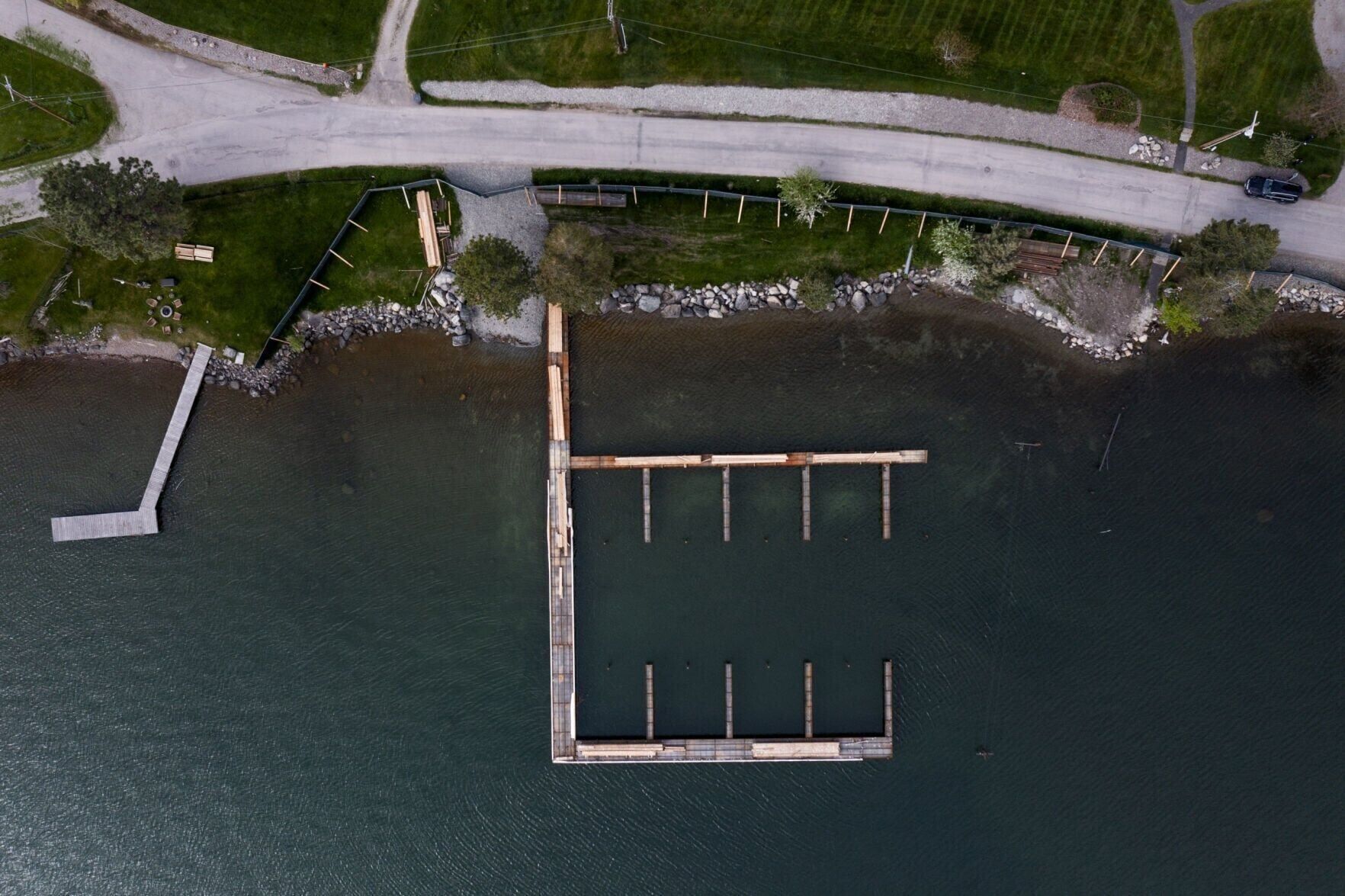
Discovery’s dock, on the other hand, was empty, unfinished, subject to a stop-work order and shrouded from view by a fence covered with green cloth.
The developer’s dock is just one piece of Discovery’s plan to construct a sprawling, piecemeal development known as Territory 1889 Golf and Lake Club.
Named after the year Montana stopped being a territory and became a state, the development appears to include three main elements: Marina 1889, which documents suggest will be linked to a lot and house across the street, at 688 Lakeside Boulevard; the Hockaday Lake Club, a private club that will occupy the former Hockaday orchard at the tip of a nearby peninsula called Angel Point; and Territory 1889, a 359-home development with a nine-hole golf course, an 18-hole golf course, 864 acres of open space and an array of restaurants, retail stores, offices and other amenities on a 1,700-acre parcel of hilly terrain located just west of Highway 93.
And not everyone sees Territory 1889 as something to resist. David Fetveit, for one, thinks his hometown has “hit the jackpot.”
A Lakeside native, local realtor and president of the Lakeside-Somers Chamber of Commerce, Fetveit argues Discovery’s latest project will bring tax revenue, jobs, growth and housing to a community that needs all three — and that the company will do so with minimal impact and a commitment to responsible development.
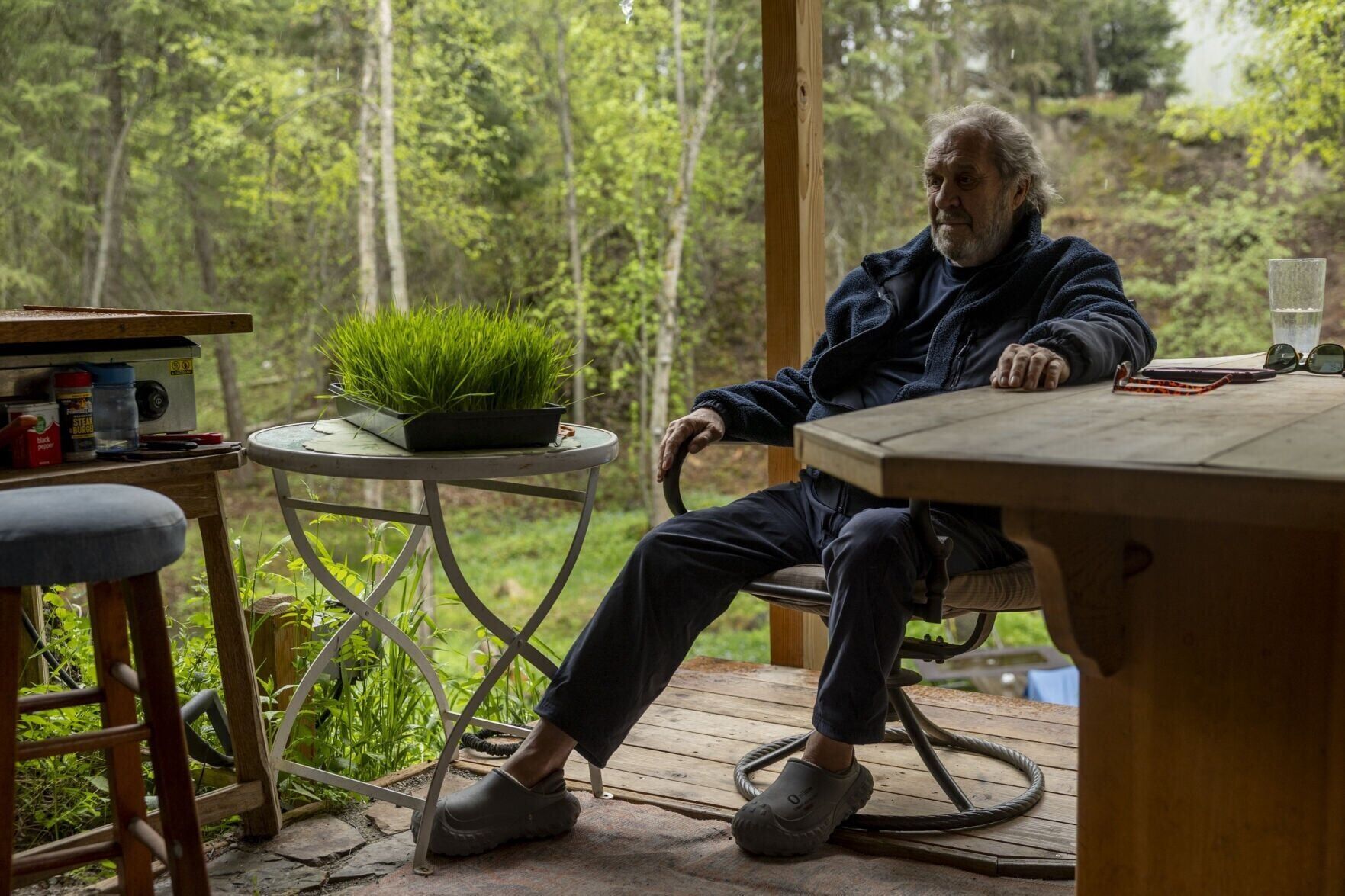
But for those gathered on the Hockaday dock, including Bruce Young, Territory 1889 represents something else: an existential threat, not just to Lakeside but to all of Flathead Lake.
Young, who has made a career in real estate and is a longtime advocate for the lake, argues Discovery’s plans threaten the environment, the culture and the future viability of the place where he has spent all 80 of his years alive.
To mitigate those perceived threats, he and others have put their support — and, in some cases, their money — behind Citizens for a Better Flathead, a nonprofit that has filed multiple lawsuits that could directly or indirectly affect the company’s plans for Territory 1889.
“Listen,” Young said, “the soul of Flathead Lake is being fought over right now.”
‘Vastly different’
Young and the others who have gathered in opposition to Discovery’s plans don’t have any illusions that the Flathead — and Lakeside, in particular — hasn’t grown and changed and won’t continue to do so.
Over the past decade, housing prices in Flathead County shot up by nearly 150%, from $255,000 in 2016 to $630,000 in 2026, according to the Northwest Montana Association of Realtors. In Lakeside, Census data show the median value of owner-occupied housing units in the town of about 2,400 residents was even higher — $720,100 — as of 2024.
And local critics of the project said they aren’t against development that meets the clear demand. But they don’t want that growth to come at the cost of the community they say they have tried to build and maintain, despite a rising tide of change.
To illustrate those efforts, Maggie Davis turned away from the Discovery dock and pointed north to another piece of Lakeside’s lakefront: Volunteer Park.
It didn’t exist until Davis and her husband spent millions buying various properties they then donated to the county to construct a public space that would enhance lake access for everyone.
“There weren't places for kids to come and people to get access to the water that didn't live here,” said Marcus Nichols, who owns the Hockaday dock where he and his neighbors were gathered. “So that just opened it up to a whole large number of people.”
Nichols, Davis, Young and others fear Territory 1889 will pull Lakeside in the opposite direction: toward even more exclusivity and privatization.
While the project has received extensive coverage in local media, they say a lack of transparency from the company has fueled rumors and fears that what’s known about Territory 1889 might only be the beginning of its plans in their town. Rumors have swirled, they said, that Discovery might be building a hotel or creating a members-only ski area, as at the Yellowstone Club.
“I think that some community members are concerned that they are coming in and buying up so much of Lakeside,” said Kate Droll. “And we have Blacktail Mountain (Ski Area), and I'm concerned they will eventually get their hands on that and make it private.”
In response to a question about that concern, a member of the Blacktail Mountain Team wrote, “At this time, Territory 1889 has not reached out to Blacktail Mountain Ski Area. We operate on 100% Public Land.”
Discovery Land Co. declined a request for an interview about the project and responded with a statement to a list of 20 emailed questions, including several about what other plans it has for Territory 1889. That statement read, in part, “Every aspect of this project is being designed with the environment and local community in mind — in Flathead County and across Montana.”
The company also said it expected “Territory 1889 will have a significant positive impact on the local economy” and that it is “committed to working closely and collaboratively with the local officials and the community.”
But Young and his fellow critics don’t see it that way.
“Discovery’s approach,” Young said, “is vastly different.”
‘Small peanut’
While Young views the dock as a relatively small piece of the larger Territory 1889 development, he said it typifies the problems with how Discovery has pursued the project and how the county has handled it.
Both parties, he said, have failed to create a public process that would allow the public to understand the full scope of the project, provide meaningful feedback and have their input truly heard.
In April 2025, an owner identified as Flathead Lake Land Partners LLC but with an address that’s the same as Discovery Land Co. sought to renew a different owner’s existing permit to "establish a commercial marina" that included "the construction of three new docks with a total of 36 slips” and a concrete boat launch.
On Jan. 5, Flathead Lake Land Partners filed for a minor variance on that initial application, seeking to build a 159-foot dock with an entirely different configuration with room for 17 slips.
A variance was needed because Flathead County Lake and Lakeshore Protection Regulations state “the maximum length of that portion of any dock extending over water shall be 100 feet.”
The developer argued that “the dock length extension is necessary to reach adequate water depth for safe vessel maneuvering and moorage,” documents state. And the county planning and zoning office found “the proposal meets the variance criteria due to site-specific physical constraints related to shallow water depth … .”
In February, Citizens for a Better Flathead filed a lawsuit over the variance, arguing that the county “violated clear statutory requirements to consult with the Planning Board and ensure meaningful public participation opportunities” both when it granted a marina permit in 2025 and when it approved the dock variance in February 2026.
“Further,” the lawsuit alleged, “both decisions reflect a blatant disregard of statutory and regulatory criteria, were unsupported by the record or substantial evidence, and therefore were unlawful, arbitrary and capricious.”
In court filings, Citizens for a Better Flathead argued the planning board did not publish a notice about the 2025 permit renewal in the newspaper, hold a public hearing, consider the impacts of a commercial marina or analyze how the dock might diminish water quality or fish habitat, among other alleged shortcomings.
When members of the nonprofit found out about the variance applications earlier this year, the lawsuit states, they voiced their objections in writing and at a meeting but their concerns were ignored.
In its statement, Discovery said, “We have met extensively with several local groups and landowners in the area to share information, learn feedback and open a dialogue, and we plan on continuing these important outreach efforts.”
“This is a small peanut, this is right here,” Young said about Discovery’s dock. “But it's a violation of all our rules and regulations, in essence, to see how far they can get away with it and how much they can change our lakeshore protection rules in the upcoming meeting in July, before they submit anything for what they're doing out on Angel Point, even though they're blasting, they're digging, they're putting in a sewer line, all kinds of things. Nothing has been submitted to the public whatsoever.”
Several parcels on Angel Point, which juts into Flathead Lake and forms Hockaday Bay, are owned by Pals Cabins LLC, which also shares an address in Texas with Discovery Land Co., property records show.
Among the questions Discovery did not answer, several were about its plans on Angel Point. But the Territory 1889 website describes Hockaday Lake Club as “your private homebase for family fun and adventure in and around the lake” and suggests it will be a place for “setting out on a paddleboarding adventure, dining with friends, or lounging lakeside.”
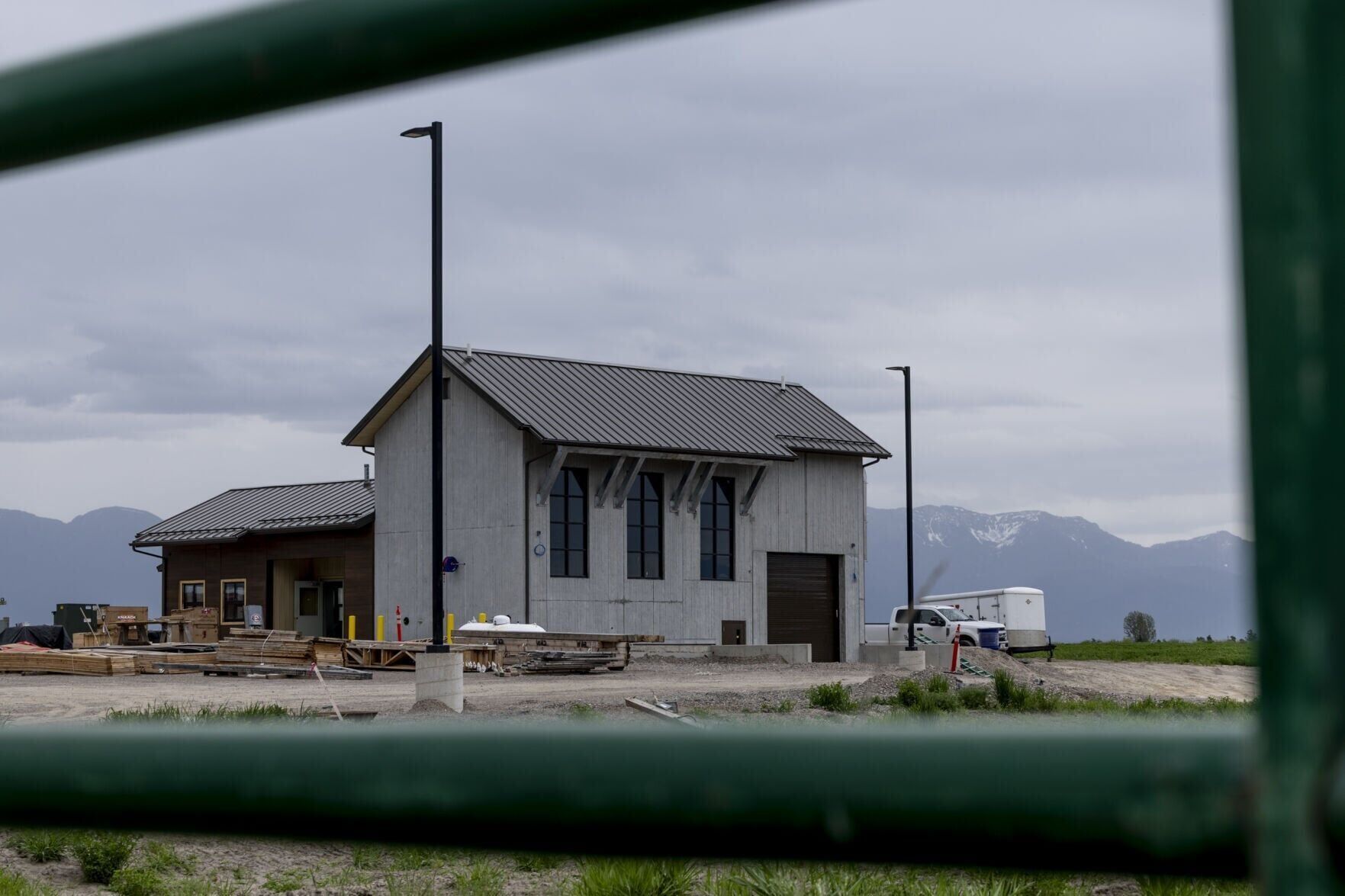
Young believes Discovery’s biggest impact will emanate from its 1,700-acre parcel west of Highway 93, where work is already underway on golf courses, houses and businesses.
He fears the construction process will send silt into the lake, and that the completed Territory 1889 will expand and overtax a local sewer district that is pursuing a contentious new wastewater-treatment facility on the northwest corner of Flathead Lake. (See next story in this series.)
Opponents are also concerned about the traffic impacts of Territory 1889 residents and visitors moving between the marina, the lake club and the development on a dangerous stretch of highway and the small roads that wind along the lake.
They believe local officials have failed to analyze all of the development’s impacts on the community and the environment — and that the implications could be far-reaching.
“The point being is that this county is not doing their job,” Young said. “They're not doing justice to the public resource, and they're not treating the people fair at all in the process.”
‘The process’
Pam Holmquist grew up in Evergreen, near Kalispell, and has been a Flathead County commissioner for 15 years.
Back in August of last year, she and the other two commissioners, Brad Abell and Randy Brodehl, unanimously approved a preliminary plat for the Territory 1889 project. At the time it was known as the Flathead Lake Club and had already received approval from the Flathead County Planning Board.
Holmquist said despite numerous public comments opposing the project, she and the other commissioners have to follow the law.
“What we base our decisions on is the process,” she said. “It doesn’t matter if it’s a little subdivision, a medium subdivision or a large subdivision. It doesn’t matter what size it is. By law we have to do what we have to do. Montana law is pretty big on property rights.”
Essentially, she said, commissioners can’t just deny a project on private property because it’s unpopular with neighbors. The developers have to meet specific criteria and conditions, and if they do, the project has to be approved or the developers can sue.
“So again, no matter how I may feel, and frankly, I get the neighbors,” Holmquist said. “They live in a wonderful place down there. All of Montana is wonderful. It’s hard to accept changes, but there are property rights too, and I can’t trample on those. I have to follow the law and do the best I can. A big kudos to our staff in our planning department and our Planning Board. We just follow the law to make decisions.”
Holmquist noted that Kalispell is also “expanding tremendously,” especially on its western side, as former ag land is carved into new housing.
“We’re growing way too fast, but you can’t really stop it, you just try to mitigate it as best you can,” she said. “I agree it seems too fast. A lot of pain comes with that, but our job is to follow the law. I know it’s hard to see the change. I’ve been here all my life, born and raised in Evergreen, and we’ve seen a lot of change down there too. It just happens, and you deal with it the best you can. We’re still going to have development.”
‘Best-case scenario’
Fetveit has no illusions that Territory 1889 won’t lead to change. But he says development — and Discovery’s development, in particular — are a good thing.
As a boy, Fetveit said, he hunted on the land the company is currently turning into golf courses and houses. And in 2008, he built a house of his own in what was then called Eagle’s Crest, a 2,300-acre subdivision. Since then, the subdivision was renamed Lakeside Club and 1,700 of its acres were sold to Discovery.
When Eagle’s Crest was planned and approved, Fetveit said, developers were granted permission to build a nearly 900-unit subdivision on that 1,700-acre parcel. So when Discovery acquired the land and announced plans for fewer than half as many houses and for 80% of the land to remain undeveloped, Fetveit was relieved.
The fact that the developer was what he considers “arguably the best developer in the world, as far as the care they're going to take,” only fueled Fetveit’s optimism and excitement.
“I could point you to five or six developments in Lakeside where they've just gone in, didn't plan for the water and sewer, didn't plan for the roads gashed up sides of mountains, that when you're out, floating out in the lake, you can see big cuts in the side of the mountains that are never gonna heal, never be back, because they didn't do their due diligence to take care of it,” Fetveit said.
Territory 1889, he said, is the “best-case scenario for how the land can be used. … I want the highest and best for any given piece of land. Like, what's going to be the best trade-off between what's going to be the highest value, but also what's going to benefit the community.”
For one thing, Fetveit said, the “private economic impact is going to be positive,” including through job creation.
And Fetveit believes the project’s exclusivity is actually a good thing, because it will lead to the “lowest density that any developer would do, just because of who they are and their black book, who they're going to sell it to.”
With wealthy buyers who are likely to visit only seasonally, Fetveit said the impact will be “minimal” on a piece of private land that was almost inevitably going to be developed into something. Meanwhile, he said, “it's going to be the highest contributor as far as property taxes go.”
“For example, phase one, the lots are selling for $2 million plus,” Fetveit said. “That same lot outside the club is, on average, you know, $500,000 to $800,000. So there's this tremendous multiple of what the private members are paying.”
And as costs go up, so will the contribution to the coffers of state tax collectors, he said.
“Bottom line, it's going to be a tremendous tax revenue benefit for the community, for Flathead County, for our local school district, for the roads, for the university system, for everything that property taxes contribute to,” Fetveit said.
When you compare the tax income versus the expense, Fetveit said the benefit “outweighs any other potential development that would be up there … because they're not going to be sending kids to the school district, but they're going to be paying for it. They're not going to be driving on these roads every day. They're going to be here for three or four weeks out of the year versus every day.”
Lawsuits
Young joined with Citizens for a Better Flathead to sue the Lakeside County Water and Sewer District last year, arguing the district failed to inform the public before agreeing to provide sewer service to Territory 1889 and to begin construction of the first phase of improvements to its wastewater facilities.
They contended the sewer district “violated their constitutional rights to know and participate by failing to fully provide requested documentation, approving projects under different names, and posting meeting agendas without supporting materials,” court documents state.
The state Supreme Court is currently considering the merits of that case, said Mayre Flowers, co-chair of the Citizens for a Better Flathead board.
Other litigation is also currently pending, leaving open the possibility that the courts will have some say in how Discovery’s dock is configured and how its sewage is handled.
In March, District Court Judge Dan Wilson found the county likely erred in granting a variance for a dock longer than 100 feet and violated Lakeshore Protection Act provisions that require environmental review and public participation in such decisions.
That led the county to post a stop-work order at Discovery’s dock, while the lawsuit continues to play out in court.
In conjunction with the Confederated Salish and Kootenai Tribes, Citizens for a Better Flathead is also pursuing a lawsuit against the Montana Department of Environmental Quality over its decision to grant a permit to the Lakeside County Water and Sewer District for a planned groundwater pollutant control system. (See follow-up story coming this week)
At stake is the expanded sewer capacity that Territory 1889 needs for its new homes.
DEQ sought to have that suit thrown out, and late last year, District Court Judge Danni Coffman did dismiss two of the counts. But Coffman allowed the plaintiffs to continue challenging the permit based on two allegations: that DEQ failed to adequately consider the impacts of nutrient discharge, and that the department failed to sufficiently consider potential environmental impacts of the discharge permit.
If the plaintiffs win, Territory 1889 would have to go back to the drawing board for how to handle wastewater, Flower said.
For those gathered on the old Hockaday dock, the goal isn’t to prevent the project entirely, they insisted.
“These developers are not sitting down with the community and saying, ‘How can we fit in here?’” Flowers said. “‘How can we enhance water quality? What can we do to improve this?’ Because everything they've done has been kind of undercover. And so, how do you work with people who want to come into your community and feel like you can have a working relationship with them going forward?”
Finding answers to those questions is crucial, Young said.
“Flathead Lake is a body of water that belongs to all of us,” Young said. “It's a public resource, and that's why these folks and me and others are standing up.”




Comments ()