
50th annual powwow to take place in the Brick Breeden Fieldhouse this weekend
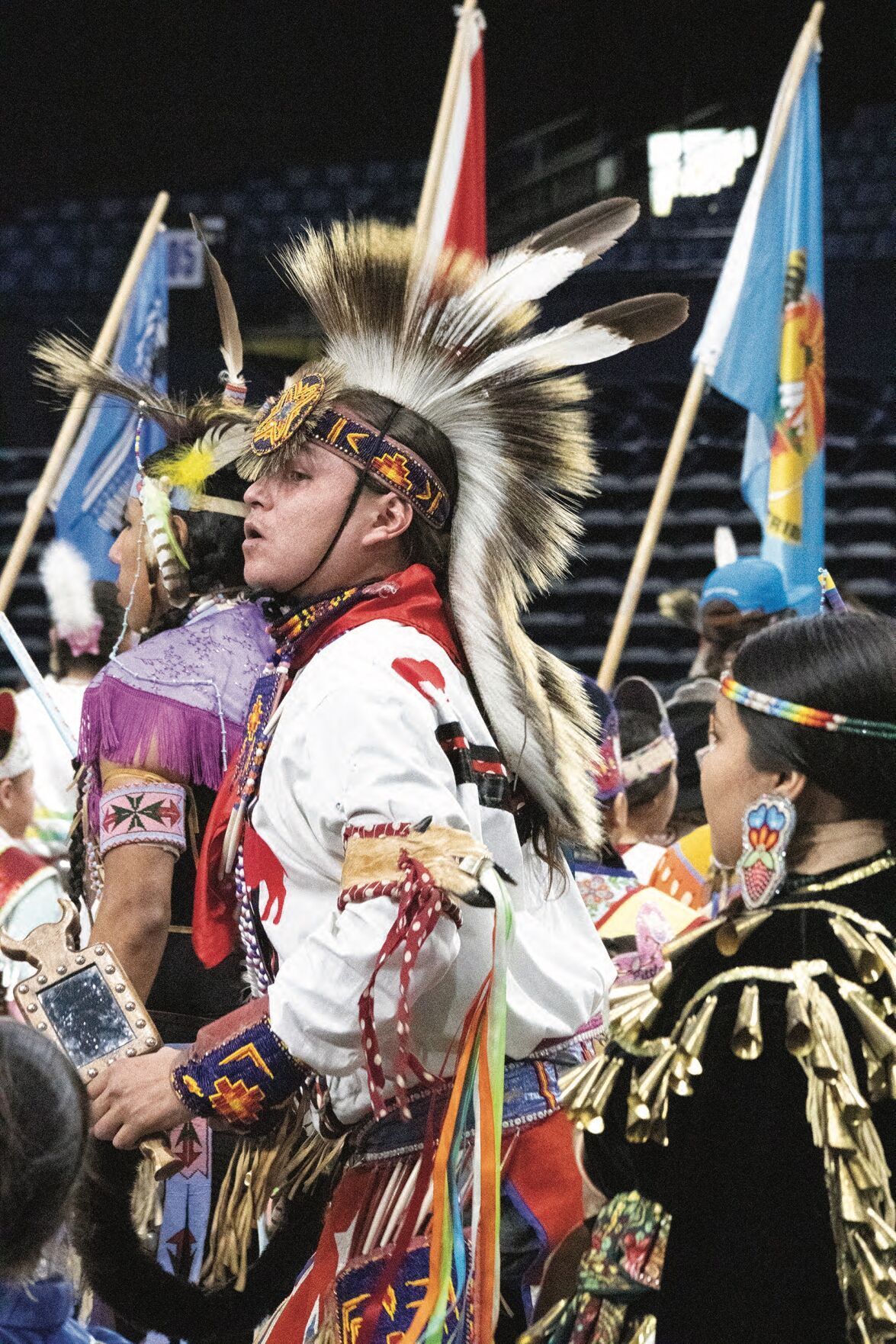
This weekend, the American Indian Council (AIC) will host MSU’s 50th Annual AIC Powwow in the Brick Breeden Fieldhouse — a milestone event celebrating Indigenous culture, community and continuity.
For Indigenous communities across the U.S., powwows are not just social gatherings, according to Michaiah Pease, an environmental engineering student and co-president of the AIC. These events hold immense historical and cultural value, celebrating Indigenous perseverance after centuries of systemic erasure.
“It's also a celebration for our culture — that we still have it and that we're able to still practice our ways of life and be able to share it with each other too,” Pease said.
Each year, the annual powwow is organized by a committee of eight AIC council members, two co-advisors and six students taking the powwow leadership class. According to Pease, this course teaches students how to handle fundraising, layout, concessions, security and more.
Pease said the organizers are hoping to make the 50th annual powwow a big one.
“I hope that I'm able to live up to a lot of what people have done in the past — and especially for the 50th. We wanted to make it as big as we could, because this is an important milestone for us,” she said.
Powwows serve as a way to bring native communities together, according to Nick Ross-Dick, the assistant director of American Indian/Alaska Native Student Success Services and a co-advisor for the AIC.
“It can be a renewal of friendship, of kinship, you know — an affirmation of a culture and diversity and the survival of culture and heritage,” Ross-Dick said. “It's all centered on the singing, the dancing, the pageantry.”
Pease said the events help connect tribes from across the country.
“Having a sense of community is really important for us,” she said. “And so this is one of the ways that — even though we may have a small tribe or a small people — we may be a part of a bigger aspect of all the tribes across the U.S.
“Coming together in that regard, it is such an amazing feeling. Like, we're not alone, and there's other people that are like us that can celebrate in the same way, that want to participate at powwows, whether that be dancing, singing, just spectating, you know. It's a really good sense of community,” she said.
A hallmark of the annual powwow is the dance competition, where drummers sing flag and victory songs as dancers perform in the center of the circles in groups of 12, according to Titan Brockie, AIC co-president and civil engineering major.
The head drum judge will select one winner from each dance category: golden age — or adults over 55 — men’s, women’s, junior and tiny tot. Each winner will receive a cash prize of $500.
Brockie said the powwow is expecting around 600 dancers to participate this year.
“People mainly come for the drums — that's kind of the main pull — and also a pretty decent prize payout for dancers, so we're expecting a lot more dancers to come this year,” he said.
The powwow will include a native leadership pageant featuring four age groups: Miss Tiny Tot MSU, Miss Junior MSU, Miss Teen MSU and Miss Indian MSU. Individuals can self-nominate for the pageant by submitting written materials that showcase their leadership skills.
“They have the crowns and the sashes they wear. They're often in regalia,” Ross-Dick said. “It's become a thing in the last several years, like people, young women and their families want to have the opportunity to represent us because we are such a reputable organization.”
According to Ross-Dick, pageant candidates can demonstrate their responsibility and leadership skills by selling raffle tickets during the powwow. Any money raised from the 50/50 raffle is split evenly between dancers and the powwow committee, according to Ross-Dick.
Additionally, the powwow will feature its annual market, where vendors sell beaded jewelry, native-inspired clothing and handcrafted artwork. Ross-Dick said the powwow is an opportunity for small businesses to increase commerce and connections within the community.
“These are world-class artisans, bead makers, bead workers, they're jewelry makers, they have their own arts and crafts fashion,” Ross-Dick said. “Something we champion, as a nonprofit ourselves, is being able to allow all these other arts and crafts vendors to showcase their work.”
Brockie, who is a member of the Aniiih and Diné tribes on the Fort Belknap Reservation, said participating in the powwow committee gives him a platform to represent his tribe.
“I just wanted to have a representation of my tribe be a part of [the powwow] and represent where I come from and give a role model for people to look up to,” he said.
According to Pease, the powwow is also an opportunity for attendees to learn more about Indigenous culture in Montana.
“I grew up in Montana, so we had the Indian Education for All [Act] for K-12, and I have to remember that not everybody had that same education as I did, that same privilege.
“So, I always encourage others to educate themselves and to take a little bit more time to learn about other cultures, especially ones that they may have been near but didn't get the chance to learn about in school,” she said.
For Ross-Dick, student ambassadorship is what shines about the powwow.
“It is always a really good feeling that we are able to make this a quality thing — but it really always comes back to the students,” Ross-Dick said. “It really is their blood, sweat and tears that are going into everything.”
Pease encouraged people from all cultures and backgrounds to attend the powwow.
“I think it's important for people to experience other cultures, especially cultures that are Indigenous to this place — that are from this land — and just put yourself in a new space that you're not used to and put yourself outside of your comfort zone and step into another perspective or another person’s way of life,” she said.
The 50th Annual AIC Powwow will be free and open to the public. For more information, visit https://www.montana.edu/aic/powwow/.

Comments ()