
53rd Iditarod carries on legacy of the last great race on Earth
Beneath a starry night sky in Anvik, Alaska, a dazzling aurora borealis stretched over the horizon in ribbons of green and purple, the sight accompanied by the rhythmic sound of paws beating faintly on the snow. By the time the lights had faded, the first team of sled dogs had pulled into the remote checkpoint.
Despite having run 603 miles, this group of Alaskan huskies showed no signs of fatigue — wagging their tails and straining against their harnesses, eager to continue on their way. When the checkpoint’s volunteer veterinarians cleared the team to continue on, the musher released the sled anchor and the dogs surged forward into the night, with 525 miles until the finish line of the last great race on Earth.
On Monday, March 3, 33 dog sled drivers — or “mushers” — and nearly 500 dogs left Fairbanks, Alaska to run the longest course in Iditarod history. More than 1,000 volunteers from around the country were dispersed over 1,128 miles of rural Alaska to support the mushers, care for the dogs and send race updates back to Anchorage.
The Iditarod Trail Sled Dog Race is the longest of its kind and typically travels from Willow to Nome after a ceremonial start in Anchorage. The first Iditarod was held in 1973 to commemorate the 1925 diphtheria serum run, when 20 mushers and 150 dogs traveled hundreds of miles through blizzards to deliver the antitoxin to rural Alaskan communities. This effort saved the lives of countless children, according to the Iditarod website.
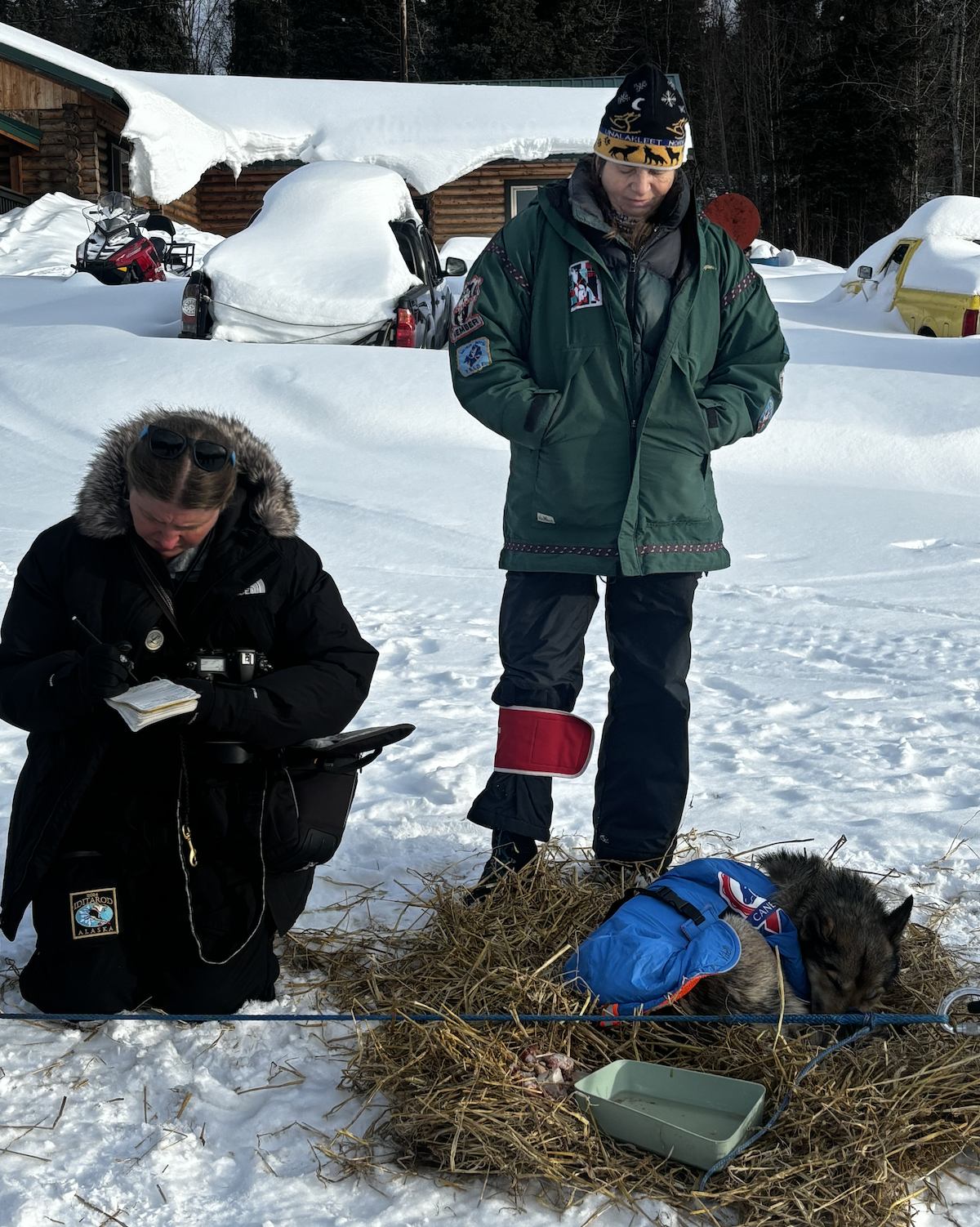
Today, each competing team consists of a musher and 15-16 dogs. The number of dogs steadily dwindles throughout the race as some are left at checkpoints for their health and safety. Each checkpoint is equipped with a team of veterinarians and other volunteers to ensure the wellness of the dogs and mushers.
This year, the 53rd annual Iditarod began with some uncertainty. Low snow levels forced race officials to altered the route, adding nearly 100 miles to the race. Mushers and their teams began in Fairbanks rather than the usual start in Willow and raced down the Yukon River, across the frozen Bering Sea to the famed Burled Arch in Nome.
Jessie Holmes, originally from Alabama, was this year’s Iditarod champion. He traveled over a thousand miles to the finish line in just under 10 days and 15 hours with a team of 10 dogs. He was awarded $57,300 for his first-place finish, along with checkpoint-specific awards that included $4,500 in cash, $4,500 in gold nuggets and 25 pounds of fresh Bristol Bay salmon.
Ebbe Pedersen was the last musher to cross the finish line, completing the route in 13 days, 13 hours and 40 minutes. He was awarded $3,000 and the iconic “Red Lantern Award,” given to the musher who finishes last —symbolizing the grit required to complete the race. Altogether, $500,000 worth of awards were given out this year. Of the 33 teams, only 22 made it to Nome, as nine withdrew from the race and two were withdrawn by race officials for not maintaining a competitive enough pace.
The event takes a year to organize and is made possible with help from thousands of volunteers. The 2025 Iditarod had about 1,300 volunteers from around the country, according to Jennifer Dowling, the Iditarod race comms and trail coordinator.
Pilots, veterinarians and dog enthusiasts left their homes and took time off of work to spend days or weeks in rural Alaska supporting the event. The unpredictability of the race extended to the volunteer experience, with many involved not knowing what resources would be available or where they would be positioned along the trail until days or sometimes hours in advance. Still, that did not deter certain volunteers who have been involved with the race for years.
Jane Holmes volunteered at her 18th Iditarod this year, where she worked as the checkpoint lead at the Anvik stop. She began following the race in 2001 with her classroom in Phoenix, Arizona.
“I found a book called Racing the Iditarod Trail — which is out of publication now — but I had never heard of it until then,” she said. “I started incorporating it into my classroom with math or science or social studies, and then I heard about their Teacher on the Trail, and I thought, oh my gosh, wouldn’t that be the most amazing thing in the world?”
The Teacher on the Trail is a coveted position for educators involved with the Iditarod and requires a lengthy application and interview process, according to Holmes. If selected, the teacher holds the position for a year. During that time, they are responsible for developing a curriculum that weaves different aspects of the Iditarod race with lesson plans across a wide array of subjects and age levels.
The Teacher on the Trail then publishes these lesson plans on the Iditarod education website and conducts remote lectures for students across the nation. During the race, the teacher gets to assist at checkpoints, connect with students and educators in rural Alaska and present their lesson plans on the trail. Holmes was a finalist for Teacher on the Trail in 2007 and was chosen in 2008, appearing at 22 stops along the trail that year.
“My experience as Teacher on the Trail changed me entirely as a person. Before I was selected for that, I didn’t know my potential. I also hadn’t found a place where I felt like I belonged,” Holmes said.
She moved to Togiak, Alaska to start teaching in 2016, a life change she credits to her first year on the Iditarod trail. “I came back, and I was definitely looking at life in a whole different way. One village I visited, I stood out there and looked around and said to myself: I’m going to teach in rural Alaska one day,” she said.
Holmes is not the only one who has found community and passion through dog racing.
Caroline Griffitts has been volunteering with the Iditarod for 32 years. After graduating from Cornell University in 1988, she was connected by a representative for a drug company to the head veterinarian of the race. She said that her interest in athletic dogs combined with her love of traveling made it an appealing opportunity.
Griffitts was among the first members of the International Sled Dog Veterinary Medical Association (ISDVMA), which was formed in 1994 one year after Griffitts’ first Iditarod. She’s now the president of ISDVMA and a three-time winner of the Iditarod’s “Golden Stethoscope,” an award given to the veterinarian deemed most helpful on the trail.
Griffitts credited not just a love for the dogs, but a love for the community as a reason for returning year after year.
“I mean, obviously, we come up because of the dogs, but for me, a lot of the really rewarding experiences are related to being in the villages, getting to know the people in the villages. I mean, I have friends now, like in Cork and Ruby and things like that, and I keep in contact with them,” Griffitts said.
There were 21 checkpoints on this year’s trail, including the village of Anvik. The 2021 census reported a population of 71 for Anvik, but the people living there say it’s closer to 54. The Anvik checkpoint wasn’t one that many mushers decided to stay at for very long, but that didn’t stop its community from cheering them on as they passed through.
“It is nice for the local communities for us to come in and say hello and bring the supplies and bring the race and interact with these kids who are stuck here with just them,” said April Grothe, who has volunteered in three Iditarods as a veterinarian. “You don’t see it at every place, but sometimes the ladies will bring the stuff that they hand make and we’ll sell it here.”
Ken Chase, Anvik resident and a musher who competed in the Iditarod’s first 16 iterations, spent many days at the checkpoint, telling stories to volunteers and reflecting on his time and involvement with the race.
“I’m to the age I realize I can’t compete,” Chase said in a 2022 interview with Jeff Schulz for his Faces of the Iditarod project. “But it just amazes me, and that’s gratifying, I think, to see the race still going, you know, the dogs still running.”
To learn more about the Iditarod, visit https://iditarod.com/.


Comments ()