
A history of psychotic delusions preceded Anaconda shootings linked to Michael Brown
First came the delusions.
The killings, the manhunt, the capture and homicide charges followed.
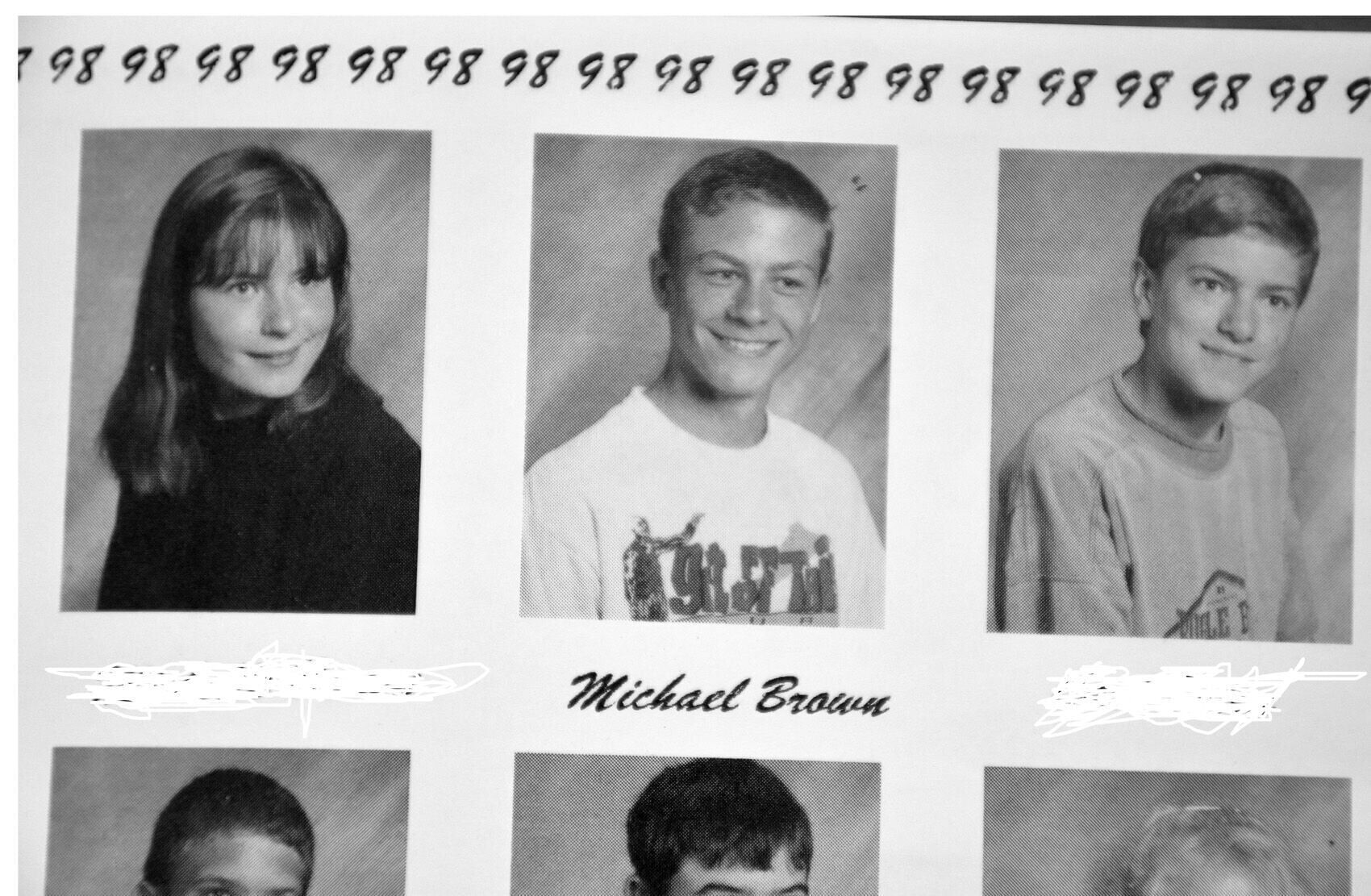
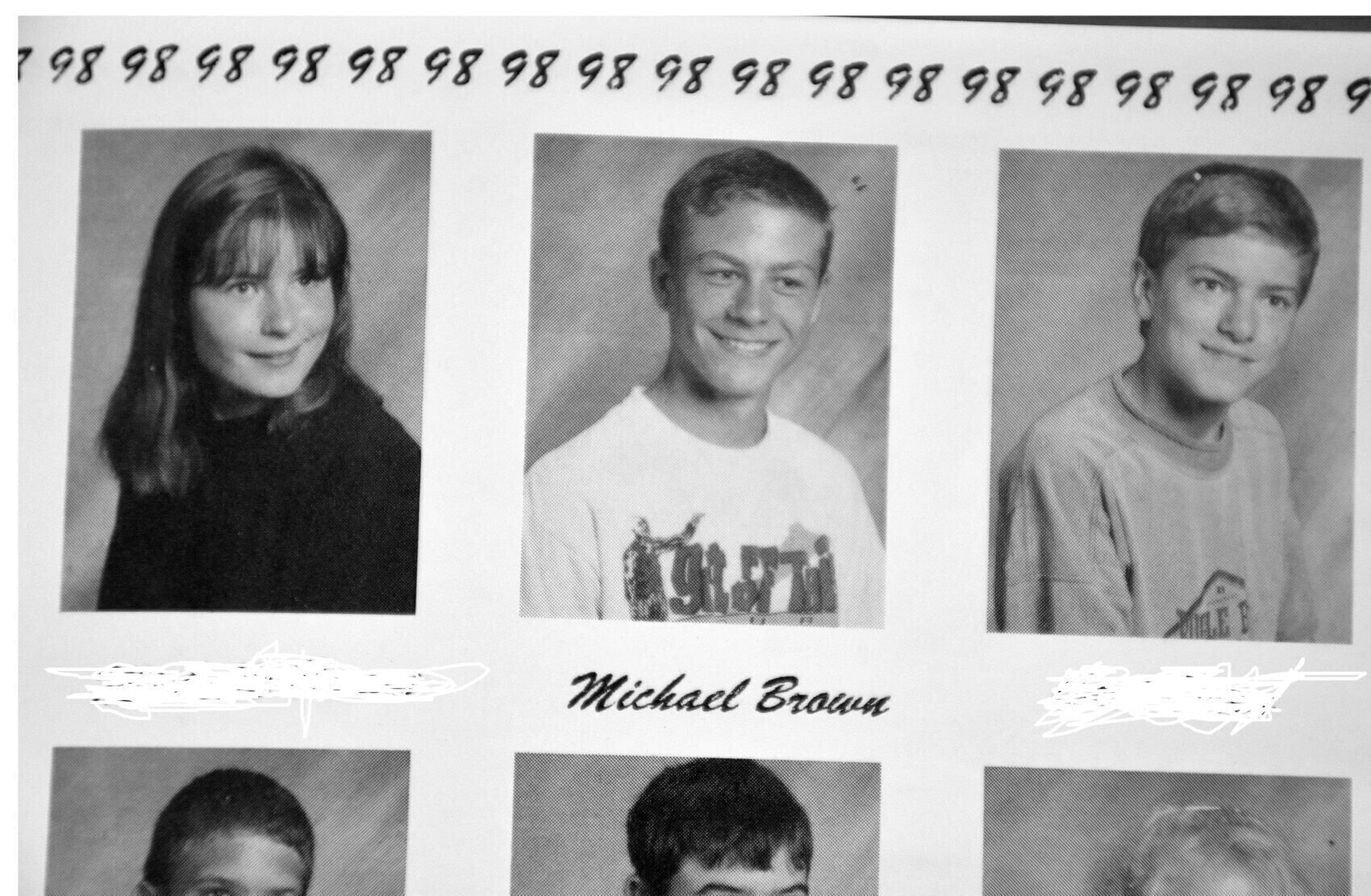
Michael Paul Brown insisted he was John Wick, the movie hitman. He maintained he was married to movie star Sandra Bullock. He said he could time travel. He believed drinking and drugging diminished his wizard powers.
Many people in Brown’s circle encountered these and other examples of his disordered thinking, the sorts of delusions often diagnostic of schizophrenia, a serious mental health condition typically requiring lifelong treatment with medication and psychosocial therapy.
Family and friends say they repeatedly tried to secure such treatment for Brown.
No one imagined the looming dark turn.
"Somebody should have helped him," said Stacy Haldane, a former bartender at the Owl Bar who has worked also at the state psychiatric hospital at nearby Warm Springs.
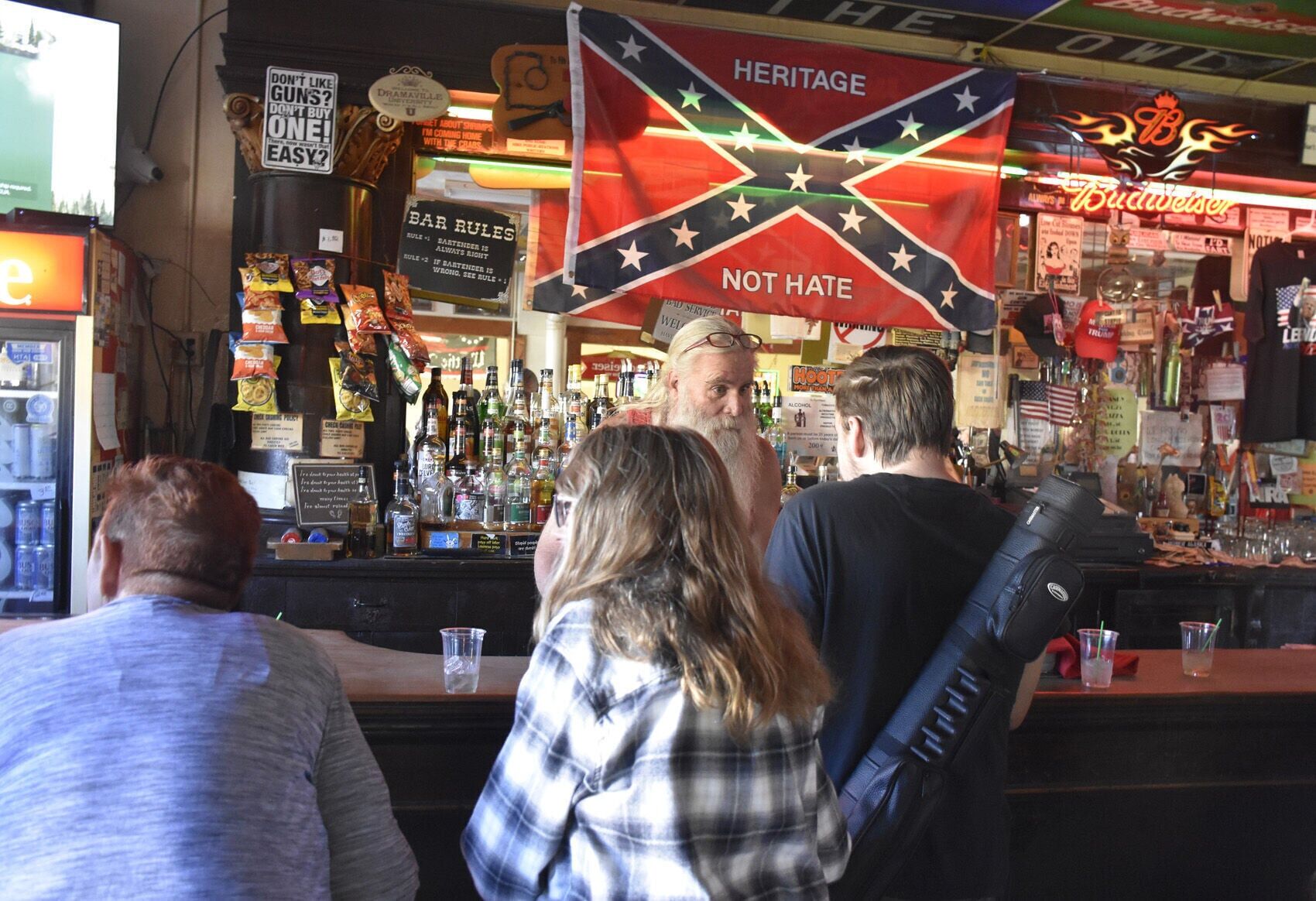
Haldane worked at the Anaconda bar for three months. Brown lived next door and often stopped in during her shift. Haldane is familiar with the symptoms of mental illness because of her onetime employment at the Montana State Hospital.
Delusional references often surfaced, she said, when Brown came in and ordered a soft drink.
“A lot of us kind of blew it off,” Haldane said. “‘Oh, it’s just Mikee.’ I never, ever thought it would come to this point.”
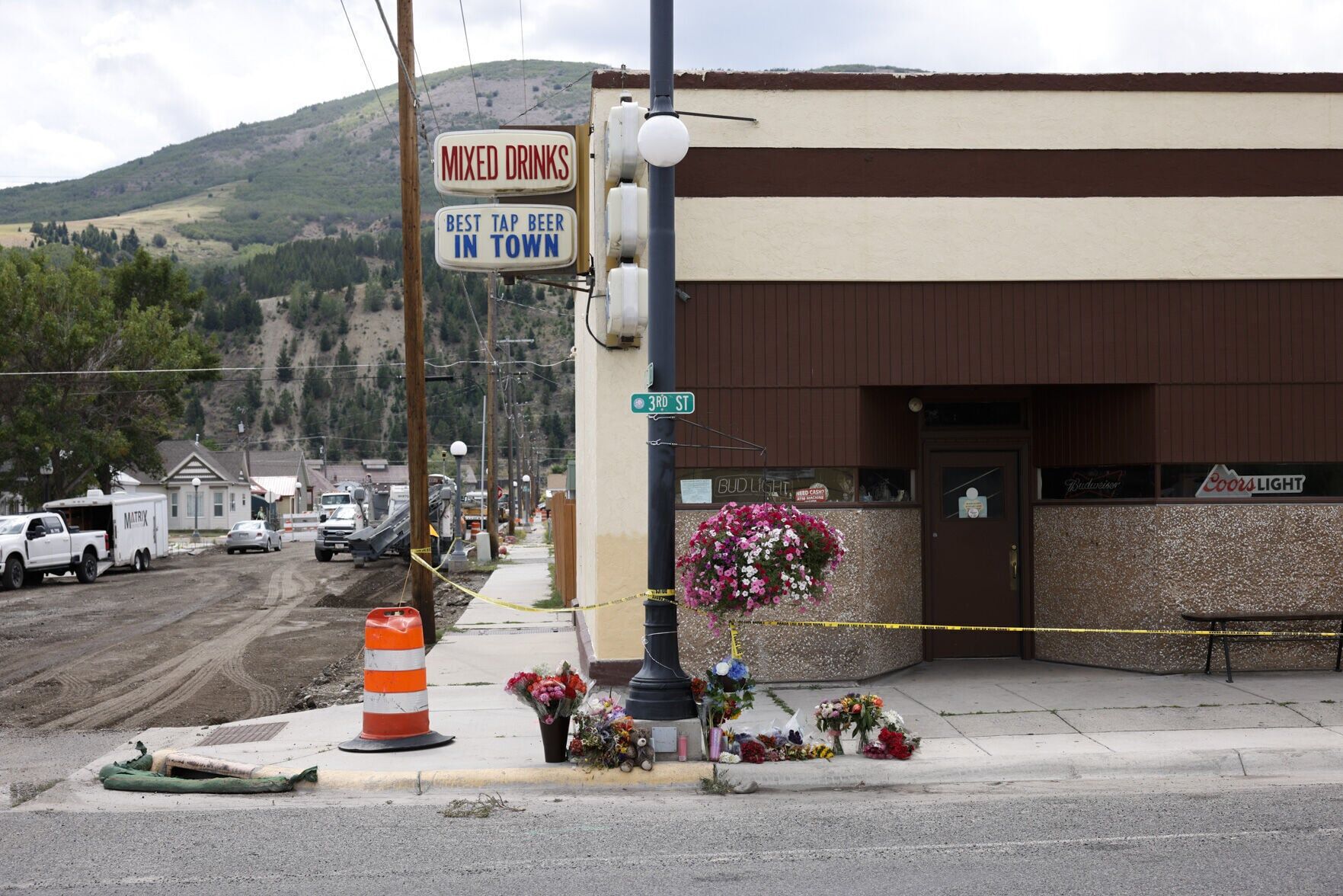
Today, Brown, 45, is jailed in Butte on charges he shot and killed four people with a rifle around 10:45 a.m. Aug. 1 in the Owl Bar before escaping in a stolen pickup. He led police on a chase out rural Stumptown Road before ditching the truck and fleeing into the foothills of the Anaconda Range – an area he was said to know well.
Federal, state and regional law enforcement agencies launched a search through these thickets with the recognition Brown might still be armed. A big push on Aug. 7 and a cold thunderstorm that afternoon apparently flushed him across Stumptown Road and Warm Springs Creek. He was captured on private property the next day.
The property’s owner had a heart-stopping face-to-face encounter with Brown before his capture.
‘A broken man’
“The first thing (Brown) said is, ‘I mean nobody harm. I made a mistake back there,’” the owner told The Montana Standard a few days later. “That’s when I went from total panic to realizing he was a broken man."
Brown is being held without bond and faces four charges of deliberate homicide, weapons charges, theft, fleeing a police officer and attempted arson.
He had long needed skilled and ongoing help for mental illness, people say.
That seems to be the consensus of nearly everyone who had contact with Brown in the years before the Owl Bar shootings. That includes close family, friends and even fleeting acquaintances in Anaconda.
“His mental health started to go after dad died,” said one member of his immediate family. “He was on meds but he was a zombie.”
Most people reacting to Brown’s alleged murder of four innocent people do not excuse the horrific act by citing his mental health struggles. Instead, they see Brown’s tale as cautionary and an indictment both of the state’s mental health system and care provided by the Veterans Administration for a U.S. Army veteran.
Some who have emphasized Brown’s mental illness in the wake of the killings have experienced blowback from people in Anaconda who insist he must be severely punished for the murders and not use mental illness as some sort of out.
Fear about such reactions moved two sources for this article to ask that they not be identified by name.
Meanwhile, Clare Boyle, one of Brown’s nieces, wrote in an August social media post about her uncle’s struggles. She, like many people close to Brown, refers to him as “Mikee.”
Major losses
“It’s been progressively worse with the passing of both parents and exceedingly worse since the trauma of my grandma’s passing,” Boyle said, with the grandmother being Brown’s mother.
The immediate family member quoted earlier described another emotional injury.
“Mike mentored a fellow veteran and then that guy committed suicide on his porch,” she said. “We would bring him food and as a family would go sit with him when his night terrors would get bad. We encouraged him to go to therapy and he did for a while.”
Boyle said recently that her uncle's delusions really began after the loss of his father, who had been an advocate for him with the Veterans Administration. She mentioned the John Wick delusion and other examples of purely irrational thinking.
“My uncle doesn’t drink anymore or use drugs because (he said), ‘They block my wizard powers.’”
Brown’s father, Raymond Brown, died in 2015. He was 59. Brown’s mother, Rosemary “Rosie” Brown, died in February 2021 at the age of 66.
Rosemary Brown’s obituary included this and other tributes, “She was the glue that held everyone together,” a reality Boyle confirmed.
"That was when the real trouble began," she said. "Mikee struggled with a lot of suicidal ideation after [his mother] passed. You don't truly know someone until you convince them to take that gun out of their face and convince them that they are worth saving."
Michael Brown grew up in a household with four other children.
The family member was asked to describe the home environment and whether there was conflict.
“Mike grew up in an active family home,” she said. “All families have conflict, but we were loved and cared for.”
Boyle said she and others tried to get Brown into treatment.
“We begged people to listen and open their eyes,” she said. “Ninety-nine percent of the time Mikee is harmless. If you’re not mocking his delusions or being awful towards him, he is one of the best people.”
Boyle said Brown was bullied on occasion.
"I have personally eye-witnessed several occasions of townfolk harassing Mikee," she said. "I was there one of the nights when one of the drunk Owl patrons decided it would be a good idea to urinate on Mikee's porch. I stopped the incident. This person was supposed to be (Owl) family."
There is no evidence disclosed to date that Brown had experienced conflict during the hours and days before the killings with the people he allegedly shot and killed. The motive remains a mystery, at least based on case details released to date.
Boyle said she is haunted about the grief the shooting victims' families must be experiencing and knows Brown's alleged actions are a stain on her family and the town.
"There is no apology big enough for this devastation," she said.
Tommi Marchion Howell met Michael Brown only once. She was at Carmel’s Sports Bar and Grill in Anaconda and one of her and Brown’s friends introduced them.
Time travel
“I saw him when he looked healthy,” Howell said. “He was very kind. He really cherished his friendships.”
Yet there were clear symptoms of a psychiatric disorder, she said.
“I didn’t know he was schizophrenic. He really, truly believed he could time travel,” she said. “He didn’t drink or do drugs because he feared they would take away his powers. It was really eye opening.”
Howell described Brown’s demeanor that night as genuine and affable.
“I really feel like this is about societal neglect of mental illness and the needs of veterans, and until we deal with it this is going to keep happening and more people will die,” she said. “We fail mentally ill people. We fail our veterans. This guy was a veteran and he was trained to kill.”
Many people who have known Brown have commented on his kindness when he was not in the throes of mental illness.
"Mikee is the kind of person who would give you the shirt off of his back and the socks off his feet if he thought it would make your life just a little better," Boyle said.
The woman who introduced Howell and Brown was willing to talk about Brown on the condition her real name not be used. She said she feared encountering hostility for anything that might sound sympathetic to Brown. She is identified in this story as Jane Fifer (not her real name).
Fifer said the deaths of Brown’s mother, Rosemary, and his friend Jeremy Raasaka in August 2019, weighed on Brown. Raasaka struggled with alcohol addiction. He died when his pickup rolled on Montana Highway One. Speed and alcohol were believed to be factors, police said. He was 38.
Raasaka’s obituary recounted, “Jeremy found a lot of happiness at the Owl Bar with all of his extended family and very close friends…”
Brown felt the losses deeply, Fifer said.
Boyle agreed.
"The loss of our friend and 'adopted' family member Jeremy Raasaka took Mikee for a ride as well," she said. "It was abrupt. No warning. At the time they did everything together. Camping, hiking, drinks together when the Owl wasn't super packed."
She said Brown lost a "brother" and friend when Raasaka died.
"We sat together and cried for hours, days in a row, after that tragedy," Boyle said. "It seemed the more Mikee lost, the more he lost himself along the way and the harder it was for us to find him."
‘He weighed nothing’
“It was after his mom died and Jeremy died that Mikee quit showering and he quit washing,” Fifer said. “He quit shaving. He weighed nothing.”
She said she believes those losses almost killed Brown.
“But I don’t think he was treating his schizophrenia,” she said. “I don’t think the military caused his schizophrenia. However, I do believe that anybody who agrees to go into the military, to do that for your country, should probably get medical coverage.”
Fifer added, “Everybody knows he’s not normal.”
Yet he was savvy about the outdoors, she said, and knew his way around the Garrity Mountain Wildlife Management Area, where the manhunt focused in August.
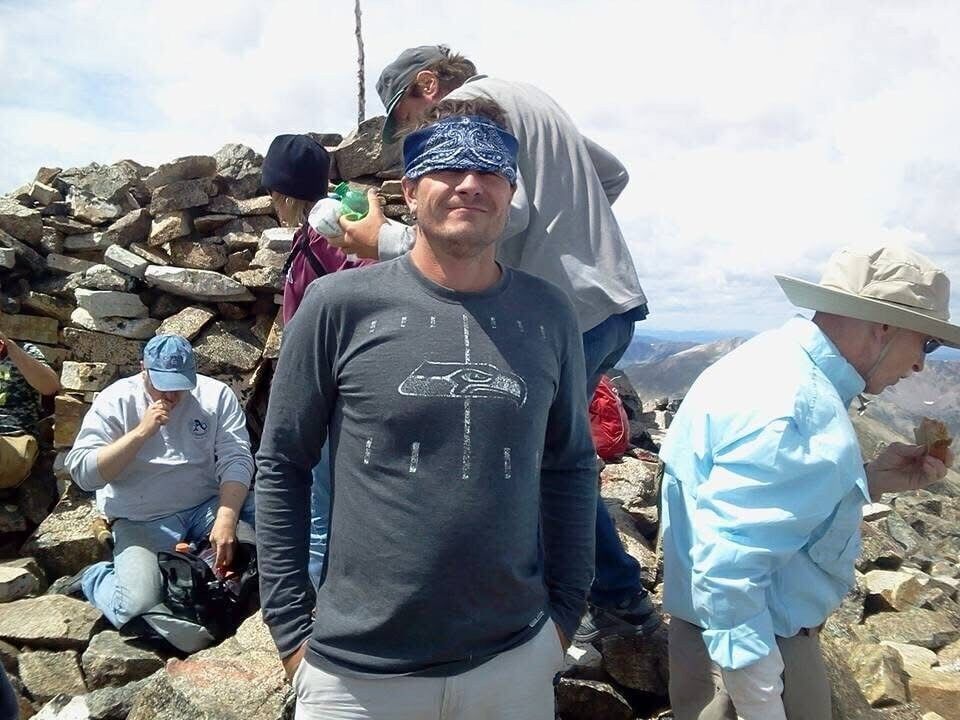
She has photos of the day in July 2015 when Brown, Raasaka and others summitted Mount Haggin, elevation 10,607 feet, an outing that requires a long trek followed by a scramble across loose scree.
Fifer said she saw Brown about a year and a half ago at Carmel’s and his physical improvement was significant.
“He was clean shaven and clean cut,” she said. “And he’s like, ‘I’m not drinking anymore. I’m not doing, you know, anything. I’m on my meds. I don’t care if people criticize me or put me down because I have to take meds.’”
During the time Brown was a fugitive, Carmel’s locked its doors, admitting patrons only after they knocked. Carmel’s, like the Owl Bar, is located on East Third Street in Anaconda.
The streetcar that once transported workers to and from the Anaconda Company’s copper smelter ran along Third Street. Corner bars like the Owl, the Sladich Bar and Carmel’s lined the route to serve smeltermen.
Atlantic Richfield closed the smelter some 45 years ago and Anaconda-Deer Lodge County has made great progress in recent years in moving past that economic, emotional and environmental blow that triggered business closings, an exodus of residents and a sort of systemic grief.
‘He’ll never forgive himself’
Fifer assumes Brown is back on his meds while jailed.
“He’ll never forgive himself. You get him back on his meds and he finds out what he’s done, he will never forgive himself,” she said. “The people he killed were very good people. Mikee loved those people.”
The victims, all residents of Anaconda, were: Daniel Baillie, 59; David Leach, 70, Tony Palm, 74, and Nancy Kelley, 64, the bartender working that morning.
Fifer said Brown should have been institutionalized a long time ago, though she recognizes a court-ordered commitment hinges on a person’s substantiated risk to harm themselves or others.
Brown’s family member shared a similar story.
“When I noticed his mental health was super bad I contacted the VA for three-to-six months,” she said. “In the end, I was told he has to do something to himself or others to make him get help but if they don’t see it, you can’t make him.”
A broken kitchen knife
Nearly 25 years ago, William Leonard Brown tried to talk his younger brother, Michael, into helping him dispose of a body.
On the evening of Dec. 18, 2000, William “Bill” Brown and Phil Nebeker, 25, bought beer and then returned to the Nebekers’ house in Anaconda. The men’s substantial beer haul included a 20-pack and a 12-pack.
At some point, Misty Nebeker, Phil’s wife, joined the men in an upstairs bedroom to smoke marijuana.
Later, Misty testified that when she went to the kitchen to get another wine cooler Phil accused her of having an affair with Bill Brown. She said Phil physically assaulted her.
“Misty testified that (Bill) Brown came into the kitchen and told Phil not to hit her,” court records show.
Misty left the kitchen and her husband and Bill Brown began to argue, according to testimony. She heard a thud.
Bill Brown entered the living room holding a broken kitchen knife. He had blood on him and said, “I stabbed him. I think he’s dead,” according to court records.
An autopsy determined that Phil had suffered three stab wounds to his chest, “one of which fatally sliced a chamber of his heart,” records show.
Sometime around 1 a.m., Bill Brown phoned Michael Brown and asked him to come to the Nebekers’ house and Michael walked the four blocks to the house.
Michael testified later that his brother wanted help getting rid of Phil’s body. But Michael declined to help and left.
In September 2001, an Anaconda jury found Bill Brown guilty of deliberate homicide for killing Phil Nebeker. Bill Brown was 22.
In January 2002, District Judge Ted Mizner sentenced him to 100 years in prison on the homicide charge and added 10 years for using a weapon. Mizner cited Bill Brown’s lengthy criminal record and longstanding addictions to drug and alcohol and said a psychological evaluation suggested the defendant had an antisocial personality disorder.
Records show William Leonard Brown remains incarcerated at the Saguaro Correctional Center in Arizona. The Montana Standard reached out to him but received no reply.
Military service
The Standard published an article about Ray Brown, Michael’s father, in April 1980 and described his role in the U.S. Army. Sgt. Brown, his wife, Rosemary, and their five children were stationed in Baumholder, Germany, the story reported.
Ray Brown was a crewman section chief on a howitzer and a trainer.
“The most rewarding thing about my job is helping young soldiers to learn their jobs,” he said then.
More than 20 years later, Michael Paul Brown was an armor crewman in the U.S. Army from January 2001 to May 2005 and then in the Montana National Guard from April 2006 to March 2009. Army spokesman Maj. Travis Shaw said Brown deployed to Iraq from February 2004 to March 2005 and left the service in the rank of sergeant.
Neither Fifer nor Dave Gwerder, owner of the Owl Bar, believes Brown suffers from post-traumatic stress disorder (PTSD) tied to some sort of trauma experienced while in the military.
Gwerder said he has owned the Owl Bar for 30 years and has known Brown for a prolonged period. He said he saw no evidence of PTSD.
“I knew him when he went in the Army and I knew him when he got out,” Gwerder said the day of Brown’s arraignment in Anaconda-Deer Lodge County District Court.
Boyle said she has talked to some soldiers who served with Brown.
"I've spoken to a few of his crew members and they say he was one of the best tank gunmen they had seen and one of the kindest souls," she said.
But Brown’s family member recalls he left town for a time after discharge.
“Mike took a year to go to Indiana after he got out of the Army to try and get his mind right,” she said.
Boyle said mental illness cannot justify the deaths of four people that morning at the Owl Bar, a place many, including Haldane, considered a home away from home.
“There are no excuses or words of defense for this awful tragedy,” Boyle said. “Mental illness does not excuse these acts and, I can’t say it enough – these acts could have been prevented with proper reporting and a healthcare system that gave a damn about its veterans and citizens.”
"No one really knows the struggle of mental health until it happens to you or someone you care about," she said.
The Owl’s morning crowd
The Owl Bar closed for several weeks in the wake of the shooting. Some wondered whether it would reopen. But it recently did. And a subsequent Sept. 27 benefit there attracted a large crowd.
Fifer said the typical morning crowd at the Owl patronized the bar for different reasons.
“They didn’t need anybody to judge them and the Owl didn’t judge them,” she said. “Nobody cared what they looked like. Nobody cared what they wore. Nobody cared if they combed their hair. They didn’t need to get better. What they needed was for people to leave them the f… alone.”
Meanwhile, sheets of plywood cover the windows and doors of Brown’s family home, at 815 E. Third St., next door to the Owl Bar.
A trial is tentatively scheduled for early next year.






Comments ()