
A look back: Prohibition came a year early for Montanans
By the time prohibition took effect nationwide on Jan. 17, 1920, Montanans were seasoned veterans to the cause.
Apparently, Montana got the memo a bit early because here in Big Sky Country, the 18th amendment to the U.S. Constitution was enforced as of Jan. 1, 1919.
“Enforced” may be a bit of an exaggeration, but nonetheless, on paper, by the winter of 1918, things were about to “dry up” in southwest Montana.
Prohibition was not a novel idea. The war on alcohol had been waged long before the Civil War. The temperance movement of the 1890s and 1900s only added fuel to the cause. It was just a matter of time when they could claim victory.
Montana was not alone in 1919, as 32 other states had enacted their own laws. Prohibition came to some states, including Idaho, Washington and Iowa, even earlier.
So, as 1918 was coming to a close, many Montanans were mourning the inevitable.
“The glow of the amber, the sparkling of the wine, the foam of the lager, and the various tints of the pretty cocktails and the cordials that tempt the eye and delight the palate,” one person lamented, “will be seen no more.”
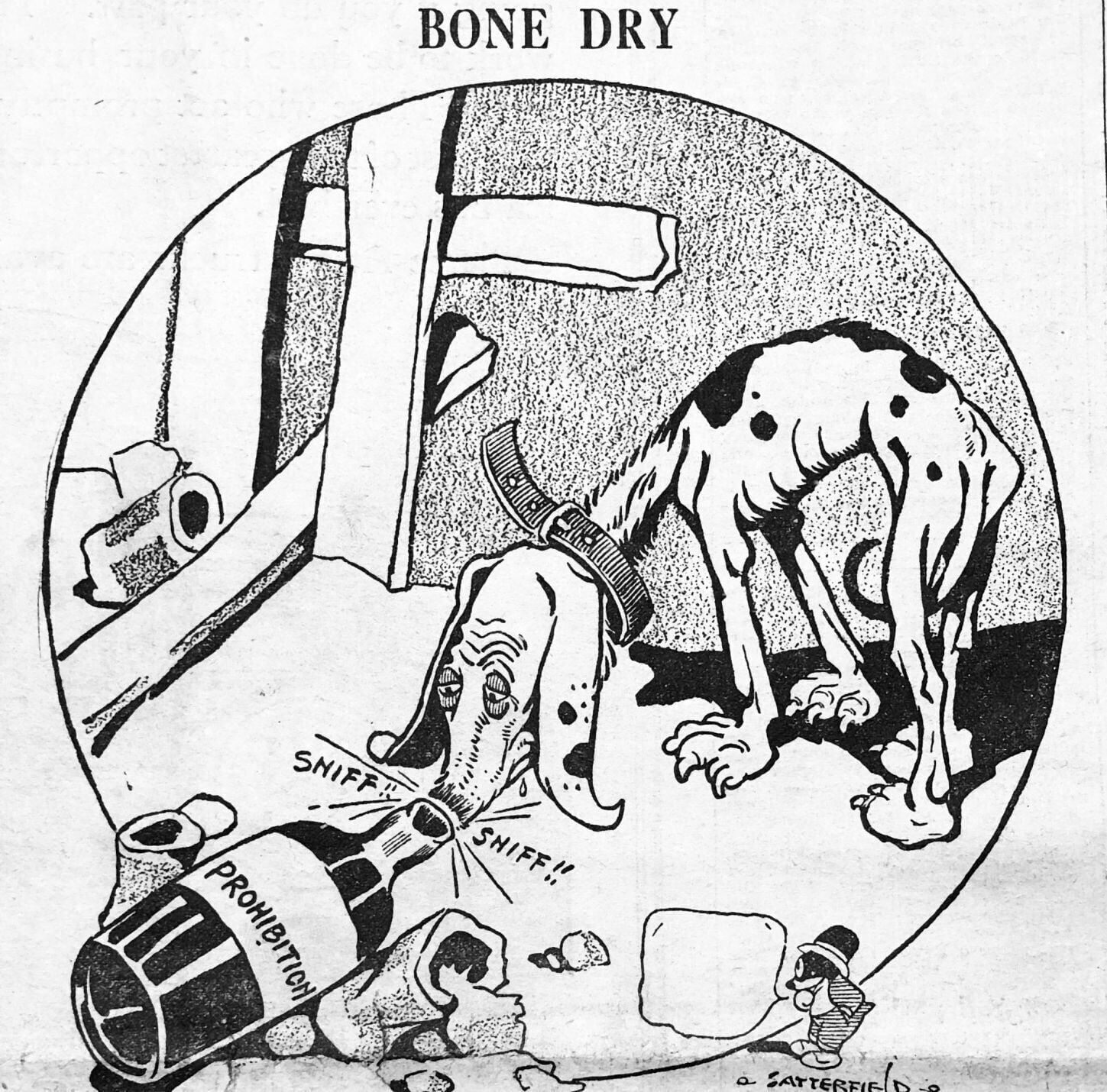
Alcohol consumption was never outlawed, per se. The amendment just made it very difficult because mass production was cut out of the equation. Transporting booze was no longer an option, nor could it be sold.
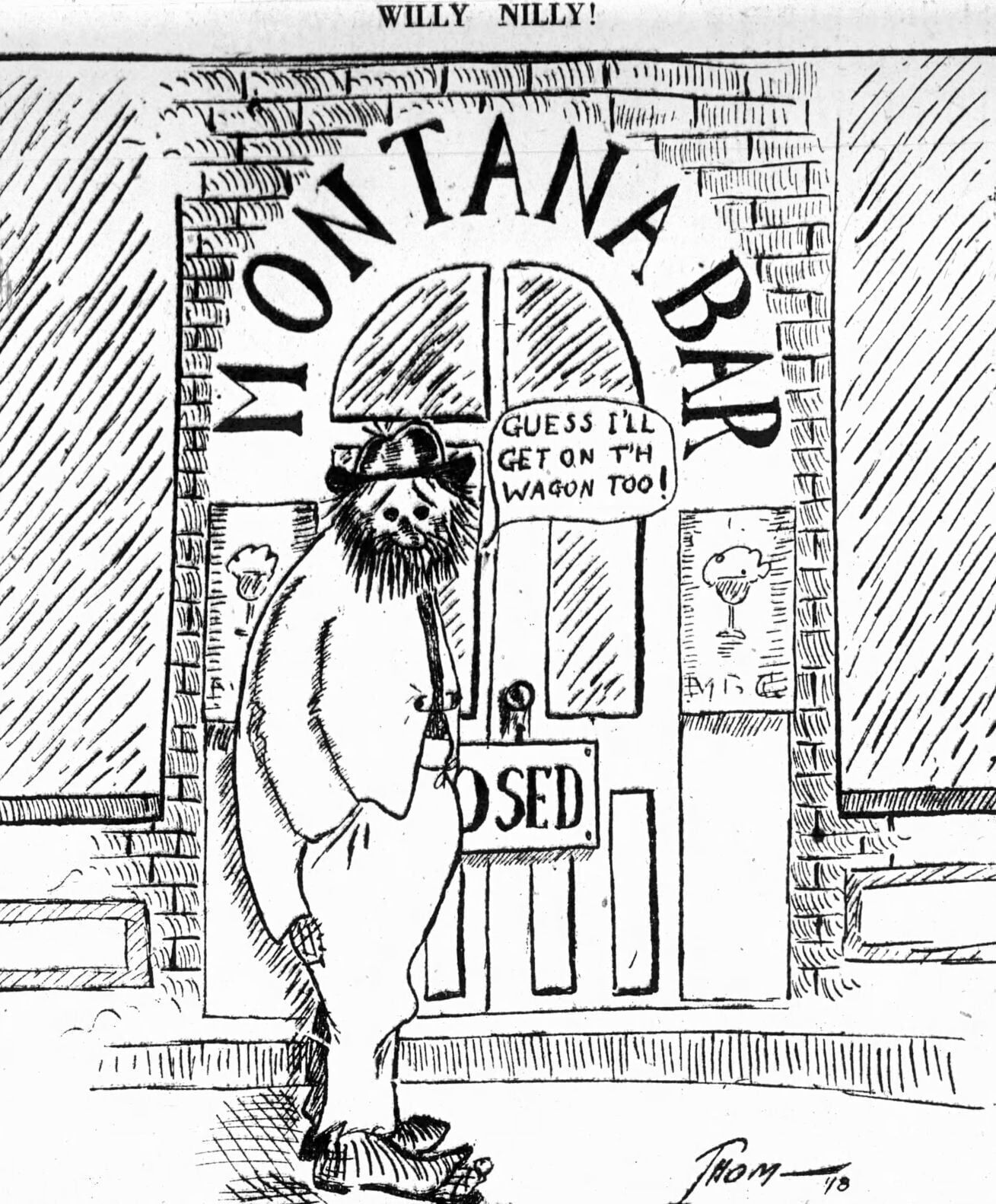
Residents might have been losing easy access to booze, but not their sense of humor.
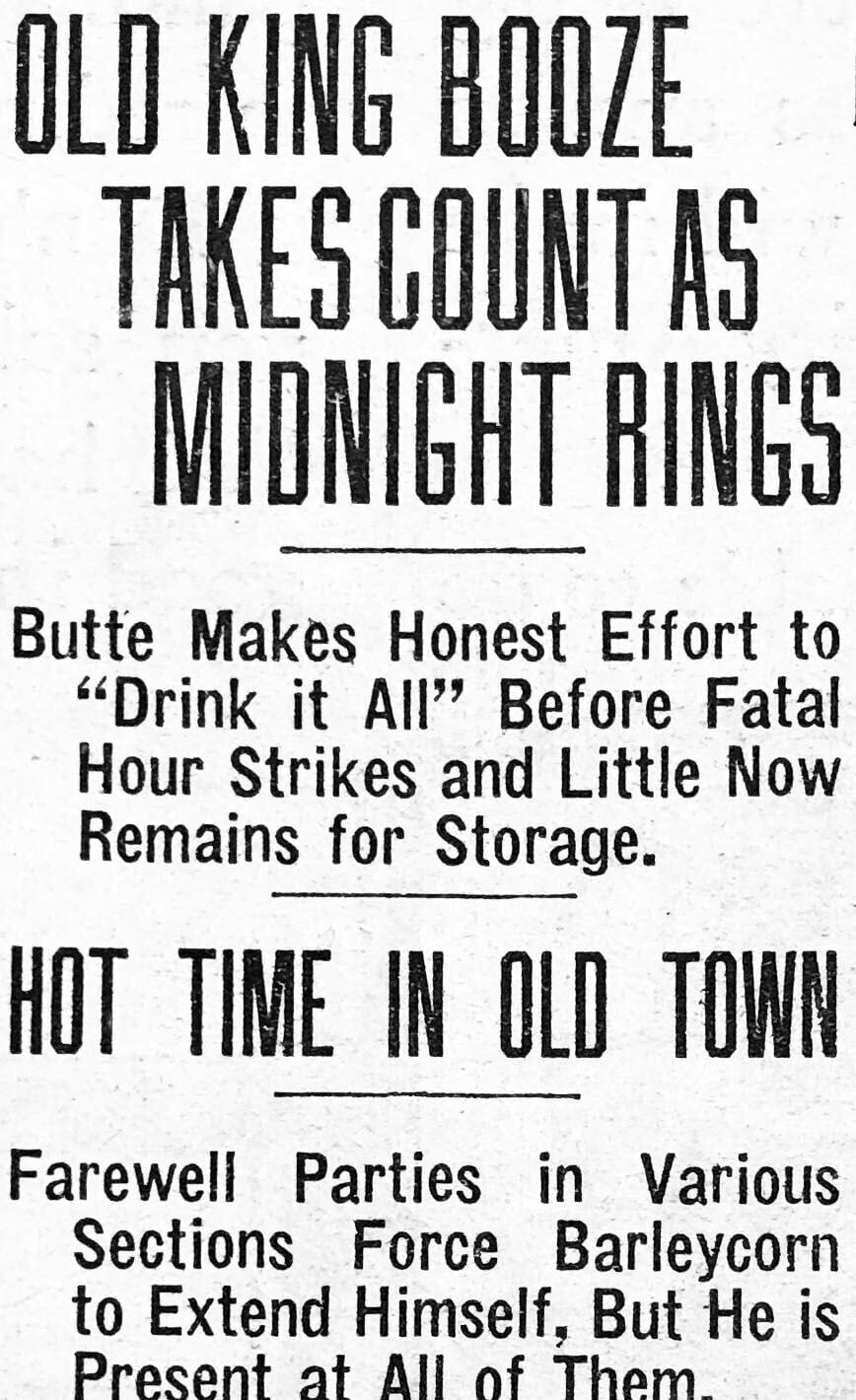
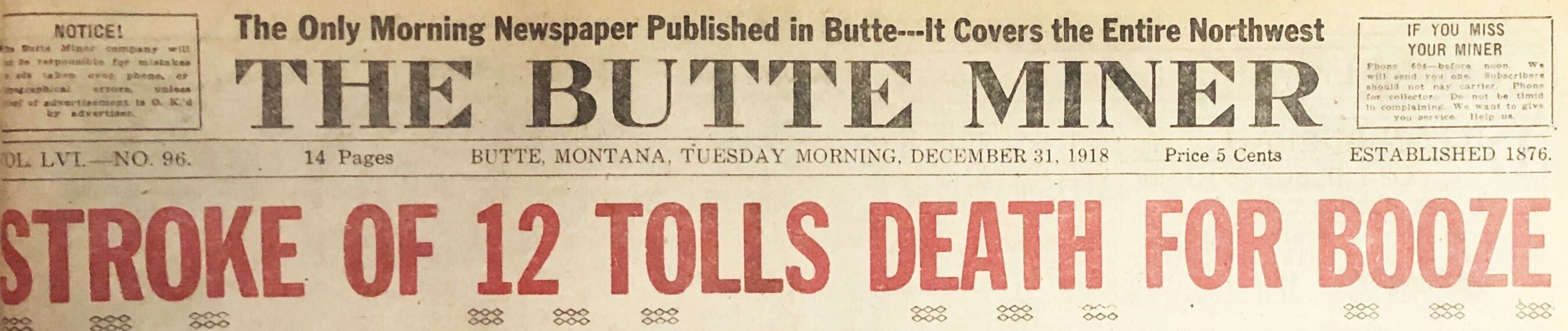
“John Barleycorn is Ill – Thought to be Fatal” was the Dec. 20, 1918 Butte Miner headline. According to the article, an effort was being made by his “friends” to prolong his life for a few weeks, but the prognosis was not good.
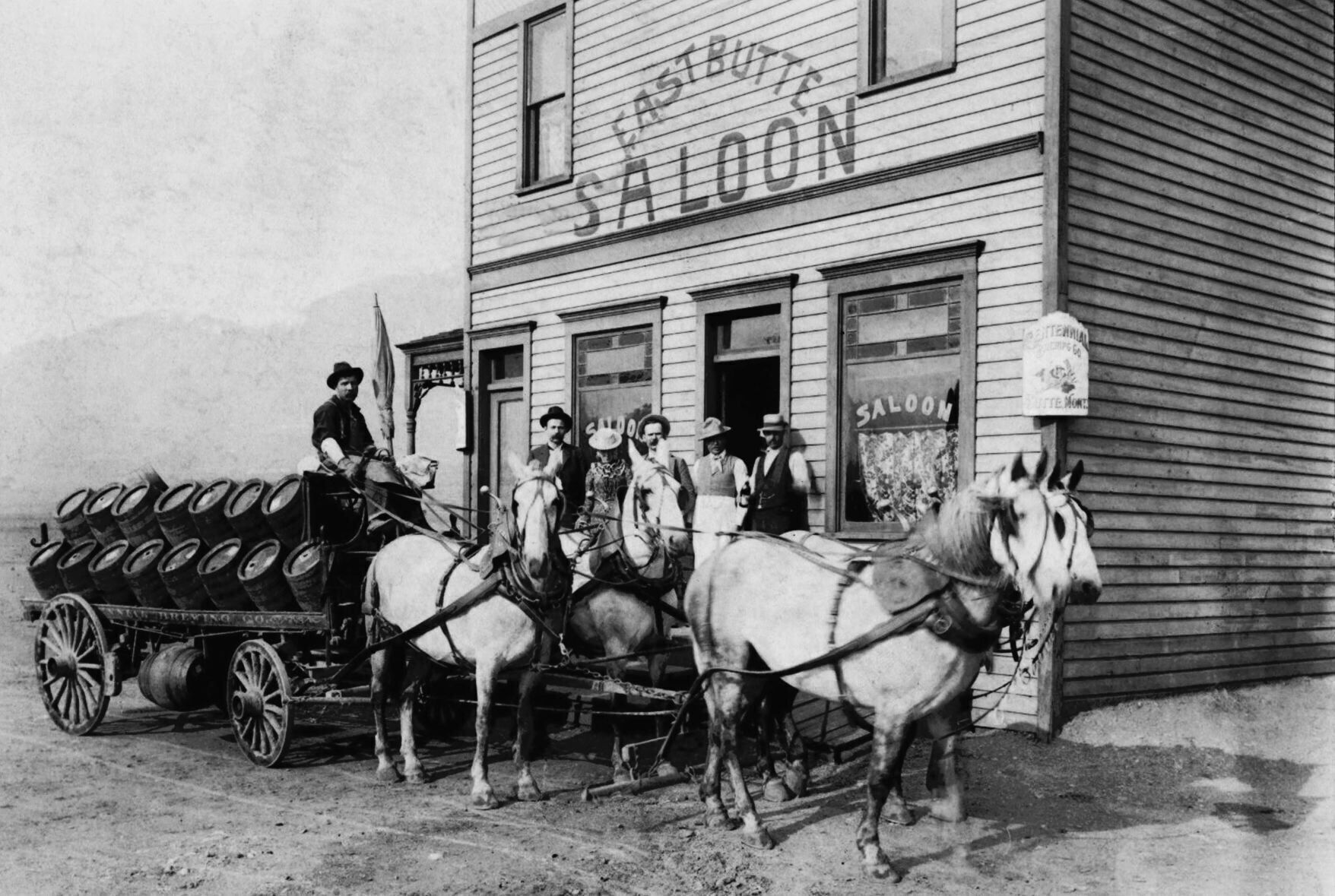
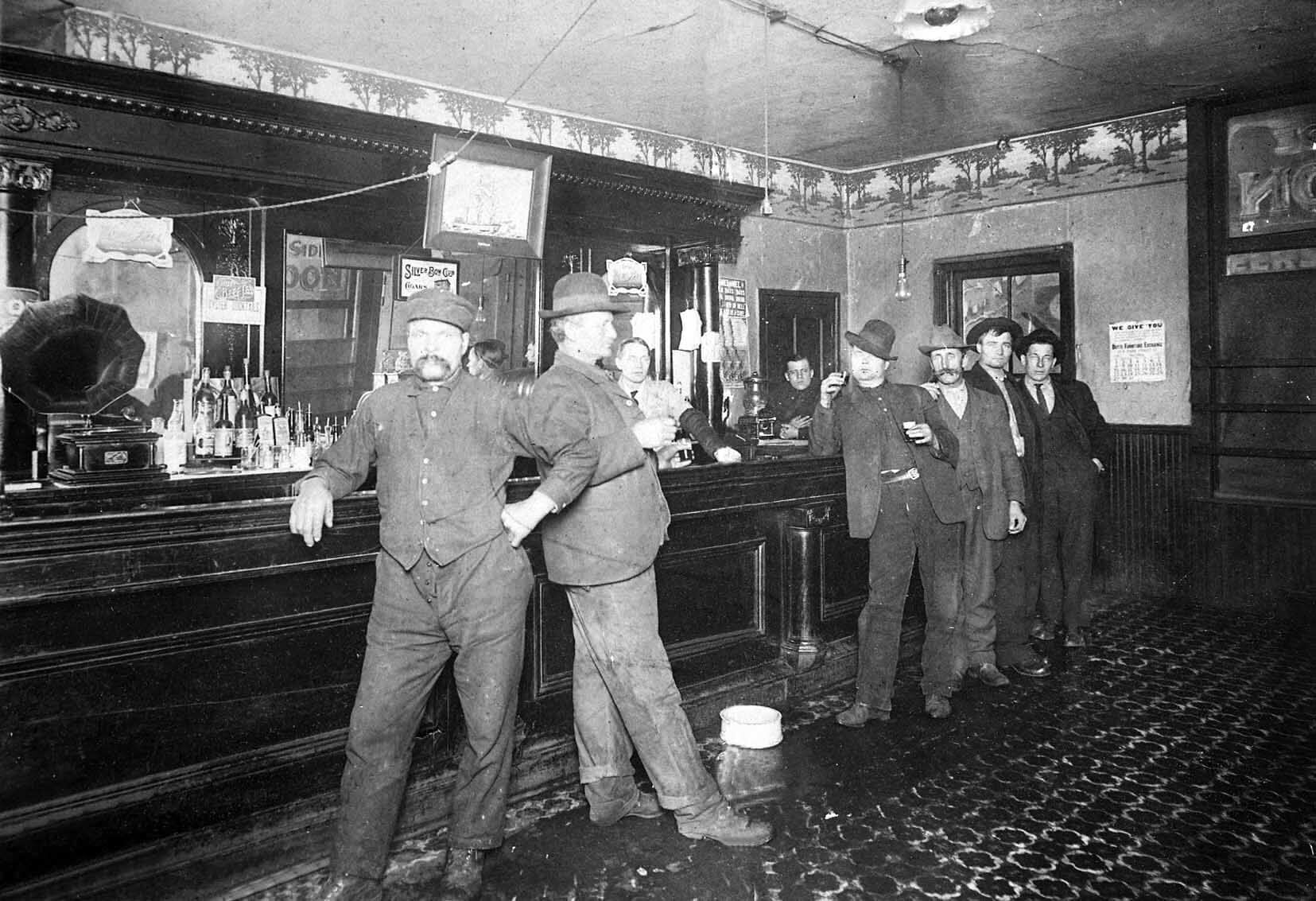
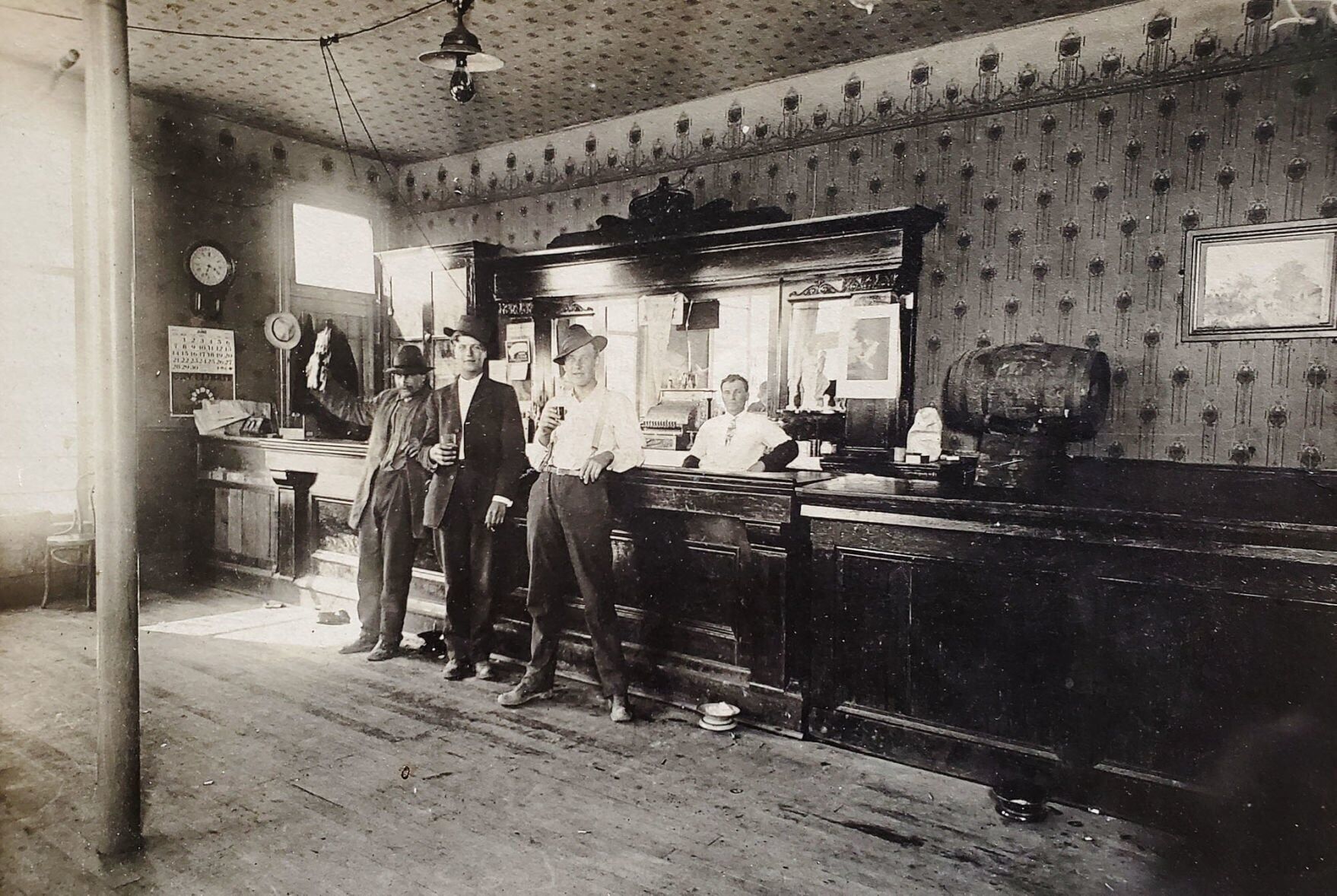
It was a tough pill to swallow for Butte’s 210 bar owners — all of whom had to “close up shop.” It was the same exact scenario for the town’s three breweries — Butte, Centennial and Tivoli.
On New Year’s Eve 1918, some predicted that “the days of Nero probably will have nothing on the closing, wetly speaking, of 1918 in Montana.” The prediction wasn’t too far off the mark, but it was not that bad, either. There were no riots and few fights.
Instead, towns across southwest Montana held “funerals” for John Barleycorn, a humorous euphemism for hard-core liquor.
Barleycorn went to his “grave” in Anaconda with much fanfare. Residents had been preparing for his demise since before Christmas and were gearing up to say their final farewells to an “old pioneer resident.”
“It was decided to hold services in various parts of the city,” The Anaconda Standard reported. “The funeral rites continued up to midnight, the time for interment.”
Everything was “hush and still” in Butte, according to an Anaconda Standard report, with residents in a “rather hilarious mood.”
“Good-bye John,” a Standard reporter lamented, “here’s hoping we meet you in another land.”
A reporter for the Butte Miner wrote: “Those who have to a greater or less extent been embalmed in Butte for various periods of time, last night placed the corpse of King Alcohol, whose fluid has been responsible for much pleasure and some sorrow, in a grave lined with empty flasks of all descriptions and of differing monetary valuations … It was a beautiful funeral.”
Not everyone took prohibition in stride.
One stubborn citizen spent New Year’s Eve reflecting how Butte could let this happen. “Consulting the dictionary,” wrote a Standard reporter, “he managed to get rid of a lot of words that possibly were intended to impress the judge of the police court.”
In Deer Lodge, John Barleycorn passed out right when the clock struck midnight.
“The part he has played in the history of the territory and state,” it was noted, “would fill a number of volumes.”
The festivities in Dillon, though, went past its allotted time. Described as “one of the most rousing and unique celebrations in the history of the town,” the cold night did not deter many.
“Troops of thirsty men stormed one saloon after another,” it was reported, “taking anything that was offered them in the shape of intoxicating liquor.”
Bootleggers would multiply in the years to follow, and many local bar owners did not follow the rule of law. Many opened “soft drink” emporiums. But if a person could no longer belly up to the bar, for certain, a bootlegger would provide.
One man stood above all the rest. The head of the dry squad for Silver Bow County, John F. “Jack” Melia, turned out to be one of Montana’s most prolific bootleggers, too.
At the start of prohibition in Montana, the former deputy sheriff was appointed chief enforcement officer and getting kudos left and right for doing a great job.
Butte’s three newspapers, almost on a daily basis, were singing his praises, and midnight raids were commonplace. The man was destroying numerous stills in the area and letting a mountain of booze go down the drain.
“Melia Breaks Moonshine Records in Butte,” reported the Butte Miner on Oct. 21, 1919.
The head of the dry squad was not a popular guy during his tenure. In April 1919, he dumped 2,124 quart bottles of whiskey into Silver Bow Creek.
One resident lamented, “The horrid deed is done. Our hearts are full of sorrow and Silver Bow Creek is full of whiskey. We hope it will contaminate the rivers to which Silver Bow Creek is tributary.”
Turns out Melia had an ulterior motive for doing such a great job. He was wiping out the competition all throughout the county, and making money hand over fist.
Near the end of 1920, local newspapers had given him a new and more deserved nickname — “the moonshine king.”
Front-page headlines on Nov. 1, 1920 told an entirely different story. “Jack Melia, Bootlegger Deluxe, Was Also King of Moonshiners,” said The Anaconda Standard.
And king he was, operating the largest still in Silver Bow County and doing business all throughout Montana.
But Melia was not the first offender and he certainly was not the last.
Up until prohibition ended, court dockets were filled with men and women charged with bootlegging or operating a liquor establishment.
A reporter in 1919 was short and to the point when describing the dawn of prohibition in Montana: “Montana has gone dry and a majority of its inhabitants will go dry with the state. Goodbye booze! Good luck prohibition.”
In the midst of the Great Depression, that luck ran out on Dec. 5, 1933, when the 21st amendment was ratified, paving the way for some old and new haunts to surface once more.
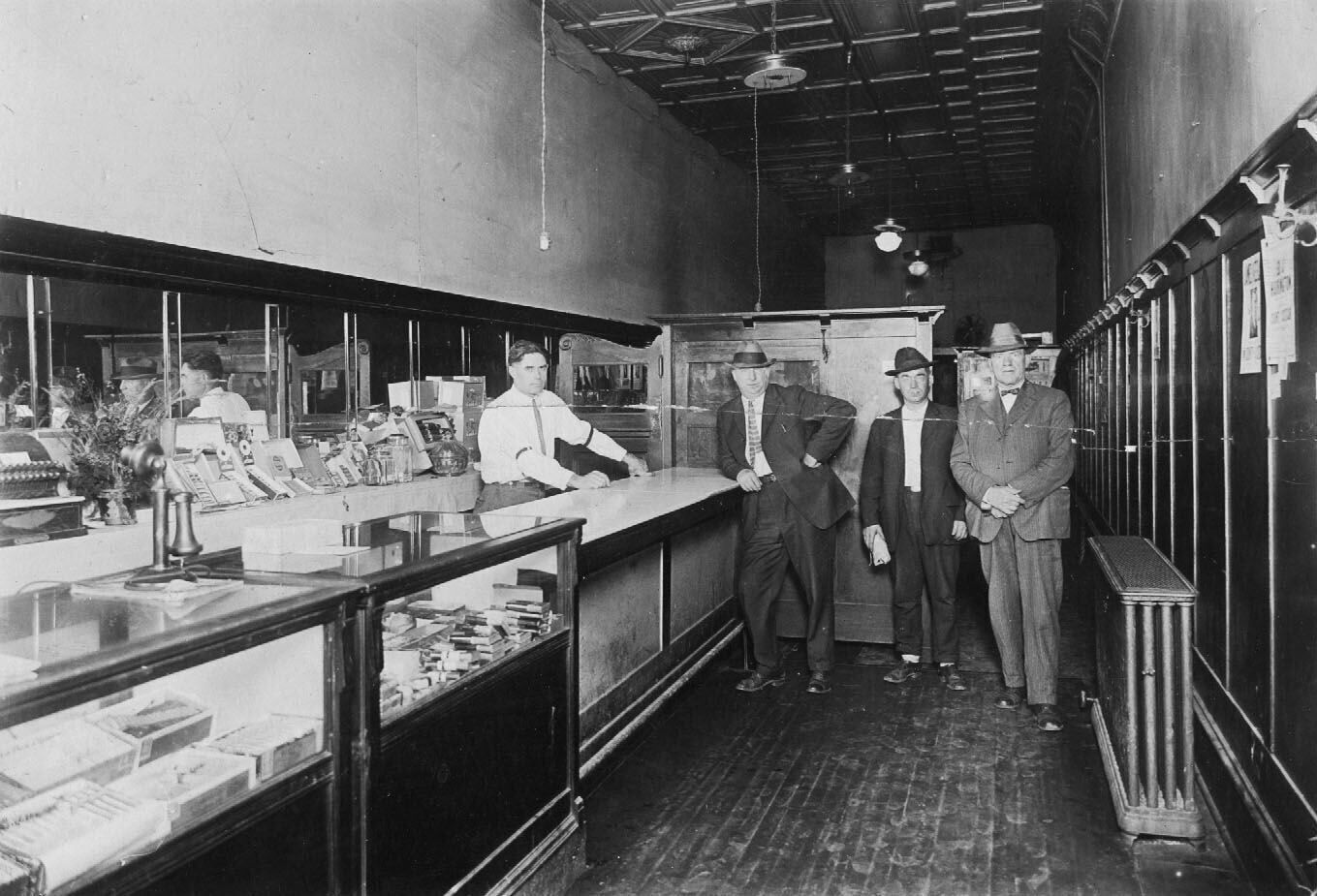
And, after nearly 15 years, the taverns of southwest Montana would once again be back in business, at least legally! “Legally” is the operative word.
In Butte, a headline in The Montana Standard says it all: “Prohibition – We Never Had Any – That’s Butte’s Idea as J. Barleycorn Returns.”
The reporter went on to explain, “The same old bootleg joints are serving the same old whiskey they always served. The same old drinkers are perched against the bar. Instead of talking politics they’re talking about ‘the good old stuff that ought to be here soon.’”



Comments ()