
A second chance for the Colonial? Billings landlord wants to rehab troubled apartments
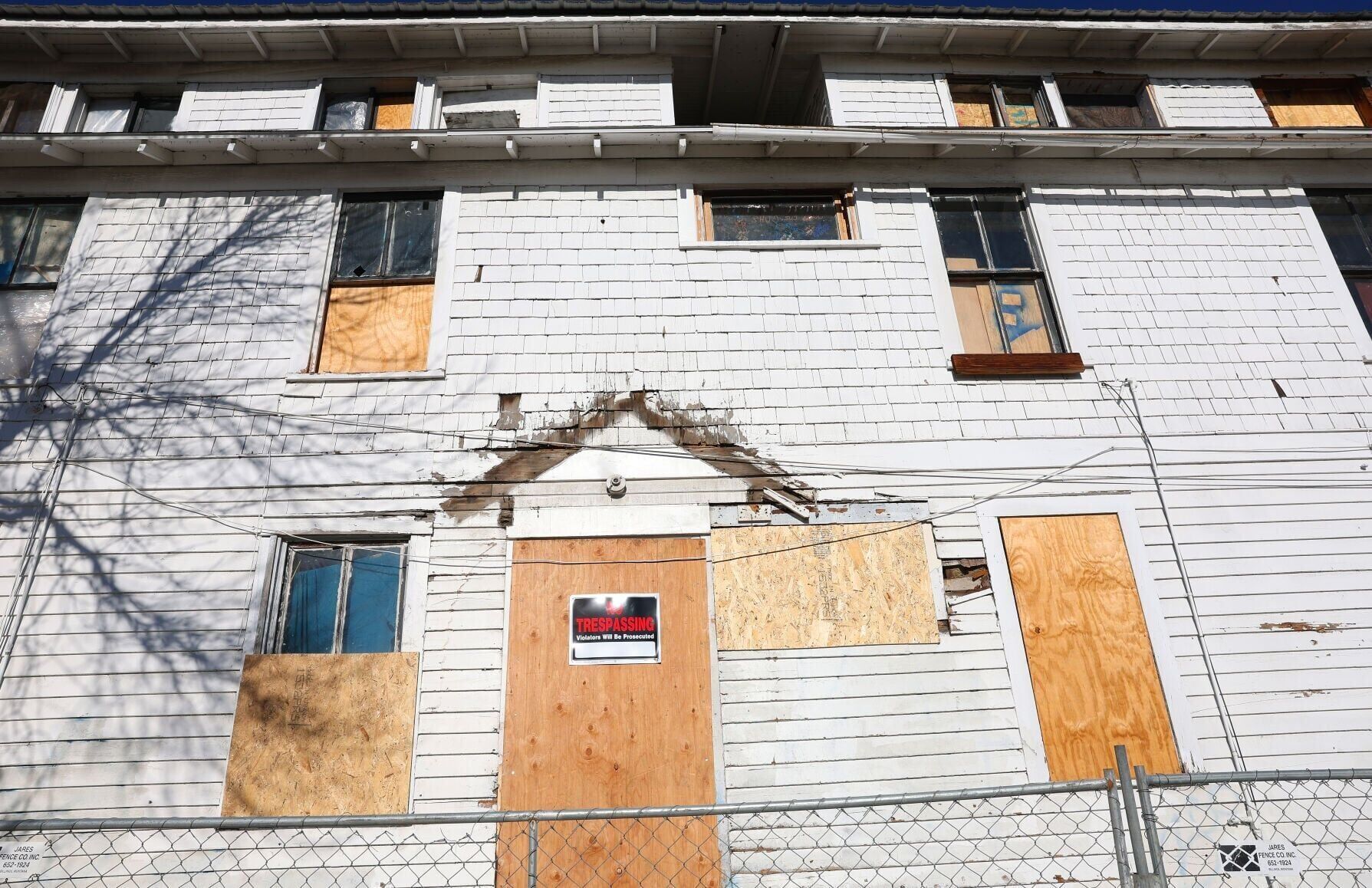
The last days of the troubled, boarded-up Colonial might not be so final after all.
On March 3, a local landlord reached out to Billings City Council with an urgent request to halt any demolition of the building to give the apartments a second life.
Apex Property Management owner Just Humphrey wants to buy the deteriorated building and make it housing once again. He still sees potential in the apartments. RiverStone Health previously proposed purchasing from the past landlord’s estate for $500,000 and has signed a letter of intent to do so.
RiverStone plans to demolish the property by the end of the year. Humphrey is formally offering $555,000 for the apartments and the two adjacent houses to privately rehabilitate the storied properties.
“It's really interesting when the place has been around since 1918, and it's got years and years of generational wealth in it,” Humphrey said. “And if done appropriately this would meet the needs of what the city wants and it would also give housing to the residents on the South Side too. And so this is just a win-win, where we're not demolishing and taking in a building.”
Humphrey has yet to receive a response from the city to his letter. City Administrator Chris Kukulski didn’t respond by press time.
The letter repeatedly expresses criticism of RiverStone's plan to demolish the apartments, potentially leaving an empty lot for years.
In a statement to the Gazette, RiverStone CEO Jon Forte noted that they have been under contract to purchase the property for several months with the goal of improving life, health and safety of the Billings community. Forte has previously said his organization had been in talks with the past landlord for about a decade before his death.
"Our primary focus is turning a symbol of trauma, pain, and suffering into a center of community resilience and strength," Forte said. "RiverStone Health’s project will include more housing than rehabilitation alone could provide, along with the supportive services RiverStone Health has provided for over 40 years. What replaces the Colonial apartments will include access to food resources, substance abuse recovery, behavioral health treatment, primary medical and dental care. It’s unfortunate that organizations and individuals who don’t live in our community are attempting to interfere with a private real estate transaction."
In his letter, Humphrey, who has lived in Billings over 20 years, stated that his offer includes a fully funded, phased rehabilitation plan that addresses cited code violations “and returns the building to safe, habitable condition under licensed contractor oversight and city inspection at every milestone.”
Rehabilitation would likely be a costly endeavor.
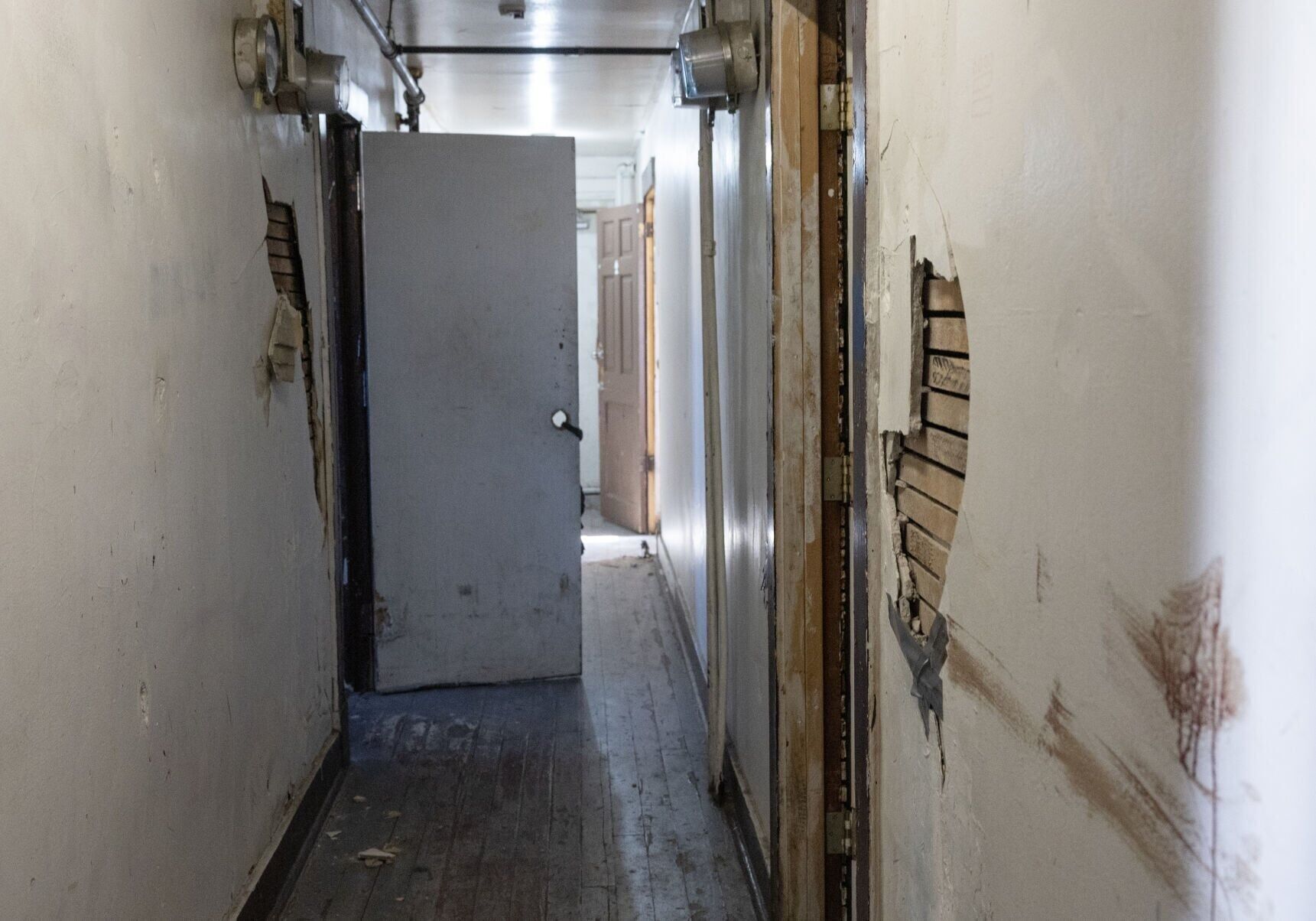
A city-sponsored assessment of the property in 2023 found that alongside outstanding electrical issues, some corners of the building’s foundation were separating from the structure. There were also structural failures in the support beams, putting the building at risk of collapsing.
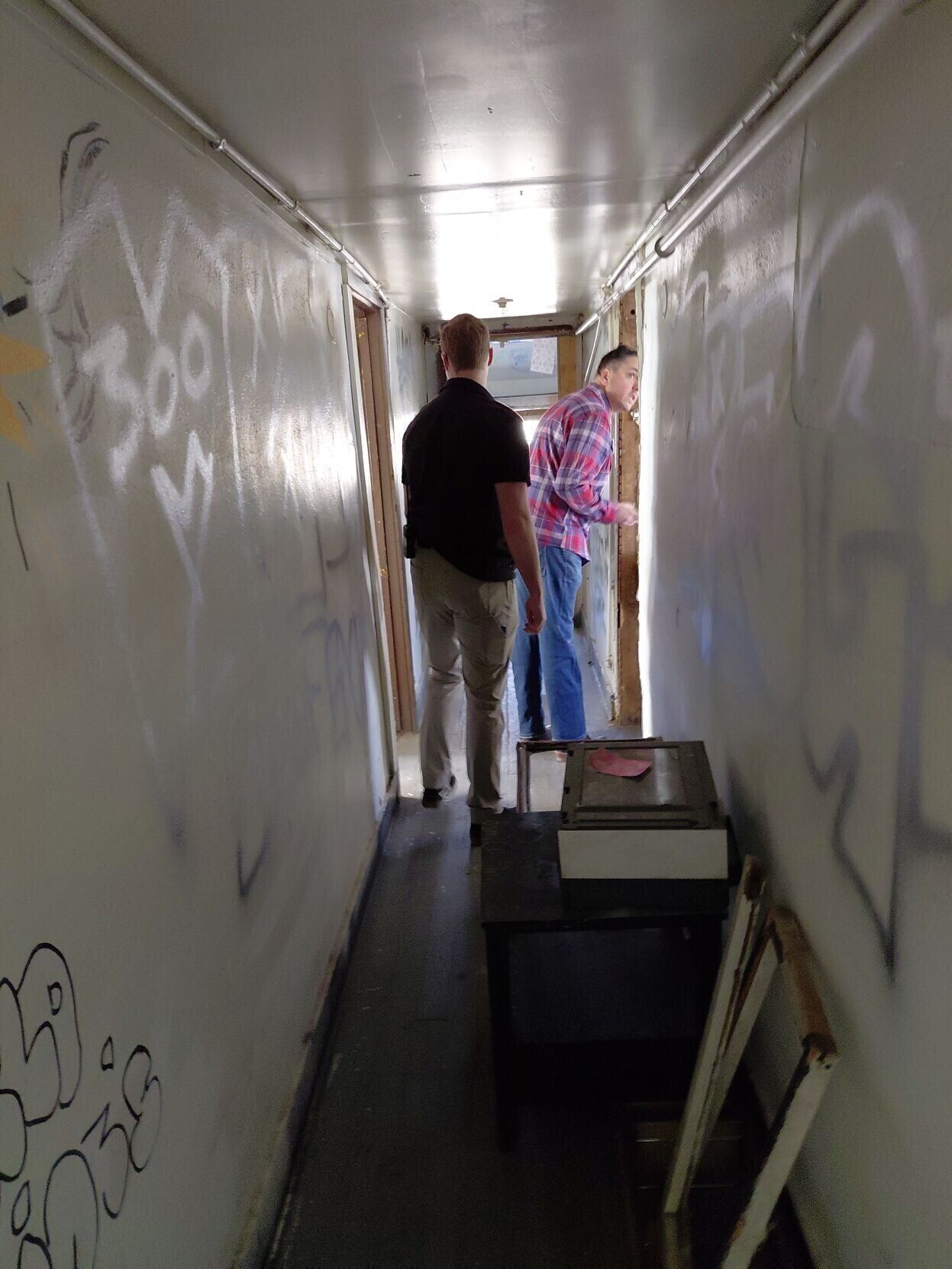
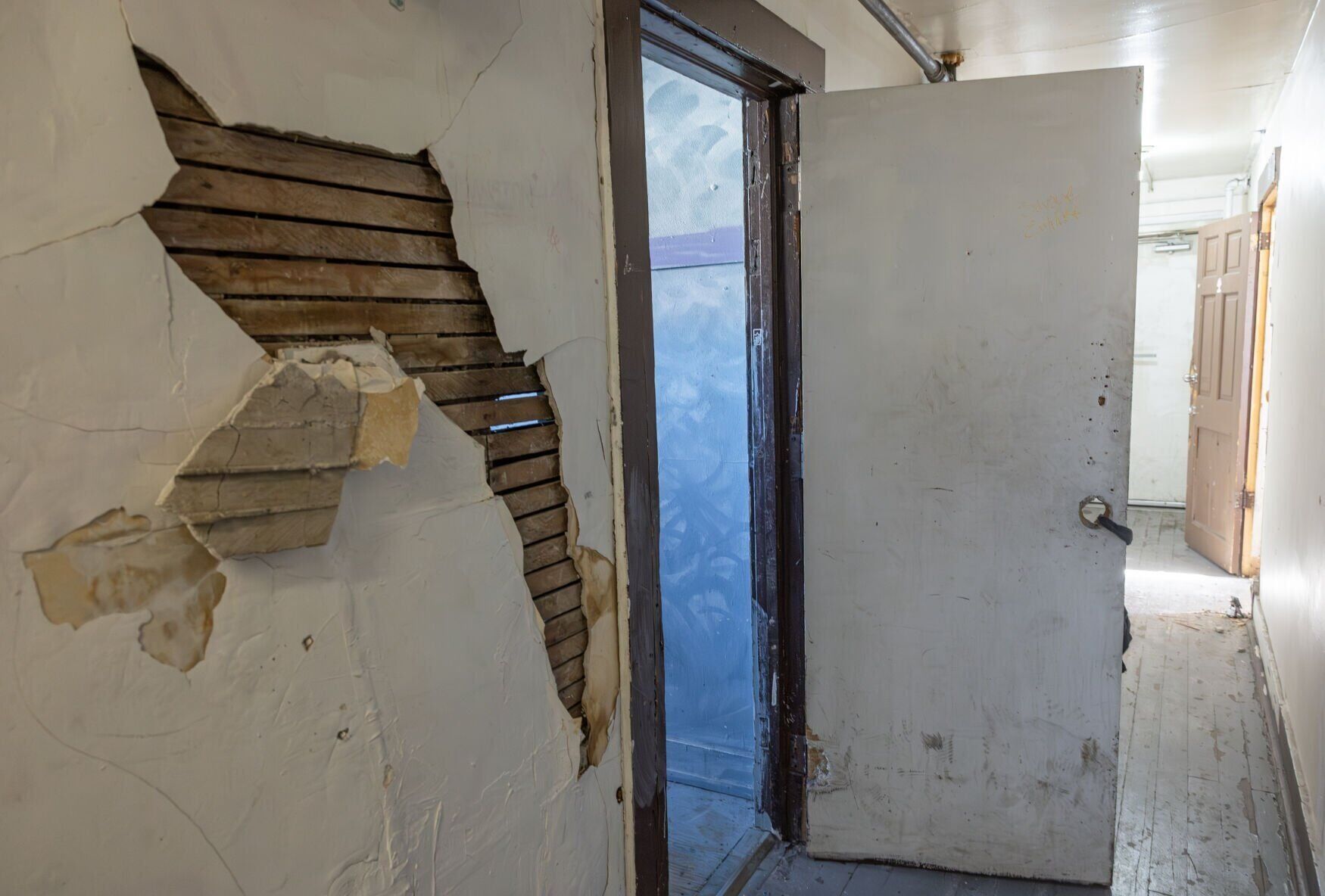
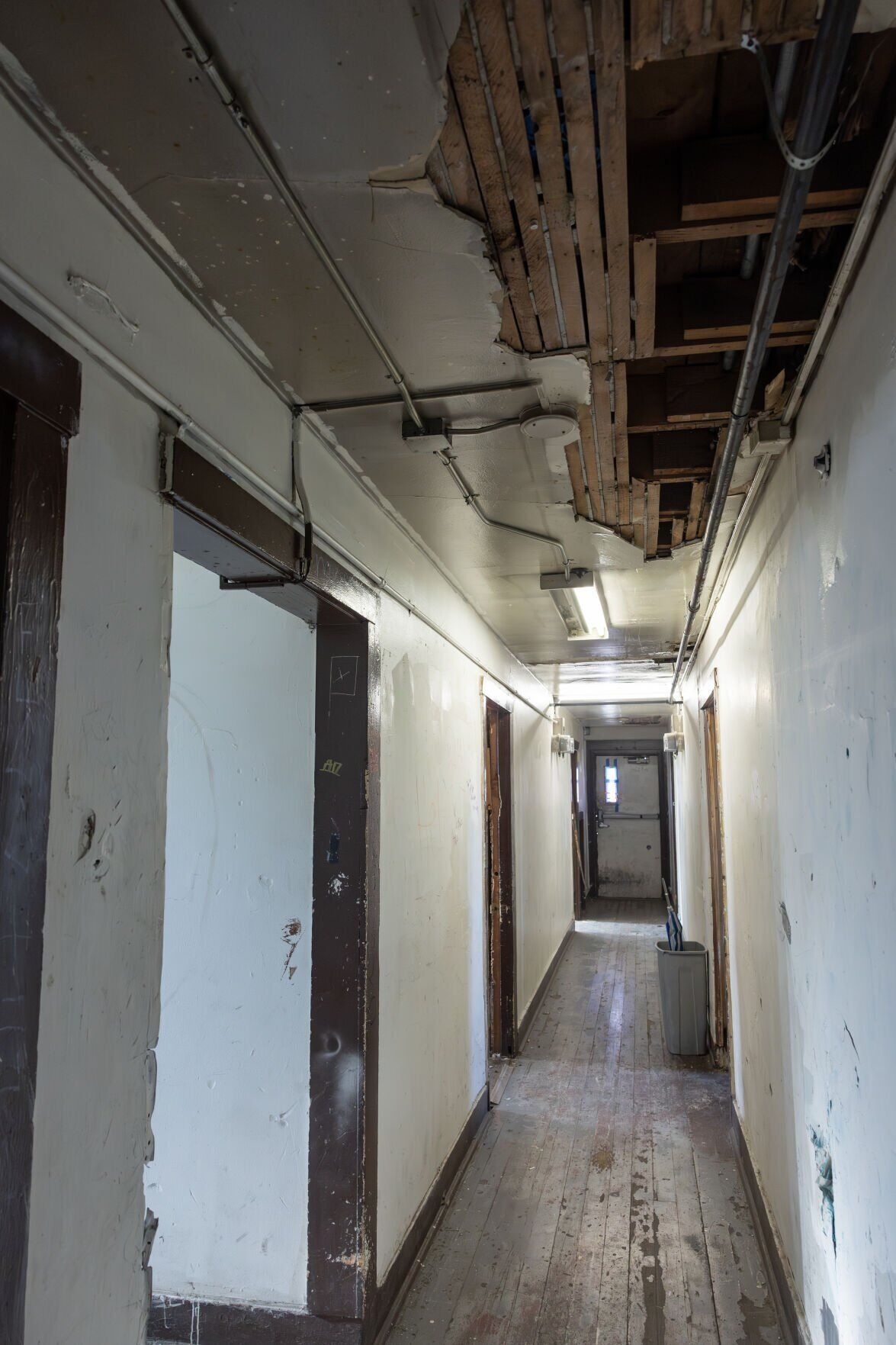
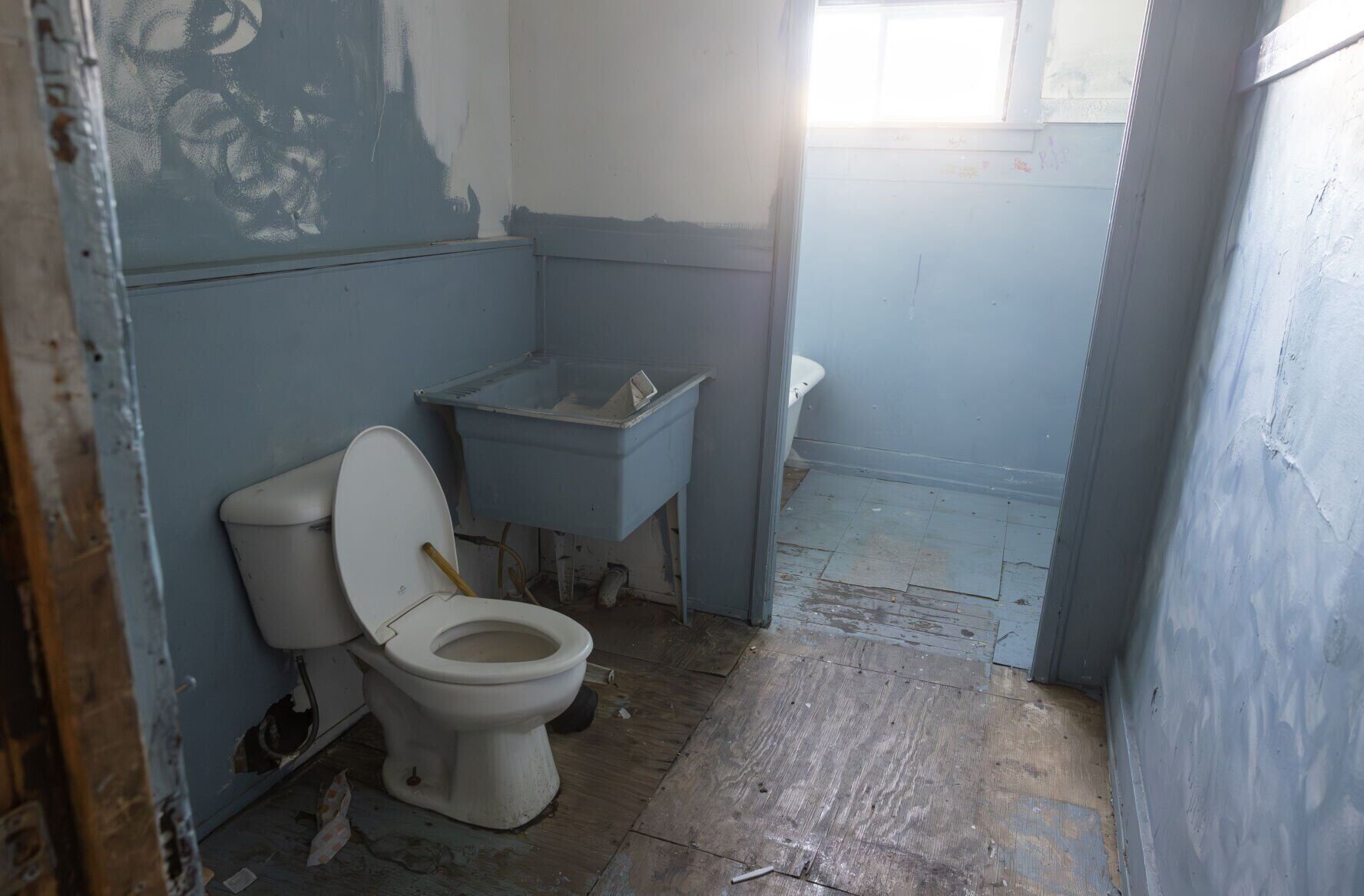
A tour of the building last month after remaining tenants were evicted revealed flimsy floor boards and damaged, graffiti-covered walls. In one place, a whole chunk of the ceiling was missing on the main floor, likely from past water damage.
Humphrey has never visited the building. Still, he said it looks better than what he had expected, including from past photos from the Gazette and other media. It's an inverse of what Forte from RiverStone said who thought it was worse than expected when he visited the property.
Humphrey wants to bring in his own engineers to determine the damages on the property fully. In his letter, he wrote that every cited violation is “correctable.”
“In order to assess that correctly, you have to have engineering and the right people in there to look at it to make sure that that's accurate,” Humphrey said. “Everybody has their own personal view. But that's an assumption until we get our people in there that can actually look at the building and look at the foundation.”
The main obstacle he assessed in his letter with purchasing the privately-owned property isn’t the purchase price, but the ongoing litigation from the City of Billings. The lawsuit by Billings over failures of the deceased landlord John Skauge to meet city code is still ongoing. The most recent hearing in the case turned contentious after the city said the estate wasn’t doing enough to board up the property.
A new buyer poses the risk of being added as a defendant to the lawsuit, Humphrey’s letter stated, complicating the lawsuit after a resolution was expected following the recent evictions.
Humphrey asked for a consent agreement or a rehabilitation memorandum of understanding to resolve the risk for the estate and city.
The consent agreement would allow the city to retain full code enforcement and to pursue proposed demolition if milestones aren’t met.
Humphrey pitched his purchase as presenting no cost to taxpayers. While the property under RiverStone’s acquisition wouldn’t cost taxpayers either, he said it might include taxpayers funds down the line whenever they redevelop the razed property. RiverStone also functions as Yellowstone County’s health department.
He also said the nonprofit acquisition would remove the Colonial from Billings’ tax base, while private rehabilitation would keep money coming into the city.
Lastly, he said along with preserving historic architecture in Billings, it would help address outstanding housing needs.
“The South Side has critical unmet demand for quality housing,” Humphrey wrote. “Proposed demolition removes 24 to 30 rehabilitable (sic) units from a market that desperately needs them and leaves the neighborhood with a vacant lot of uncertain duration while RiverStone pursues long-term funding for a redevelopment that has no confirmed timeline.”
Humphrey couldn’t confirm a timeline himself as to when the property might serve as housing again under his vision. He said he would be better informed if he was allowed to visit the property since boarded and fenced up.
AI-generated images of a rehabilitated Colonial included in his letter show two different versions of the building.
Humphrey said he never found an opportunity to present an alternative to the RiverStone purchase.
RiverStone Health had long viewed the property as problematic with it being next door to their campus. The apartments maintained one of the highest calls for law enforcement and emergency services in Billings in the past few years.
“I think it depends on how it's managed and what goes on with it, and I'm not responsible for any of that,” Humphrey said. “All I can do is my vision is to make it better, to run it the appropriate way, to rehabilitate it the right way, and have the right people in there so that you're adding benefit to the community, instead of it being looked at as like a sore.”
Like RiverStone, Humphrey has a health background. He came to Billings roughly 25 years ago for college and has stayed since, working as a critical care and flight nurse at Billings Clinic, while also working in property management. He said the project would be financed through private capital and investors.
“I've worked as a nurse for 23 years here, and have saved up and done some projects with my constituents,” Humphrey said. “And after saving people in the hospital, and now it’s just trying to save a natural, historical old building that has got maybe a bad name on it, but I think it's got strong bones. And I think that would be recoverable, instead of it being gone forever.”


Comments ()