
A 'seismic shift': How AI is impacting teaching and learning at UM
At an artificial intelligence symposium last month on campus, Tammi Fladager, University of Montana student and a commissioner for Daniels County (population 1,600 people), cracked a joke to show the juxtaposition between Montana’s old frontier and technology’s new frontier.
“In my county ... people think that AI is what you do to a cow,” Fladager said, referring to the process of artificial insemination.
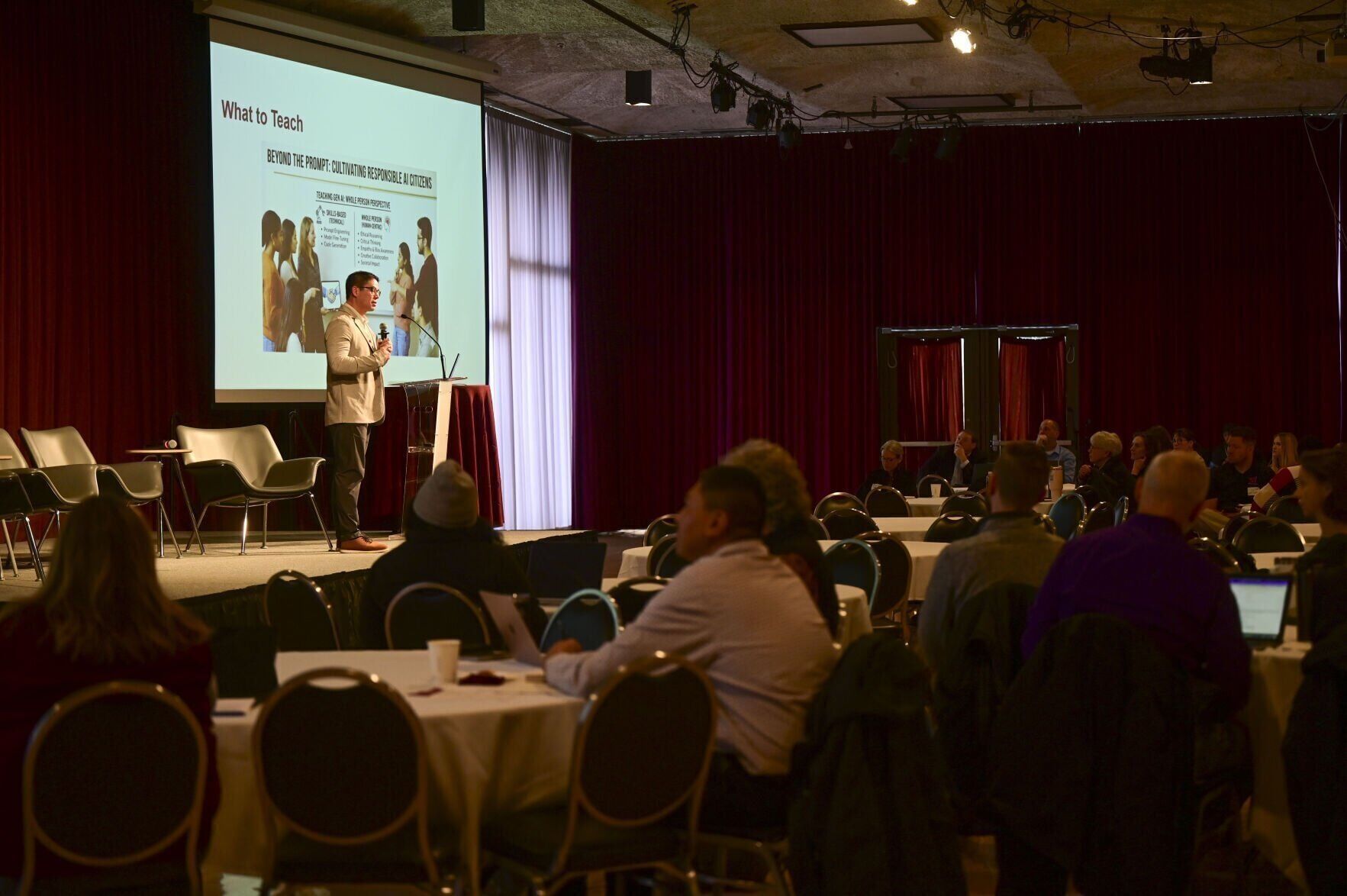
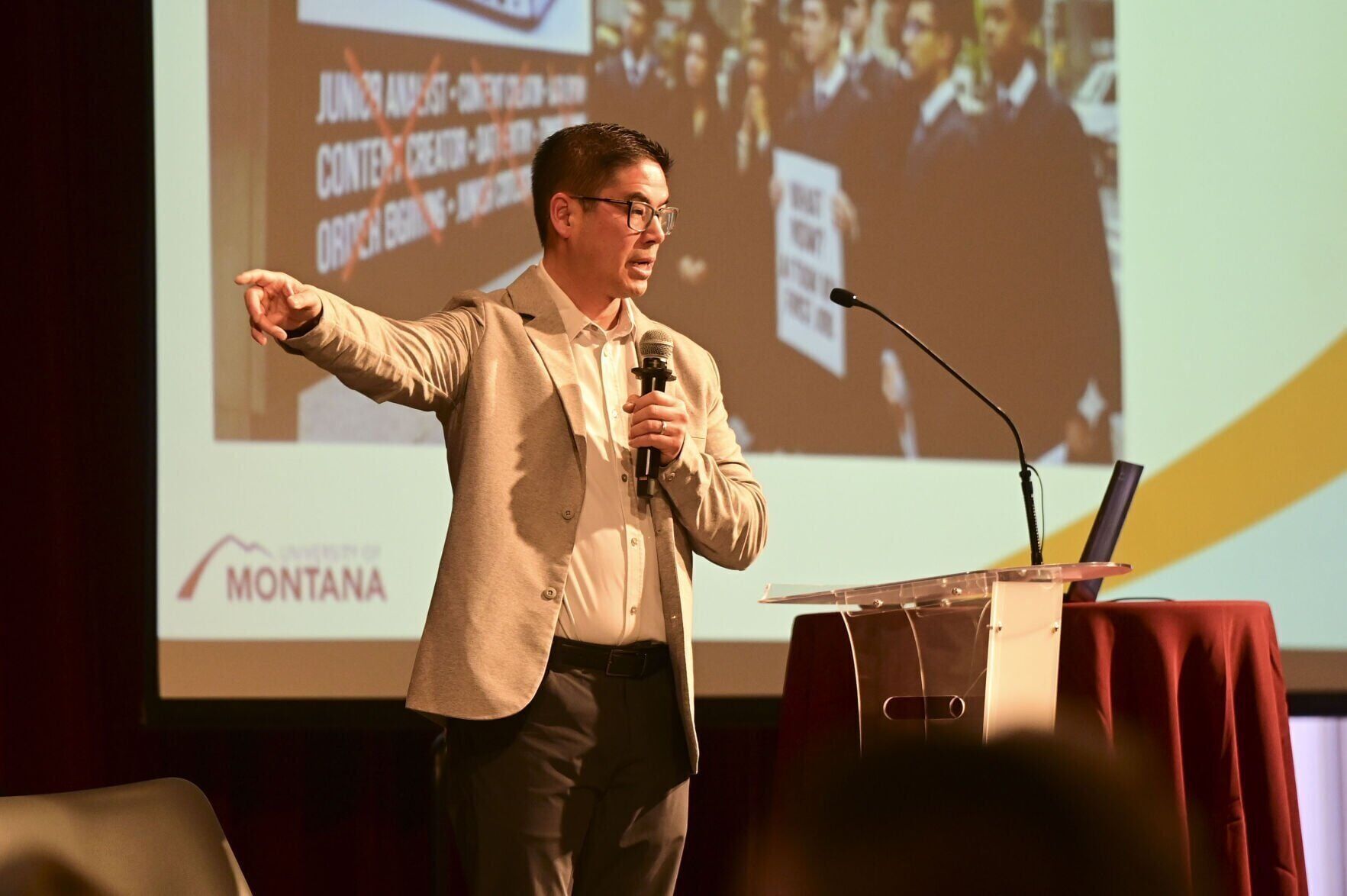
Speaking on a panel at UM’s second annual AI Symposium, Fladager said she thinks students should be taught how to use generative AI, like ChatGPT, so it can be a tool to help them, comparing it to classrooms allowing calculators to do math when it had previously been required by hand.
“I grew up in the time when you couldn't use a calculator in class, and I was quite offended when I found out (students today) could,” Fladager said. “And now I'm on the other end, I'm like, ‘Please let them use that tool.’ They're going to use it anyways.”
Universities across the U.S. are working to develop guidance and restrictions around AI use in the classroom.
UM currently does not have a blanket policy around the use of AI, and instead leaves it up to professors to decide on rules and regulations for their own classes.
Professors told the Missoulian this open-ended approach leads to confusion from students around expectations and disproportionately impacts the humanities.
Some professors have gone back to hand-written exams to avoid cheating, while others are embracing AI, saying it’s necessary to prepare students to use this tool in the workforce.
While UM doesn’t have an overarching policy, it has been working to develop guidelines for professors to use.
About UM’s policy
Last year, UM launched the “Future Project,” which brought more than 50 UM faculty and staff together to develop AI trainings and campus guidelines. The initiative is meant to guide the institution’s understanding of how “generative AI is transforming higher education, student learning, the future of work, and Montana's broader workforce,” according to the project website.
The Future Project website is also a central hub for UM’s approved AI tools, and includes resources for students as well
The guidelines leave rules around the use of AI mainly up to professors, but recommends all teachers include a statement in their syllabi as to whether they “welcome, limit or discourage” the use of AI in their classrooms.
The Future Project provides sample statements professors can use to explain how they intend to use AI in course development, talking points for how to discuss AI in the classroom, as well as a procedure for steps to take in a case of suspected AI misuse. This includes a sample script for how to initiate a “low stakes” initial conversation on the issue:
"I wanted to talk with you about your recent assignment. Some parts made me wonder if generative AI tools might have been used. I would like to further understand your process and clarify expectations going forward. Can you walk me through how you approached the assignment?"
The university updated its guidance this month asking that faculty not use AI detection tools, which scan student work to identify if AI has been used, due to student privacy concerns.
The Future Project’s guidance says AI detection tools are unreliable and not admissible proof for academic dishonesty.
Assistant Professor of English at UM Kelly Schirmann said in a statement that while the Future Project’s guidelines are a good start in acknowledging AI’s “complex impact” on higher education, “... it also leaves instructors with the burden of identifying and disciplining cases of sophisticated plagiarism at unprecedented rates, or else completely re-envisioning their course curriculum, assignments, and assessments as a work-around.”
Schirmann said UM’s humanities programs and writing instructors are being disproportionately impacted by unchecked AI usage in their classrooms, which often include more essay assignments done outside of class.
“I'd like to see a lot more guidance, leadership and long-term consideration around GenAl at every level,” she said. “It would be great if the administration could take a stronger role in studying its negative impacts, clearly regulating its usage, and supporting the concerns of its faculty as they navigate the challenges of adoption.”
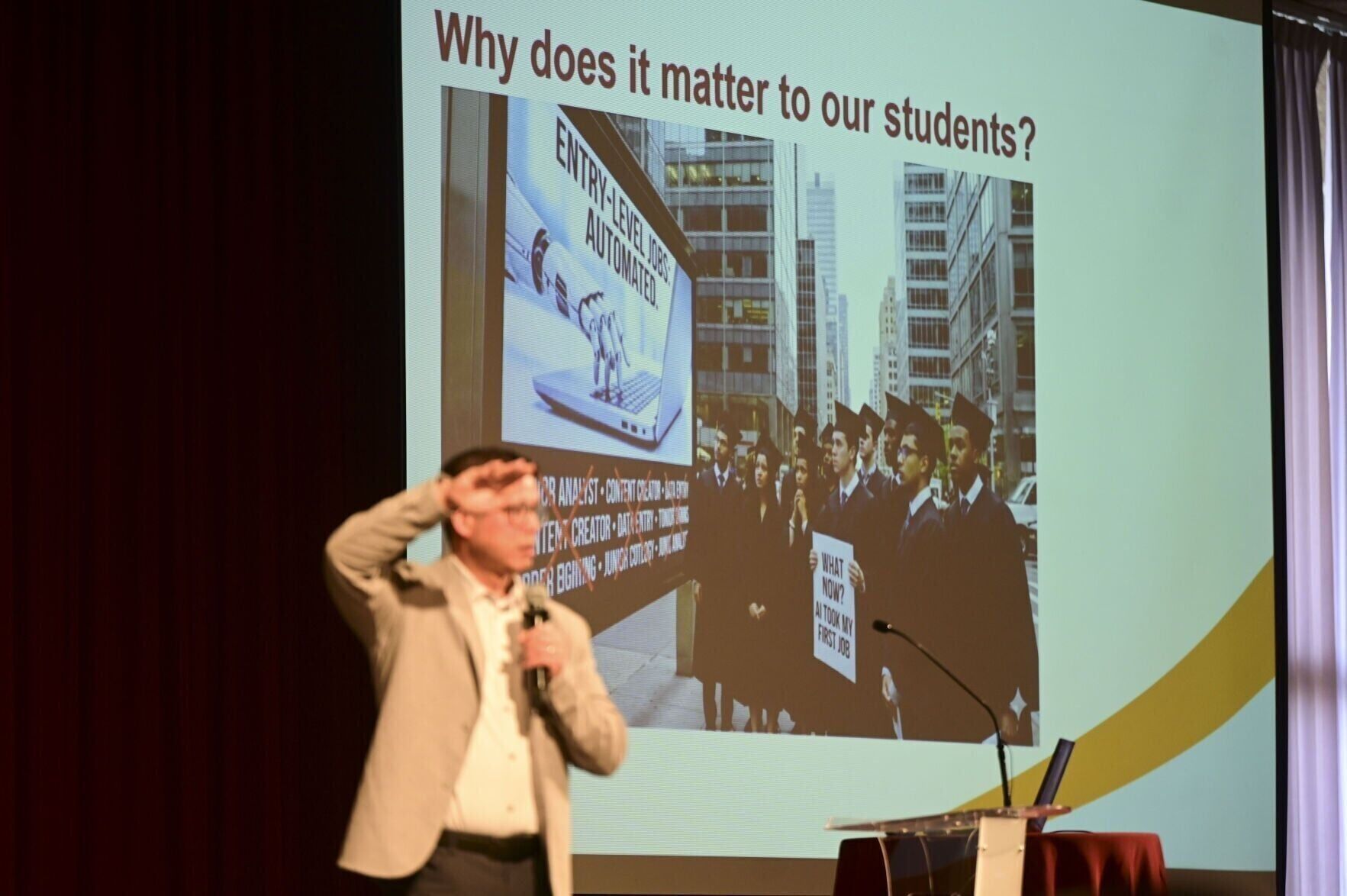
UM spokesperson Dave Kuntz said in a statement to the Missoulian the university’s approach to AI recognizes UM graduates need to “develop AI-based skills, including the ability to evaluate AI-generated output, if they are going to compete and win in the workforce.”
“While some universities have banned AI and others have welcomed it with no guard rails, UM is taking seriously its obligation to develop in students the AI-based technical skills they’ll need for their careers, while doubling down on the uniquely human skills that employers are telling us are needed more than ever,” Kuntz said.
Professors on AI
CollegeBoard, a national nonprofit known best for developing and administering the SAT exam, found in a survey of more than 3,000 faculty nationwide almost 90% of humanities instructors reported students in their classes were using generative AI for writing.
Schirmann said she’s noticed a “seismic shift” in her college writing classes this year, noting a "significant" number of her students have turned in work with partial or full use of generative AI programs.
“Some confessed ashamedly to using ChatGPT, others claimed they used it only to ‘clean up’ their own words, and still others vehemently denied usage altogether,” she said. “(There was) even one student who forgot to remove the chatbot's friendly goodbye from the end of their fully-generated essay and still argued that they deserved an A.”
“My sense is that there is no consensus among students as to whether using GenAl to write their papers is cheating in the first place,” Schirmann said. “They are receiving deeply mixed signals about how valuable it is, how disruptive it will be, and when and where they can and can't use it.”
Director of Literature at UM Rob Browning said some professors in his department have gone back to using blue books to administer tests, where students hand-write responses to prompts while in the classroom. Browning said he used them to administer exams in his “Intro to Literature” course last year.
During a panel discussion at UM’s AI Symposium, Associate Director of Academic Assessment Amy Ratto Parks said plagiarism has always been something universities have dealt with, but that AI adds “a new twist.”
She said transparency is key in preventing and catching plagiarism and cheating, adding professors need to tell students they will be checking their citations and follow through. She also emphasized the need to make sure students understand why they are doing the assignment in the first place.
Students don’t understand what they’re missing out on by cheating, she said, because they don’t understand why they did the assignment.
“There is a math equation happening in their head about whether they should invest in the assignment or maybe just not,” she said.
One audience member said in talking with students she found some thought they needed to use AI to “compete” with their peers.
“They feel like if they don't use AI, they're going to get a worse grade than the student next to them who is (using it),” the audience member said. “What do they do? What can we do to help them not feel obligated?”
Ratto Parks said asking students to provide a critical reflection of their process behind their work can be used to discourage AI use.
“If AI was your strategy, then there’s not a lot to say about your thinking in the project,” she said.
Associate Professor in the School of Visual and Media Arts Michael Cassens teaches game design and interactive media, and is one of the more than 50 UM staff members involved in the Future Project.
Cassens told the Missoulian the university’s AI guidance policy is aimed at keeping professors in the driver’s seat in their classrooms with a rapidly developing and changing technology. He said it’s on professors to communicate their expectations around AI use to their students.
“That's on us as faculty members to say, ‘this is why we're doing X, or why we're not doing X,’ and giving latitude to students to also have the freedom to say, ‘these are the things that I want to do or not do, and these are the reasons why,’” Cassens said. “Having that dialogue is just so critical.”
College of Business Associate Professor Jesse King, who also works on the Future Project, said his department has been more on the forefront of AI implementation than most, describing how he uses AI for everything from transcribing lessons to building AI models for his marketing students to interact with that can embody a customer personality.
What two students think
At the AI Symposium, Fladager described using AI in her role as a Daniels County commissioner to help come up with ideas for how the county could recycle cardboard.
AI came up with ideas for how to collect the cardboard, but also how to use the material as mulch for gardens or beds for cattle in cold weather.
“It's like brainstorming with someone who never gets tired,” she said.
Alexis Huotte is a 31 year-old student with narcolepsy who grew up in special education classes, and said if she had access to AI when she was growing up, it may have helped her connect.
“I was really isolated from my peers,” she said. “I think at that age, it would have really helped me broaden my horizons and feel more confident.”
Huotte said teachers should be accepting of AI and use it to try to make courses more engaging and exciting for students.
“I'm not quite sure how to do that, or the special format of that,” she said. “Maybe you can ask AI and see?”




Comments ()