
After years of delay, EPA promises Butte community that a new lead action level is coming
EPA’s regional administrator spoke Tuesday night at Montana Technological University and said something locals have verbalized for years.
“We all know that the 1,200 number, that’s not acceptable, that it needs to come down, and that’s going to by a pretty significant extent,” said Cyrus Western, EPA’s Denver-based administrator.
The number cited by Western refers to the 1,200 parts per million standard EPA has relied on in Butte-Silver Bow County to trigger cleanup of residential soils and interior dust contaminated by lead, a toxic heavy metal especially injurious to children.
Public officials, Superfund watchdogs and public health officials have long argued that the 1,200 ppm number is too high. For comparison, the trigger in Anaconda for residential soils and dust cleanup has been 400 ppm.
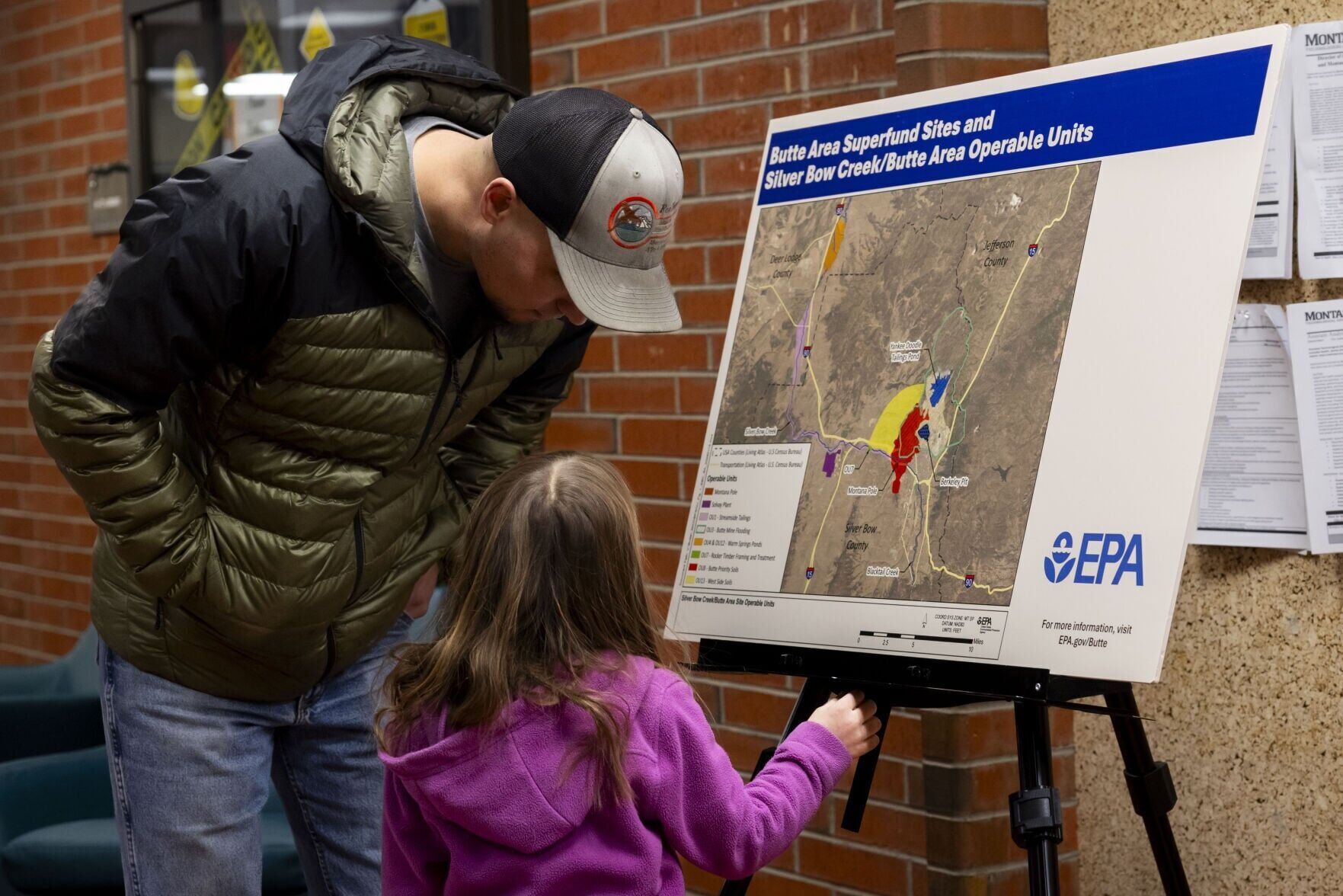
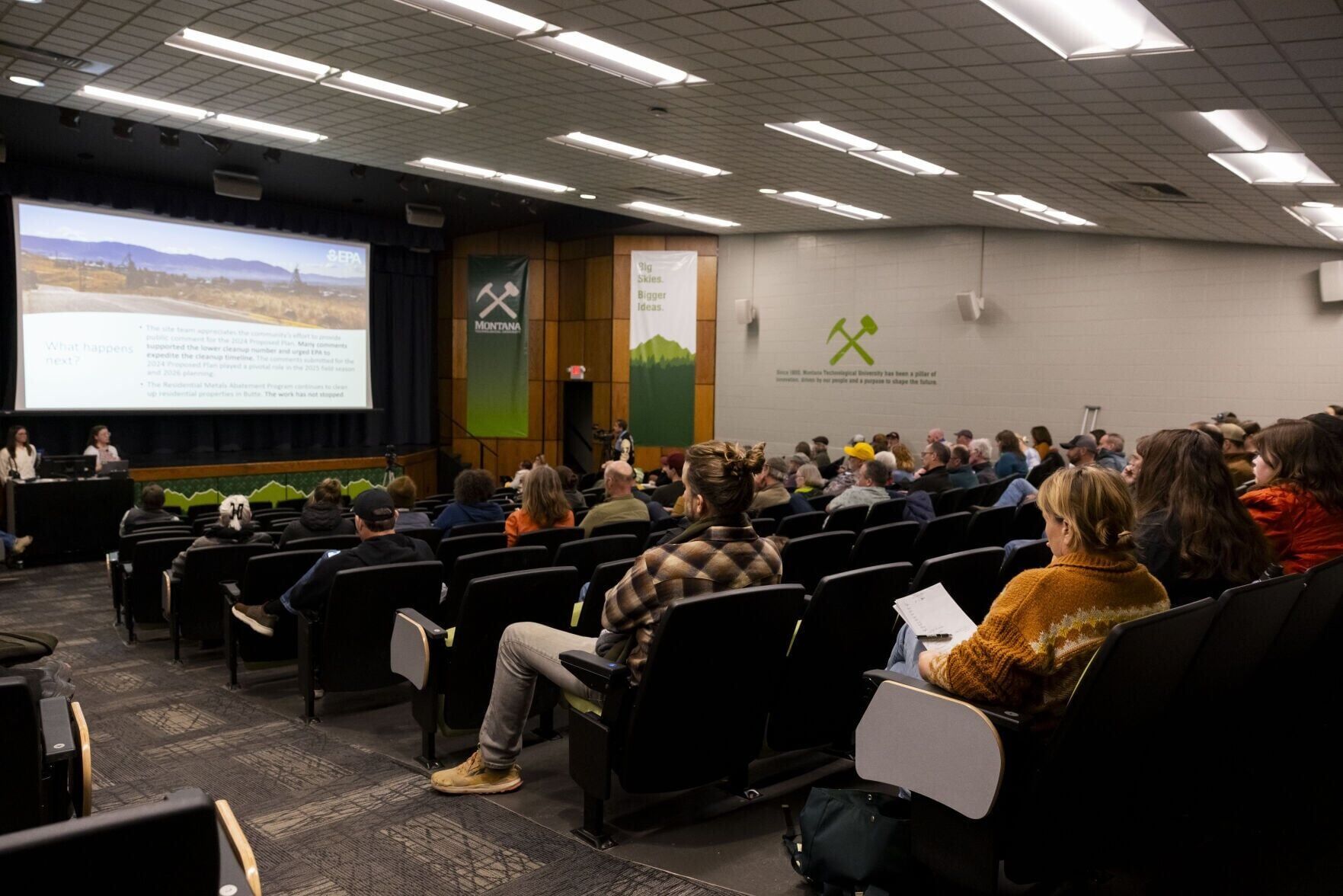
Western spoke Tuesday during a public meeting in the Montana Tech library focused on lead. About 100 people attended.
He said a new action level would be identified by EPA by June 1 or maybe sooner.
“We are going to go through the process to come up with a new number,” Western said.
He said that an action level of 175 ppm proposed in October 2024 came from the Biden Administration.
An updated lead directive released in October 2025 superseded that guidance, Western said.
Meanwhile, when dealing with the EPA, Butte-Silver Bow officials have felt a bit like Charlie Brown approaching a football held by Lucy in the comic strip “Peanuts” or a field goal kicker facing moving goal posts.
J.P. Gallagher, chief executive of Butte-Silver Bow, read a statement during Tuesday’s meeting. He mentioned that October 2024 proposal to identify 175 ppm as the new action level and EPA’s request for related public comment.
“We moved to 175 and then we were asked for public comment, and we're yet to have the answers to those questions from our community,” Gallagher said. “And so the community has waited a long time for this, and we continue to. Prolonged uncertainty is deeply frustrating for the community.
“When we're talking about this, words don't matter. Action is what really is going to make a difference here,” he added. “The health of the community, health of our children, it's paramount to us, and we've waited too long for all of this to happen. We're not asking for special treatment at all. We're asking to be consistent. We're asking for timely answers and clarity and firm commitment to public health.”
Butte resident Don Petritz weighed in.
“We've waited too damn long for things to get done in this community,” he said. “I have three grandchildren, for crying out loud. They'll be my age before any of this stuff gets completed. I think we have gone on and we've been patient long enough. Now, we got to wait until June 1 and have another 30-day comment period. When is this going to get done? And when are we going to move forward? You know, we're one year almost, when you wanted our comments back and nothing has been done."
Western responded that his top priority as President Trump’s nominee as regional administrator is to get results.
Longtime Superfund watchdog Evan Barrett told Western that the pattern of delays and the changes in approaches and policies were “a terribly bad thing in terms of good government.”
Again, Western said his focus is getting results.
“And I don’t care how hard I have to crack the whip on my staff, on [Atlantic Richfield], on the county, on the state, whoever it is, to make sure we are moving the needle and that we are delivering results,” he said.
Federal Superfund work in Butte started more than four decades ago, driven by contamination tied to historic mining and smelting.
For years now, the EPA has ground away at identifying the level of lead contamination in residential soils and interior dust in Butte necessary to trigger cleanup.
The grinding persists.
Meanwhile, regional Superfund and public health watchdogs protest that the Mining City’s children, those most vulnerable to ingestion of the toxic heavy metal, continue playing in soils contaminated by historic mining and smelting.
In Butte, EPA has long relied on a remediation standard allowing a much greater concentration of lead in soils than in many other communities.
EPA’s explanation for that disparity has hinged on the concept of “bioavailability,” with the agency insisting the lead in Butte from hard rock mining is less bioavailable than the lead in Anaconda from smelter emissions. The agency defines bioavailability as the amount of contaminants absorbed into the body following skin contact, ingestion or inhalation.
Yet a history of Butte notes that ore was milled, roasted and smelted locally in the city between the late 1800s and mid-1940s. The first crude smelter was built in 1867 to process copper ore from the Parrot Mine. Even after construction of smelters in Anaconda, wind-driven emissions from those facilities sometimes settled in Butte.
When the EPA in October 2024 proposed dropping the lead action level in Butte from 1,200 ppm to 175 ppm, though skeptical, regional officials and environmental watchdogs celebrated the dramatic drop and were similarly pleased by EPA’s proposal to expand sampling and remediation to more residential neighborhoods in Butte.
EPA asked for public comment on the new proposal and set a deadline of Valentine’s Day 2025. The agency said it would review the comments and provide a “responsiveness summary.” That hasn’t happened.
The grinding resumed.
EPA released an updated lead directive in October 2025 but without clarity about how it would translate into action levels guiding remediation.
At the time, watchdogs and public officials worried the new guidance might rob Butte of the 175 ppm action level. The announcement also described raising children’s target blood lead level from a benchmark of 3.5 micrograms per deciliter (µg/dL) to 5 µg/dL.
At the time, Gallagher was among those expressing concerns about the potential impacts to Butte of the new national directive.
“As chief executive of Butte-Silver Bow, I am deeply disappointed by the EPA’s updated lead guidance, which raises the target children’s blood lead level to 5 µg/dL and may shift soil action levels away from the previously proposed action level of 175 ppm,” he said at the time.
“Under the previous framework, the EPA brought forth a proposed action level of 175 parts per million for lead in residential soil and a blood lead level benchmark of 3.5 micrograms per deciliter (µg/dL) to guide cleanup decisions,” Gallagher said. “These thresholds, while not perfect, were seen as a hard-won compromise between science and policy. They offered a measure of hope that the agency was listening to communities like Butte-Silver Bow.”
The Residential Metals Abatement Program samples residential yards and attic dust in Butte-Silver Bow County and conducts remediation where necessary. RMAP is funded through an agreement between Atlantic Richfield and Butte-Silver Bow. The money is provided by Atlantic Richfield and Butte-Silver Bow allocates the funding to the program annually.
If a new lead action level is adopted, which seems likely, residential yards in Butte that were remediated based on a higher level might need to be revisited.
Under Superfund law, Atlantic Richfield has been deemed liable for remediation and restoration costs tied to historic mining and smelting pollution associated with the Anaconda Co., which Atlantic Richfield bought in 1977.
Experts agree that exposure to any level of lead, a highly toxic metal, is especially harmful to children — no matter whether the source is historic mining and smelting wastes, pipes, lead paint or something else.
The Butte-Silver Bow County Department of Public Health offers free blood lead testing to county residents.







Comments ()