
American Prairie sues state Land Board over bison grazing directive
Montana’s top elected officials ordered the Department of Natural Resources and Conservation to ignore American Prairie’s latest request to graze bison on a parcel of adjoining state land, prompting the group to again take legal action.
The lawsuit was filed on St. Patrick’s Day after the state's Land Board, at its Feb. 17 meeting, voted unanimously to issue a moratorium on new bison grazing leases until new rulemaking was completed.
Gov. Greg Gianforte was not present. Acting in his stead was Lt. Gov. Kristen Juras.
"The Land Board changed decades-old policy on bison grazing after meeting in a closed-door private session,” Mary Cochenour, attorney for American Prairie, said in a statement. “If the state wants to change policy, it must comply with Montana law and go through rulemaking procedures, including public notice and a comment period.”
Executive session
It was Juras who said the board should go into executive session to discuss the matter because it could affect ongoing litigation between the state and American Prairie, a Bozeman-based nonprofit.
Her reference to litigation regards the March 4 ruling by District Court Judge Mike Menahan that DNRC had a “clear legal duty to act but has failed to do so” in regard to 2019 requests by American Prairie to graze bison on two state leases. The judge gave DNRC 60 days to conduct public scoping and 90 days to complete an environmental analysis.
The Land Board’s directive to DNRC would therefore violate the judge’s order for the agency to adhere to Montana Environmental Policy Act timelines.
In district court the state argued it was waiting for the Bureau of Land Management to finalize its decision before acting. Although the BLM originally approved bison grazing on federal lands next to American Prairie’s purchased property in northeastern Montana, the Trump administration stepped in to overturn the ruling earlier this year. American Prairie has appealed.
Taylor Grazing Act
To justify its new decision, the BLM said the Taylor Grazing Act governing federal leases does not apply to bison, only to production livestock.
That’s a theme the Land Board reiterated.
After returning from executive session, Juras said “current administrative rules do not contemplate bison in determining grazing lease stocking rights, including the absence of bison from the current definition of animal unit.”
An animal unit month, or AUM, is the amount of forage a 1,000-pound cow and her unweaned calf consumes in one month. That calculation to determine stocking rates was established in the early 1900s. Since then, breeding has improved the genetics of cattle increasing their body weight to an average closer to 1,400 pounds.
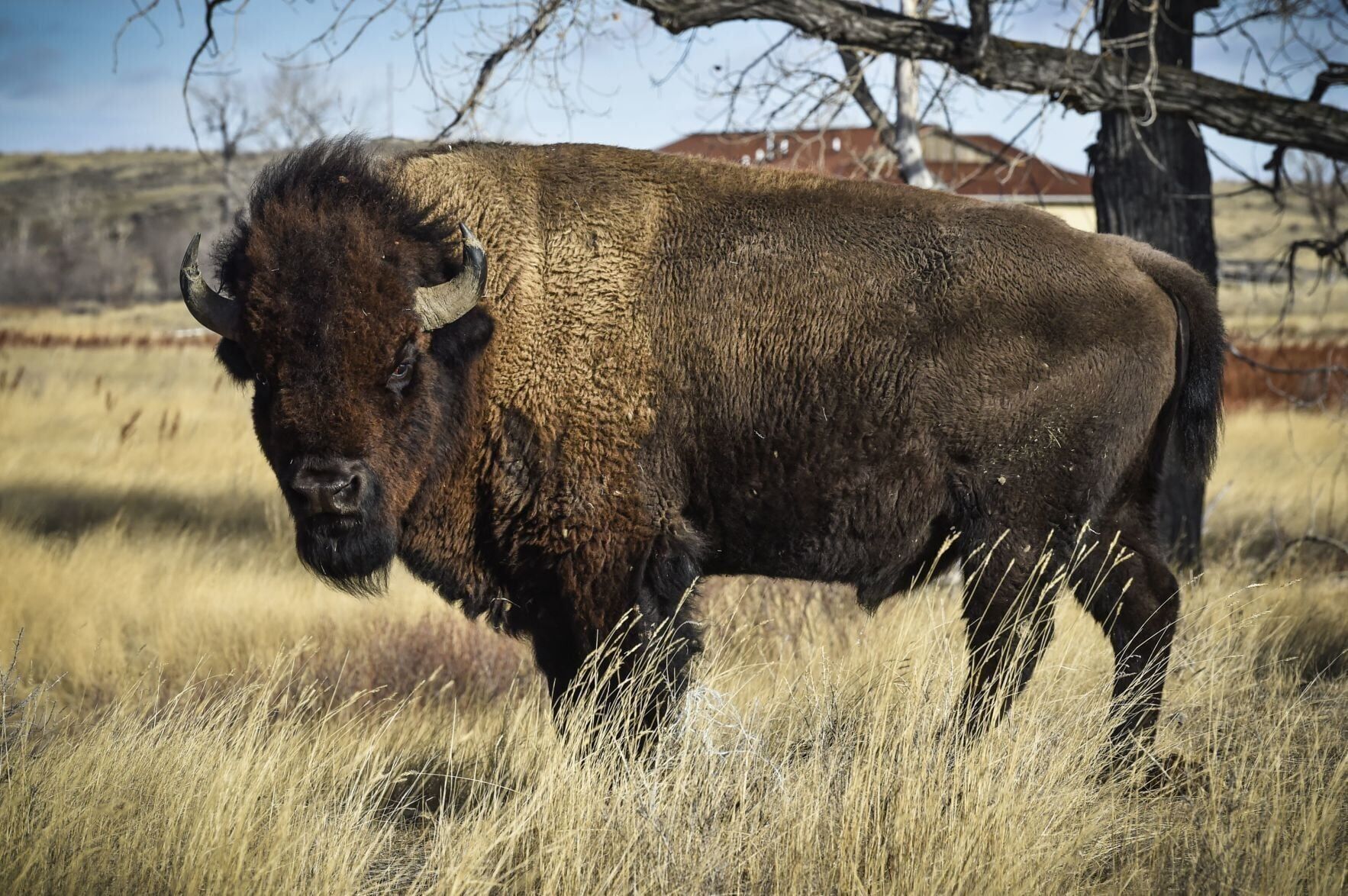
In Yellowstone National Park, male bison weigh up to 2,000 pounds and females around 1,000 pounds.
The University of Wyoming Extension classifies a mature bison and a 1,000-pound cow with a calf at the same animal unit equivalent.
Raising the rhetoric
Although Brown referenced a Montana administrative rule to say the state doesn’t recognize bison as they pertain to “animal unit,” Montana code does list bison — along with ostriches, emus and other animals — as livestock.
Brown went on to argue that bison consume more than cattle which could result in “significant overgrazing of state trust lands.” In his letter to the editor also signed by Attorney General Austin Knudsen, the men go further, stating grazing bison will “take grass from your cows, hammer your fences, increase predator pressure and disease risk for neighboring operations.”
Former Montana governor Brian Schweitzer, who grew up on a northeastern Montana family farm, has called such accusations “a bunch of crap.”
The Montana Stockgrowers Association, however, has been staunchly behind the GOP effort to make life difficult for American Prairie, including helping to fund legal challenges to the group’s federal grazing rights.
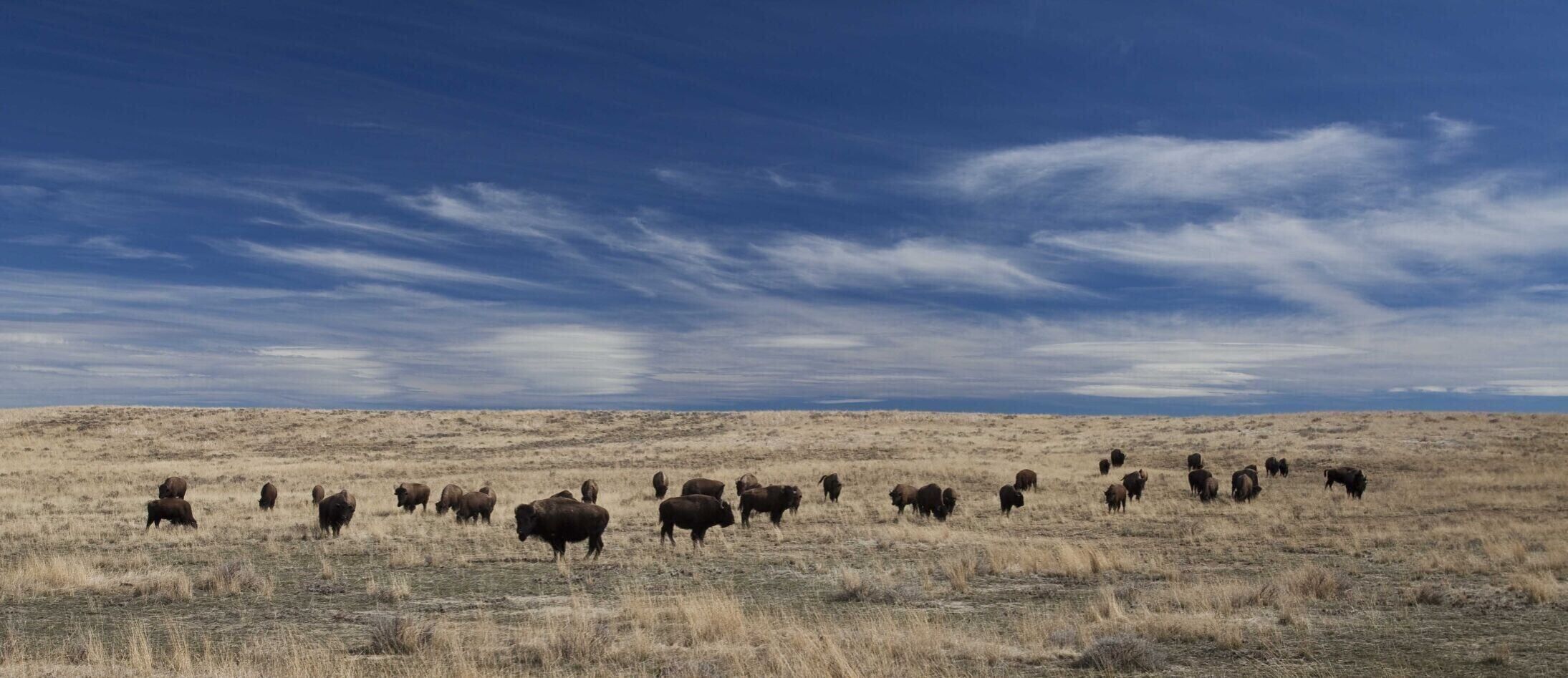
American Prairie currently grazes about 8,000 cattle and 940 bison on its deeded and leased properties. Since its formation in 2001, the group has purchased 605,739 acres — 168,832 deeded acres and 436,907 leased public acres.
Since the Dust Bowl era, federal grazing leases have been linked to private property and are included in land sales, which Schweitzer called a federal “handout” to ranchers.
Prior to the Gianforte administration, the DNRC followed the BLM’s lead in issuing grazing permits.
Earlier leases approved
Knudsen’s and Brown’s letter to the editor ignores the fact that American Prairie has been grazing bison on other state parcels since 2008, in compliance with DNRC regulations. In those leases, and previous ones with the BLM, bison have been recognized as consuming the same amount of forage as cattle. Turner Enterprises Inc., founded by media mogul Ted Turner, has grazed bison on state lands since 1999.
"Our repeated attempts to reach out to the administration to try to work with the state and avoid costly, time-consuming litigation have unfortunately been met with silence,” Pete Geddes, American Prairie's chief external relations officer, said in a statement. “This is disappointing. We will continue to defend ourselves against these unfounded attacks by the state."
DNRC and the governor’s office do not comment on ongoing litigation.
However, in their letter to the editor Brown and Knudsen refer to American Prairie as “out-of-touch liberal elites” and write the board will “fix the rules” to keep bison off state lands.
Knudsen also made a motion at the Land Board meeting for “DNRC (to) develop and propose a policy that favors the issuance of grazing leases on state trust lands to production livestock operations,” echoing the recent BLM decision.
He also said the issue will undoubtedly come before the 2027 Legislature but that the board needed to act now.
DNRC’s trust obligations
The DNRC manages more than 4.7 million acres of trust land for farming and grazing to raise money for the state’s schools.
American Prairie argued that in denying the group to graze bison on state property it is ignoring its trust obligations. The state currently charges cattle $26.07 per AUM compared to the BLM which charges $1.35.
Schweitzer said the Land Board should “resign tomorrow” for not profiting off American Prairie’s state grazing leases.


Comments ()